
In the humid, shifting climate of Middle Tennessee, the traditional choice of solid oak isn't always the wisest investment for your home. While many homeowners assume that "real wood" only comes in solid planks, the reality is that a more advanced solution often outperforms it in Brentwood and Franklin living rooms. You want the timeless beauty of genuine timber underfoot, yet the fear of warped boards or "cupping" during a Nashville summer is enough to make any homeowner hesitate. It's easy to feel overwhelmed by technical jargon or to mistake high-quality timber for the synthetic layers of laminate.
This guide clarifies exactly what is engineered hardwood and why its sophisticated, multi-layer construction is specifically designed to handle our local environmental challenges. We will explore the structural differences between engineered and solid wood, debunk the myths surrounding refinishing, and identify the best rooms in your home for this durable, elegant flooring. By the end, you'll have the confidence to choose a floor that combines elite craftsmanship with the resilience needed for our unique Tennessee landscape.
Key Takeaways
- Understand exactly what is engineered hardwood by exploring its 100% real wood construction and the high-quality wear layers that define its longevity.
- Discover why dimensional stability is the secret to protecting your floors against Middle Tennessee’s intense humidity and seasonal temperature shifts.
- Identify the specific areas of your home, including basements and kitchens, where engineered planks offer superior performance over traditional solid wood.
- Learn how to distinguish premium engineered wood from synthetic alternatives and why it maintains the same elite aesthetic as solid timber.
- Prepare for your project by learning what to look for during a professional showroom consultation in Nashville or Franklin to ensure a perfect match for your vision.
Defining Engineered Hardwood: More Than Just a Surface Layer
Many homeowners visiting our showroom for the first time find themselves asking the same fundamental question: what is engineered hardwood? At its core, this material is 100% genuine wood. It's not a synthetic imitation or a plastic-based product. Unlike solid planks, which are cut from a single piece of timber, engineered wood flooring is a precision-crafted product composed of multiple layers of real wood bonded together under intense pressure.
It's vital to distinguish this from "fake" options like laminate or luxury vinyl plank (LVP). Laminate uses a high-resolution photograph of wood printed onto a fiberboard core, whereas engineered hardwood uses an actual slice of timber for its surface. When you run your hand across an engineered plank, you're touching the same oak, hickory, or walnut you'd find in a traditional solid floor. It offers the same warmth, grain patterns, and organic beauty that only nature can provide.
The Anatomy of an Engineered Plank
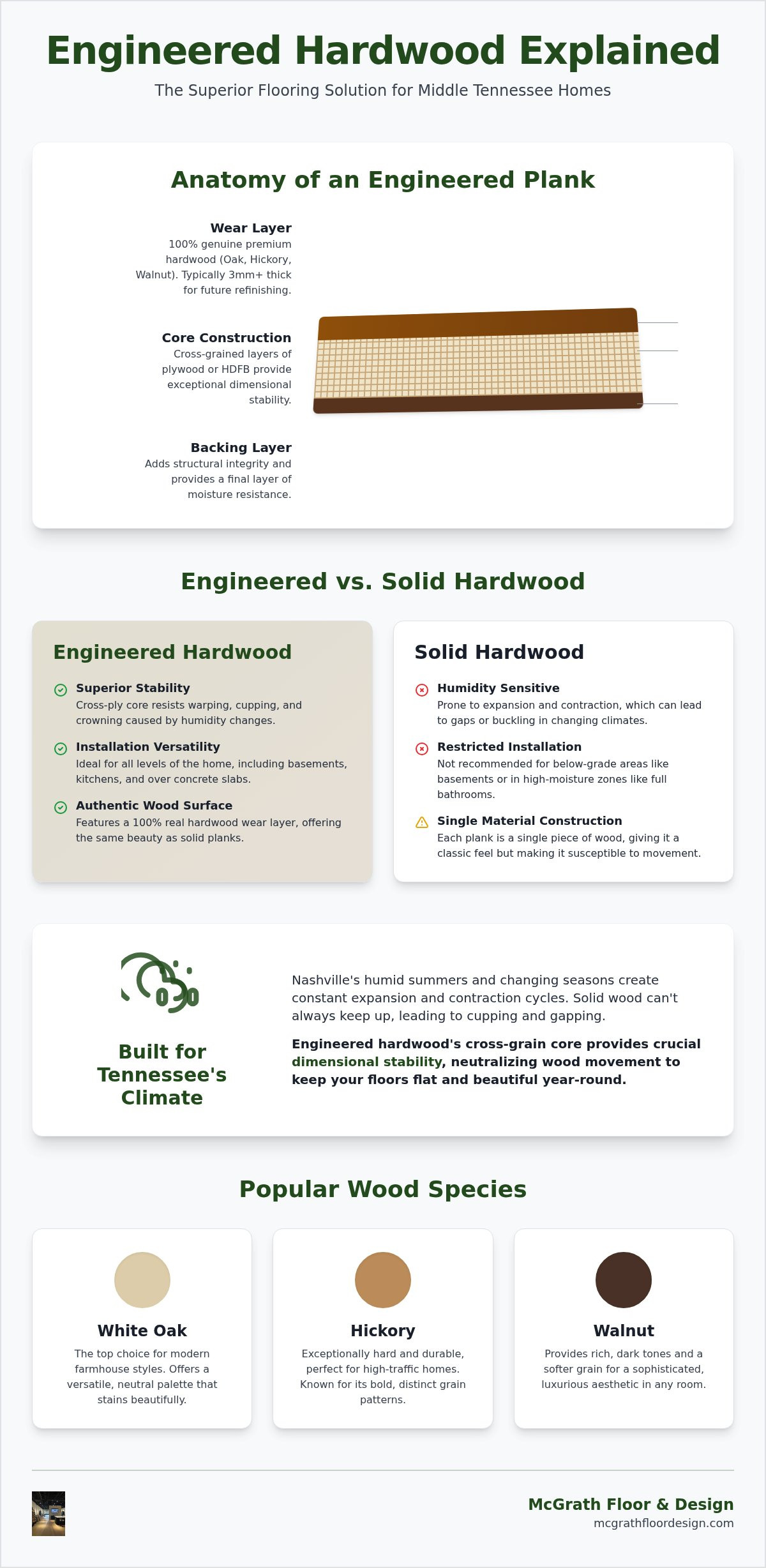
The strength of these floors lies in their internal architecture. A standard plank consists of three distinct components. First, the wear layer is the top veneer of premium hardwood. In 2026, high-quality planks typically feature a veneer of 3mm or more, which provides enough depth to allow for professional sanding and refinishing later in the floor's life. This top layer defines the aesthetic of your home, showcasing the natural character of the wood species.
Beneath the surface is the core construction. This middle section is built from cross-grained layers of plywood or high-density fiberboard. By stacking these layers in alternating directions, manufacturers create a "balanced" board that resists the natural urge of wood to expand or contract. Finally, a backing layer completes the structure. This bottom slice provides essential structural integrity and an extra level of moisture resistance, making the entire plank far more stable than its solid counterparts.
Common Wood Species Used in 2026
Choosing the right species is about balancing durability with your personal design vision. We see several favorites dominate Nashville interiors this year:
- White Oak: This remains the reigning favorite for the modern farmhouse aesthetic popular in Nashville. It offers a neutral palette that accepts stains beautifully.
- Hickory: Known for its exceptional hardness and bold grain variations, hickory is a top choice for high-traffic homes in Franklin where durability is a priority.
- Walnut: For those seeking a more sophisticated, traditional look in Brentwood, walnut provides rich, dark tones and a softer grain that exudes luxury.
Understanding these layers helps you see why this isn't a compromise. It's a deliberate engineering choice made to ensure your investment lasts for decades.
Engineered Wood Performance: Why Stability Matters in Middle Tennessee
Nashville's climate is notoriously hard on natural materials. Our humid summers and dry winters create a constant cycle of expansion and contraction for everything inside your home. This is where the technical definition of what is engineered hardwood translates into real-world performance. Unlike solid wood, which acts like a sponge that reacts to every percentage point of moisture in the air, engineered planks are designed for dimensional stability. This means the wood stays in place, resisting the urge to shift as the seasons change.
Traditional solid planks often fall victim to cupping, where the edges rise higher than the center, or crowning, where the center bulges upward. These issues occur because solid wood grows and shrinks primarily in one direction across its grain. Engineered wood solves this through its sophisticated cross-ply core. By layering wood grains at 90-degree angles, the layers pull against each other. This structural tension effectively neutralizes the movement, keeping your floors flat and your seams tight.
Handling Humidity Fluctuations
The cross-grain architecture is your best defense against warping in the Tennessee heat. This structural balance is exactly why we recommend engineered hardwood flooring installation Brentwood TN for homes with large windows or fluctuating indoor temperatures. Even the highest-quality planks require proper care before they are laid. We ensure every batch is acclimated to your home's unique environment for several days. This meticulous process ensures your floor stays beautiful regardless of the July humidity or January dry spells.
Radiant Heat and Concrete Subfloors
In many new builds across Franklin, concrete slabs are the standard foundation. Solid wood is rarely a viable option here because it cannot be glued directly to concrete without a significant risk of moisture damage and failure. Engineered hardwood excels in these environments. Its stability allows for "floating" installations where the planks click together over a specialized moisture barrier. It's also the only wood flooring compatible with modern radiant heating systems. The layers distribute heat evenly without drying out the timber to the point of cracking. If you're planning a renovation, you can speak with our design team to see how these different installation methods can transform your specific subfloor into a stunning finished room.
Engineered vs. Solid Hardwood: Debunking the Real Wood Myth
There's a persistent misconception that choosing anything other than a solid oak plank means settling for an inferior, "imitation" product. To truly understand what is engineered hardwood, you must look past the labels often applied by those who confuse it with synthetic laminate. Both solid and engineered options utilize the exact same high-quality timber for their surfaces. Whether you choose a premium hickory or a character-grade oak, the wood grain you see and feel is authentic. The primary difference lies in the architecture beneath that surface, which actually allows for greater design flexibility and environmental responsibility.
From an ecological standpoint, engineered construction is remarkably efficient. It allows manufacturers to produce significantly more flooring from a single slow-growing tree by using that timber for the visible wear layer and utilizing fast-growing or recycled wood for the stable core. This makes it a sustainable choice for environmentally conscious homeowners in Brentwood who want the luxury of genuine hardwood without the same environmental footprint as traditional solid planks.
Longevity and Refinishing Potential
A common worry is that these floors won't last as long as their solid counterparts. While a solid plank is 3/4-inch thick, you can only sand it down to the tongue and groove, which leaves only about 1/4-inch of usable wood. A premium engineered plank with a 4mm wear layer provides nearly the same amount of sandable surface. Most homeowners only refinish their floors once or twice in 30 years. When you follow proper wood floor care tips Nashville, a high-quality engineered floor can easily serve your family for 50 to 80 years. It's an heirloom-quality investment that simply handles the Tennessee humidity with more grace.
Visual and Aesthetic Differences
The visual possibilities of engineered wood often surpass solid options in modern design. Because the multi-layer planks are so stable, they can be crafted in much wider formats without the risk of warping or gapping. In 2026, we see a massive preference for 7-inch to 10-inch wide planks that create a seamless, expansive feel in open-concept Franklin homes. These wider boards showcase the natural grain patterns and knots in a way that narrow solid strips cannot. Whether you prefer a wire-brushed texture or a smooth, ultra-matte finish, modern engineered joins are precision-milled to be nearly invisible. This provides a level of sophistication and a contemporary aesthetic that traditional solid wood often struggles to match.
Installation and Versatility: Where Engineered Hardwood Excels
Versatility is the hallmark of this material. Because you now understand what is engineered hardwood—a cross-layered, stable product—it's easy to see why it thrives where solid wood often fails. It adapts to almost any subfloor, from traditional plywood in older Nashville homes to the concrete slabs common in modern Brentwood construction. When clients ask us what is engineered hardwood's greatest strength, we always point to its ability to go where traditional wood cannot, providing a seamless aesthetic throughout your entire floor plan.
Grade Level: Above, On, and Below
Grade level refers to the floor's relationship to the ground. Solid wood is strictly restricted to "above-grade" rooms because it cannot handle the moisture rising from the earth. Engineered hardwood, however, is rated for every level of your home. It's the premier basement solution. It transforms Nashville walk-out basements into luxury living spaces that feel just as warm and inviting as the main floor. In kitchens and entryways, it handles the occasional spill and the higher humidity levels found near appliances with much better resilience than traditional alternatives.
The Professional Installation Advantage
Choosing the right method is critical to the floor’s long-term performance. Depending on your home’s structure, we might recommend a glue-down, nail-down, or floating installation. A glue-down approach offers a solid feel underfoot that mimics traditional wood, while floating installations are perfect for covering existing flooring without a messy tear-out. The speed of pre-finished products means your home is back in order quickly, often without the dust and fumes of on-site sanding.
While the click-lock systems of 2026 make it look simple, DIY attempts often lead to "hollow spots" or annoying clicking sounds. These issues usually stem from uneven subfloors or improper vapor barrier placement. A professional engineered hardwood installation Franklin TN ensures that your subfloor is perfectly prepped and moisture-sealed. This protects your investment from ground moisture and guarantees a silent, sturdy walk for decades. If you're ready to see how these versatile planks fit your floor plan, schedule a personalized design consultation with our team today.
Choosing the Right Planks: The McGrath Showroom Experience
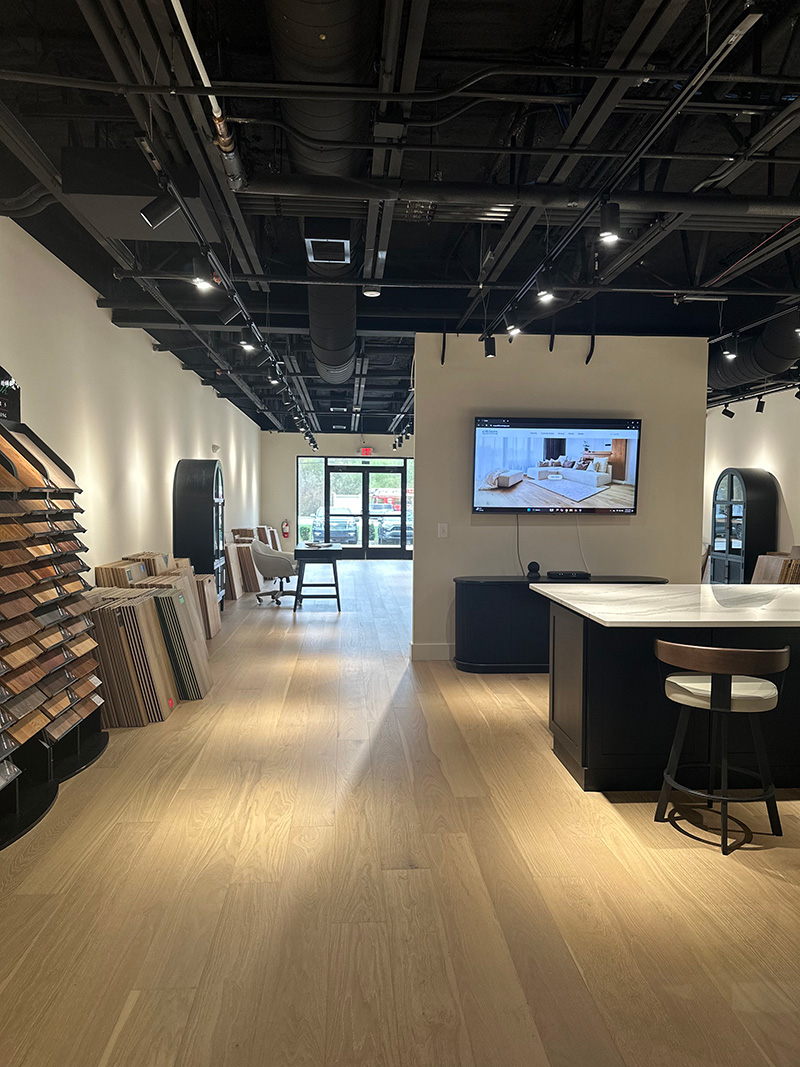
While digital research provides a solid foundation for understanding what is engineered hardwood, nothing replaces the tactile experience of a professional showroom. You need to run your hands over the wire-brushed textures and see the authentic depth of the grain under proper lighting. Online photos often fail to capture the subtle nuances of a high-quality wear layer. By visiting us, you'll see why the question of what is engineered hardwood is best answered through physical samples rather than spec sheets. At our showroom, you can compare different thicknesses side-by-side, seeing exactly how a 4mm veneer differs from thinner alternatives. This hands-on approach ensures you aren't just buying a product; you're selecting a permanent foundation for your home's future.
We believe in a "listen-first" philosophy. Every home in Brentwood or Franklin has a unique story and architectural style. Our design consultations focus on your specific vision before we ever dive into the technical specifications. As your local Nashville partner, we understand the regional aesthetics and the practical demands of our climate. We guide you through the selection process, acting as a trusted advisor to ensure the final result matches the image in your mind. This collaborative relationship is what turns a simple renovation into a stunning home transformation.
Evaluating Samples in Your Own Light
Nashville sunlight has a specific quality that shifts dramatically from morning to dusk. A plank that looks perfect in a warehouse might look entirely different in your sun-drenched breakfast nook. We encourage you to take samples home to see how the wood grain interacts with your specific windows and artificial lighting. It's also the best way to ensure your new floors harmonize with existing cabinetry and trim. Our experts help you navigate this "vision-to-reality" process, ensuring there are no surprises once the installation begins.
Expert Guidance on 2026 Flooring Trends
The trends for 2026 show a definitive move away from the cool "gray-wash" tones of previous years. Homeowners in Brentwood are now gravitating toward warm, natural oaks and soft, sun-washed finishes that feel organic and timeless. Choosing between matte, satin, and high-gloss finishes is also an essential step in setting the right mood. Matte and ultra-matte finishes are currently leading the way for their ability to hide small scratches while maintaining a sophisticated, low-maintenance look. Visit our showroom to find your perfect engineered hardwood.
Elevate Your Nashville Home with Enduring Style
Understanding what is engineered hardwood allows you to invest in your living space with complete clarity. You now recognize that these planks offer the authentic warmth of premium White Oak and Hickory while providing the structural stability needed for our humid Middle Tennessee climate. Whether you're transforming a walk-out basement or refreshing a modern kitchen, this material provides a level of versatility that traditional solid wood simply cannot match. It's a precision-engineered solution that ensures your floors remain as beautiful as the day they were installed.
As a family-owned business with over 50 years of local experience, we take immense pride in guiding our neighbors through every step of their home transformation. Our NWFA-trained installation experts are dedicated to ensuring your vision becomes a reality with meticulous craftsmanship and care. We invite you to experience our curated selection in person and see the difference that professional guidance makes. Schedule your personalized flooring consultation at our Nashville showroom today. We look forward to helping you create a space that you and your family will cherish for decades.
Frequently Asked Questions
Is engineered hardwood real wood?
Yes, engineered hardwood is 100% real wood from the surface to the core. It consists of a genuine hardwood veneer on top of a stable, multi-layered wood core. This construction is exactly what is engineered hardwood and distinguishes it from plastic-based laminate or vinyl. You get the same natural grain and warmth as solid planks because the surface you walk on is harvested from real timber like oak or hickory.
Can engineered hardwood floors be refinished?
Most high-quality engineered floors can be refinished at least once or twice during their lifespan. The ability to sand the surface depends entirely on the thickness of the top wear layer. Planks with a 3mm to 4mm veneer provide enough depth for a professional sanding and resealing process. It's vital to consult with an expert before starting to ensure your specific floor has the necessary thickness to handle the equipment safely.
How long do engineered hardwood floors last?
A premium engineered floor can last between 30 and 80 years when maintained correctly. The total lifespan depends heavily on the quality of the wear layer and the environmental conditions in your home. Because these floors handle humidity fluctuations so well, they often maintain their structural integrity longer than solid wood in Middle Tennessee. Regular cleaning and occasional professional maintenance will ensure your investment serves your family for several generations without needing replacement.
Is engineered hardwood better than solid hardwood for Nashville homes?
Engineered wood is often the superior choice for Middle Tennessee due to our intense seasonal humidity. Solid wood planks are prone to cupping and gapping as moisture levels shift throughout the year. Understanding what is engineered hardwood's structural benefit helps you see why the cross-ply construction provides the dimensional stability needed to resist this movement. This makes it a more reliable option for homes in Nashville where foundations are often built on concrete.
Can I install engineered hardwood in my kitchen or bathroom?
Kitchens are an excellent location for engineered wood because the material handles temperature changes and occasional spills better than solid wood. However, we generally advise against installation in full bathrooms where standing water and high steam are constant. For half-baths or powder rooms, it remains a beautiful and viable option. Always ensure a professional installer applies the correct moisture barriers to protect your subfloor from potential leaks or heavy condensation issues.
Does engineered hardwood increase home value in Tennessee?
Real wood floors are a significant selling point in the Tennessee real estate market and consistently increase a home's resale value. Potential buyers in Brentwood and Franklin look for the timeless appeal of genuine timber. Since engineered wood is 100% real wood, it provides the same return on investment as solid planks. Its reputation for durability in our local climate often makes it even more attractive to informed buyers who worry about warping.
How do I clean and maintain engineered hardwood floors?
Maintaining these floors is simple if you use the right tools and avoid harsh chemicals. Use a soft microfiber mop and a cleaning solution specifically formulated for hardwood finishes. Avoid using steam mops or excessive water, as moisture can eventually seep into the seams and damage the core. Placing rugs in high-traffic entryways and using felt pads under furniture will prevent surface scratches. Regular sweeping keeps abrasive grit from dulling the factory finish.
What is the average cost of engineered hardwood in Brentwood?
The total cost depends on your chosen wood species, the thickness of the wear layer, and the specific installation method required. Premium options like wide-plank White Oak typically fall at the higher end of the spectrum due to their durability and aesthetic appeal. Professional installation in Brentwood also factors in the cost of subfloor preparation and moisture barriers. We recommend a showroom consultation to review samples and receive an accurate estimate for your specific square footage.


