

You just spent a quiet Saturday morning watching the sunlight hit your Nashville living room, only to notice a strange, cloudy film where you last mopped and a few new scratches from the dog. It's a common frustration for homeowners who value the warmth and character of natural timber. You want your home to reflect the care you put into it, yet the wrong cleaner or a bit of grit can quickly dull that professional finish.
We understand that your flooring is a significant investment in your home's beauty and value. Finding the right wood floor care tips Nashville residents can actually rely on is essential because our Middle Tennessee climate presents unique challenges. Between the humid summers and the dry winters that cause unsightly gaps, your floors need a specific strategy to stay resilient. Maintaining that luster requires more than just a mop; it requires a partnership with the environment inside your home.
This guide provides a clear, professional roadmap to keep your hardwoods looking spectacular year-round. We'll walk you through a simple cleaning schedule, help you choose the right products with confidence, and explain how to manage indoor humidity to prevent seasonal damage. You will gain the expert knowledge needed to protect your floors for decades to come.
Key Takeaways
- Discover why the Middle Tennessee climate requires a specific approach and get wood floor care tips Nashville families use to prevent seasonal damage.
- Transition to a microfiber cleaning routine that removes grit and dust without the abrasive risks of traditional cotton mops.
- Protect your floor's polyurethane finish by avoiding acidic "natural" cleaners like vinegar that can eat away at the protective topcoat.
- Maintain a consistent indoor humidity level between 35% and 55% to stop your hardwood from gapping during dry winters or swelling in the summer.
- Learn how a professional screen and coat can refresh your floors' appearance and significantly extend the time between full refinishing projects.
Essential Wood Floor Care Tips for Nashville Homeowners
Professional wood floor care is much more than an occasional pass with a broom. We define true care as a holistic strategy that combines meticulous cleaning, physical protection, and precise environmental control. In Middle Tennessee, your flooring isn't just a surface; it's a living material that reacts to the world around it. The primary goal of your maintenance routine is to preserve the wear layer and maintain the integrity of the finish. By keeping this protective barrier intact, you ensure the wood beneath remains shielded from moisture, stains, and the friction of daily life.
The Nashville Wood Care Standard is a disciplined balance of year-round moisture control and the aggressive removal of abrasive grit.
Understanding Middle Tennessee’s Impact on Hardwood
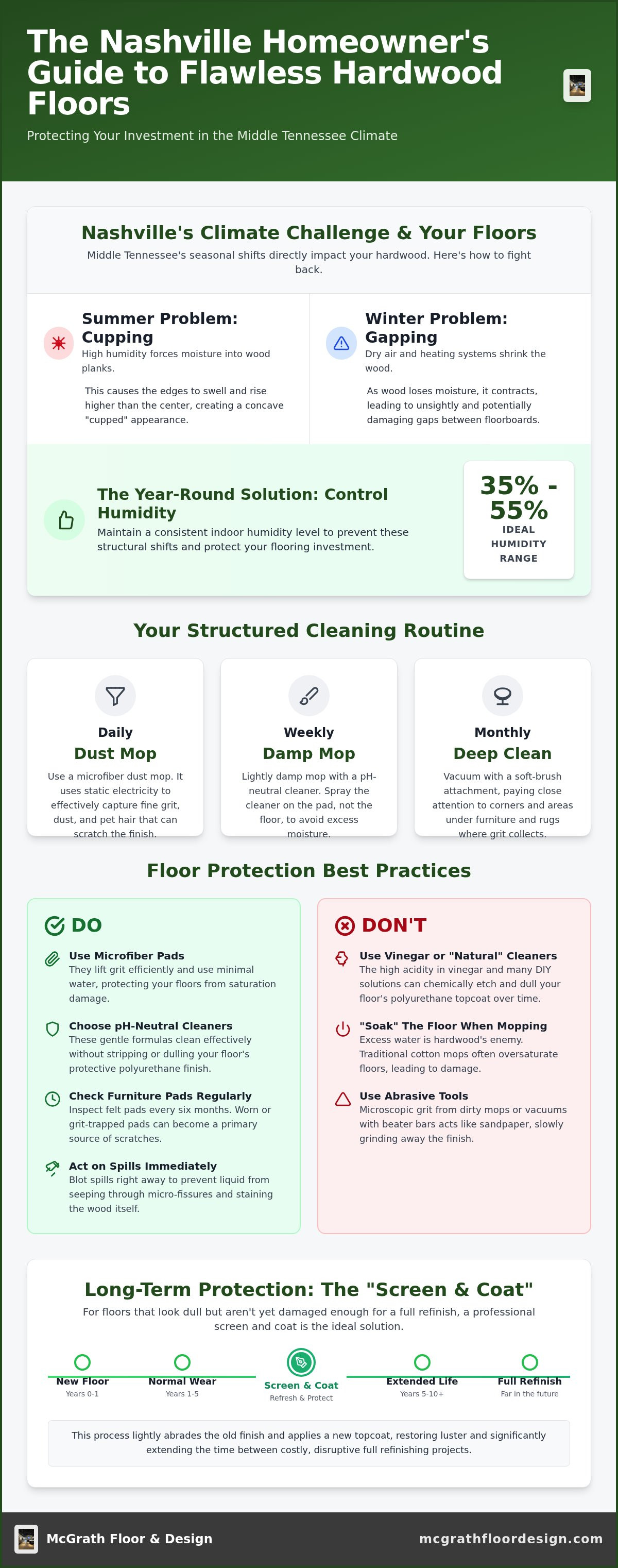
Nashville floors face environmental pressures that differ significantly from other regions. Our high summer humidity can force moisture into solid wood planks, causing the edges to rise higher than the center in a process known as cupping. When winter arrives, the air turns dry and heating systems kick on, causing the wood to lose that moisture and shrink. This often leads to unsightly gaps between your floorboards. Maintaining a consistent indoor climate is the best way to prevent these structural shifts. This level of environmental awareness is especially important for engineered hardwood flooring installation in Brentwood TN, where preserving the bond between the wear layer and the core is essential for long term durability.
The Golden Rules of Surface Protection
Preventative maintenance starts with stopping damage before it begins. Dry cleaning, such as sweeping or using a specialized vacuum, is actually more important than wet cleaning for your daily routine. Microscopic grit acts like sandpaper under your feet, slowly grinding away the finish every time you walk across the room. While you can look to general floor cleaning guidelines for basic methods, Nashville homes require a more proactive approach to physical barriers.
Check the felt pads on your furniture legs every six months. These pads eventually trap grit or wear thin, turning a protective tool into a source of scratches. You should also identify your floor finish before applying any liquid products. Most modern Nashville homes feature polyurethane, which creates a hard plastic-like shield on top of the wood. Older or specialty floors might have an oil finish that penetrates the grain. Using a cleaner designed for polyurethane on an oil-finished floor can cause a dull, sticky residue that is difficult to remove without professional help. These specific wood floor care tips Nashville homeowners follow can be the difference between a floor that lasts twenty years and one that needs refinishing in five.
The Best Routine for Cleaning Wood Floors Without Damage
Consistency is the foundation of lasting beauty. A well-structured cleaning routine acts as a shield for your home, preventing the slow accumulation of damage that leads to premature refinishing. We recommend a tiered approach to maintenance that fits naturally into your lifestyle. By breaking tasks into daily, weekly, and monthly goals, you can manage your investment without it feeling like an overwhelming burden. These wood floor care tips Nashville homeowners swear by focus on removing the primary catalysts of wear: friction and moisture.
- Daily: Use a micro-fiber dust mop to capture fine grit and pet hair.
- Weekly: Perform a light damp mop with a pH-neutral cleaner to remove sticky residues.
- Monthly: Vacuum with a soft-brush attachment in hard-to-reach corners and under area rugs.
Switching to micro-fiber is one of the most impactful changes you can make. Traditional cotton string mops are heavy and hold excessive water, which often leads to saturating the wood. Micro-fiber pads use static electricity to lift dust and require very little moisture to be effective. Remember the "mist, don't soak" rule: spray your cleaning solution onto the mop pad rather than directly onto the floor. If a spill occurs, act immediately. Liquid left to sit can find its way through micro-fissures in the finish, leading to permanent staining through the timber. Implementing these wood floor care tips Nashville residents trust will keep your surfaces gleaming for years.
Daily Debris Removal: Tools and Techniques
An electric broom or a dedicated micro-fiber dust mop is significantly safer than a standard upright vacuum. Most vacuums feature a rotating beater bar designed to agitate carpet fibers. On a hardwood surface, that same bar can leave rhythmic dents or fine scratches that dull the finish over time. Daily sweeping is your first line of defense against the "sandpaper effect." In Nashville, fine grit from driveways and local soil can hitch a ride on shoes and pets, turning every footstep into an abrasive force if not removed promptly.
Safe Mopping Practices for Sealed Wood
Standing water remains the number one enemy of high-quality hardwood flooring. To ensure a streak-free and safe clean, always mop in the direction of the wood grain. This technique helps pull dirt out of the small gaps between planks rather than pushing it in. After your damp pass, follow up with a clean, dry micro-fiber pad to buff the surface. This "dry-mopping" step ensures no residual moisture lingers. Understanding how humidity affects wood floors is vital, and preventing surface water from seeping into the grain is a key part of that balance. If you ever have questions about the right tools for your specific installation, the experts at McGrath Floor & Design can help you select the perfect maintenance kit.
Can You Use Vinegar on Wood Floors? Debunking the Myth
One of the most persistent myths in home maintenance is that white vinegar is a safe, "green" alternative for cleaning timber. While we appreciate the desire for natural solutions, vinegar is actually one of the most damaging substances you can apply to a modern finish. These wood floor care tips Nashville residents should follow prioritize the long-term health of the polyurethane over short-term savings. Vinegar is essentially acetic acid; while it's a great degreaser for your stove, it's a destructive force for your floors.
Why Vinegar and Water is Risky for Modern Finishes
The acid in vinegar works by breaking down chemical bonds. On a wood floor, it slowly dissolves the topcoat that protects the wood grain. This process leads to etching, a condition where the finish becomes dull, cloudy, and eventually rough to the touch. No amount of buffing will bring back the shine once the chemical structure of the polyurethane is compromised. We always point our clients toward the NWFA maintenance guidelines, which clarify that pH-neutral cleaners are the only safe option for routine care. Beyond the visual damage, using acidic cleaners can void your flooring warranty. Protecting your investment means staying away from DIY kitchen concoctions that weren't designed for high-end wood surfaces.
Identifying Safe Cleaners for Hardwood and Engineered Wood
Identifying the right product is straightforward once you know what to look for on the label. Always choose a "pH-neutral" and "no-rinse" formula. These cleaners are engineered to lift dirt and oils without leaving a film or attacking the seal. We strongly advise against using oil soaps or wax-based products commonly found in grocery aisles. These cleaners leave a sticky residue that traps Nashville dust and grit, eventually turning your floor into a magnet for grime that requires professional intervention to strip away. For professional-grade solutions, visit our flooring installation Franklin TN showroom to see the specific products our master craftsmen recommend. Investing in the right chemistry today prevents a costly and premature refinishing project tomorrow.
Managing Humidity and Seasonal Shifts in Franklin & Brentwood
Nashville's climate is notoriously demanding on natural materials. To protect your investment, you must manage the "Relative Humidity (RH) Sweet Spot," which for Tennessee homes is between 35% and 55%. When the air falls outside this range, your wood floors will react physically. Implementing the right wood floor care tips Nashville homeowners rely on starts with understanding your HVAC system. During our sweltering summers, the air conditioner acts as a powerful dehumidifier. In the winter, however, your heating system becomes a "moisture-sucker," pulling essential hydration from the wood fibers and causing them to shrink.
Installing a whole-home humidifier is one of the most effective ways to preserve a solid wood investment. It provides a consistent environment that prevents the wood from experiencing extreme seasonal stress. If you're renovating a basement or an area prone to moisture fluctuations, you might consider the resilience of laminate flooring. This material offers the look of wood with a construction that handles Tennessee's humidity swings with significantly less movement.
Preventing Gaps and Buckling in the Tennessee Climate
Monitoring your home's air quality is simple with a basic tool called a hygrometer. This device allows you to track RH levels in real time so you can adjust your thermostat or humidifier accordingly. Remember that wood is a natural product that "breathes." Seeing minor gaps during a dry January is a normal part of the wood's lifecycle and usually resolves itself as the weather warms. However, you should watch for "cupping," where the edges of the planks curve upward. This often indicates a serious moisture issue or a leak rather than a simple humidity shift and requires immediate attention.
Entrance Strategies for High-Traffic Nashville Homes
Protecting your floors also means keeping the outside environment from ever reaching your hallways. We recommend a "Three-Mat System" for every entrance to manage the grit and debris common in Middle Tennessee. Start with a heavy-duty scraper mat outside, followed by an absorbent mat just inside the door, and finish with a designated "no-shoes" zone. This is vital for managing Nashville’s infamous red clay. If this clay dries on your floor, it becomes an abrasive paste that embeds itself into the grain. These wood floor care tips Nashville families use also include choosing the right rug pads. Always use breathable pads, as non-breathable rubber backings can trap moisture against the wood and lead to permanent discoloration.
If you're seeing signs of moisture stress or need advice on the best materials for your home, contact the experts at McGrath Floor & Design for professional guidance.
Professional Maintenance and Long-Term Protection
Even the most disciplined cleaning routine eventually yields to the friction of daily life. Professional intervention is the bridge between a floor that looks "fine" and one that remains a stunning centerpiece of your home. It's important to distinguish between routine maintenance and restorative work. A professional deep clean uses specialized equipment to extract embedded dirt from the wood grain that standard mopping simply can't reach. For floors that have lost their luster but aren't physically damaged, a "screen and coat" is the ideal solution. This process involves lightly abrading the existing top layer and applying a fresh coat of polyurethane to restore the original sheen.
In a busy Nashville household, a high-quality hardwood finish typically provides peak protection for three to five years before it benefits from a professional refresh. By scheduling these periodic updates, you effectively prevent the need for a full sand and refinish. This is a significant advantage, as sanding is a more intensive, dusty process that removes a portion of the wood's wear layer. these wood floor care tips Nashville homeowners use to extend the life of their floors rely on proactive timing rather than waiting for visible damage to occur.
Recognizing When Your Floors Need More Than a Mop
You can easily assess your floor's health with the "Water Bead Test." Place a single drop of water on a high-traffic area where the finish looks thin. If the water beads up on the surface, your protective seal is still performing its job. If the water soaks into the grain and darkens the wood, the finish has been compromised and moisture is reaching the timber. You should also watch for "graying" in entryways or kitchens. This change in color indicates that the wood fibers are oxidizing because the finish has worn away completely. Surface scratches are often manageable with a screen and coat, but deep gouges that penetrate the wood itself may require more localized repair.
The McGrath Advantage: Expert Guidance in Middle Tennessee
Choosing a local partner who understands the specific nuances of our climate makes future care much easier. At McGrath Floor & Design, our 50 years of combined industry experience allows us to provide guidance tailored to the unique architectural styles found in Nashville and Brentwood. We curate our selection of materials based on how they perform in the local humidity, ensuring your installation is built for longevity from day one. We invite you to visit our showroom for a personalized care consultation. Our team is ready to help you assess your floor's current health and develop a maintenance plan that protects your investment for the next generation.
Preserving the Warmth of Your Nashville Home
Your hardwood floors are more than just a surface. They are the backdrop to your family's life and a significant part of your property's value. By mastering these wood floor care tips Nashville homeowners can ensure their floors remain a stunning asset for decades. Success lies in the small details, like maintaining consistent humidity levels and choosing pH-neutral cleaners over acidic kitchen myths. Consistent care combined with professional monitoring will keep your finish resilient against the unique challenges of the Middle Tennessee environment.
Consulting with a seasoned expert makes all the difference in the long-term health of your flooring. Our team brings over 50 years of industry experience to every project, offering premium materials specifically selected to thrive in the Tennessee climate. With our professional, certified installation teams, you can trust that your home is in capable hands. Protect your home’s beauty—consult the experts at McGrath Floor & Design today. We look forward to helping you maintain a space that brings you joy every time you walk through the door.
Frequently Asked Questions
Is it okay to use a steam mop on hardwood floors?
Steam mops are not safe for hardwood floors. The high-pressure steam forces moisture deep into the wood grain and between the planks. This often leads to cupping, warping, or even the delamination of engineered layers. While many manufacturers claim their mops are safe, the heat can also degrade the protective finish over time. Stick to a slightly damp micro-fiber mop and a pH-neutral cleaner to ensure your investment remains structurally sound.
How often should I professionally clean my wood floors in Nashville?
We recommend a professional screen and coat every three to five years depending on your household's activity level. Homes with large pets or frequent guests may benefit from an annual professional deep clean to extract hidden grit. These wood floor care tips Nashville families follow ensure that the protective wear layer stays thick enough to prevent permanent damage. Regular professional checkups help you avoid the more invasive and expensive process of a full sand and refinish.
Can I use dish soap and water to clean my wood floors?
You should avoid using dish soap and water on your hardwoods. Dish soap is designed to break down grease, which means it will quickly dull the chemical structure of your polyurethane finish. It also leaves a sticky residue that acts as a magnet for dust and pet hair. This buildup creates a cloudy appearance that's difficult to remove. Always use a dedicated, pH-neutral wood cleaner that evaporates quickly without leaving any film behind.
What is the best way to remove pet urine smells from hardwood?
The most effective way to remove pet urine smells is to use an enzymatic cleaner specifically formulated for finished wood. Standard household cleaners often just mask the odor rather than breaking down the uric acid crystals. You must blot the liquid immediately to prevent it from soaking into the grain. If the urine has already caused a dark stain, it often indicates that the moisture has penetrated the finish, which may require professional repair.
Why are my wood floors turning cloudy or milky?
A cloudy or milky appearance is almost always the result of product buildup or trapped moisture. If you've used oil soaps, waxes, or "mop and shine" products, they create layers of residue that trap dirt. In some cases, high humidity can trap moisture under the finish during the application process, leading to a hazy look. To fix this, you often need a professional deep clean or a chemical stripping process to remove the old residue.
Do I need to wax my modern hardwood floors?
You don't need to wax modern hardwood floors finished with polyurethane. In fact, applying wax to a surface-sealed floor is counterproductive. The wax won't penetrate the finish and will instead create a slippery, dangerous film that attracts grime. Once a floor has been waxed, it becomes nearly impossible to apply a fresh coat of polyurethane later because the new finish won't bond to the wax. Stick to routine cleaning with approved products instead.
How do I fix small scratches in my floor finish without refinishing?
You can often hide small surface scratches using a wood touch-up pen that matches your floor's stain color. For very fine scratches in the polyurethane layer, a specialized floor restorer can help blend the marks. However, if the scratches are deep enough to catch your fingernail, they may have penetrated the protective seal. In these cases, a professional screen and coat is the best way to restore the surface without the need for a full refinish.
What humidity level should I keep my Nashville home at for my floors?
You should maintain a relative humidity level between 35% and 55% in your home. These wood floor care tips Nashville experts provide are essential for managing the dramatic seasonal shifts in Middle Tennessee. Keeping your air within this range prevents the wood from shrinking and gapping during the dry winters or swelling and cupping during humid summers. Use a hygrometer to monitor your indoor air and adjust your HVAC or humidifier as needed for stability.


