
In Middle Tennessee, your flooring isn't just a design choice; it's a living material that must coexist with our region's intense humidity and seasonal shifts. Many homeowners believe that choosing a premium product is enough to guarantee longevity, but the reality is that even the finest planks will fail if the environment isn't mastered first. You likely want a home that feels both elegant and enduring, yet the fear of warping, buckling, or hiring an uncertified installer who cuts corners can make the process feel daunting.
We understand that your home is your greatest investment. This guide outlines the professional framework for engineered hardwood installation in Franklin, TN, designed to protect that investment against the unique challenges of our local climate. By following a meticulous, "listen-first" approach rooted in over 50 years of industry experience, we ensure your floors add lasting resale value without the frustration of squeaks or gaps. You'll discover the essential steps of subfloor assessment, the science of proper acclimation, and why adhering to NWFA certified standards is the only way to transform your vision into a durable, beautiful reality.
Key Takeaways
- Understand why engineered hardwood’s structural design makes it the premier choice for resisting the warping and buckling common in Middle Tennessee’s humid climate.
- Gain insight into the non-negotiable preparation steps, including moisture testing and proper acclimation, required for a successful engineered hardwood installation in Franklin, TN.
- Determine the best installation method for your specific subfloor to ensure maximum structural stability and a silent, high-quality finish.
- Explore the professional layout planning techniques that master craftsmen use to create a seamless visual flow while accommodating necessary expansion gaps.
- See how NWFA certified standards and a personalized showroom experience work together to protect your investment and increase your home's resale value.
Why Engineered Hardwood is the Premier Choice for Franklin Homes
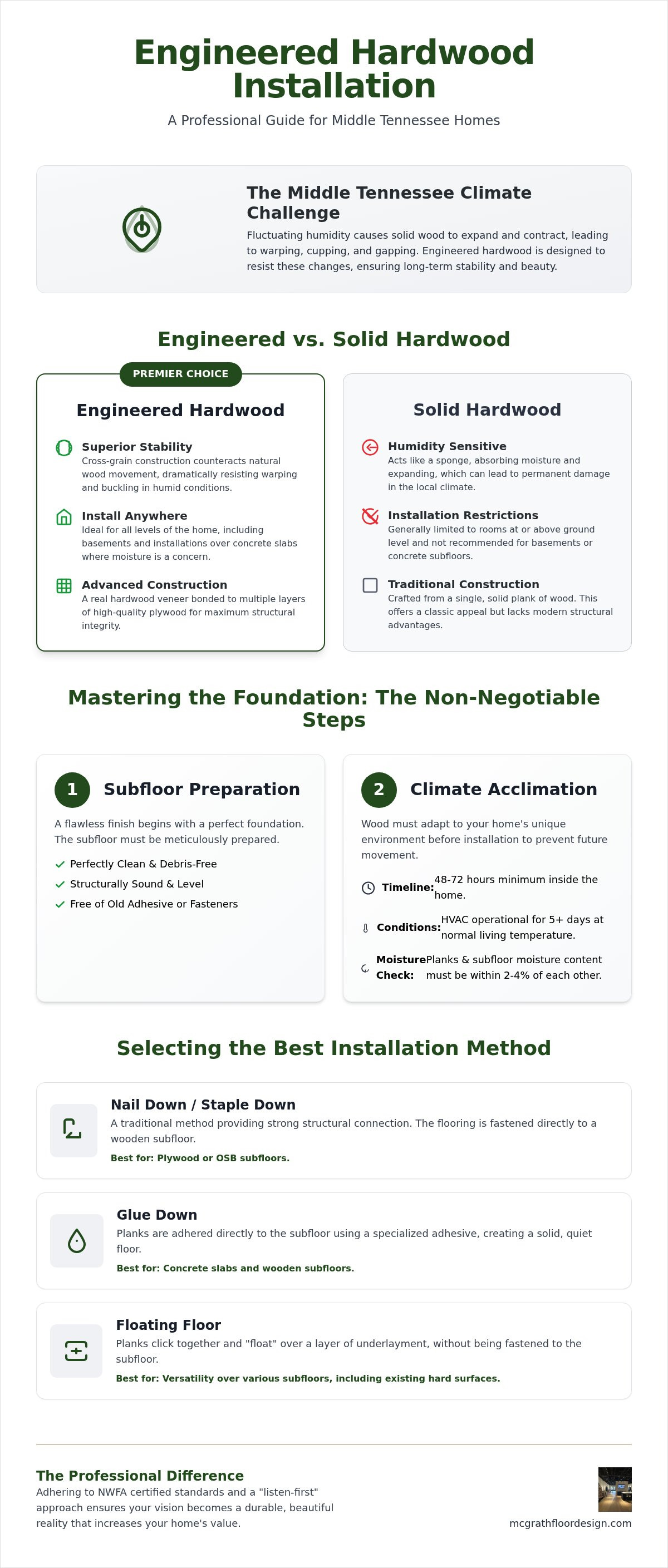
Engineered hardwood isn't just a modern alternative to solid wood; it's a sophisticated structural advancement designed for performance. It consists of a genuine hardwood veneer bonded to multiple layers of high-quality plywood or composite material. This layered approach creates a floor that looks identical to solid oak or hickory but behaves with much greater stability. For homeowners considering engineered hardwood installation in Franklin, TN, this structural integrity is the difference between a floor that lasts decades and one that fails after the first humid summer. It's an investment in both aesthetics and long-term property value.
Middle Tennessee is famous for its fluctuating humidity levels. Solid wood planks act like sponges, expanding in the summer heat and shrinking during dry winter months. This cycle often leads to gapping, cupping, or even structural failure. Engineered planks use cross-grain construction to counteract these forces, providing a floor that stays flat and beautiful regardless of the weather outside. It delivers the timeless look of traditional wood with the resilience required for our local environment.
Engineered vs. Solid Hardwood in the Nashville Climate
The core of an engineered plank is built with layers oriented in opposite directions. This cross-grain design restricts the natural movement of the wood. It's particularly vital for Brentwood basements or homes built on concrete slabs, where moisture levels are typically higher than in traditional crawl spaces. While solid wood is often restricted to above-grade rooms, engineered hardwood thrives throughout the entire home. Modern premium planks also offer thick wear layers, allowing for refinishing similar to solid wood, ensuring your floors can be refreshed as styles evolve over time.
The Benefits of Choosing Local Expertise
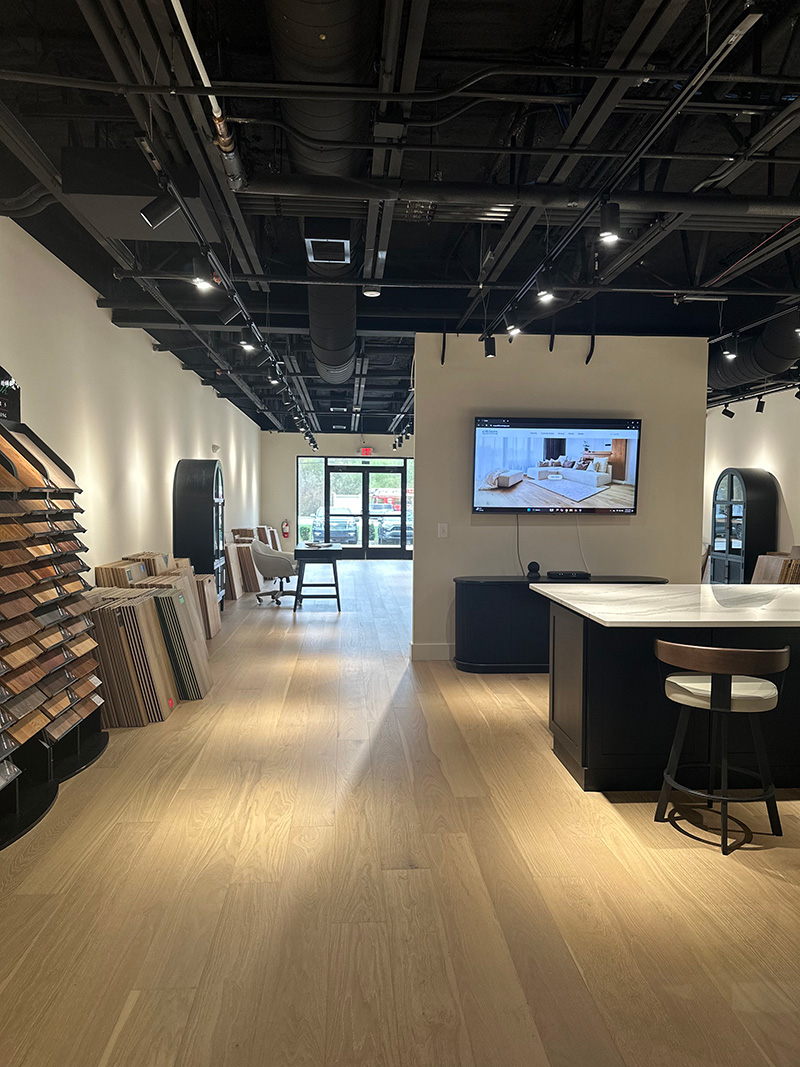
Selecting the right material is only half the battle. Many homeowners fall into the "Big Box" trap, purchasing mass-produced products that aren't rated for our specific environmental conditions. A local showroom experience allows you to see how different textures and species complement Franklin's unique architecture, from historic downtown renovations to modern farmhouse builds. We focus on a "listen-first" philosophy to ensure the material matches your lifestyle and the specific subfloor conditions of your home. To understand how these choices fit into the broader market, you can explore our Hardwood Flooring in Nashville: 2026 Homeowner’s Guide for deeper insights into local trends. Expertly managed engineered hardwood installation in Franklin, TN provides the peace of mind that comes from knowing your floors were chosen and laid by those who understand our soil and our skies.
Mastering the Foundation: Subfloor Preparation and Acclimation
A master's guide focuses on what's underneath. Before the first plank of your engineered hardwood installation Franklin TN begins, the environment must be controlled. Squeaks, gaps, and pops often stem from a subfloor that wasn't properly prepped. It's not just about sweeping the surface; it's about structural readiness. Every bit of debris, from drywall dust to old adhesive, must be removed to ensure the new planks bond or sit perfectly flush. If the foundation is flawed, the finished floor will eventually reflect those imperfections.
Acclimation is the non-negotiable "Golden Rule." Wood is a natural material that responds to its surroundings. If you rush the process, you risk the wood expanding or contracting too quickly once it's fastened down. An installer should use a professional moisture meter to compare the wood's moisture content to the subfloor. A difference of more than 2% to 4%, depending on the plank width, usually means it's not ready. This step ensures the wood has reached its equilibrium moisture content within your specific living space, preventing future buckling.
The Acclimation Timeline in Middle Tennessee
Most manufacturers suggest 48 to 72 hours, but local humidity can extend this. During your 2026 installation, your HVAC system must be operational and set to typical living conditions for at least five days prior. Don't leave the wood in a garage or a room without climate control. You'll know the wood is ready when the moisture readings stabilize within the manufacturer's specified range across multiple planks in different boxes. If you're unsure about your home's readiness, visiting a professional showroom can help you understand the specific needs of your chosen material.
Subfloor Leveling and Moisture Barriers
Concrete slabs require a different approach than plywood. High spots must be ground down, and low spots filled with high-quality self-leveling compounds. A flat floor is a quiet floor. In many Franklin homes, especially older farmhouses, checking for structural deflection is vital. During an engineered hardwood installation Franklin TN, we also utilize moisture barriers or vapor retarders to prevent ground moisture from seeping into the planks. This layer is your insurance policy against the hidden dampness that often plagues Middle Tennessee foundations. Without this barrier, even the best engineered wood can succumb to the constant pressure of rising vapor.
How to Lay Engineered Hardwood: A Step-by-Step Professional Framework
Once the foundation is prepared and the moisture levels are verified, the transformation begins. This phase of engineered hardwood installation in Franklin, TN requires a blend of mathematical precision and artistic vision. It's where the raw materials finally start to look like a home. Laying the planks is more than just a technical task; it's the moment your design vision takes physical form. We approach this step with a focus on creating a cohesive visual experience that respects the unique architecture of your living space.
The Layout and Racking Process
The secret to a stunning floor often lies in "racking." This is the process of dry-laying several rows of planks across the subfloor before any fastening occurs. By racking the floor, a master craftsman can inspect the grain patterns and natural color variations, preventing unsightly clusters where too many dark or light boards end up in one area. We also measure the room's total width to ensure the final row isn't a tiny, awkward sliver. This careful planning ensures symmetry and a visual flow that complements the light and dimensions of your Franklin home. It's a proactive way to ensure the floor looks as good in reality as it did in your imagination.
Cutting and Fitting the Planks
Precision cutting is where true quality becomes visible. During an engineered hardwood installation in Franklin, TN, we prioritize seamless transitions. This includes undercutting door jambs so the floor slides underneath, rather than cutting the wood to fit around the trim. This technique creates a clean, professional finish that DIY projects often lack. However, the most critical technical detail is the expansion gap. We maintain a strict 1/2-inch gap around the entire perimeter of the room. In our humid Middle Tennessee climate, this gap is essential; it allows the floor to breathe and move slightly without the risk of buckling or peaking.
Structural strength is also built into the pattern. We stagger the end joints of the planks by at least six inches from the joints in the previous row. This creates a "stair-step" effect that locks the floor together, providing maximum stability and preventing the boards from shifting over time. Once the field is laid, we install the final transitions and baseboards to hide the expansion gaps. The process concludes with a collaborative walk-through, where we apply our "listen-first" mentality to ensure every detail meets your expectations. Your new floor is now ready for its first steps, offering a silent, durable surface that adds immediate value to your property.
Nail, Glue, or Float? Selecting the Best Installation Method
Selecting the right attachment method for your engineered hardwood installation in Franklin, TN is a decision that dictates the "feel" and longevity of your floor. While the visual beauty is what you see, the method of attachment is what you experience with every step. The choice isn't arbitrary; it's dictated by your home's unique anatomy. A master craftsman evaluates the subfloor, the expected foot traffic, and the specific material chosen before recommending a path forward. We believe in transparency, ensuring you understand why one method might be superior for your specific Brentwood renovation.
When to Glue vs. When to Nail
If your home has a traditional plywood subfloor, the nail-down method is often the gold standard. It uses specialized pneumatic flooring nailers to drive cleats through the tongue of the plank into the subfloor. This creates a mechanical bond that is incredibly secure and time-tested. However, many modern homes in Middle Tennessee are built on concrete slabs. For these foundations, the glue-down method provides maximum stability. A high-quality adhesive creates a permanent bond that eliminates the "hollow" sound sometimes associated with engineered materials. We prioritize low-VOC adhesives to ensure your indoor air quality remains pristine after the project is complete. This method makes engineered planks feel just as substantial and quiet as solid oak. It requires a meticulous hand to ensure the adhesive is spread evenly and the planks are seated perfectly without any "bounce."
Floating Floors: Pros and Cons
The floating method involves clicking the planks together over an underlayment without actually fastening them to the subfloor. It's often a fast way to complete an engineered hardwood installation in Franklin, TN, but it comes with trade-offs. While it's excellent for specific renovation scenarios where you want to preserve the existing floor underneath, it can sometimes feel less permanent. If you choose this path, the quality of your underlayment is critical. A premium pad provides the necessary sound dampening and moisture protection that a floating floor requires to succeed. For a deeper dive into how these methods apply to local luxury properties, see our Engineered Hardwood Flooring Installation in Brentwood, TN: The 2026 Homeowner’s Guide. Every home in the Franklin and Brentwood area has its own set of challenges, from historic settling to modern slab moisture. Choosing the right method requires a "listen-first" approach to both the homeowner's needs and the building's requirements. If you aren't sure which path is right for your space, visit our local showroom to speak with a master craftsman who can guide your decision.
Elevating Your Franklin Home with McGrath’s Precision Installation
Choosing the right material and method is the science; executing the project with care is the art. For over 50 years, we've refined a "listen-first" philosophy that ensures every engineered hardwood installation in Franklin, TN reflects the homeowner's unique vision. We don't just lay planks. We act as dedicated guides, using our historical knowledge of Middle Tennessee homes to navigate the technical challenges of humidity and subfloor stability. This commitment to excellence is what transforms a simple renovation into a lasting legacy for your property. It's about pride in craftsmanship that's earned through decades of meticulous work in our local community.
The Showroom to Installation Journey
Quality begins long before the first tool is lifted. Our showroom experience is designed to be the essential first step for Franklin and Brentwood owners. It's a space where you can touch the textures, see the grain under natural light, and discuss your Brentwood aesthetic with a master craftsman. We provide professional measurements and transparent project planning to eliminate surprises and ensure the vision-to-reality transition is seamless. To see how we've set the standard for local projects, explore our guide on MC Flooring: Premier Flooring Installation in Franklin, TN. We also prioritize a clean, dust-controlled environment, using advanced equipment to protect your home’s air quality and existing furnishings throughout the process.
Protecting Your Investment Post-Installation
A beautiful floor is a significant investment, and we're committed to its long-term health. Our team adheres to strict NWFA certified installation standards, which are often overlooked by uncertified installers who cut corners. These standards ensure your engineered hardwood installation in Franklin, TN is structurally sound and prepared to handle the environmental stresses of our region. Once the project is complete, we don't just walk away. We provide the guidance you need to maintain that luster against the grit and moisture of Tennessee life. You can find our specific recommendations in our Wood Floor Care Tips Nashville: Protecting Your Hardwood Investment. Our relationship with you is a partnership, focused on ensuring your floors remain a source of aesthetic joy and increased resale value for decades to come.
Build a Foundation That Lasts for Generations
Mastering your home's flooring requires more than just selecting a beautiful species. It's about understanding how wood behaves in our local humidity and ensuring every plank is supported by a perfectly leveled foundation. By prioritizing meticulous acclimation and adhering to NWFA-standard installation practices, you protect your investment from the common pitfalls of warping or buckling. Whether your project demands the structural bond of a glue-down method or the traditional security of a nail-down application, precision is the only way to guarantee a floor that remains silent and stable.
With over 50 years of combined experience, we've specialized in Middle Tennessee environments to help homeowners turn aspirational designs into durable realities. We're here to act as your dedicated guide through every technical decision. Visit Our Franklin Showroom to Start Your Flooring Transformation and see how our "listen-first" philosophy sets the stage for a successful engineered hardwood installation in Franklin, TN. We look forward to helping you create a space that brings you joy every time you walk through the door.
Frequently Asked Questions
How long does engineered hardwood installation take in Franklin, TN?
Most standard room installations take between one and three days, while whole-home projects can extend to a week or more. This timeframe depends on the total square footage and the complexity of your home's layout. We include time for meticulous subfloor preparation and the final installation of trim and transitions. This estimate doesn't include the essential acclimation period, which must be completed before our craftsmen begin laying the first row of planks.
Can I install engineered hardwood over a concrete slab in my Brentwood home?
Yes, engineered hardwood is the ideal solution for homes built on concrete slabs. Its layered construction provides the necessary stability to handle the moisture vapor that naturally rises from concrete foundations. We typically utilize the glue-down method for these applications to ensure a solid, quiet feel underfoot. It's vital to perform professional moisture testing on the slab first to determine if a specialized vapor barrier is required to protect your new floors.
Is acclimation really necessary for engineered wood in Tennessee?
Acclimation is an absolute requirement due to the significant humidity fluctuations throughout Middle Tennessee. Even though engineered planks are more stable than solid wood, the material must reach an equilibrium with your home's specific internal climate. Skipping this step often leads to structural failures like buckling or gapping later in the year. We recommend letting the wood sit in a climate-controlled area for at least 48 to 72 hours before the project starts.
What is the best way to clean engineered hardwood floors in Nashville?
Use a microfiber mop paired with a pH-neutral cleaner specifically formulated for high-quality hardwood finishes. Avoid using steam mops or excessive water, as moisture can seep into the joints and cause long-term damage. In Nashville, grit from outdoors can act like sandpaper on your floor's finish, so regular sweeping with a soft-brush attachment is vital. Placing mats at every entryway will help trap abrasive debris before it reaches your living spaces.
Should I glue or nail my engineered hardwood floors?
Your specific subfloor type determines the best attachment method for your engineered hardwood installation in Franklin, TN. We generally recommend the nail-down method for plywood subfloors because it provides a reliable mechanical bond. For concrete slabs, the glue-down method is superior as it eliminates "hollow" sounds and offers maximum stability. Our team evaluates your foundation during the planning phase to suggest the method that ensures a silent, high-quality result for your home.
What is the difference between engineered hardwood and solid wood for TN humidity?
Engineered hardwood features a cross-grain core designed to resist the expansion and contraction caused by Tennessee’s intense humidity. Solid wood is a single piece of timber that moves significantly as moisture levels change, often leading to cupping or gapping. Because of this structural stability, engineered options are the safer choice for local homes. They're particularly effective in basements or on concrete slabs where moisture is a constant environmental factor.
Do I need to remove my old flooring before laying engineered hardwood?
Removing old flooring is almost always necessary to ensure the subfloor is level and structurally sound. While some systems can technically be laid over existing hard surfaces, we don't recommend it for premium, long-lasting results. Removing the old material allows us to inspect the foundation and address any hidden moisture issues. This ensures the new engineered hardwood installation in Franklin, TN sits at the correct height for your existing doors and architectural transitions.
What certifications should I look for in a Franklin flooring installer?
Look for a professional who adheres to National Wood Flooring Association (NWFA) standards. This certification ensures the craftsman understands the technical science of wood behavior, moisture testing, and proper fastening techniques. At McGrath, we leverage over 50 years of combined experience and follow these rigorous industry standards. Choosing a certified professional protects your manufacturer's warranty and guarantees that your floor is installed to withstand the unique environmental challenges of our region.


