
Porcelain tile is generally the durability leader, but it isn’t automatically the best fit for every home. If you’re asking what is the most durable type of flooring, the answer depends on the wear it needs to withstand: tile resists moisture and scratches, while vinyl’s protective wear layer helps guard against scratches, scuffs, and dents.
That difference matters, but so do the floor’s feel and appearance in your space. Porcelain tile can crack if a heavy object lands on it, and dropped dishes or glassware may break on its hard surface. Vinyl offers a different balance of everyday resilience and design flexibility, with options for a range of interiors.
This guide compares vinyl and porcelain tile, including their durability, strengths, and trade-offs, then considers how design can shape your decision. You’ll also see how laminate, ceramic, and hardwood compare, so you can weigh lasting performance against the look and feel you want at home.
Key Takeaways
- Match flooring to the wear it will face: moisture, scratches, dents, and impact can favor different materials.
- Compare vinyl and porcelain tile by their trade-offs, not just their reputation for durability.
- Consider how laminate and hardwood fit your room’s traffic, care needs, and preferred look.
- Balance long-term performance with the colors, textures, and overall feel you want in your space.
What Type of Flooring Is the Most Durable?
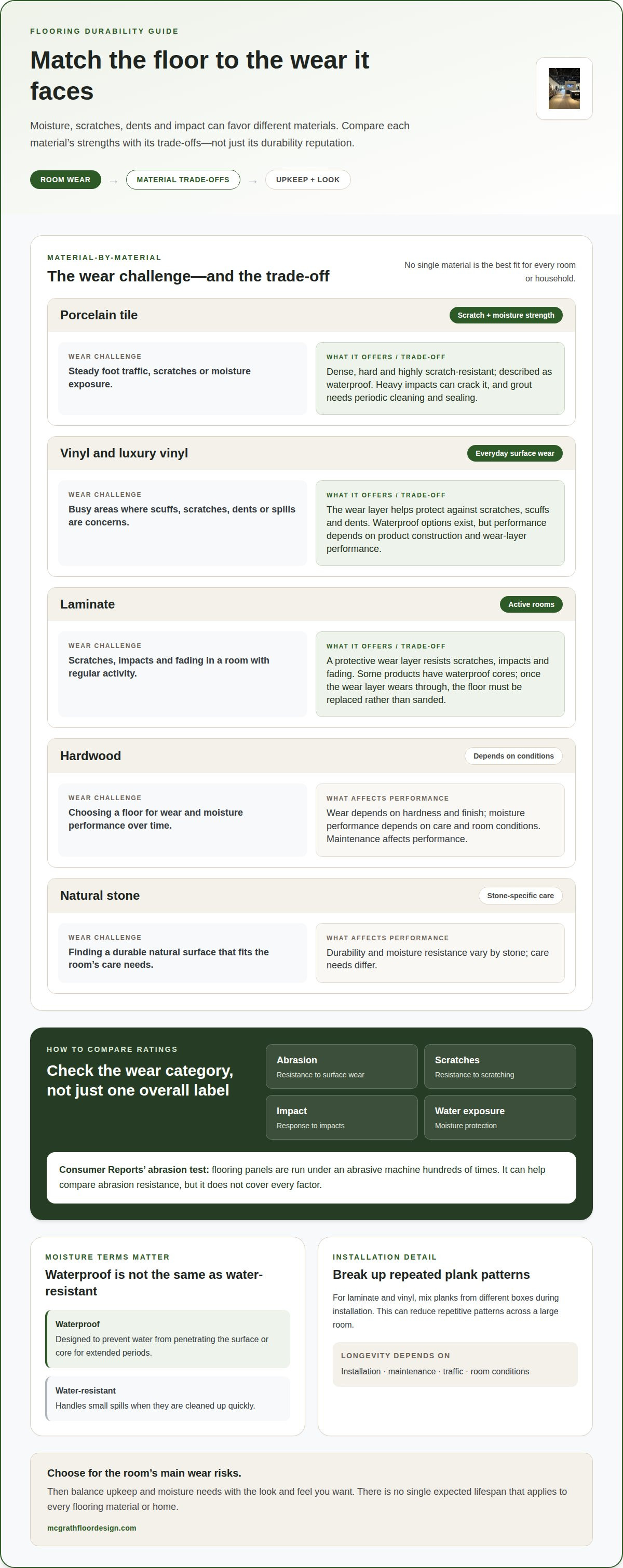
The answer to what is the most durable type of flooring depends on the wear a room faces. Porcelain tile resists moisture and scratches, while laminate and vinyl offer different strengths for busy homes.
Laminate Flooring
Laminate has a protective wear layer that resists scratches, impacts, and fading, which can suit active rooms. Some products have waterproof cores and locking systems, but moisture protection depends on the product. Once the wear layer wears through, laminate must be replaced rather than sanded like refinished wood. During installation, mix planks from different boxes to break up repeated patterns.
Porcelain Tile and Natural Stone
Porcelain tile is dense, hard, and highly scratch-resistant, making it a strong choice for heavy foot traffic. Natural stone also offers durable options, though performance and care vary by stone. There is no single expected lifespan for porcelain tile, natural stone, hardwood, laminate, or luxury vinyl; installation, maintenance, traffic, and room conditions all affect longevity. Porcelain is a strong option for scratch resistance and heavy traffic, but heavy impacts can crack it.
Vinyl and Luxury Vinyl
Vinyl’s wear layer helps protect against scratches, scuffs, and dents in high-traffic areas. Luxury vinyl comes in waterproof options, though performance varies by product. It provides a resilient plank surface, but durability depends on its construction and wear-layer performance. Mix planks from different boxes during installation to reduce repetitive patterns across a large room.
Flooring Durability Ratings
Compare ratings for the kinds of wear that matter, such as abrasion, scratches, impact, and water exposure. Consumer Reports tests flooring wear by running panels under an abrasive machine hundreds of times. This can help compare abrasion resistance, but it doesn’t cover every factor. Review product ratings by category rather than relying on one overall label when deciding what is the most durable type of flooring for your home.
| Flooring | Wear and impact | Moisture | Key trade-off |
|---|---|---|---|
| Laminate | Resistant wear layer | Waterproof options | Replace when wear layer is spent |
| Porcelain tile | Strong scratch resistance | Waterproof | Can crack from heavy impact |
| Vinyl | Wear layer resists scuffs and dents | Waterproof options | Varies by product |
| Hardwood | Depends on hardness and finish | Depends on care and conditions | Maintenance affects performance |
| Natural stone | Varies by stone | Varies by stone and care | Care needs differ |
Choose for the room’s main wear risks, then balance upkeep with the look you want.
Vinyl flooring's resistance to wear, dents, scratches, sunlight discoloration, and stains
Vinyl flooring has a protective wear layer, but specific performance depends on the product. Consider traffic, moisture, and the room’s daily demands together.
Luxury Vinyl Flooring
Luxury vinyl comes in plank and tile formats, with wood-inspired or stone-inspired looks. Its wear layer helps protect against scratches, scuffs, and dents, making it suitable for busy living spaces. Don’t assume a thicker-looking surface indicates a particular performance level; compare the product’s stated wear and water details. For sunlight discoloration and stains, review product-specific information rather than relying on the word “vinyl.”
Vinyl for High-Traffic Homes
For households with pets, children, or mobility needs, vinyl may be worth considering, though suitability depends on the household and room. Consider the room’s traffic and likely spills, then decide whether planks, tiles, or sheet flooring suit the layout. No flooring type automatically meets every household’s needs; surface feel, maintenance, and moisture exposure also matter.
Waterproof sheet vinyl can suit utility spaces where spills are a concern. Vinyl sheet flooring typically comes in rolls that are 12 feet wide, and it works well in rooms 12 feet wide or less. Waterproof flooring is designed to prevent water from penetrating its surface or core for extended periods; water-resistant flooring handles small spills when cleaned up quickly. Those terms describe different levels of moisture protection, so match the claim to the room.
For planks, mix pieces from different boxes during installation to break up repetitive patterns. This simple step can make the floor’s appearance feel less uniform across a large room. In a busy kitchen, for example, consider both spill exposure and foot traffic before choosing a vinyl format. If a wood-inspired look is part of your plan, explore laminate flooring options alongside vinyl.
Porcelain tile's resistance to wear, moisture, scratches, and stains
Porcelain tile is dense and hard, making it a strong choice for rooms with steady foot traffic. It’s fired at extremely high temperatures, which helps it resist chips and scratches. Consumer Reports describes porcelain as waterproof and says its color doesn’t fade. That combination suits moisture-prone areas, though grout lines still need periodic cleaning and sealing to help keep them fresh and reduce staining.
Porcelain is denser than ceramic tile, so the two materials don’t have identical durability. Both create a finished tile-surface look, but porcelain’s density and scratch resistance make it a particularly durable option. For bathrooms or other moisture-exposed areas, porcelain’s waterproof quality is useful. Consider grout as part of the floor system, since its upkeep affects how clean the tiled surface looks over time.
Scratches are less likely to mark porcelain than softer flooring surfaces. Its color often runs through the tile rather than appearing only in a surface glaze, which can help disguise damage. Still, tile isn’t immune to impact: a heavy object can crack porcelain, and dropped glassware or dishes may break on its hard surface. Furniture pads can help reduce scuffs during moves, but they can’t prevent every accident.
Repair is one practical advantage. If a tile is damaged, it can often be replaced individually instead of removing the entire floor. That depends on having a suitable replacement tile and carefully addressing the damaged area. Poor installation can also contribute to cracks, so a stable, properly prepared installation matters in busy areas.
Unlike laminate flooring, porcelain doesn’t rely on a wear layer that eventually wears through. Laminate comes in waterproof options, but its moisture performance depends on the product. For tile, consider the surface, grout care, and impact risks together. Choose porcelain when moisture and scratch resistance top your priorities; include ceramic’s different density and your preferred finish in the design decision.
Balancing flooring durability and design
A durable floor should suit both the room’s demands and the home’s visual direction. Start with the practical needs: consider foot traffic, moisture, sunlight, and the look you want. A kitchen with frequent spills needs different moisture protection than a quiet basement. The right choice balances those conditions with color, texture, and how adjoining rooms connect.
Consider performance and style together. Vinyl plank creates a wood-inspired look while its wear layer helps resist scratches, scuffs, and dents. Hardwood brings natural variation, while engineered hardwood is less prone to warping and can resist scratches and dents in high-traffic areas. These qualities help narrow your options, but room conditions and maintenance needs still matter.
Use this short decision sequence before settling on a material:
- Map the room: Identify traffic paths, moisture exposure, and bright sunlight near windows.
- Set the design goal: Choose whether you want a wood-like appearance, tile finish, or another look.
- Compare the rating: Look at the performance categories tested, such as abrasion, scratches, and impact, rather than relying on one overall label.
- Plan installation: Account for transitions between rooms and how plank direction or tile layout will shape the finished space.
Installation affects the finished floor’s performance as well as its appearance. For example, a continuous design across a kitchen and adjoining living area can make the transition feel intentional, while a different material can define each space. In basements, assess moisture conditions before choosing a material based on color or pattern. Flooring experts also consider care needs, since grout, wood finishes, and vinyl surfaces call for different routines.
Bring your room requirements and preferred look together in a considered flooring selection plan, then choose the material that meets both.
McGrath Floor & Design: Hardwood Flooring
McGrath Floor & Design helps you weigh durability, room conditions, and design when choosing flooring. The team guides you through product selection and installation for hardwood flooring, laminate, and ceramic tile. Turn to them when narrowing options for a busy room, comparing a natural wood look with laminate, or considering ceramic for your home in Franklin or Brentwood.
Start with how each space is used. Foot traffic, moisture, maintenance preferences, and the look you want can all influence the right material. McGrath Floor & Design can connect those practical needs with a cohesive design direction, helping you make a considered flooring choice from selection through installation.
For guidance on flooring options for your home, contact McGrath Floor & Design.
Plan a Floor That Fits Your Home
Deciding what is the most durable type of flooring for your home starts with how you use each space. Look beyond a material’s reputation: consider daily routines, the look you want throughout your rooms, and the care you’re comfortable providing. A thoughtful choice connects these needs instead of treating durability and design as separate decisions.
Before moving forward, identify your priorities and where you’re willing to compromise. You might favor easy upkeep in one room and a particular visual character in another. Clear priorities make it easier to shape a cohesive plan and choose flooring that feels right for the long term.
McGrath Floor & Design can help you consider flooring choices in light of your home and design goals. Contact McGrath Floor & Design to discuss your next flooring project and take a considered step toward a home that feels beautifully finished.
Frequently Asked Questions
What flooring material is most durable for residential use?
Porcelain tile is a leading choice for residential wear and scratch resistance, especially in busy rooms. The best fit still depends on each space: moisture, dropped objects, maintenance preferences, and the desired feel underfoot all matter. In a home with varied rooms, choosing different materials for different spaces can make more sense than using one surface everywhere.
How durable is porcelain tile compared with luxury vinyl plank and hardwood?
Porcelain is especially hard and scratch-resistant; luxury vinyl plank has a wear layer that helps guard against everyday scuffs and dents. Hardwood durability depends partly on its Janka hardness rating, thickness, finish, and maintenance. Focus on the wear that matters most: tile suits scratch exposure, vinyl offers a resilient plank surface, and hardwood brings natural character with care needs shaped by its finish.
Which flooring is most water-resistant for kitchens, bathrooms, and basements?
Porcelain tile is waterproof, while luxury vinyl and laminate come in waterproof options. Product construction matters, so don’t assume every vinyl or laminate floor offers the same moisture protection. In a kitchen, consider frequent spills; in a basement, consider the room’s moisture exposure. Match the material’s water performance to the conditions instead of choosing by appearance alone.
What maintenance and repairs do the most durable flooring types require?
Maintenance varies by surface. Tile grout needs periodic cleaning and sealing, and a damaged porcelain tile can often be replaced individually. Sweep or vacuum regularly to keep grit from scratching finishes, and use furniture pads to reduce scuffs during moves. For laminate, protect the top layer: once it wears through, the floor needs replacement rather than sanding.
What are the drawbacks and risks of the most durable flooring materials?
Hardness brings trade-offs. Porcelain can crack if a heavy object falls on it, and dropped dishes or glassware may break on its surface. Laminate’s wear layer can’t be sanded once worn through, so replacement may be necessary. Vinyl performance varies by product, while hardwood durability depends on its species, thickness, finish, and upkeep. Consider likely impacts and care before choosing.


