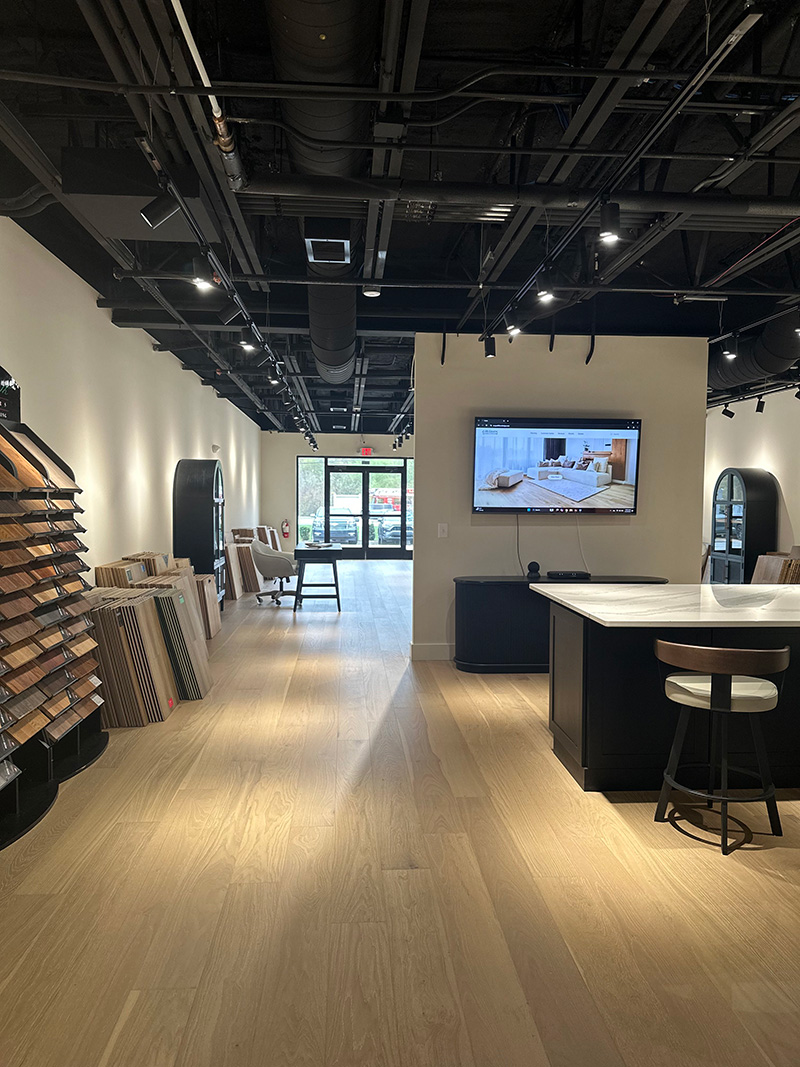

One flooring choice rarely suits every room in a Southern traditional home. The best flooring for Southern traditional homes in Franklin balances a welcoming, classic look with each room’s needs, using thoughtful transitions between shared spaces, the foyer, and the loft. Hardwood, laminate, and ceramic each bring distinct character and practical strengths.
It makes sense to want floors that feel cohesive throughout the home and suit the way each space is used. The right selection depends on room function, the look you want, and how the flooring connects from one area to the next.
Learn how to plan flooring across rooms, create a polished first impression in the foyer, and choose a suitable surface for a loft. This guide also explains how Franklin’s humidity and seasonal temperature changes can inform material choices, helping you create a traditional home that feels considered and comfortable.
Key Takeaways
- Match wood species and finish to the home’s traditional character and the way each room is used.
- Compare hardwood, luxury vinyl, tile, and engineered wood by their look, feel, and practical fit for each space.
- Plan flooring with Franklin’s humidity and seasonal temperature shifts in mind, especially when choosing materials for connected rooms.
- Use durable, easy-to-maintain surfaces in kitchens, bathrooms, and entryways while keeping the home’s overall design cohesive.
What hardwood species and finishes are popular in Franklin traditional homes?
Traditional interiors in Franklin often call for wood tones that complement detailed trim, paneled doors, and gracious room transitions. Rather than assume one species dominates local homes, compare oak, hickory, maple, and walnut with your home’s architecture and daily use. Each has a distinct grain pattern and visual weight.
Oak’s pronounced grain suits classic rooms and works with both warm and restrained color palettes. Hickory’s varied grain creates a livelier surface, while maple has a smoother, subtler appearance. Walnut brings deeper brown tones and a rich look. Compare samples with existing woodwork, cabinetry, and natural light.
Finish influences a floor’s character as much as species. A natural or lightly warm stain keeps the grain visible, while medium brown tones can connect floors with traditional furnishings. Matte and satin sheens create a quieter look than gloss. Distressed textures can suggest age, but a clean, smooth finish may suit refined trim better.
- For a formal living room: Compare oak or walnut with the home’s millwork and furniture.
- For a busy family room: Look at hickory’s varied grain, which can make everyday marks less conspicuous.
- For a lighter, calmer scheme: Consider maple with a natural-looking finish.
Use a simple selection process: identify the room’s fixed finishes, shortlist a species, then compare stain and sheen samples in the space. View them in daylight and evening light, since lighting changes how warm or dark a floor appears. Keep connected rooms visually coherent by repeating a tone or finish, even when layouts differ. For flooring for Southern traditional homes in Franklin, the strongest choice respects the home’s details and suits the way each room is lived in.
How do hardwood, luxury vinyl, tile, and engineered wood compare for Southern homes?
Choose flooring according to room conditions, desired character, and how the surface relates to traditional details. Hardwood, luxury vinyl, tile, and engineered wood each offer a different balance of appearance, comfort, and care. A formal living room and a busy kitchen may need different priorities, even in one open plan.
Hardwood brings natural grain and a classic finish to dining rooms, parlors, and hallways. It can be refinished, allowing the room’s look to change over time. Wood responds to moisture changes, so stable indoor conditions and appropriate installation matter. It suits homeowners who value authentic wood and are comfortable with routine care.
Luxury vinyl offers a wide range of wood- and stone-inspired looks. Its softer feel underfoot can suit family rooms and everyday spaces. Construction varies by product, so performance depends on the specific flooring. Compare samples beside trim and cabinetry rather than judging the pattern alone.
Tile provides a firm surface well suited to kitchens, bathrooms, and entryways. Ceramic tile can complement traditional homes with stone-like patterns or understated color. Grout lines affect the finished look and need regular cleaning. Choose tile where easy cleanup and a distinct room transition are priorities.
Engineered wood has a real-wood surface over a layered core. Its construction can be a practical alternative where seasonal indoor changes are a concern, while retaining a wood appearance. Refinishing potential depends on the product’s wear layer, so it varies among options.
- Choose hardwood for natural character in formal rooms.
- Consider luxury vinyl where comfort and a wood-inspired look matter.
- Use tile to define wet-use areas and entry spaces.
- Compare engineered wood when you want a real-wood surface with layered construction.
For a traditional home, coordinate adjoining floors through consistent tones or deliberate transitions. Explore hardwood flooring as one option for carrying natural wood character through shared living spaces.
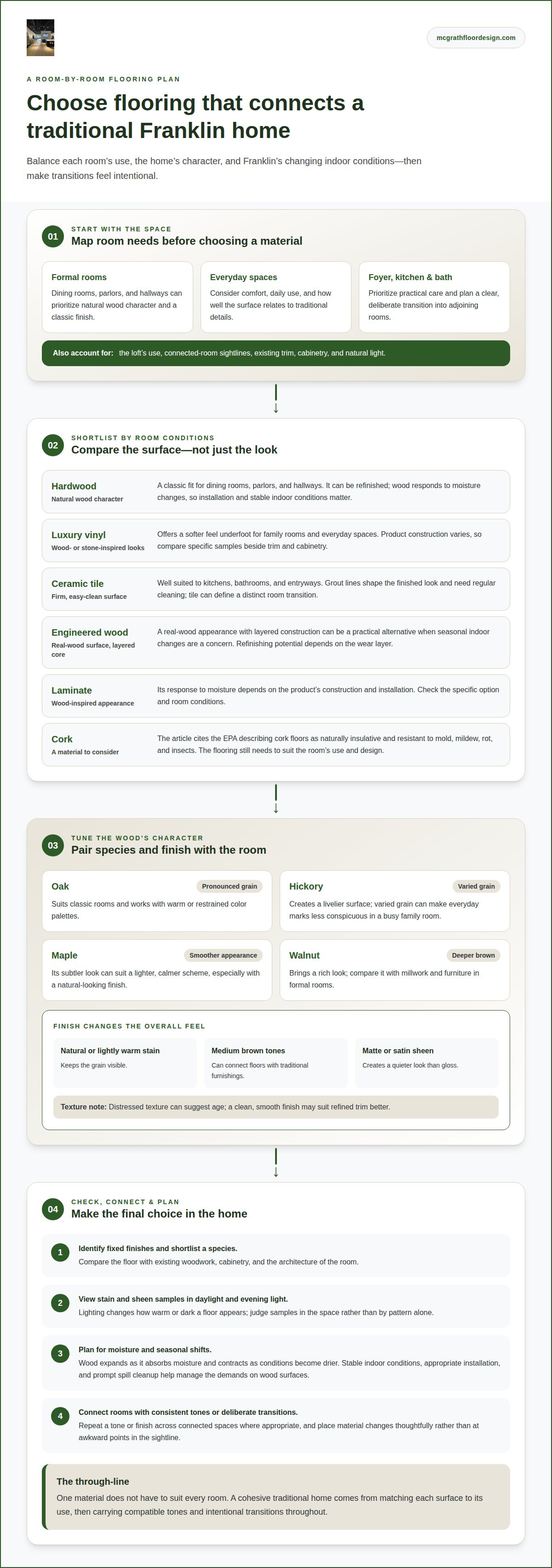
What flooring handles Franklin's humidity and seasonal temperature changes best?
Franklin’s seasonal changes make moisture management an important part of flooring selection. Wood responds naturally to shifts in indoor humidity, expanding as it absorbs moisture and contracting as conditions become drier. This movement can affect joints and appearance. Hardwood can still suit a traditional home, but its performance depends on proper installation and stable indoor conditions. No single material is the answer for every room.
For hardwood, consider the room’s exposure to changing conditions and how the floor meets adjoining spaces. A consistent indoor environment helps limit stress from repeated moisture changes. Use transitions where flooring areas meet, and don’t let spills linger on wood surfaces. In connected formal rooms, plan material changes deliberately rather than placing them at awkward points in the sightline.
Laminate offers a wood-inspired appearance, but its response to moisture depends on the product’s construction and installation. Ceramic tile is another option where a hard surface suits the room’s use. Neither eliminates the need to manage indoor moisture. Where natural wood character matters most, hardwood remains a considered choice, with installation planned around the home’s conditions.
Cork is another material to consider. According to the U.S. Environmental Protection Agency, cork floors are naturally insulative and resist mold, mildew, rot, and insects. These qualities may matter in humid rooms, though the flooring still needs to suit the room’s use and design. Compare samples with the home’s trim and adjoining surfaces before choosing a material.
- For formal rooms: Consider hardwood, with installation planned for changing indoor conditions.
- For practical transitions: Use ceramic tile where a hard surface fits the room.
- For another material option: Evaluate cork’s insulating qualities and natural resistance properties.
The best flooring for Southern traditional homes in Franklin matches each room’s moisture exposure, appearance, and maintenance needs. Plan transitions and indoor conditions as part of material selection.
What flooring works best for kitchens, bathrooms, and entryways in traditional homes
Kitchen, bathroom, and entryway floors face different routines, even within one traditional home. A kitchen may need quick cleanup around the sink and cooking area. A bathroom needs a surface suited to splashes, while an entryway catches dirt and moisture from outdoors. Match the material to each room before choosing one finish for the whole floor plan.
In kitchens, ceramic tile provides a firm surface and a clear visual boundary beside hardwood in adjoining rooms. Grout lines add texture but need routine cleaning. Laminate can offer a coordinated wood-like look in nearby living areas. Make the kitchen transition intentional, using a change in material or direction to define the space without disconnecting the rooms.
For bathrooms, consider how the floor handles regular splashes and cleaning. Ceramic tile is a practical option to evaluate, with grout color and pattern shaping its appearance. A small-scale tile pattern can complement traditional cabinetry, while a restrained color keeps the floor from competing with trim. Avoid extending wood flooring into splash-prone areas without considering exposure and upkeep.
At the entry, choose a surface suited to shoes, grit, and frequent cleaning. Ceramic tile can create a durable-feeling landing near the front door, while wood or laminate may continue into a dry foyer. A defined mat area and a thoughtful threshold help protect adjoining surfaces and make the transition look deliberate.
- Kitchen: Balance cleanup needs with a smooth transition to dining or living spaces.
- Bathroom: Consider tile, grout maintenance, and the room’s traditional details.
- Entryway: Plan for tracked-in debris and a clear connection to the next room.
Bring room use, cabinetry, and adjoining finishes into the selection process. Explore hardwood and laminate flooring for connected dry spaces, and coordinate their tones with tile in hardworking rooms. A consistent palette can make different materials feel at home together.
McGrath Floor & Design: Hardwood Flooring
McGrath Floor & Design can help bring your flooring plan together with hardwood flooring, laminate floors, and ceramic tile. Turn to the team when weighing a classic wood surface for living spaces against a practical material for a kitchen, bathroom, or entryway. Coordinated choices can preserve a traditional home’s character while reflecting how each room is used.
Share the rooms you’re updating and the look you want to create. Product guidance can help you consider color, surface, and how flooring choices relate across connected spaces. Hardwood can establish a natural foundation in traditional interiors, while laminate and ceramic provide other options for a whole-home plan.
For help shaping your flooring choices, contact McGrath Floor & Design.
Shape a flooring plan that feels like home
Choosing flooring for Southern traditional homes in Franklin is an opportunity to bring the home’s character together from room to room. Before moving ahead, consider the atmosphere you want, each space’s demands, and how one surface will meet another. A clear plan connects individual choices without making every room look identical.
Think beyond a single sample. Picture the selected floor alongside your home’s trim, cabinetry, furnishings, and natural light. That broader view can help you turn inspiration into a finished interior that feels distinctly yours. McGrath Floor & Design can guide your flooring decisions as you refine the plan.
Take the next step at a pace that feels right for your project. Talk through your flooring plans with McGrath Floor & Design and begin shaping a home that welcomes you every day.
Frequently Asked Questions
What flooring styles suit traditional Southern homes in Franklin, Tennessee?
Classic wood looks and restrained tile patterns complement traditional Southern interiors in Franklin. For example, use a consistent wood tone through a formal dining room and adjoining hallway, then distinguish the kitchen with ceramic tile. Choose patterns and finishes that relate to existing trim, cabinetry, and furnishings. The goal is a connected palette, with room-specific materials where household routines call for a different surface.
Which Franklin-area flooring stores and installers specialize in traditional home styles?
McGrath Floor & Design serves Franklin and Brentwood with flooring selection guidance and installation. Its offerings include hardwood flooring, laminate floors, and ceramic tile, giving homeowners options for coordinating surfaces across traditional interiors. It’s a local resource for discussing how room use, home details, and material choices fit together. Share which rooms you’re updating and the look you want.
What flooring colors and plank widths complement Southern traditional interiors?
Choose a floor color by comparing it with fixed elements such as painted trim, cabinetry, and existing furnishings. A restrained wood tone keeps ornate details in focus, while stronger contrast makes the floor more prominent. For plank width, consider the room’s proportions and the visual rhythm of its trim. Lay sample planks beside a doorway or cabinet run to judge their scale in place.


