

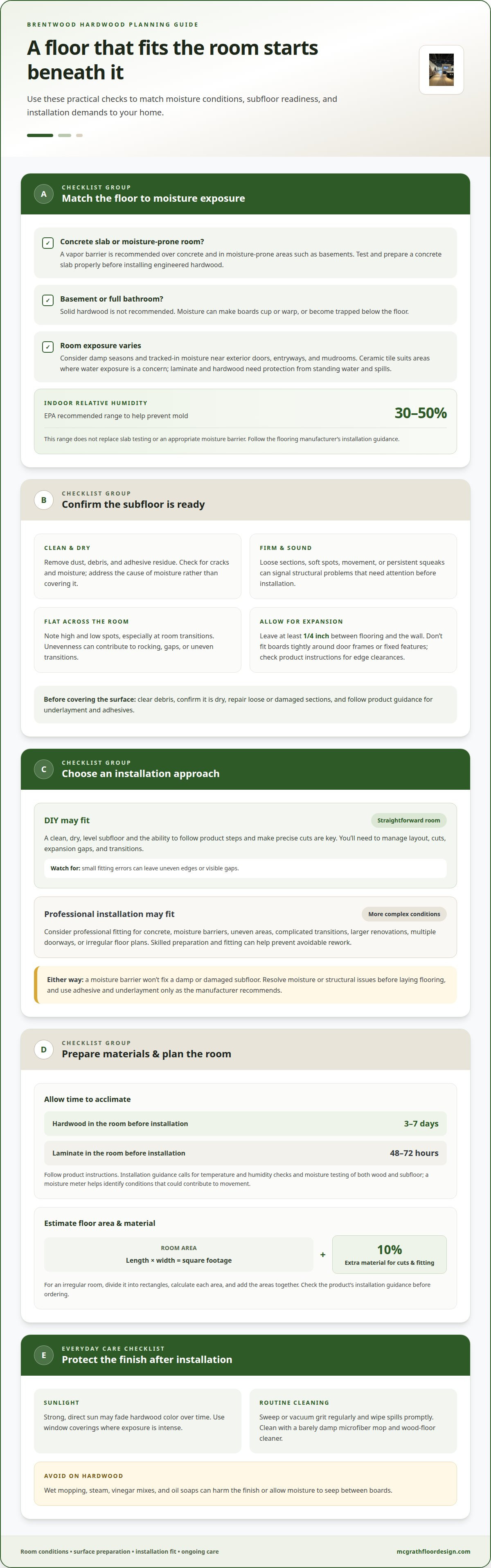
The most attractive floor isn’t always the right one for a room. When avoiding common flooring mistakes in Brentwood, start with moisture: a vapor barrier is recommended when installing hardwood over a concrete slab or in a moisture-prone area such as a basement. Solid hardwood is not recommended for basements or full bathrooms, where moisture can cause boards to cup or warp.
It’s easy to focus on color and overlook what lies beneath the floor or how your household uses the space. The subfloor should be clean, dry, and level before installation, and the best choice for a busy entryway may differ from what suits a quieter room. This guide explains how to weigh DIY against professional installation, match flooring to your subfloor, and account for pets, children, foot traffic, and everyday moisture. These practical checks can help you choose a floor that suits your Brentwood home and the way you live.
Key Takeaways
- Match any moisture protection to the hardwood type, room conditions, and subfloor beneath it.
- Weigh the hands-on demands of DIY installation against the preparation and precise fitting a professional can provide.
- Address subfloor cleanliness, flatness, dryness, and structural condition before choosing an installation approach.
- Choose flooring with your household’s traffic, pets, children, and changing needs in mind, not appearance alone.
1. Do you need a vapor barrier under hardwood floors?
Start with the surface beneath the hardwood. A vapor barrier is recommended over a concrete slab and in moisture-prone spaces, including basements. Engineered hardwood can be installed over concrete when the slab is tested and prepared properly. Solid hardwood isn’t recommended for basements or full bathrooms, where moisture can make boards cup or warp or trap dampness below.
The U.S. Environmental Protection Agency recommends keeping indoor relative humidity in a 30-to-50-percent range to help prevent mold. That range helps frame moisture control, but it doesn’t replace slab testing or an appropriate barrier. In Brentwood, consider damp seasons and tracked-in moisture when choosing flooring near exterior doors, in entryways, and in mudrooms.
Match the floor to each room’s exposure. A bathroom with frequent splashes, for example, needs a different moisture strategy than a bedroom. Ceramic tile suits areas where water exposure is a concern; laminate and hardwood need protection from standing water and spills. Follow the flooring manufacturer’s installation guidance for the subfloor and moisture conditions.
To measure a room, measure its length and width, then multiply them to find square footage. For an irregular room, divide it into rectangles, calculate each area, and add them together. Allow an extra 10% of material for cuts and fitting, then check the product’s installation guidance before ordering.
Before hiring a Brentwood flooring contractor, review their credentials and check license details against the issuing authority’s public records. Confirm that the insurance certificate is current, and ask references about the contractor’s work and communication.
Sunlight and cleaning can also damage a hardwood finish. Strong, direct sun may fade its color over time, so use window coverings where exposure is intense. Sweep or vacuum grit regularly, wipe spills promptly, and clean with a barely damp microfiber mop and wood-floor cleaner. Avoid wet mopping, steam, vinegar mixes, and oil soaps, which can harm the finish or allow moisture to seep between boards.
2. Comparing DIY installation with professional installation
DIY installation may suit a straightforward room with a clean, dry, level subfloor. But you’ll need to manage layout, cuts, expansion gaps, and transitions without professional equipment or experience. A small fitting error can leave uneven edges or visible gaps. Larger renovations, multiple doorways, and irregular floor plans add measuring and cutting challenges. Professional installation includes skilled preparation and fitting, helping prevent avoidable rework.
The subfloor needs attention before either approach begins. Poor preparation can lead to uneven boards, squeaky spots, or gaps that appear after installation. Remove debris, address unevenness, and resolve moisture or structural damage before laying flooring. Use adhesive and underlayment only as the flooring manufacturer recommends. In a bathroom or another moisture-prone space, choose a suitable flooring system and install its required moisture barrier. A barrier won’t fix a damp or damaged subfloor.
Acclimation and moisture testing are essential parts of hardwood preparation. Hardwood should sit in the room for 3 to 7 days before installation, while laminate is generally left in the room for 48 to 72 hours. Follow the product instructions, since materials respond differently to indoor conditions. The National Wood Flooring Association’s installation guidelines call for temperature and humidity checks and moisture testing of both wood and subfloor. A moisture meter helps identify conditions that could contribute to movement after installation.
DIY may be practical when you can prepare the surface, follow the product steps, and make precise cuts. Choose professional installation when the project involves concrete, moisture barriers, uneven areas, or complicated transitions. Those details can turn a seemingly simple job into a costly correction. Dry-fitting boards first helps reveal layout issues before permanent installation begins. For a laminate project, review laminate flooring options alongside the room’s installation requirements.
3. Subfloor cleanliness, flatness, and structural condition
A finished floor performs only as well as the surface beneath it. Before installation, inspect the subfloor for dust, adhesive residue, loose sections, cracks, and signs of moisture. Even a small ridge beneath laminate, for example, can make boards move or joints separate. Clear debris and repair damaged areas before covering them.
Check whether the floor feels firm underfoot. Soft spots, movement, or persistent squeaks can signal structural problems that need attention before new flooring goes down. Look closely around doorways and along walls, where previous repairs or water exposure may have affected the subfloor. If moisture is present, address its cause instead of covering it.
Flatness matters as much as cleanliness. Inspect the surface across the room and note high and low spots, especially where the floor meets another room. Correct uneven areas using a preparation method suited to the subfloor and flooring material. A flat surface helps prevent rocking, gaps, and uneven transitions after installation.
Allow for natural expansion at the room’s edges. Leave at least 1/4 inch between flooring and the wall, so the floor isn’t trapped against the perimeter. Don’t fit boards tightly around door frames or fixed features. Use the flooring manufacturer’s instructions to guide edge clearances and installation details for that product.
To prepare a subfloor, clear away debris, confirm it’s dry, and repair loose or damaged sections. Check that the surface is level, then follow the flooring instructions for underlayment and adhesives.
Humidity can affect wood flooring and its supporting surface. Moisture-meter testing helps identify conditions that may cause boards to move after installation. A concrete subfloor, for example, needs suitable preparation before wood flooring is installed. Follow the product’s requirements, since laminate and hardwood may need different underlayments or installation methods. Careful preparation creates a stable base and helps prevent avoidable repairs.
4. Choosing flooring for household lifestyle and traffic
Choose flooring based on the people, pets, and routines in each room. A busy Brentwood hallway gets more foot traffic than a guest bedroom, while pets and active children can mean more scratches, spills, and tracked-in dirt. Consider future household changes, too, such as mobility needs or plans to sell. To avoid common flooring mistakes in Brentwood, match each material to the room’s everyday demands.
Hardwood flooring brings natural character, but grit can scratch its finish. Use rugs in high-traffic areas and runners along hallways, and add felt pads beneath furniture legs. Laminate also needs protection from excess water: wipe up spills promptly and don’t leave wet cleaning tools on its surface. Ceramic tile suits areas exposed to splashes, though cracked or chipped tiles should be replaced promptly to prevent further damage.
Hardwood, laminate, vinyl, and tile differ in durability and maintenance. Hardwood benefits from regular sweeping and wood-friendly cleaning; laminate calls for minimal water; vinyl needs routine sweeping or vacuuming and doormats to limit tracked-in dirt. Tile can work well in splash-prone spaces, but grout and damaged pieces need attention. Compare each material’s upkeep with the time your household can give it.
Match the floor to each room instead of applying one rule throughout the home. Choose a durable surface for a frequently used entryway, for example, and consider a quieter, more comfortable option for a bedroom. Near exterior doors, mats and washable rugs can catch dirt and moisture before they reach hardwood. Plan transitions so different materials flow naturally between rooms.
Before choosing a color or finish, bring samples into the room and view them beside your décor under different lighting. A shade that looks beautiful in a showroom may appear different near a sunny window or beneath evening lights. Measure the space accurately to estimate material needs. Avoiding common flooring mistakes in Brentwood also means weighing appearance against cleaning routines and household traffic. To compare hardwood flooring or laminate for your home, explore flooring options for your home.
McGrath Floor & Design: Hardwood Flooring
McGrath Floor & Design helps Brentwood homeowners match flooring to their rooms, subfloor, moisture exposure, and daily traffic. If hardwood’s warmth suits your vision, careful product selection and installation planning can help prevent a mismatch between the material and the space. Laminate Floors and Ceramic are also options when your household needs a different surface.
Turn to McGrath Floor & Design when weighing appearance against practical concerns such as spills, busy entryways, or cleaning routines. Share which rooms you’re updating and how your household uses them to guide the choice. The goal is a floor that feels cohesive with your home and suits the way you live.
Contact McGrath Floor & Design to discuss flooring for your home.
Shape a flooring plan around the home you want
A flooring decision can shape how connected your rooms feel, not just how one space looks. Before moving ahead, decide how you want your finished home to feel: calm and consistent, or thoughtfully varied from room to room. If you’re avoiding common flooring mistakes in Brentwood, a broader vision can help turn individual material choices into a cohesive plan.
Consider how each room meets the next, which finishes complement your existing furnishings, and whether your preferences may change over time. A clear design direction makes it easier to assess samples and discuss trade-offs without losing sight of the overall result. You don’t need every detail settled before taking the next step. Bring your priorities and questions to a conversation about the possibilities for your home.
Contact McGrath Floor & Design today to talk through your flooring plans and move toward a home that feels distinctly yours.
Frequently Asked Questions
Do you need a vapor barrier under hardwood floors?
Often, yes, when hardwood is installed over concrete or in a moisture-prone area. The right approach depends on the wood product, subfloor, and installation method. Engineered hardwood over a concrete slab, for example, still needs proper slab testing and preparation. Match the barrier and installation materials to the flooring manufacturer’s instructions rather than assuming one underlayment suits every room.
Is it better to repair or replace hardwood floors?
Repair can make sense when damage is limited and the boards remain structurally sound. Minor scratches may respond to wood filler or floor polish, while a dull surface with light scratches may benefit from screening and a new coat. Deeper damage may call for sanding. Whether engineered hardwood can be refinished depends on the thickness of its real-wood wear layer.
What are the most common flooring installation mistakes homeowners make?
Common installation errors include rushing the layout, overlooking door clearances, skipping a dry fit, and choosing transitions only after work begins. A doorway between two materials, for example, can end up with an awkward height change if the transition wasn’t planned. Another preventable problem is using adhesive or underlayment that doesn’t follow the flooring manufacturer’s directions. Planning these details helps avoid disruptive corrections later.
How do you choose flooring for each room and its moisture levels?
Start by identifying where water, spills, and tracked-in dirt are most likely, then choose a material suited to that exposure. Ceramic tile is worth considering for splash-prone areas, while hardwood and laminate need prompt spill cleanup and care suited to their finishes. In bedrooms, prioritize the feel and maintenance you prefer; in entryways, account for frequent traffic and outdoor debris.
What acclimation, expansion-gap, and moisture-testing requirements prevent flooring problems?
Follow the product’s installation instructions for acclimation, since hardwood and laminate can require different preparation periods. Hardwood guidance commonly calls for moisture-meter testing of both flooring and subfloor, along with indoor temperature and humidity checks. Leave at least 1/4 inch between flooring and walls for expansion. Keep spacers in place during fitting so boards don’t press tightly against fixed edges.
What warranties and maintenance steps help prevent flooring damage?
Warranty terms depend on the flooring product, so read its documentation for covered conditions, exclusions, and care requirements before installation. Keep the product and maintenance instructions together for future reference. For routine care, remove grit with regular sweeping or vacuuming, use products suited to the floor’s finish, and wipe up spills promptly. Felt pads and rugs can reduce scratches in busy areas.


