
The softest floor isn’t necessarily the warmest choice over radiant heat. For the best flooring for radiant heat in Brentwood, ceramic tile and natural stone generally transfer heat most efficiently, while carpet, laminate and luxury vinyl can also work when the flooring and heating system are compatible.
Choosing flooring for radiant heat means weighing comfort, appearance and durability alongside heat transfer. The right fit depends on how quickly you want a room to warm, how the floor handles temperature changes and which system is beneath it. This guide compares carpet, laminate, luxury vinyl and natural stone, with practical notes on underlayment and installation requirements. You’ll have a clearer basis for matching a floor to your heating system and the feel you want.
Key Takeaways
- Compare flooring by how it transfers heat and handles temperature changes, not appearance alone.
- Carpet can soften a room, but its combined carpet-and-pad resistance affects how readily radiant warmth comes through.
- Laminate and luxury vinyl may suit radiant heating when the flooring, underlayment and system are compatible.
- Natural stone warms more gradually and can hold warmth after the heating system cycles off; ceramic flooring is another option to consider.
Which Floors Work Best with Your Radiant Heating System?
For homeowners comparing the best flooring for radiant heat in Brentwood, compatibility depends on the floor, underlayment and heating system working together. Hydronic systems circulate heated water, while electric systems use heating elements; install each floor according to the instructions for both the flooring and heating products. Underlayment, adhesives and moisture barriers also depend on those instructions, since some floors need specific layers for heat transfer or moisture control.
Rigid-Core Luxury Vinyl
Rigid-core luxury vinyl has a firm core, but that alone doesn’t determine whether it suits radiant heating. Compare the product’s temperature limit with the heating system requirements before installation. Vinyl used over underfloor heating generally shouldn’t exceed 80.6 degrees Fahrenheit. The specified underlayment matters too, because an added layer can affect heat transfer through the finished floor.
Luxury Vinyl Tile with Hydronic Systems
Luxury vinyl tile (LVT) can work with hydronic heating when the product instructions approve the pairing. Hydronic systems circulate heated water beneath the floor, so the LVT installation requirements must suit the heating system. Vinyl-based flooring transfers heat less readily than tile or stone. When choosing the best flooring for radiant heat in Brentwood, assess the product, installation layers and heating system together.
Engineered Wood and Hardwood
Engineered wood uses layered construction that can reduce the risk of heat-related warping or gapping compared with natural hardwood. Shaw and Anderson Tuftex engineered hardwood guidance sets a maximum floor surface temperature of 80°F over radiant heat. Consistent thermostat settings help limit temperature swings. Product-specific instructions also set the installation conditions, including any underlayment requirements.
Engineered Timber
Engineered timber can accommodate changing floor temperatures and humidity better than natural hardwood, making it a wood-floor option to consider for radiant heating. Hardwood can respond to temperature and humidity changes, so dimensional stability varies by product and construction. Follow the flooring and heating manufacturers’ instructions for temperature settings, moisture control and installation layers.
| Flooring | Key compatibility consideration | Installation focus |
|---|---|---|
| Rigid-core luxury vinyl | Temperature limit | Underlayment and system instructions |
| LVT | Hydronic system compatibility | Required installation layers |
| Engineered wood | Dimensional stability | Surface temperature and underlayment |
| Engineered timber | Temperature and humidity changes | Product and system instructions |
Choose flooring whose installation requirements and temperature limits suit your specific radiant heating system.
Thermal conductivity and dimensional stability
Radiant heating performance depends on how readily flooring passes warmth upward and how well it withstands temperature changes. Ceramic tile, stone, wood, vinyl, bamboo and carpet each behave differently in these respects.
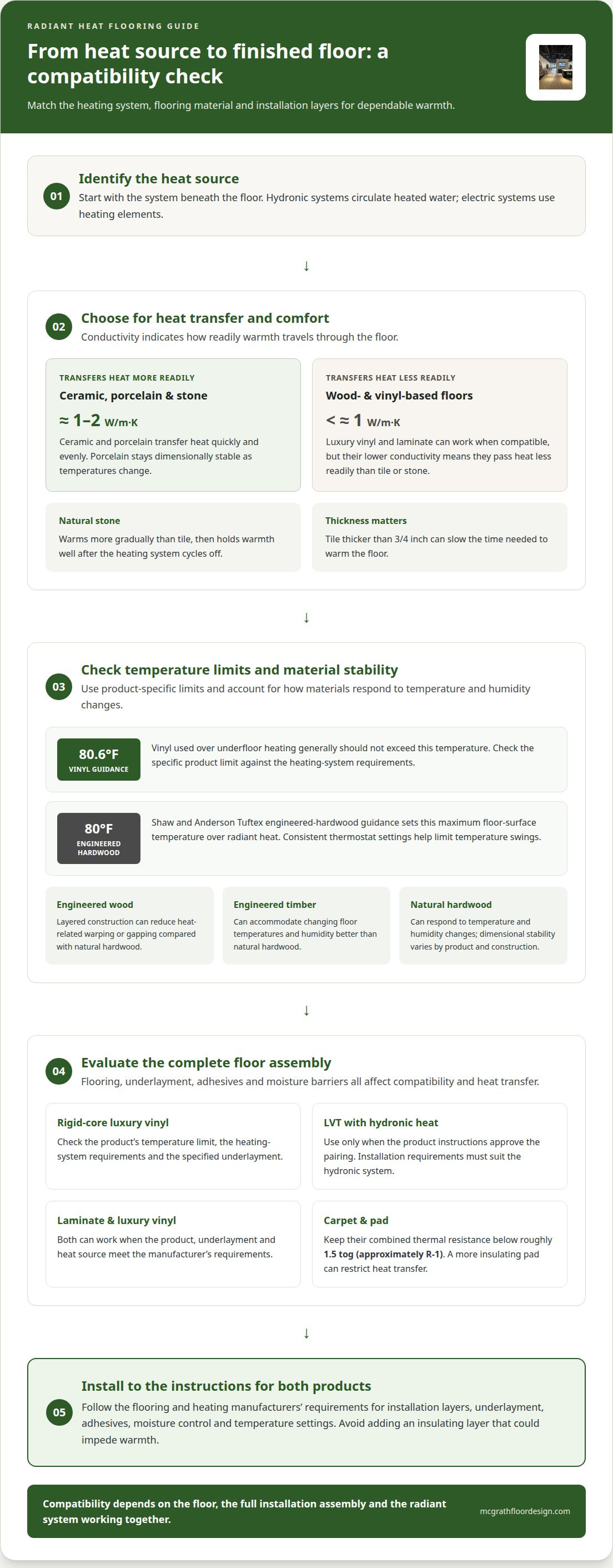
Ceramic and porcelain tile transfer heat quickly and evenly, while porcelain remains dimensionally stable as temperatures change. Tile and stone have thermal conductivity of approximately 1-2 W/m·K, compared with below approximately 1 W/m·K for wood- and vinyl-based flooring. That difference helps explain why tile can deliver warmth more directly.
Conductivity and Heat-Up Times
Thermal conductivity measures how readily heat travels through a material. Tile and stone conduct radiant warmth efficiently; wood and vinyl transfer it less readily. Heat-up time also depends on thickness: tile thicker than 3/4 inch can slow the time a radiant heating system needs to warm the floor. Natural stone warms more slowly than tile but holds heat well.
Bamboo doesn’t have one conductivity value that applies to every floor. Construction and thickness affect heat transfer, so assess the specific flooring alongside the radiant system. The same is true for electric systems: the complete floor assembly affects how quickly warmth reaches the room.
Recommended Flooring R-Value
For carpet over radiant heating, keep the combined thermal resistance of carpet and pad below roughly 1.5 tog, approximately R-1. This is a carpet-and-pad recommendation, not a universal target for tile, stone, vinyl or wood. A thicker, more insulating pad can restrict heat transfer, even when the carpet itself seems suitable.
Dimensional stability matters as much as thermal performance. Porcelain resists temperature-related movement, while natural hardwood can respond to heat and humidity changes. Compare the material, thickness and complete floor assembly to balance steady warmth with stability.
For a material choice that pairs efficient heat transfer with a durable finish, explore ceramic flooring options.
Luxury vinyl and laminate over radiant heat
Luxury vinyl and laminate can feel comfortable over radiant heating when the floor assembly suits the system. Compared with tile and stone, their lower thermal conductivity means they pass heat less readily.
Luxury Vinyl and Laminate
Luxury vinyl feels softer underfoot than tile or stone, while laminate offers another wood-style surface. Both can work over radiant heat when the system and installation meet the product requirements. Compatibility depends on the whole assembly: flooring, underlayment and heat source work together, so performance cannot be assumed across every product.
For luxury vinyl tile, choose a product whose instructions allow use with your specific heating system, including hydronic systems. Unsuitable combinations can risk warping or damage. Underlayment also affects heat transfer and moisture control, so follow the product’s directions for required layers rather than adding an insulating underlay that could impede warmth.
Flooring Temperature Limits
Vinyl used with underfloor heating generally shouldn’t exceed 80.6 degrees Fahrenheit. Shaw and Anderson Tuftex engineered hardwood guidance sets a maximum floor surface temperature of 80°F. These figures apply to the named flooring types and guidance; they don’t establish one shared limit for every floor.
There is no single temperature limit for all laminate flooring. The permitted conditions depend on the product instructions and radiant system. During planning, identify the flooring product, note its specified temperature requirements and align the system’s operating settings. For vinyl or laminate, make sure the underlayment and moisture-control layers also follow the product instructions.
Stable settings help limit sharp temperature changes, particularly with wood-based floors. After installation, raise the radiant heat gradually rather than immediately switching to a higher temperature. This helps support a compatible floor assembly and maintain consistent warmth across the room.
Natural stone heat retention
Natural stone suits radiant heating when lasting warmth matters as much as a quick heat-up. Its density stores heat and releases it gradually after the system cycles off. Slate and granite illustrate this balance: they warm more slowly than tile but retain warmth well. That slower response can suit rooms where steady heat is preferable to a rapid temperature change.
Tile and stone both transfer radiant heat effectively, but feel different in use. Ceramic and porcelain tile warm quickly and evenly, while dense natural stone takes longer to heat. Stone continues to release stored warmth after the system stops actively heating. Consider whether a room calls for a quick response or gradual heat release when comparing the two.
Flooring thickness also affects how radiant heat moves through the finished surface. Thicker tile and stone retain heat better than thinner options, while tile thicker than 3/4 inch can slow heat-up times. Consider the full floor assembly, including the surface material and layers below it, because each layer influences how warmth transfers from the heating system into the room.
Tile and stone floors used with underfloor heating can reach 84 degrees Fahrenheit or sometimes higher. That figure helps explain why stone can feel notably warm after the system runs, then remain comfortable as it cycles off. Temperature response depends on the material and system together, so compare the expected pace of heating with how you use each room.
For a practical comparison, weigh three properties: how quickly the floor transfers heat, how long it retains warmth, and the finish you want underfoot. Choose stone for gradual heat release; consider tile where quicker, more even warmth is the priority. Explore ceramic flooring options as you compare heat-responsive surfaces for your home.
McGrath Floor & Design: Hardwood Flooring
McGrath Floor & Design helps you compare hardwood flooring, laminate floors and ceramic for a radiant-heated room. Turn to the team when you’re ready to move from weighing heat transfer and stability to choosing flooring that suits your home’s style and installation needs.
Each material offers a different balance of warmth, feel and appearance. Hardwood brings a natural wood look, laminate offers a wood-style alternative, and ceramic is a tile option to consider for heat transfer. Product selection and installation guidance help bring these practical considerations together with the finish you want.
Share which rooms you’re updating and what matters most, such as steady warmth, a particular surface or a wood-inspired look. Contact McGrath Floor & Design to discuss your flooring project.
Turn Your Flooring Decision Into a Room-by-Room Plan
The best flooring for radiant heat in Brentwood is the option that suits both your comfort preferences and the way you want each room to look. Before choosing, consider how you use the space, which surface feels right underfoot, and whether you want the floor to stand out or create a calm backdrop.
A room-by-room plan can create a cohesive home without requiring the same finish everywhere. Decide where a consistent look matters and where another material may better suit the room’s purpose. With those priorities clear, your flooring choice can be both personal and practical.
McGrath Floor & Design can help you bring those preferences into the selection and installation conversation. Contact McGrath Floor & Design to discuss your flooring project and take the next step toward a home that feels thoughtfully finished.
Frequently Asked Questions
What about carpet and laminate?
Carpet can work over radiant heating if the combined carpet and pad do not block too much warmth. Laminate may also suit the system when its installation requirements align. For example, carpet may provide the softer feel you want in a bedroom, while laminate offers a firm surface in a living area. Include the underlayment in your compatibility assessment.
What flooring materials work best with radiant floor heating?
Ceramic and porcelain tile, as well as natural stone, transfer radiant warmth effectively. Engineered wood, laminate and luxury vinyl can also work when paired with compatible systems and installation methods. Choose for the room’s needs: tile can suit a space where direct heat transfer matters, while wood-look flooring offers a different visual effect. Make sure the flooring and heating instructions align.
How efficiently does tile conduct heat compared with hardwood, vinyl, laminate, and carpet?
Tile and stone transfer heat more readily than hardwood, vinyl or laminate, while carpet generally slows heat movement the most. Wood- and vinyl-based flooring have thermal conductivity below approximately 1 W/m·K; tile and stone are approximately 1-2 W/m·K. In practical terms, tile responds more directly to the heating system, while carpet and pad can limit warmth reaching the room.
What are the risks of installing solid hardwood or thick carpet over radiant floor heating?
Solid hardwood can respond to temperature and humidity changes, potentially bowing, warping or expanding. Thick carpet and padding can insulate the floor and reduce heat transfer. With wood flooring, steady thermostat settings help limit temperature swings. With carpet, consider the combined resistance of the carpet and pad, since a thick, insulating pad can reduce the warmth that reaches the room.
Which local Brentwood flooring contractors install floors suitable for radiant heat?
McGrath Floor & Design serves Brentwood and Franklin with flooring selection guidance and professional installation. Its hardwood, laminate and ceramic options can be considered for radiant-heated rooms based on the specific product and system requirements. Share your heating system details as you plan, so the flooring instructions and installation approach can be aligned with your project.
How should flooring be installed over hydronic versus electric radiant heating?
Hydronic systems circulate heated water, while electric systems use heating elements. For either type, follow the flooring and heating manufacturers’ installation instructions. With hydronic heating, use LVT only when its product instructions allow the pairing.


