
A beautiful new floor can completely transform your home's character, but the initial sticker price rarely tells the whole story. In Nashville, the true cost to replace hardwood floors is influenced by factors that go far beyond the wood itself. You're likely looking for a clear path through the maze of material grades and installation fees. We understand the hesitation that comes with big home investments. It's frustrating to see a project total climb because of unexpected subfloor repairs or Middle Tennessee's notorious humidity.
This guide provides a professional breakdown of what you should expect when planning your 2026 renovation. You'll learn how to distinguish between the long term value of solid oak and the structural stability of engineered planks in our local climate. We will walk through the specific labor requirements and high quality material choices, such as regional favorites like White Oak, that ensure your investment lasts for decades. From the initial vision to the final plank laid, we'll help you understand every driver of your final invoice so you can move forward with confidence.
Key Takeaways
- Understand why the total cost to replace hardwood floors depends on three critical pillars including materials, labor, and professional site preparation.
- Learn why engineered wood often outperforms solid hardwood in Middle Tennessee's humid climate to protect your home investment from warping.
- Prepare for common "hidden" expenses like subfloor leveling and disposal fees that often surprise Nashville homeowners during a renovation.
- Compare the price difference between refinishing and full replacement to decide which path offers the best long term return for your space.
- Discover how 50 years of local expertise and a curated showroom experience help you secure an accurate quote while avoiding costly material mistakes.
Understanding the Components of Hardwood Replacement Costs
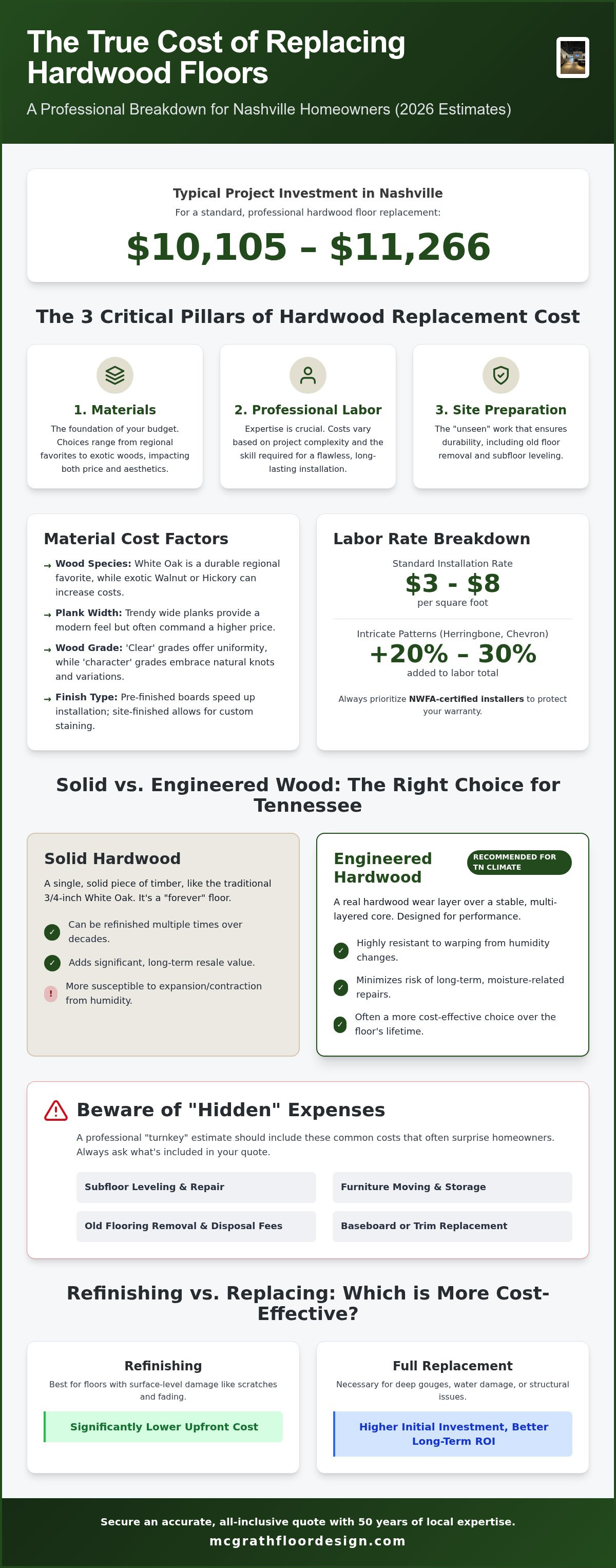
Budgeting for a home renovation shouldn't feel like guesswork. When you look at the total cost to replace hardwood floors, it's essential to view the project as a three-part equation: materials, skilled labor, and site preparation. Many homeowners get caught up in the price per square foot listed on a retail shelf, but that number is only the beginning of the story. A truly accurate budget relies on a "turnkey" estimate that accounts for the removal of your old surface and the meticulous leveling of your subfloor. The average 2026 Nashville cost to replace hardwood floors typically ranges from $10,105 to $11,266 for a standard professional installation.
Understanding these variables helps you grasp the full financial picture without being blindsided by the final invoice. It's the difference between buying a product and investing in a permanent home transformation. By focusing on the "all-in" price, you ensure that every detail, from the transition strips to the final coat of finish, is covered from the start.
Material Costs: From Budget to Luxury
The type of Wood flooring you select serves as the baseline for your financial plan. While species like White Oak remain a regional favorite for their durability and timeless appeal, moving toward exotic Walnut or high-grade Hickory will shift your numbers. You also need to consider the grade of the wood. Clear grades offer a uniform, modern appearance, while character grades celebrate natural knots and grain variations. Wide planks are a major trend in 2026, providing a spacious and contemporary feel, but they often command a higher price point than traditional narrow strips. Choosing pre-finished boards can streamline your timeline, whereas site-finished wood allows for a completely custom stain that perfectly matches your home's aesthetic.
Labor and Professional Installation Fees
Expertise carries its own value, especially in the sophisticated markets of Franklin and Brentwood. Labor rates for a professional install in Middle Tennessee typically range from $3 to $8 per square foot, depending on the specific demands of your space. If you've envisioned a striking herringbone or chevron pattern, expect these intricate designs to add 20% to 30% to your labor total due to the extreme precision required. We always recommend prioritizing NWFA-certified installers. This certification ensures that your team understands critical factors like moisture testing and expansion gaps, which are vital for protecting your warranty and the long-term beauty of your floors. Investing in master craftsmanship today prevents the heartbreak of warping or gaps tomorrow.
Solid vs. Engineered Hardwood: Cost Comparisons for TN Homes
Choosing between solid and engineered wood isn't just a design choice; it's a strategic decision based on Nashville's unique climate. While both options contribute to the overall cost to replace hardwood floors, they perform differently under the stress of Tennessee's humid summers and damp winters. Solid hardwood offers a classic feel that many associate with heritage homes, but engineered products provide a structural stability that many modern homeowners now prefer. The right choice depends on your home's foundation and your long-term goals for the property.
The primary advantages of engineered hardwood lie in its cross-layered construction. This design resists the natural expansion and contraction that often causes solid wood to cup or warp when the humidity spikes in Middle Tennessee. Because of this stability, engineered wood is frequently the more cost-effective choice over several decades, as it minimizes the risk of moisture-related repairs. However, the upfront investment can vary wildly based on the quality of the "wear layer," which is the actual slice of hardwood on top of the plywood core.
Solid Hardwood: The Traditional Investment
Solid wood is a single, solid piece of timber from top to bottom. In our region, 3/4-inch solid White Oak is the gold standard for luxury and durability. While the material itself is a significant part of the cost to replace hardwood floors, you must also factor in the labor for site-finishing. This process involves sanding, staining, and sealing the wood after it's nailed down. The greatest benefit of solid wood is its longevity. You can refinish it multiple times over a century, making it a "forever" floor that adds substantial resale value to a home. It's an investment in craftsmanship that matures with the house.
Engineered Hardwood: High-Style for Humidity
Premium engineered flooring often features wide planks that are difficult to achieve with solid wood without risking stability issues. High-end engineered options can actually exceed the material costs of solid wood because of their sophisticated construction. When budgeting, consider how the installation method affects your quote. A glue-down application requires specialized adhesives and more labor than a floating click-lock system, but it provides a firmer feel underfoot. Don't be fooled by low-cost engineered wood with paper-thin wear layers. These cannot be refinished and will likely need replacing much sooner than a high-quality product. If you're unsure which material fits your home's subfloor and lifestyle, visiting a curated showroom can provide the hands-on clarity you need to make a confident selection.
Hidden Cost Drivers: Removal, Subfloors, and Prep Work
The visible beauty of a new floor rests entirely on what lies beneath it. Many homeowners calculating the cost to replace hardwood floors focus solely on the planks and the installation labor, but the preparation phase often holds the most significant variables. In Middle Tennessee, where the historic homes of East Nashville meet the newer builds of Williamson County, the condition of the subfloor is rarely perfect. Addressing these hidden factors early is the only way to ensure a flat, quiet, and long lasting result.
Preparation is the foundation of craftsmanship. It's the stage where we transition from your current reality to your future vision. By identifying potential hurdles before the materials arrive, we eliminate the "sticker shock" that often plagues less organized renovations. A comprehensive budget must account for the labor required to clear the canvas before the first new plank is laid.
Demolition and Disposal Fees
Removing your existing surface is a labor intensive process that requires more than just muscle. Professional removal costs typically range from $1.50 to $3.50 per square foot, depending on the material being cleared. Carpet is generally the most affordable to pull, often costing between $0.70 and $1.60 per square foot. However, tearing out old tile or existing glued down hardwood involves significant labor to grind away mortar or scrape off stubborn adhesives. You must also account for dumpster rental and hauling fees, which are frequently overlooked in DIY estimates. Every staple and tack strip must be meticulously removed to ensure the subfloor is perfectly clean for your new investment.
Subfloor Remediation and Moisture Protection
A floor is only as good as its foundation. If your subfloor has dips or humps, your new hardwood will eventually squeak or even separate. Correcting these issues with self leveling compounds or new plywood can cost between $2.20 and $5.00 per square foot. This isn't an area where you want to cut corners. As noted in a USDA Forest Service study on flooring costs, the long term economic advantage of hardwood depends heavily on proper initial installation and structural integrity.
In our humid climate, moisture testing is a non negotiable step. We use professional grade meters to check the moisture content of both the wood and the subfloor before a single nail is driven. Using high quality moisture barriers, such as 6-mil poly or premium underlayments, acts as an insurance policy against the warping and cupping discussed in previous sections. These prep steps might seem like extra line items, but they are the difference between a floor that lasts ten years and one that lasts a century.
Refinishing vs. Replacing: Which is More Cost-Effective?
Deciding whether to breathe new life into your current floors or start fresh is a pivotal moment in any home renovation. While the immediate cost to replace hardwood floors is higher than a simple refinish, the decision shouldn't be based on the price tag alone. You need to evaluate the structural integrity and the long-term vision for your Nashville home. Refinishing can save between 40% and 60% compared to a full replacement, but that savings disappears if the floor is fundamentally past its prime.
We always start by listening to your goals for the space. A floor that has survived decades of Nashville's seasonal shifts might still have plenty of life, or it might be ready for retirement. Making an informed choice now ensures you won't be repeating this process in just a few years. It's about finding the balance between preserving history and investing in the future of your property.
When to Choose Refinishing
Refinishing is an excellent choice for floors with light to moderate wear. In Nashville, the average cost for this service typically falls between $3.50 and $6.50 per square foot. This process allows you to update your home's aesthetic by changing stain colors to match modern design trends without the disruption of a full tear-out. However, this only works if your solid wood floorboards have enough thickness left. Every sand-and-finish removes a small layer of wood. If your boards are too thin or if you have engineered wood with a shallow wear layer, refinishing is no longer a viable option.
The Case for Full Replacement
Sometimes, starting over is the only way to protect your home's value. Deep water damage, structural warping from Tennessee humidity, or persistent pet stains often penetrate beyond what a sander can reach. Full replacement allows you to upgrade to the regional standard of White Oak or adopt the popular 2026 trend of wide-plank flooring. This choice does more than just look better. Real estate professionals suggest that installing new hardwood can increase a home's sale price by 2% to 5%. It's a significant appraisal boost that a simple refinish rarely achieves. Modern pre-finished factory coatings also offer superior durability compared to site-applied finishes, potentially saving you on maintenance for years to come.
If you're struggling to decide if your current floors have one more life in them, we can help. Visit our showroom or contact our team for an expert assessment of your home's unique needs.
Maximizing Your ROI with McGrath Floor & Design
A successful renovation is the result of meticulous planning and a partnership with a team that values your home as much as you do. When you calculate the total cost to replace hardwood floors, the quality of your partner is just as important as the quality of the wood. We focus on turning your vision into a durable reality by combining 50 years of industry experience with a deep understanding of the Nashville market. This long-standing expertise allows us to leverage local relationships, ensuring you receive the best possible material lead times and competitive pricing on premium selections like White Oak.
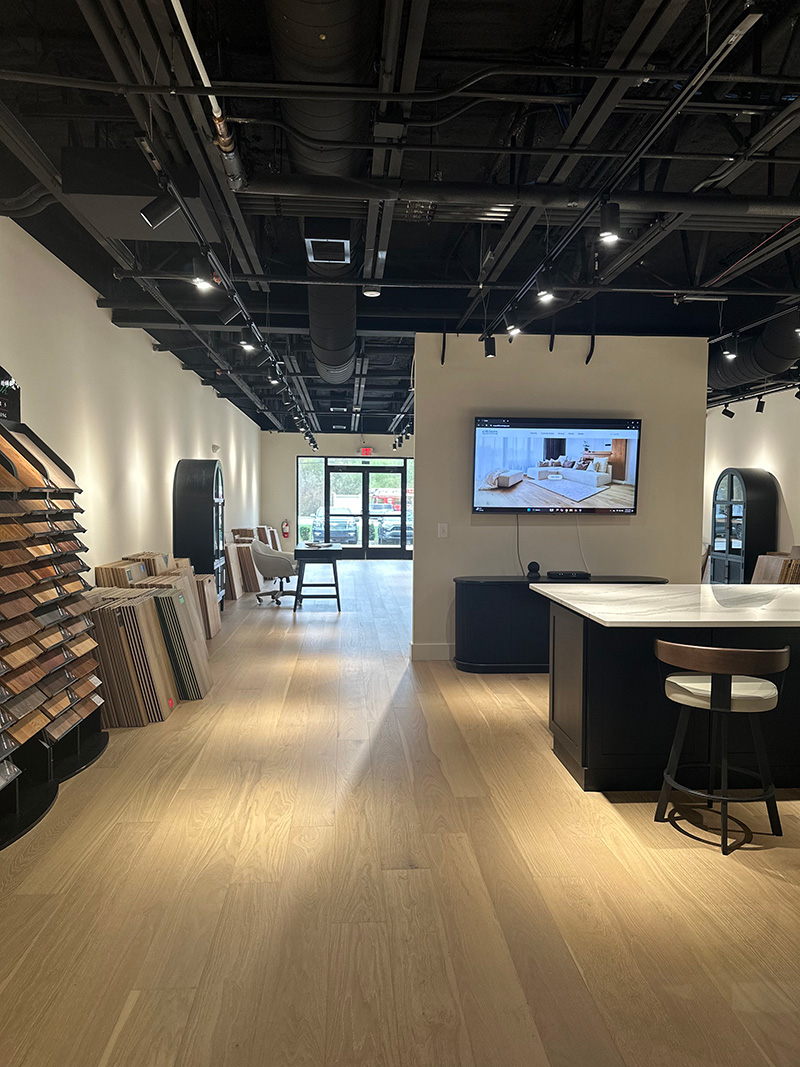
Choosing the right floor involves more than just picking a color from a small sample. Our curated showroom experience in the Franklin and Brentwood area prevents the costly selection mistakes that often happen when buying from big box retailers. You can see and feel the different material grades in person; this hands-on approach ensures the texture and grain pattern you choose in the showroom is exactly what ends up in your living room. We believe that an informed homeowner is a confident homeowner, and we're here to act as your dedicated guide through every technical detail.
The Value of Local Expertise in Franklin & Brentwood
Middle Tennessee's humidity presents unique challenges that out-of-state contractors often overlook. Rick McGrath and our design team prioritize structural stability to protect your warranty and your investment. We understand how local moisture levels fluctuate, which is why we strictly adhere to NWFA-certified installation standards. This local insight is critical. It's the difference between a floor that stays beautiful for a century and one that requires expensive repairs after its first humid summer. We provide personalized guidance that balances your aesthetic desires with the practical requirements of our regional climate.
Getting Your Accurate Replacement Estimate
An accurate budget starts with a professional site measure, not an over-the-phone guess. We visit your home to identify potential subfloor issues and moisture concerns before any contracts are signed. This thoroughness helps us minimize waste factors, especially for complex layouts. For instance, while a standard room might require 10% extra material, a custom herringbone pattern requires more precise calculations to ensure the cost to replace hardwood floors stays within your initial budget. Before you sign any flooring contract, always ask these essential questions:
- Does this quote include the removal and disposal of my existing floors?
- How will you test and document the moisture levels of my subfloor?
- Are the transition strips and baseboards included in the final price?
- What specific NWFA standards will your installation team follow?
Our goal is to provide a transparent, turnkey experience that removes the stress from your home transformation. We invite you to schedule your professional measurement with McGrath Floor & Design today to take the first step toward a beautiful, long-lasting floor.
Start Your Home's Next Chapter with Confidence
Investing in new flooring is a significant decision that defines the character and comfort of your home. By looking beyond the initial sticker price and understanding the true cost to replace hardwood floors, you're better prepared to make choices that stand the test of time. Whether you opt for the structural stability of engineered planks or the timeless legacy of solid White Oak, success lies in the details of preparation and professional installation. Addressing moisture factors and subfloor integrity now ensures your investment remains a source of joy rather than a future repair project.
Since 2004, we've helped homeowners in Nashville, Franklin, and Brentwood navigate these choices with clarity and pride. Our NWFA certified installers bring over 50 years of combined experience to your doorstep, ensuring every plank is laid with master craftsmanship. We invite you to Request a Personalized Quote from McGrath Floor & Design to receive an expert, site-specific estimate tailored to your vision. Let's work together to turn your design dreams into a beautiful, lasting reality.
Frequently Asked Questions
How much does it cost to replace 1,000 square feet of hardwood in Nashville?
Industry data for 2026 suggests that the average cost for professional hardwood installation in Nashville for a 1,000-square-foot space typically ranges between $10,105 and $11,266. This estimate generally covers mid-range materials and standard labor. If you select luxury species like Walnut or request intricate patterns, your total investment will likely sit at the higher end of the market range.
Does the cost of hardwood replacement include moving furniture?
Furniture moving is usually treated as an additional service and isn't included in a baseline installation quote. Most professional teams charge a separate fee based on the number of rooms or the presence of heavy items like pianos and large armoires. You can often lower your project expenses by moving smaller items and clearing out closets before the crew arrives on-site.
Is engineered hardwood cheaper to install than solid hardwood?
Engineered hardwood is often more cost-effective to install because it typically requires less specialized labor than solid wood. While high-end engineered materials can have a significant purchase price, the ability to use click-lock or floating systems often reduces the overall cost to replace hardwood floors. Solid wood requires more time for nailing and, if unfinished, additional days for on-site sanding and staining.
How much extra should I budget for subfloor repairs?
You should plan to budget an additional $2 to $5 per square foot if your subfloor requires leveling or structural remediation. These costs are particularly common in older Middle Tennessee homes where foundations have settled over time. Addressing these dips and humps during the preparation phase is the only way to prevent your new floors from squeaking or gapping in the future.
Can I save money by pulling up the old flooring myself?
Performing the demolition yourself can save you between $1.50 and $3.50 per square foot in professional labor fees. It's a practical way to reduce the cost to replace hardwood floors if you have the time and tools to do it correctly. You must be careful to remove every staple and tack strip without damaging the subfloor, as any gouges you create will need to be repaired before the new wood is laid.
How long does a typical hardwood replacement project take in Brentwood?
A standard replacement project in Brentwood usually takes three to five days for pre-finished hardwood. If you choose solid wood that needs to be finished on-site, the timeline often extends to seven or ten days to allow for the staining and curing process. We always provide a detailed schedule during the initial measure so you can plan for the temporary disruption to your home life.
Does new hardwood flooring increase my home value in Middle Tennessee?
High-quality hardwood is a premier feature in the Middle Tennessee real estate market and can increase a home's sale price by 2% to 5%. Real estate professionals in Nashville and Franklin consistently report that genuine wood floors attract more buyers and help homes sell faster than those with synthetic alternatives. It's an investment that pays dividends in both daily enjoyment and long-term equity.
What is the most durable hardwood species for homes with pets and kids?
Hickory and White Oak are the top choices for durability in active households because of their impressive density and hardness. Hickory is particularly effective at hiding small dents and scratches due to its bold grain patterns and natural color variations. White Oak is also highly recommended for its structural stability and resistance to the moisture shifts common in our humid Tennessee climate.


