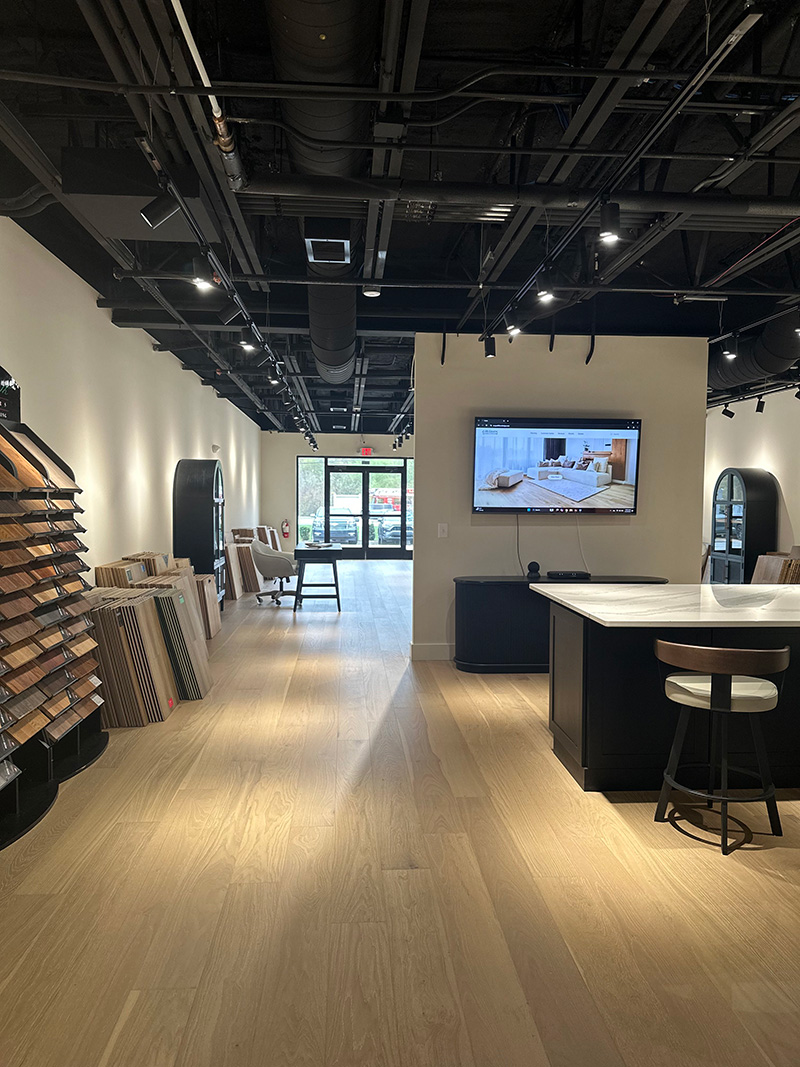

The floor that looks most striking in a sample may feel very different once it runs through your home. The question behind “light vs dark hardwood floors Franklin TN” is about more than style: it’s how each tone works with your natural light, furnishings, and daily routine.
Both light and dark hardwood can bring warmth and character to a Franklin home. You may be weighing how each shade affects a room’s feel, whether dust or pet hair will stand out, and why a sample seems to shift as daylight changes. Those details matter when choosing a floor you’ll live with every day.
This guide compares the look, upkeep, and room-by-room impact of light and dark hardwood. You’ll find practical ways to test samples against your finishes and furniture, then consider how your preferred tone can flow between rooms. The right shade suits your home’s light and your vision while feeling comfortable and cohesive in everyday life.
Key Takeaways
- Light and dark are relative visual categories; wood species, grain, stain, and finish all shape the final tone.
- Dust, pet hair, and everyday marks show according to contrast, texture, lighting, and the color of the debris, not tone alone.
- Compare samples beside fixed finishes like cabinets, trim, and stone, and view them at different times of day.
- Choose light vs dark hardwood floors Franklin TN by weighing room light, your home’s palette, and household routines together.
- McGrath Floor & Design can help connect your design vision with practical hardwood choices for your home.
Light vs. dark hardwood floors: how each tone changes a Franklin room
A floor tone can be difficult to judge from a photo or small sample. The same color may look brighter in a sunlit showroom, warmer beside cream walls, or more dramatic beneath evening lamps. When considering light vs dark hardwood floors in Franklin, TN, look beyond the shade name and assess how the floor relates to each room’s light and finishes.
“Light” and “dark” are visual categories, not fixed specifications. A pale natural wood can look warmer or cooler depending on its undertone, while a darker stain may reveal a different grain than expected. Species, grain pattern, stain, and finish all influence the result. For a general overview of hardwood characteristics, consider how wood’s natural qualities contribute to its appearance.
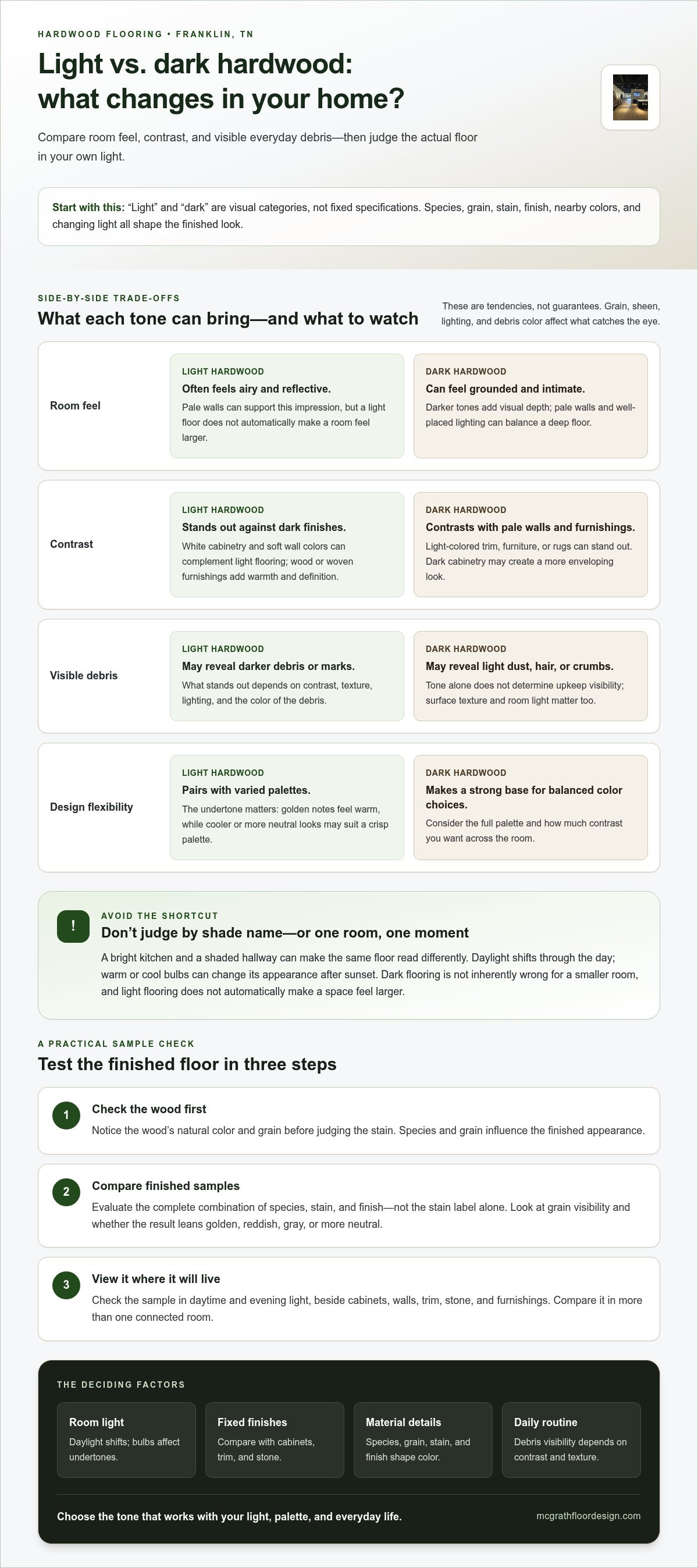
| Consideration | Light hardwood | Dark hardwood |
|---|---|---|
| Perceived brightness | Often feels airy and reflective | Can create a grounded, intimate feel |
| Contrast | Stands out against dark finishes | Contrasts with pale walls and furnishings |
| Visible dust | May reveal darker debris or marks | May reveal light dust, hair, or crumbs |
| Design flexibility | Pairs well with varied palettes, depending on undertone | Makes a strong base for balanced color choices |
These are tendencies, not guarantees. Grain, sheen, nearby colors, and the color of household debris all affect what catches the eye. Daylight shifts throughout the day, while warm or cool bulbs change a floor’s appearance after sunset. Check the tone in the actual room under the lighting you use, rather than judging it in only one setting.
What light hardwood can bring to a room
A lighter floor may give a room an airy impression, especially alongside pale walls, but it doesn’t automatically make a space feel larger. Grain and undertones matter: golden notes can make wood feel warm, while a cooler or more neutral look may suit a crisp palette. For example, light flooring can complement white cabinetry and soft wall colors. Wood or woven furnishings can add warmth and definition.
What dark hardwood can bring to a room
Darker tones add visual depth and can make furniture, rugs, or light-colored trim stand out. Their effect depends on the full palette and available light. Pale walls and well-placed lighting can balance a deep floor, while dark cabinetry may create a more enveloping look. Dark flooring isn’t inherently wrong for a smaller room. Consider the full combination, including how much contrast you want and how the room feels throughout the day.
In a Franklin or Brentwood home with connected living spaces, compare the tone in more than one room before settling on a direction. A shade that feels balanced in a bright kitchen may read differently in a shaded hallway. Choose a tone that supports the mood you want and works with the home’s fixed finishes and changing light.
How wood species, stain, and light shape hardwood floor color
A floor’s finished color comes from more than the stain name on a sample. The wood’s natural color and grain provide the starting point, stain shifts its tone, and finish affects how light reflects from the surface. That’s why two floors with similar color labels can look noticeably different in a Franklin home.
Stain is a color treatment that changes wood’s appearance while leaving its natural grain visible. It can deepen or warm the wood, but it doesn’t make every species look identical. The underlying material still influences the result.
Why the same stain can look different on different wood
Each species has its own natural color and grain pattern. Oak, for example, often has visible grain that remains part of the finished look. Another wood with a different natural tone or grain may take a similar stain differently. Even within one species, variation among boards can create subtle shifts across the floor. These are general material characteristics, not a guarantee that every board will look the same.
Stain labels are useful for narrowing options, but they can’t show the full effect on their own. Compare finished samples made with the wood and finish you’re considering. Look at the overall color, the grain’s visibility, and whether the result leans golden, reddish, gray, or more neutral. This makes the light vs dark hardwood floors Franklin TN decision about the actual material, not just a name or small color chip.
How Franklin-area room light affects floor color
Daylight changes in direction and intensity throughout the day, and the room’s windows and surroundings affect how much light reaches the floor. A sample may look crisp in bright daytime light, then reveal warmer or deeper undertones later. Room orientation can influence the quality of daylight, but no single direction guarantees how a floor will appear in every home.
Artificial lighting adds another layer. Warm bulbs can emphasize golden or reddish notes, while cooler bulbs may make some tones appear more neutral or subdued. For a useful comparison, view the sample in daylight and again under the lighting you typically use in the evening. Leave it near cabinets, walls, and furnishings so you can judge how its undertones relate to the room.
- Check the wood first. Notice its natural color and grain before judging the stain.
- Compare finished samples. Evaluate the complete combination of species, stain, and finish, not the stain label alone.
- View it in the room. Observe the sample in daytime and evening light alongside the finishes it will live with.
McGrath Floor & Design offers personalized guidance to connect your design vision with practical hardwood choices. Explore hardwood flooring guidance as you narrow down tones and materials for your home.
Light or dark hardwood: compare upkeep, marks, and everyday use
A floor’s color can affect how quickly you notice dust or a stray mark, but it doesn’t tell the whole story of living with it. The color of debris, the wood’s grain, the finish, and the room’s lighting all change what stands out. Floor tone can influence how visible debris appears, but it does not determine durability.
Which floor tone makes dust and marks more noticeable?
Contrast is a useful place to start. Pale dust or light-colored pet hair may be easier to see against a dark floor; dark crumbs or hair may catch the eye on a lighter one. A mid-tone or varied grain can break up the surface visually, but no shade hides every speck, scratch, or everyday mark.
Finish and lighting matter, too. A mark that’s subtle in a softly lit room may become more apparent when sunlight falls across the floor. Grain variation can help set realistic expectations by showing how natural changes across the boards affect the overall look. If possible, assess a sample in a lived-in setting rather than judging only a pristine piece under showroom lighting.
Match floor color to household routines
Think about where everyday traffic happens. An entryway may collect grit and outdoor debris, while pets and children can add hair, crumbs, and activity to shared rooms. Consider your pets’ coat colors and the usual debris in your home. Then decide how often you’re comfortable cleaning to keep the floor looking the way you like.
Keep appearance separate from performance. A darker color isn’t automatically more scratch-resistant, and a lighter one isn’t inherently less durable. Scratch resistance and care depend on the flooring and its finish, while color affects how noticeable a mark may be. Choose cleaning methods and products according to the flooring’s care guidance, rather than assuming a light or dark surface needs a particular routine.
- With pets: Compare the color of their hair with the floor tone, and consider where they spend the most time.
- With children: Think about busy paths and how visible crumbs or small marks might be in the rooms they use.
- At entryways: Consider how outdoor debris may contrast with the floor and what cleaning routine feels manageable.
For light vs dark hardwood floors Franklin TN, the useful question isn’t which tone hides everything. Neither does. It’s which one makes everyday signs of use feel acceptable in your home, given your lighting, household routines, and willingness to maintain the floor.
To weigh color alongside broader material and care considerations, explore the 2026 hardwood flooring homeowner's guide. It can help frame your choice around more than appearance alone.
How to test light and dark hardwood samples in your Franklin home
A screen can help narrow your options, but it can’t show exactly how a floor will look under your own windows, lamps, and furnishings. Give the leading tones a real-room test before deciding. Comparing samples in place helps reveal undertones and contrasts that may be easy to miss in a photo.
A four-step in-home floor sample test
Use comparable samples and assess them where the finished flooring will go. Keep the test simple, but give each option enough time and context to show how it fits your home.
- Shortlist a few tones. Choose a small range of light and dark options that suit your design direction. A few distinct candidates are more useful than many nearly identical shades.
- Place samples in the room. Set each sample on the floor near the area where the hardwood will be installed. If possible, use a larger sample so you can see more of its grain and overall color.
- Observe them throughout the day. Look in the morning, around midday, and in the evening. Notice whether a sample shifts warmer, cooler, lighter, or deeper as daylight changes and your usual lights come on.
- Compare against the room. Move samples beside fixed finishes such as cabinets, trim, and existing stone. Check them near major furnishings, too, to see whether the floor supports the room’s palette or competes with it.
Questions to ask while comparing floor tones
Look beyond which sample catches your eye first. Ask how each option feels in the room and whether it still suits the space under different lighting. A tone that looks appealing by itself may feel too cool beside warm cabinetry or too dramatic next to dark furniture.
- Which sample best supports the mood you want, such as calm and airy or rich and grounded?
- Does the color work with permanent finishes, including cabinets, trim, and stone?
- Does your preferred shade still feel right under the lighting you use each evening?
- How does the sample relate to the main furnishings and colors that will remain in the room?
Leave the samples in place long enough to see them in ordinary use. View them from different parts of the room, not only up close, and compare the overall impression. If two choices remain close, note what you like about each. That can clarify whether your priority is a particular undertone, stronger contrast, or a more understated look.
Remember that tone and floor construction are separate decisions. Color helps shape the room’s appearance; the type of hardwood relates to the flooring choice and installation planning. For background on that distinction, see this engineered hardwood installation guide for Brentwood homeowners.
For a thoughtful comparison of light vs dark hardwood floors Franklin TN, McGrath’s flooring team can help you weigh your design vision alongside practical considerations. Explore hardwood flooring guidance as you plan your sample review.
Choose hardwood flooring with McGrath Floor & Design in Franklin
The right hardwood tone should feel at home in your rooms, not just look appealing on a sample board. Bring together what you’ve learned about light, color, and daily use, then use those priorities to guide your selection. For light vs dark hardwood floors Franklin TN, there’s no universal winner. The best fit depends on how your home looks and how you use it.
Before choosing, check four things:
- Room light: Does the tone feel right in the natural and artificial light the room actually gets?
- Existing palette: Does it work with fixed finishes, wall colors, and furnishings?
- Household routines: Does the floor’s appearance suit the way your household uses the space?
- Sample results: Does your preferred option still feel cohesive after you’ve viewed it in the room?
Bring your color preferences into the showroom conversation
Make your selection conversation specific. Bring photos of the room, including cabinets, trim, stone, and furnishings that will remain in place. Share how the space is used, what you want it to feel like, and which tones stood out during your sample comparisons.
McGrath Floor & Design’s selection guidance connects your design vision with practical flooring choices. The team can help you consider how the hardwood’s tone and character relate to the room’s palette and use, keeping the discussion focused on your preferences rather than a passing trend. You don’t need to arrive with every detail settled. A clear sense of what you like and what you want to avoid is a useful starting point.
Move from flooring selection to installation
Once a tone feels right, consider the flooring choice in the context of the full project and the room where it will be installed. Material selection comes first; professional installation brings the chosen hardwood into the finished space. Keeping both steps in view connects the look you’ve chosen with the finished room you’re planning.
Take time to compare options, note what matters most, and bring your questions into the conversation. A thoughtful choice balances appearance with the practical needs of your home, without forcing you to choose a shade simply because it’s popular.
When you’re ready to take the next step, explore McGrath Floor & Design for local flooring guidance and professional installation as you plan your Franklin or Brentwood project.
Take the next step toward a floor that feels like home
The right hardwood tone can become a steady foundation for the rooms you’re shaping, complementing future furnishings and helping connected spaces feel considered. Let your in-home sample results guide the decision, then choose a shade that reflects how you want to live, not just what caught your eye first.
With light vs dark hardwood floors Franklin TN homeowners can make the choice personal: notice which option feels most natural in your rooms and gives you confidence when you picture it as part of everyday life. There’s no need to force a quick answer. A considered selection can make the finished space feel distinctly yours.
Ready to explore hardwood flooring for your home? Explore hardwood flooring with McGrath Floor & Design and take the next step toward a floor that suits your vision. Start planning your Franklin or Brentwood project with a tone that feels right for your home.
Frequently Asked Questions
Can you change dark hardwood floors to a lighter color without replacing them?
Sometimes, but changing a dark floor to a lighter color usually takes more than applying a lighter stain over the existing finish. The old finish and stain may need to be removed first, and the floor’s condition and construction affect what work is suitable. Because sanding can’t be done the same way on every floor, have the existing hardwood assessed before planning a color change.
Is hardwood floor color different under LED lighting than in daylight?
Yes, a floor can appear different under LED bulbs than it does in daylight. LED bulbs vary in color temperature, which can make warm undertones seem stronger or cooler tones look more pronounced. To avoid choosing based on a single lighting condition, view a sample near a window during the day and again beneath the bulbs you use most often. The comparison is especially helpful in rooms used after sunset.
Can sunlight change the appearance of hardwood floors over time?
Yes, prolonged exposure to sunlight can gradually affect the appearance of some hardwood and floor finishes. The amount and character of change depend on the wood, finish, and light exposure. A floor partly covered by furniture may develop visible differences between exposed and shaded areas. If a room gets strong direct sun, consider how window coverings and furniture placement may affect the floor’s appearance over time.
Do area rugs make hardwood floors change color unevenly?
They can contribute to an uneven appearance because the wood under a rug receives less light than the surrounding floor. If you later move the rug, the newly exposed area may look different until the contrast lessens, though the extent varies by floor and exposure. Rotating rugs and occasionally changing their placement can help distribute light exposure more evenly. Use a rug pad suited to your floor’s care guidance.
Does hardwood floor color affect a room's resale appeal?
Color can influence a buyer’s first impression, but no light or dark shade guarantees stronger resale appeal. A floor that coordinates with the home’s finishes and feels appropriate to the space may help the interior feel cohesive. Condition and overall presentation matter too. For light vs dark hardwood floors Franklin TN homeowners should weigh personal preference alongside how naturally the tone fits the home, rather than choosing a shade based on a supposed universal resale rule.
Are light or dark hardwood floors better for homes with pets?
Neither tone is automatically better for pets. Think about your pet’s coat color and where hair tends to collect: light fur may be more visible on a dark floor, while darker fur can contrast with a pale one. Also consider how active your pets are and the floor’s finish, since color alone doesn’t determine scratch resistance. A sample viewed with your pet’s hair color in mind can offer a more useful comparison.
What should I bring when comparing hardwood samples in Franklin?
Bring clear room photos, including views toward windows and the main furnishings, plus notes on finishes that will stay. If you can, bring a cabinet or paint sample, or a photo taken in the room under its usual evening lights. Note which rooms connect so you can think about how the floor tone will flow between them. These references help make a showroom sample review more relevant to your Franklin or Brentwood home.


