

The natural cleaner in your pantry may be the wrong choice for protecting hardwood. So, can you use vinegar on hardwood floors? In most cases, it’s safer not to use it routinely. Vinegar’s acidity may gradually dull or wear down some protective finishes, though one diluted cleaning is unlikely to cause visible damage.
Conflicting advice is understandable: vinegar is inexpensive, familiar, and often recommended as a DIY cleaner. But hardwood floors have different finishes, and unfinished, oiled, or waxed surfaces need particular care. The main concern is damage to the finish that protects the wood, not simply to the wood itself.
This guide explains why recommendations differ, what repeated use may do, and how to clean hardwood more cautiously with minimal moisture and a cleaner made for wood floors. You’ll also learn why identifying your floor’s finish matters, what signs of wear to watch for, and when a persistent change in appearance may call for professional guidance.
Key Takeaways
- If you’re asking “can you use vinegar on hardwood floors,” the cautious answer depends on the finish and floor condition, but vinegar isn’t the safest routine choice.
- If you don’t know the finish, or the floor is waxed or unfinished, avoid homemade acidic mixtures and follow the floor’s care instructions.
- Use a gentler routine: remove grit first, apply a wood-floor cleaner sparingly, and follow its directions for drying.
- Persistent dullness or discoloration may signal that the finish needs attention rather than another cleaning solution.
- Thoughtful care helps preserve hardwood’s appearance as a lasting home investment.
Can You Use Vinegar on Hardwood Floors? The Short Answer
Vinegar isn’t the cautious default for cleaning hardwood floors. Whether a diluted solution causes a noticeable change depends on the finish, the floor’s condition, how often you use it, and how much moisture remains on the surface. One past cleaning doesn’t mean your floor is damaged, but regular use may increase the risk of dulling or wearing the finish over time.
The question “can you use vinegar on hardwood floors” has no simple yes-or-no answer for every home because hardwood surfaces and finishes vary. A surface-finished floor may respond differently from a waxed, oiled, unfinished, worn, or already damaged floor. General information about wood flooring can help explain the differences, but the care instructions for your specific floor should guide your cleaning decisions.
Why trustworthy sources disagree about vinegar
Clean Mama describes diluted-vinegar methods for some sealed or prefinished floors, while Bona advises against vinegar and water, warning that repeated use may affect the finish. These recommendations reflect different assumptions about the floor and different levels of caution. A method that appears to work on one intact floor isn’t necessarily a good fit for a floor with a different finish or condition.
The practical distinction is that diluted vinegar may seem to work without an immediate visible change, while a more cautious approach limits repeated exposure to an acidic solution. Bona also cautions about excess water, which can contribute to swelling or discoloration. Whichever advice you encounter, the flooring manufacturer’s instructions are more relevant to your floor than a general recipe.
The cautious takeaway for homeowners
For everyday care, choose a cleaner labeled for wood floors and follow the flooring manufacturer’s instructions when available. Those directions are more specific to your surface than a homemade recipe. Apply cleaning solutions sparingly, since moisture can be a concern even when the product is suitable.
A cautious rule of thumb: choose a wood-floor cleaner over vinegar, especially if you don’t know the finish or its condition. That doesn’t mean vinegar will always cause visible harm. It simply favors a product made for wood floors when the effects of repeated cleaning can be difficult to assess.
If you’ve already used vinegar
Don’t assume one use has ruined the floor. Stop using vinegar as a routine cleaner and watch for persistent dullness, cloudiness, discoloration, or other surface changes. If the floor looks unchanged, return to the care instructions and use a suitable wood-floor cleaner going forward. If visible changes remain, avoid trying stronger mixtures or adding more moisture. The floor’s finish and condition will help determine what attention it may need.
How Vinegar and Water Can Affect a Hardwood Floor's Finish
To understand what happens when you ask, “can you use vinegar on hardwood floors,” separate the floor’s surface from the wood beneath it. During routine cleaning, a cloth or mop mainly contacts the finish, the protective layer over the wood. That layer helps shield the floor from everyday wear and spills, but its composition and condition affect how it responds to cleaning products.
What the floor finish changes
A finished floor has a protective surface coating; an unfinished floor does not. Waxed and oiled floors have different surface treatments and care needs, so don’t assume they respond like floors with a durable surface coating. Wood species, finish type, age, and wear can all influence a floor’s appearance and maintenance requirements.
Vinegar is acidic. Repeated exposure may gradually affect some finishes and contribute to a dull or cloudy appearance, but that’s a potential risk, not a guaranteed result of every use. Dilution changes the solution, and an intact finish may respond differently from one that’s worn or damaged. There’s no reliable universal timeline for when a change might appear, so don’t treat “nothing happened after one cleaning” as proof that regular use is harmless.
The finish matters because the same cleaning mixture can affect different floor systems in different ways. If the surface is scratched, worn through, or unknown, you can’t assume the solution will interact with it as it would with an intact finish. That’s why care instructions for the specific flooring are more useful than a recipe presented as safe for every hardwood floor.
Why water exposure matters
Water presents a separate concern from vinegar’s acidity. Wood can absorb moisture, which may contribute to swelling or discoloration, particularly if liquid reaches vulnerable areas or remains on the floor. A lightly damp cloth used carefully is different from a wet mop that leaves a visible film or puddles behind.
Pay attention to where moisture can collect, including seams, edges, and areas around spills. Wipe spills promptly, use only the amount of liquid needed, and don’t leave standing water to air-dry on the surface. Even a cleaner made for wood floors should be applied according to its label and your flooring’s care instructions.
Cautious hardwood care means controlling both the cleaner and the moisture it leaves behind. If the finish is unclear or the floor already shows changes, avoid experimenting with acidic mixtures or adding more water. McGrath Floor & Design helps homeowners select and install hardwood flooring, with product guidance that takes the flooring choice into account.
Should You Use Vinegar on Your Hardwood? A Practical Decision Guide
The right choice depends less on a popular cleaning recipe and more on what’s protecting your floor. Use this guide as cautious general information, not a diagnosis of a specific floor. If you know the flooring or finish manufacturer, follow its care instructions ahead of generic online advice.
| Floor situation | Cautious choice | Why |
|---|---|---|
| Known, intact finish | Follow the manufacturer’s care instructions; a wood-floor cleaner is the conservative default. | Guidance differs, and a sound-looking surface doesn’t make every cleaning solution suitable. |
| Unknown finish | Skip vinegar and homemade acidic mixtures. | Without knowing the surface treatment, you can’t confidently judge how it may respond. |
| Waxed or unfinished floor | Avoid vinegar and excess moisture. | These floors don’t have the same protective surface layer as many finished floors. |
| Vinegar used before | Stop using it routinely and look for persistent changes. | One past use doesn’t prove the floor is damaged, but repeated use may increase risk. |
If you know the floor’s finish
Start with the flooring or finish manufacturer’s maintenance instructions, especially if they identify approved cleaner types or methods. Those directions apply more closely to your floor than a general household recipe. If the paperwork is unavailable, consider the floor’s age and visible condition, but don’t assume its appearance alone identifies the finish.
Clean Mama recommends diluted vinegar for some sealed or prefinished floors, while Bona advises against vinegar and water. These are different recommendations, not a guarantee that either approach suits every floor. If you’re asking, “can you use vinegar on hardwood floors,” the more cautious answer is to choose a cleaner made for wood floors unless your flooring’s care instructions say otherwise.
If the finish is unknown, worn, waxed, or unfinished
Choose caution. Skip vinegar if you can’t identify the finish, or if the floor is waxed, unfinished, or visibly worn. Areas where the protective surface has thinned may be more exposed to moisture, so a homemade mixture could pose a different risk there than on an intact surface.
Don’t test vinegar on a visible, scratched, or damaged spot to see how the floor reacts. If you’ve already used it, don’t panic: discontinue routine use and note whether dullness, cloudiness, or discoloration persists. A change in appearance deserves attention, but it doesn’t identify the cause or prove permanent damage. Use the floor’s care instructions to guide your next cleaning choice.
How to Clean Hardwood Floors Without Vinegar
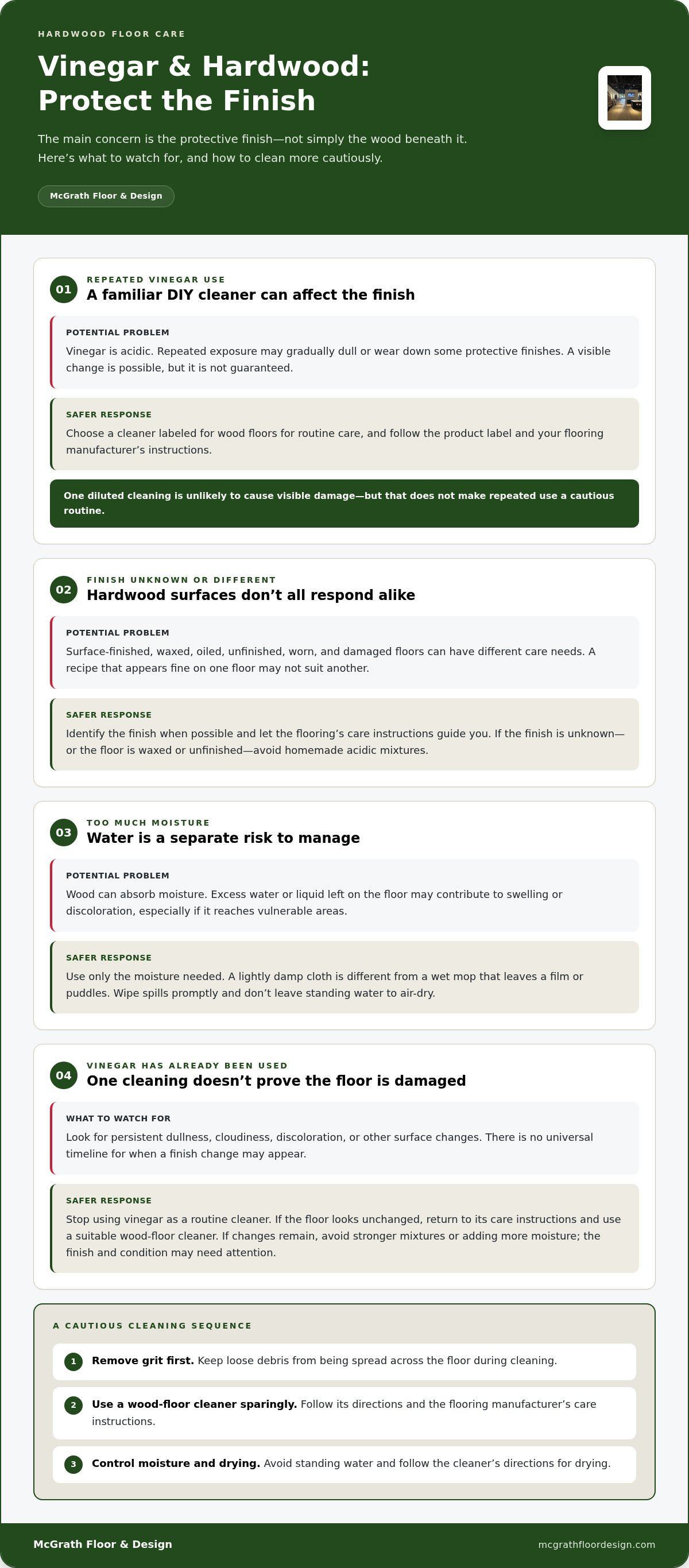
A simple routine can keep everyday dirt from building up without relying on a homemade acidic mixture. If you’re wondering “can you use vinegar on hardwood floors,” a lower-risk everyday approach is to use a cleaner labeled for wood floors and follow its directions along with the flooring manufacturer’s care instructions. The aim is straightforward: remove grit first, use as little liquid as practical, and leave the floor dry rather than wet.
- Remove grit before cleaning. Sweep or dust-mop to lift dust, crumbs, and other particles that could scratch the surface as you mop. A vacuum can also help if it’s suitable for hard floors; avoid a beater bar that could scuff the finish.
- Choose a compatible cleaner. Use a product labeled for wood floors and check that its directions fit your floor’s care instructions. A pH-neutral wood-floor cleaner is a cautious choice, but the manufacturer’s guidance for your specific floor should take priority.
- Apply sparingly. Follow the product label, using a microfiber mop or pad that’s damp rather than soaking wet. Don’t pour cleaner directly onto the floor unless the product directions specifically call for it.
- Finish and dry as directed. Follow the cleaner’s instructions for drying or buffing. Wipe up excess liquid promptly, and don’t leave puddles or standing water on the floor.
This order matters. Grit trapped beneath a mop can act like a fine abrasive, while excess liquid creates an avoidable moisture concern. Work in manageable sections so you can control how much solution reaches the surface and notice any areas that remain wet. Rinse or replace a dirty mop pad as needed, following its care directions, rather than spreading soil across the floor.
If you’ve already used vinegar, there’s no need to respond with a stronger cleaner or repeated scrubbing. Stop using the mixture routinely. If liquid remains, remove it with a soft, slightly damp cloth if needed, then dry the area. Return to a suitable wood-floor cleaner and watch for changes that persist. Avoid abrasive pads, scouring powders, and leaving a wet mop on hardwood. Steam mops and wet mopping are also best avoided because excess moisture and heat can be hard on wood floors.
Good maintenance starts with understanding the floor as well as the cleaning method. McGrath Floor & Design’s 2026 hardwood flooring guide offers broader material guidance for homeowners considering hardwood.
To explore hardwood flooring options for your home, connect with McGrath Floor & Design.
Protecting Hardwood Floors in Franklin and Brentwood Homes
Hardwood is a considered investment, and the way you care for it over time can help preserve the look you chose for your home. For homeowners asking, “can you use vinegar on hardwood floors,” a cautious cleaning routine is a practical place to start: follow the flooring’s care instructions, choose products intended for wood floors, and avoid unnecessary moisture. These habits matter in Franklin, Brentwood, and across Greater Nashville.
When a cleaning concern may be a floor concern
Pause your usual cleaning approach if you notice dullness that doesn’t lift, discoloration, a cloudy appearance, or changes near areas where liquid may have remained. These signs don’t identify the cause by themselves. They could relate to the finish, the floor’s condition, moisture exposure, or another issue, so adding vinegar or scrubbing more vigorously may not be the right next step.
Instead, avoid experimenting with additional solutions and review the floor’s care instructions if you have them. The appropriate response depends on the flooring material and its current condition. A surface that looks worn may need different attention from one that is simply showing ordinary soil. If a visible change persists, flooring guidance can help you understand what factors to consider before deciding what to do next. No single cleaning remedy can be assumed to restore every floor.
A local perspective on choosing and caring for hardwood
McGrath Floor & Design serves homeowners across Greater Nashville, including Franklin and Brentwood, with hardwood flooring selection, professional installation, and guidance through the product selection process. The owners and partners bring more than 50 years of combined industry experience. Their perspective can help homeowners consider how flooring choices and surface condition affect their needs, without treating a cleaning product as a one-size-fits-all recommendation.
If you’re considering hardwood for your home or comparing flooring types, material guidance can help you make a thoughtful choice and understand the care considerations involved. Explore the engineered hardwood flooring guide for more on this option.
Protecting hardwood doesn’t require a complicated routine. Choose care suited to your floor, keep moisture in check, and treat persistent changes as a reason to pause rather than reach for a stronger cleaner. McGrath Floor & Design helps homeowners in Franklin, Brentwood, and the wider Nashville area select hardwood flooring and plan professional installation.
Make Your Next Flooring Choice With Confidence
The question “can you use vinegar on hardwood floors” is a reminder that good care starts with knowing what your floor needs, not following a one-size-fits-all recipe. Keep the flooring care instructions somewhere easy to find, and use them when choosing a cleaning method. If you’re planning a future update, consider how the material and finish will fit your home and the care routine you’re comfortable maintaining.
Thoughtful flooring choices can bring lasting character to a room. McGrath Floor & Design serves Greater Nashville homeowners, including those in Franklin and Brentwood, drawing on more than 50 years of combined experience among its owners and partners. Explore hardwood flooring options with McGrath Floor & Design as you plan your next step.
Frequently Asked Questions
Can diluted vinegar be used on sealed hardwood floors?
Some sources recommend diluted vinegar for certain sealed floors, but a sealed surface doesn’t guarantee compatibility. If you’re asking, “can you use vinegar on hardwood floors,” check the care instructions for your specific flooring before applying any homemade solution. A cleaner labeled for wood floors is the more cautious option for routine use. Don’t assume a recipe that worked on one sealed floor is suitable for another.
What should I do if I already cleaned my hardwood floors with vinegar?
One cleaning doesn’t mean you’ve ruined the floor. If any solution remains, remove it with a soft cloth and avoid rinsing with more water. Once the area is dry, inspect it in natural light for a persistent change in sheen or color. If you don’t notice a change, use the floor’s recommended care method going forward. If the appearance has changed, avoid trying to correct it with stronger cleaners or abrasives.
Is vinegar safe for engineered hardwood floors?
Not necessarily. “Engineered” describes how the flooring is constructed, but it doesn’t tell you which surface finish is present or what cleaner its manufacturer recommends. Check the product’s care guide, especially if you know the brand or have installation paperwork. Until you can identify the recommended method, avoid vinegar and use only a cleaner labeled for wood floors that fits the manufacturer’s instructions.
Can vinegar remove wax from hardwood floors?
Vinegar isn’t a dependable or cautious way to remove wax. Its acidity and the water in a vinegar solution may affect a waxed floor’s appearance, and rubbing or scraping to lift residue could add surface damage. Don’t treat a dull or sticky patch with more vinegar. Follow care guidance intended for that floor’s wax finish before attempting to remove buildup or change the surface treatment.
Does vinegar damage hardwood floors immediately or only over time?
Visible effects aren’t inevitable after one use. Concern is generally greater with repeated exposure, which may gradually dull some finishes, while prolonged moisture can create a separate risk. Results depend on the finish, its condition, and how much liquid is left behind. If you notice a change after cleaning, stop using the mixture and don’t assume the cause or permanence from appearance alone.
Are steam mops a safer alternative to vinegar on hardwood?
No. The National Wood Flooring Association advises against steam mops on hardwood because heat and moisture can harm the finish or contribute to swelling, cupping, and discoloration. A steam mop isn’t a safer substitute simply because it avoids vinegar. Choose a method allowed by the flooring manufacturer, and avoid applying steam or leaving wetness on the surface.


