
Cabinets don’t need to match flooring exactly. If you’re learning how to match flooring with cabinets in Franklin, start by creating contrast: keep wood flooring and cabinets at least two shades apart, and choose undertones that complement each other.
It’s easy to focus on color alone, but a pairing can look different in your kitchen than in a showroom. Natural and artificial light both affect how cabinet finishes, wood grain, and floor color appear together.
This guide explains how contrast, undertones, grain, and texture help balance a kitchen, and why it matters to view flooring and cabinet samples together in your own lighting. You’ll also learn how light can change the look of a pairing before you settle on a final design.
Key Takeaways
- Use contrast to give cabinets and flooring definition rather than trying to make them an exact match.
- Coordinate warm or cool undertones across the kitchen, then let one surface take the visual lead.
- Balance wood grain and texture so the room feels layered without becoming visually busy.
- Compare flooring and cabinet samples under your kitchen’s natural and artificial light before settling on a pairing.
1. Should Your Kitchen Cabinets Match Your Flooring?
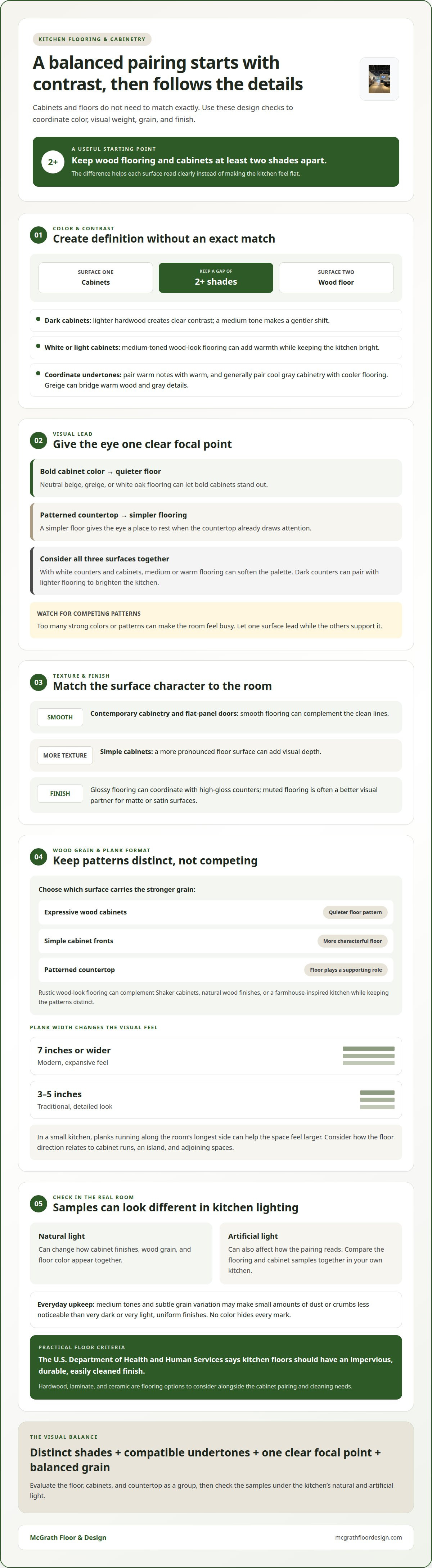
Kitchen cabinets and flooring don’t need to match exactly. A flooring professional plans them together, then uses contrast to give each surface definition. Matching wood tones too closely can make a kitchen feel flat, while a complementary floor creates a more cohesive finish. For wood floors and cabinets, a difference of at least two shades can help distinguish the surfaces.
For homeowners learning how to match flooring with cabinets in Franklin, a useful starting point is the room’s visual balance. With dark cabinets, lighter flooring can keep the kitchen from feeling heavy. Light hardwood beneath dark wood cabinetry creates clear contrast, while medium-tone flooring offers a gentler shift. For white or light cabinets, medium-toned wood-look flooring can add warmth while keeping the room bright.
Color undertones matter as much as lightness or darkness. Compare whether the cabinets read warm, cool, or neutral, then look for flooring with compatible undertones. Natural wood cabinets, for example, can pair with a complementary floor that differs in shade and grain rather than repeating the exact same wood color. This keeps the pairing coordinated without making every surface look identical.
White cabinets can work with medium wood tones, while gray cabinets pair with flooring that complements their warm or cool cast. Natural wood cabinets benefit from a distinct, complementary floor; dark cabinets can work with lighter hardwood or a balanced medium tone. These combinations maintain contrast without letting one surface overpower the room.
When considering how to match flooring with cabinets in Franklin, think about appearance as well as everyday upkeep. Medium tones and subtle grain variation may make small amounts of dust or crumbs less noticeable than very dark or very light, uniform finishes. No color hides every mark, but a less uniform appearance can make debris less conspicuous between cleanings.
For kitchens in Franklin, Tennessee, flooring options include hardwood, laminate, and ceramic. Consider the material alongside the cabinet pairing and cleaning needs. The U.S. Department of Health and Human Services says kitchen floors should have an impervious, durable, easily cleaned finish. Material, finish, and color all contribute to a practical, coordinated kitchen.
2. Balancing contrast, undertones, focal points, and textures
A flooring professional starts by reading the cabinet color’s undertone, not just its surface shade. Warm wood cabinets pair naturally with flooring that also has warm notes, while cool gray cabinetry generally suits cooler flooring. For example, a greige floor can bridge warm wood and gray details when the room includes both.
Next, identify the kitchen’s focal point. If cabinets have a bold color, a neutral floor such as beige, greige, or white oak lets them stand out. A patterned countertop already draws attention, so simpler flooring gives the eye a place to rest. Too many competing colors or patterns can make the room feel busy rather than cohesive.
Texture and finish help define the mood. Smooth flooring can complement contemporary cabinetry and flat-panel doors, while a more pronounced surface adds visual depth beside simple cabinets. A glossy floor finish can coordinate with high-gloss counters; muted flooring is often a better visual partner for matte or satin surfaces. These choices shape the room’s character, from polished luxury to a quieter, timeless look.
Contrast should feel intentional, not abrupt. With white counters and cabinets, medium-tone or warm flooring can soften the palette. Dark counters, by comparison, can pair with lighter flooring to brighten the kitchen. Consider all three surfaces together so a dramatic counter doesn’t clash with the cabinet color or floor texture.
Common missteps include mixing warm and cool undertones without a connecting element, matching every surface so closely that the room looks flat, and combining several strong patterns. A flooring professional compares the cabinet, counter, and floor samples as a group, then narrows the choices to a clear focal point and supporting textures. For a considered starting point, explore flooring options that suit your kitchen’s palette.
3. Balancing wood species and grain patterns
Wood cabinets and hardwood floors can share a natural character without using the same species or grain. A flooring professional considers grain scale, direction, and color together, then chooses which surface should carry stronger visual detail. For example, rustic wood-look flooring can complement Shaker cabinets, natural wood finishes, or a farmhouse-inspired kitchen. This pairing gives the room a related style while keeping the cabinet and floor patterns distinct.
Grain needs room to read clearly. If both the cabinets and floor have pronounced patterns, the surfaces can compete across the room. Pair expressive wood cabinets with a quieter floor pattern, or use more characterful flooring beside simpler cabinet fronts. The countertop also affects the balance: a patterned surface adds another visual element, so the flooring can play a supporting role instead of introducing another busy grain.
Plank width changes how hardwood reads across the kitchen. Planks 7 inches or wider can create a modern, expansive feel, while 3-to-5-inch planks can offer a more traditional, detailed look. A professional weighs those formats against cabinet style and room proportions. For example, wider planks may reinforce clean-lined cabinetry, while narrower boards can suit a more detailed, classic design.
Grain direction can guide the eye, too. Align the floor layout with the room’s shape and nearby spaces to create a considered transition from kitchen to adjoining areas. In a small kitchen, hardwood planks running along the room’s longest side can help the space feel larger. That direction also affects how the floor’s pattern relates to cabinet runs and an island.
Compare the full composition, not just a flooring sample beside one cabinet door. Evaluate the wood’s overall appearance, grain movement, plank width, and cabinet style as a set of choices. This helps hardwood add warmth and texture without making the kitchen feel visually crowded.
4. Testing flooring and cabinet samples in kitchen lighting
A sample can look harmonious under showroom lights, then shift beside the cabinets at home. Compare flooring and cabinet samples together in the kitchen, where natural and artificial light reveal how they work together. The practical takeaway is simple: judge the pairing in the room’s actual light before settling on its color, undertones, and finish.
The comparison starts by placing the samples beside each other, then viewing them in different parts of the kitchen. A window can brighten one floor area while cabinets beneath it remain shaded. The professional looks for changes in warmth, grayness, or green tones as daylight moves, checking whether the materials continue to complement each other rather than clash.
Artificial lighting matters, too. A 3000K warm-white LED bulb can enhance the richness of wood, while a 4000K cool-white LED bulb can make some natural wood floors appear slightly green or washed out. The professional considers the kitchen’s installed lighting before interpreting a sample’s color. A floor that looks balanced in daylight may feel different under evening lights.
Consider more than color. Check how the floor’s grain and finish look beside the cabinet surface, then bring the countertop into the comparison. For example, a warm wood floor may complement natural wood cabinets in daylight, yet appear more orange under warm artificial light. That shift can change the room’s overall feeling and visual harmony.
Review the samples under both natural and artificial light, from more than one position in the kitchen. The goal isn’t to make every surface identical; it’s to see whether their colors and textures work together across the room. This lighting test connects your final choice to everyday kitchen conditions.
Bring your cabinet and flooring choices together with professional flooring guidance before deciding on the finished pairing.
McGrath Floor & Design: Hardwood Flooring
McGrath Floor & Design helps Franklin homeowners coordinate flooring with cabinet color, grain, and overall kitchen design. Turn to the team when you’re weighing wood tones, comparing materials, or planning a floor that feels cohesive beside existing cabinets.
Hardwood Flooring brings natural grain and warmth to a kitchen, while Laminate Floors offer another way to coordinate a floor’s appearance with cabinet finishes. Ceramic is also an option when a different surface character better suits the room. McGrath Floor & Design helps you compare these choices alongside cabinet and countertop samples, so the finished pairing feels considered rather than selected in isolation.
Bring your kitchen vision and cabinet details to McGrath Floor & Design, then explore which flooring direction best supports them. Contact the team to discuss your flooring and cabinet pairing.
Move From Inspiration to a Confident Flooring Choice
Before settling on a kitchen palette, decide how you want the room to feel in everyday use. A calm, understated space calls for different visual priorities than a kitchen designed around expressive color or a distinctive island. That intention gives the flooring and cabinet decisions a shared direction, rather than leaving each choice to compete for attention.
As you plan how to match flooring with cabinets in Franklin, consider what you’re keeping and what you’re changing. Existing cabinets can anchor the palette; a full remodel allows more freedom to coordinate the room as a whole. Either way, the pairing should feel natural in your home, not just attractive as a standalone sample.
McGrath Floor & Design can help you explore flooring options in relation to your kitchen’s design. Bring your ideas into the conversation and take the next step at a pace that feels right. Contact McGrath Floor & Design to discuss your project and shape a kitchen that feels thoughtfully yours.
Frequently Asked Questions
Should Your Kitchen Cabinets Match Your Flooring?
No, cabinets and flooring don’t need to be identical. Exact matching can make the kitchen feel overly uniform, especially if both surfaces share prominent grain. Instead, treat them as related finishes within the same palette. For example, cabinetry can remain the room’s defining feature while flooring supports it with a compatible color and distinct visual character.
Can a flooring professional help me mix different wood species in the same kitchen?
Yes. A flooring professional can assess whether different species work together by comparing their color, grain character, and finish. The goal is a deliberate pairing, not an imitation of one wood across every surface. For instance, a clearly distinct floor can sit alongside wood cabinets when the overall palette feels connected and other finishes don’t introduce competing patterns.
Should a flooring professional recommend wood floors that are darker or lighter than my cabinets?
Either can work. Consider the kitchen’s overall balance, including cabinet coverage, room proportions, and the finishes already in place. In a kitchen with extensive dark cabinetry, a lighter floor can reduce visual weight. If cabinets are light, a darker floor may create a stronger foundation. Choose for the whole room, not color alone.
The Golden Rule: Contrast or Complement?
Use both: contrast to distinguish surfaces, and complementary color character to connect them. A floor and cabinets can differ in depth while still feeling coordinated. For example, a visibly lighter floor beneath dark cabinetry creates separation; a related color cast across nearby finishes can keep that contrast from feeling disconnected. The balance depends on the kitchen’s complete palette.
Should a flooring professional recommend flooring that is lighter or darker than kitchen cabinets?
There’s no single direction that suits every kitchen. A professional weighs how much cabinet surface dominates the room, how open the layout feels, and whether adjacent spaces share the same flooring. A lighter option may help offset substantial dark cabinetry; a deeper floor may ground a light cabinet scheme. The recommendation should support the room’s proportions and visual flow.
How does a flooring professional coordinate wood floor undertones with cabinet undertones?
Identify whether the cabinet finish reads warm, cool, or relatively neutral, then compare it with flooring that has a compatible cast. Also consider fixed finishes, such as a backsplash or countertop, that may influence how the wood appears. For example, a neutral element can help connect different wood tones, while a clashing undertone can make otherwise attractive finishes feel unrelated.


