
The right floor suits the room, not just the sample. Professional flooring advice in Franklin can help you consider how each space is used, assess existing floors, and narrow your choices to materials that fit your home.
Choosing flooring involves more than colour and appearance. Moisture, everyday wear, comfort, and the surface beneath your current floor can all affect your decision. A professional can help you weigh these details together, so your choice works well in daily life as well as in the finished room.
In this guide, you’ll learn how flooring advice can match materials to different rooms, what an evaluation of existing surfaces may cover, and how to prepare for an in-home consultation and measurements in Franklin. You’ll also see how McGrath Floor & Design’s hardwood, laminate, and ceramic options fit into the selection process. A clear picture of your needs and existing floors makes it easier to move from ideas to a well-planned project.
Key Takeaways
- Choose laminate by considering its wear layer, core, moisture needs, and the look you want for the room.
- Match flooring to how each space is used; tile can be a practical choice where moisture resistance and easy cleaning matter.
- An evaluation of existing floors can help determine whether the surface is ready for new flooring or needs attention first.
- Prepare for an in-home consultation by thinking through your room priorities and design preferences so measurements and material choices reflect your plans.
Laminate flooring selection in Franklin, Tennessee
Laminate offers a wood-inspired look and a layered construction suited to everyday use. For a home in Franklin, Tennessee, weigh room conditions, appearance, and installation needs when choosing it.
A protective wear layer helps guard laminate against scratches, stains, and fading, while the core supports stability and helps resist warping. This combination can suit busy areas where routine cleaning matters. The surface beneath the planks matters, too: an unsuitable or poorly prepared base can affect the finished floor’s performance.
Water-Resistant and Waterproof Options
Standard laminate is designed to resist limited moisture, while some products offer greater water resistance. Some waterproof versions use a concealed, resin-soaked core designed to create a barrier against spills and accidents. Compare the product’s stated moisture protection with the room’s likely exposure, rather than assuming every laminate floor is waterproof. Promptly cleaning up spills is still sensible floor care.
Laminate and Luxury Vinyl Comparisons
Laminate’s wear layer and core support durability, while its photographic layer can reproduce wood patterns such as oak or mahogany. Luxury vinyl plank is another option for high-traffic spaces, kitchens, and basements where moisture resistance and easy maintenance matter. Compare room conditions and the look you want: the better fit depends on your priorities, not appearance alone.
Tile-look laminate can mimic ceramic or porcelain, offering a different look from wood flooring. A click-and-lock design may not require adhesives or nails; in commercial settings, professionals may use glue for added reinforcement. Poor installation can compromise performance and may void product warranties.
For flooring work in Franklin, Tennessee, permit and building-code requirements depend on the project scope and existing conditions. Establish the requirements for the specific work before installation begins.
Licensing, insurance, and customer reviews are distinct factors in assessing contractors. No specific Franklin contractor’s credentials or review record are established here, so this section can’t identify a verified, well-reviewed list.
Franklin’s climate makes room exposure and moisture conditions important when choosing and maintaining flooring. Consider how much moisture a particular room may encounter as you compare laminate options.
Installation time for a home in Franklin depends on the area, preparation required, floor layout, and installation method. These factors shape the project schedule.
Warranty coverage and workmanship terms vary by company and product. Review the written terms for your chosen laminate and installation, including how improper installation could affect product warranty coverage.
Flooring material selection based on room use
Match each material to the room’s daily demands, not just its appearance. For homeowners seeking professional flooring advice in Franklin, room use is a practical place to start.
Comparing Flooring Durability and Cost
Hardwood, luxury vinyl plank, tile, laminate, and carpet differ in feel, maintenance, and suitability for each space. Hardwood offers a natural wood surface; tile suits areas where moisture resistance and easy cleaning matter. Laminate has a protective wear layer, while luxury vinyl plank can work well in high-traffic areas. Carpet provides a softer surface that may suit bedrooms.
There’s no useful cost ranking without considering the specific product and project. Compare the material, existing-floor preparation, installation needs, and expected upkeep together. Product warranties and workmanship terms are separate from how well a material suits a room, so consider both the written terms and the room’s demands.
Choosing Materials for Franklin Homes
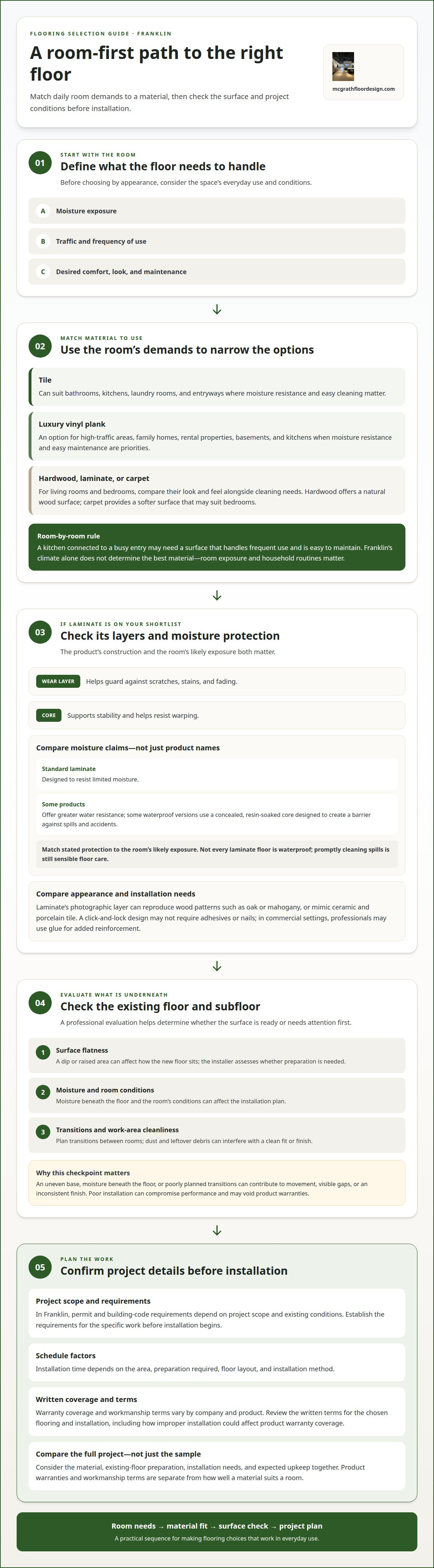
For Franklin homes, start by considering how each room is used. Tile can suit bathrooms, kitchens, laundry rooms, and entryways, where moisture resistance and easy cleaning matter. Luxury vinyl plank is another practical option for high-traffic areas, family homes, rental properties, basements, and kitchens where moisture resistance and easy maintenance are priorities.
In a living room or bedroom, compare the look and feel of hardwood, laminate, and carpet alongside cleaning needs. A kitchen connected to a busy entry may call for a surface that handles frequent use and is easy to maintain. Franklin’s climate alone doesn’t determine the best material; room exposure and household routines shape the decision. Professional flooring advice in Franklin can help match these priorities to a suitable material.
Use a room-by-room plan: identify moisture exposure, traffic, desired comfort, and maintenance expectations, then weigh materials against those needs. This keeps one attractive sample from driving choices throughout the home. For a wood-focused design, explore hardwood flooring options as part of that comparison.
Flooring preparation and surface evaluation
A sound finish starts with the surface beneath it. Before installation, a professional evaluates the existing floor, subfloor, and room conditions to identify any work that could affect the result.
Common installation problems include an uneven base, moisture beneath the floor, and poorly planned transitions between rooms. These issues can lead to movement, visible gaps, or an inconsistent finish. A professional inspection helps identify areas needing preparation and match the installation plan to the flooring material.
For example, a dip or raised area beneath a new floor can affect how the material sits. The installer assesses the surface and its flatness, then determines whether preparation is needed before installation. Cleaning the work area matters, too: dust and leftover debris can interfere with a clean fit or finish. Each step helps the new surface meet adjoining rooms neatly.
Pay attention to moisture before installing any floor covering. The US EPA advises drying wet under-flooring with a vacuum or by exposing it to the air. A flooring professional can assess affected areas and allow for drying before proceeding, rather than covering a damp surface.
Existing hardwood may not need replacement. If it is scratched, dull, faded, or worn but remains structurally sound, refinishing may be suitable. An evaluation helps distinguish cosmetic wear from problems requiring more extensive preparation. For instance, worn finish alone is different from movement or damage to the floor structure.
During an evaluation, the professional considers the current material, surface condition, signs of moisture, room transitions, and planned replacement. Point out worn areas and explain how each room is used to help focus the inspection. Addressing surface concerns before installation supports an even result and helps avoid preventable complications once the new floor is in place.
In-home consultation and measuring
An in-home consultation connects material choices to your actual rooms, existing surfaces, and measurements. For a Franklin home, a professional can discuss your priorities, inspect the areas you’re considering, and gather dimensions for an estimate.
Before the visit, note which rooms you’re updating and how you use each one. Mention priorities such as a hardwood look in the living room or an easy-to-clean surface near an entry. These examples help focus the discussion on suitable materials, room transitions, and the condition of your current floor.
During measuring, the professional records the shape and dimensions of each area, including spaces that aren’t simple rectangles. Doorways, alcoves, and connections between rooms can affect material quantities and installation planning. The professional can also inspect the existing floor and identify areas that may need preparation before installation.
Ask what the estimate includes, how surface preparation and transitions are handled, and which installation steps apply to your chosen flooring. Clarify the product warranty and workmanship terms. These questions help you understand the full project scope, rather than focusing only on the material in a sample.
Franklin homeowners can discuss flooring choices and measurements at McGrath Floor & Design’s local showroom. A showroom consultation connects samples and design preferences to the rooms you’re considering; an in-home visit adds room-specific dimensions and observations about the existing surface. Together, these details support a more informed estimate.
Bring your room priorities, examples of preferred colours or finishes, and notes about worn or damaged areas. For instance, point out a doorway where two floor surfaces meet or a corner with visible wear. These details help the professional guide the discussion and measurement process.
To discuss room measurements and flooring choices, schedule a flooring consultation.
McGrath Floor & Design: Hardwood Flooring
McGrath Floor & Design can help connect your room-by-room plans with flooring choices and installation guidance. Turn to the team when you’re ready to compare hardwood flooring, laminate floors, and ceramic for your home.
In a living room or bedroom, hardwood can bring the natural character of wood into the space. Laminate offers another wood-inspired option, while ceramic can suit rooms where easy cleaning matters. The right choice depends on how each room is used, the existing surface, and the look you want throughout your home.
Bring your priorities and questions to McGrath Floor & Design. Whether you’re refining material choices or moving on to measurements and installation planning, the team can guide your next step with options suited to your project.
Contact McGrath Floor & Design to discuss your flooring plans.
Take the Next Step Toward a Finished Floor
A flooring project starts with a clear sense of how you want each room to feel and function. Bring that vision into the conversation, even if you’re still weighing design choices. Details you’ve noticed at home, from worn areas to transitions between rooms, can help shape a practical plan.
Professional flooring advice in Franklin can make the move from early ideas to a considered project plan feel more manageable. Focus your next conversation on the spaces that matter most, the look you’re drawn to, and the questions you want answered before moving ahead. A thoughtful process gives each decision a purpose, from choosing a surface to preparing for installation.
When you’re ready to take that next step, start a flooring conversation with McGrath Floor & Design. Your home’s next chapter can begin with a clear plan and a floor chosen for the way you live.
Frequently Asked Questions
What are the steps in a professional flooring installation, including subfloor preparation?
A professional installation generally moves from project planning to subfloor preparation, flooring placement, and a final review. The installer confirms the selected material and room layout, then assesses whether the existing floor needs removal or surface work. After addressing concerns such as damage or moisture, the installer prepares the base, places the new flooring according to its installation method, and finishes transitions at doorways and adjoining rooms.
How does Franklin’s climate affect flooring material choices and maintenance?
Franklin’s climate makes room exposure and moisture conditions relevant to flooring choice and maintenance. Compare options based on how much moisture each room may encounter.


