
The most attractive floor isn’t automatically the right choice for a home gym. When considering Franklin TN flooring for a home gym, match the surface to the room’s moisture conditions, equipment loads, and planned workouts. Carpet, hardwood, luxury vinyl, and laminate each have different strengths, so the best fit depends on how you’ll use the space.
A gym floor should feel comfortable while fitting the rest of your home. A stretching area has different needs from a room with heavy equipment, and moisture can affect which materials are suitable. The surface beneath the finish matters, too: subfloor preparation, load support, and moisture control all contribute to the result.
This guide compares carpet, hardwood, luxury vinyl, and laminate for home gyms, then explains how room use, equipment loads, and moisture affect the choice. You’ll get practical criteria for narrowing the options and understanding what professional installation should account for.
Key Takeaways
- Match the flooring material to the workout: carpet, hardwood, luxury vinyl, and laminate each suit different room conditions and routines.
- Consider how the room is used day to day, including whether it serves as a dedicated gym or a shared living space.
- Account for equipment weight and floor loads so the flooring choice fits the demands of your workouts.
- Factor in moisture, subfloor preparation, and seam alignment when planning a durable, well-finished gym floor.
Carpet, hardwood, luxury vinyl, and laminate options
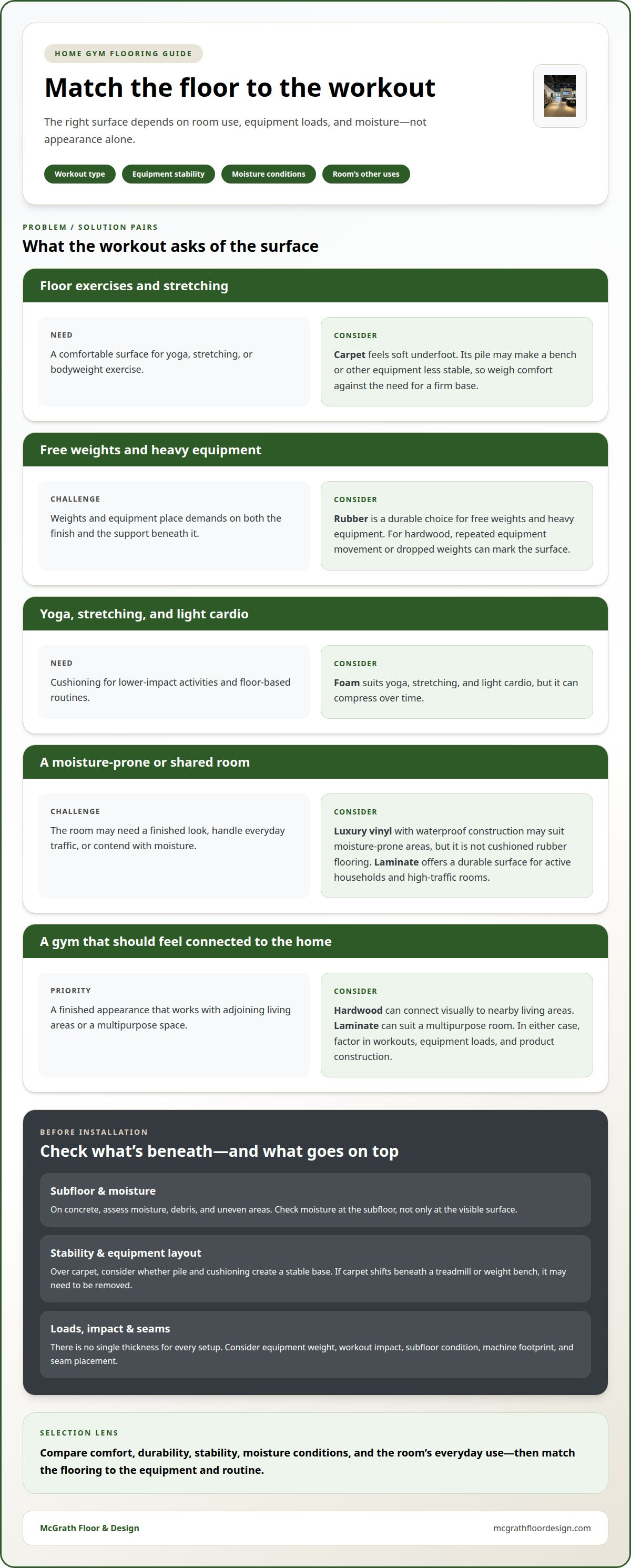
Rubber, foam, and vinyl differ in cushioning, surface feel, and response to equipment. Rubber is a durable choice for free weights and heavy equipment; foam suits yoga, stretching, and light cardio but can compress over time. Luxury vinyl offers a finished, waterproof surface, but it isn’t the same as cushioned rubber gym flooring.
Carpet feels soft underfoot, which can be comfortable for floor exercises, but its pile may make a bench or other equipment less stable. A room used for bodyweight stretching has different surface needs from one with a weight rack. Consider whether carpet’s comfort outweighs the need for a firm, steady base for equipment.
Hardwood gives a gym a finished look that can connect it visually to adjoining living areas. Dropped weights and repeated equipment movement, however, can mark the surface. A room used for stretching or bodyweight exercise places different demands on hardwood than a weight-training space. Choose with your planned routine in mind as well as the room’s appearance.
Luxury vinyl is available with waterproof construction, making it an option to consider in moisture-prone areas. Waterproofing alone, however, doesn’t provide the cushioning of rubber. Laminate offers a durable surface for active households and high-traffic rooms, and its finished appearance can suit a multipurpose space. With either material, consider the equipment loads and the product’s specific construction.
Use these distinctions to narrow your choices for Franklin TN flooring for a home gym:
- Carpet: Consider it for floor-based workouts, while accounting for equipment stability.
- Hardwood: Weigh its finished appearance against potential marks from weights or moving equipment.
- Luxury vinyl: Consider it where a waterproof surface matters, while distinguishing it from cushioned gym flooring.
- Laminate: Assess its durable surface for a busy shared room and the loads it will carry.
The right material depends on the workouts, moisture conditions, and equipment in the room. Weigh those factors against your priorities for durability, comfort, and a finish that complements your home.
Flooring choices for different rooms and lifestyles
A dedicated weight room and a shared guest room have different flooring needs. Match the surface to the workouts, equipment, moisture conditions, and other uses of the room.
In Franklin, permit or HOA requirements depend on the property and project scope. Replacing a floor covering differs from work that changes structural or electrical systems, so the flooring material alone doesn’t determine whether approval is needed.
Care depends on the surface. After workouts, clear away sweat, dust, and debris, then use cleaning products suited to the installed material. In a multipurpose room, regular upkeep helps keep the floor ready for both exercise and everyday use.
Home Gym Flooring Costs
Home gym flooring cost in Franklin depends on room size, material, subfloor preparation, seam layout, and equipment loads. The total varies by project and is provided after a quote request. A spare bedroom may need a different plan from a dedicated weight room, particularly if preparation or load requirements differ.
Compare the complete project scope, not just the material. Uneven subfloor conditions or a layout with multiple seams can affect the work involved. A clear estimate should account for the selected surface and the room conditions that shape installation.
Buying Gym Flooring Near Franklin
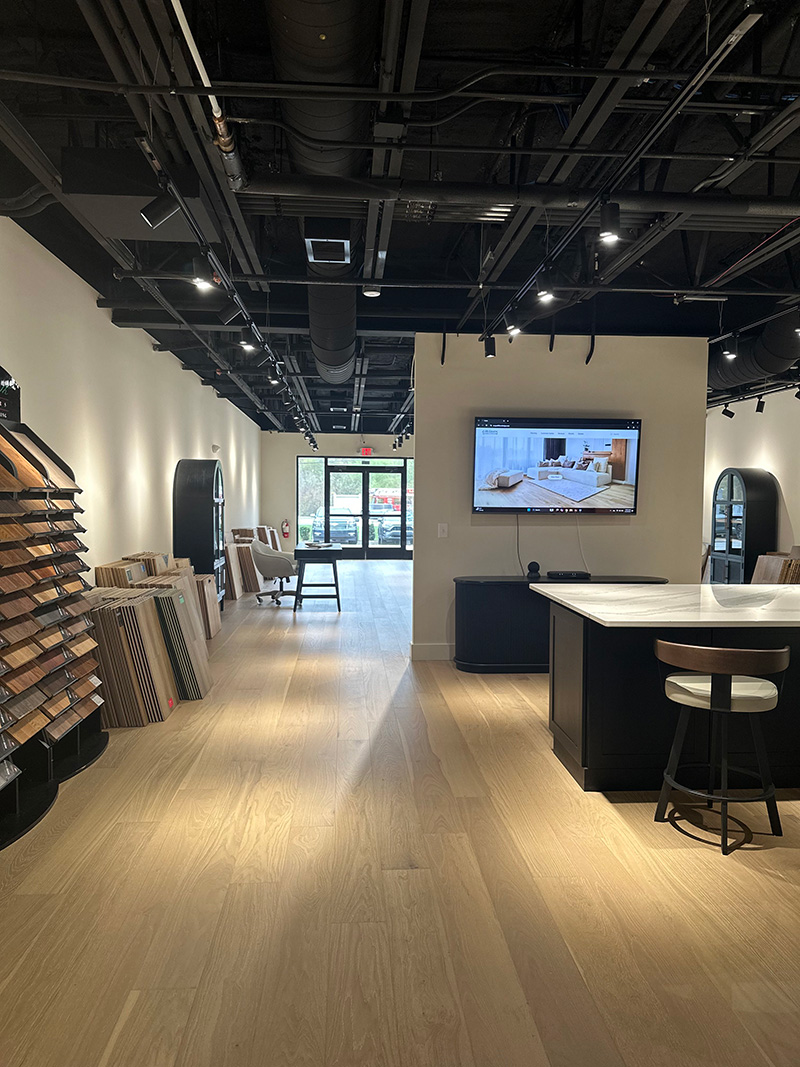
A flooring showroom near Franklin lets you compare finishes for a home gym and nearby rooms. Consider how hardwood or laminate would look in a shared space, then weigh the workout and equipment needs before choosing a gym surface. Samples and details about the room help connect appearance with everyday use.
For a home that needs a finished look beyond the workout area, hardwood and laminate flooring options can help coordinate adjacent spaces. Bring the room’s intended use, equipment plans, and moisture concerns into the selection conversation. That makes it easier to weigh a durable finish against the demands of the workout space.
Load-bearing requirements and moisture considerations
A gym floor needs to suit both the equipment loads and the surface beneath it. Concrete, carpet, and hardwood each require different preparation before installation.
On concrete, flooring professionals assess moisture, debris, and uneven areas, then prepare the surface for the selected material. Over carpet, they consider whether its pile and cushioning provide a stable base. If carpet shifts beneath a treadmill or weight bench, it may need to be removed before installation. Equipment layout and seam placement also affect the finished floor.
Check moisture at the subfloor, not just on the visible surface. A damp concrete slab can affect flooring installed above it, while spills can reach seams or edges. A professional installation plan should account for moisture conditions and whether the surface can support the room’s intended use.
Flooring Thickness for Weights and Cardio Equipment
There’s no single flooring thickness that suits every weightlifting and cardio setup. The appropriate choice depends on equipment weight, workout impact, and subfloor condition. A stationary bike and a weight bench create different contact points and demands, so flooring professionals consider the full equipment layout rather than relying on the workout label alone.
For free weights, consider where you lift and set them down, along with the loads from racks or benches. For cardio equipment, consider the machine’s footprint and whether it moves during use. These details help determine how the flooring should support the room, without treating one thickness as suitable for every setup.
Rubber Flooring and Hardwood Protection
Rubber gym flooring can mark or stain hardwood, depending on the rubber and the floor’s finish. Moisture or residue trapped beneath a mat may also affect the surface over time. A protective layer can separate the materials, but it should be suitable for both the rubber and hardwood and should not introduce unwanted movement.
A weight area over hardwood, for example, needs protection from equipment contact and shifting mats. Flooring professionals can assess the finish, expected loads, and moisture exposure, then plan suitable separation and seam placement. That helps protect the hardwood while creating a stable workout area.
What flooring is best for a home gym in Franklin, TN?
For serious workouts, rolled rubber is often considered the gold standard. It provides a durable surface for free weights and heavy equipment, while offering a more forgiving workout area. Its cushioning is intended to protect athletes’ joints and help prevent fall-related injuries.
Room use helps determine whether rubber is a good fit. In a Franklin weight room with heavy equipment, it can suit demands that foam may not. Rolled rubber can also help reduce noise in spaces such as weight rooms. For yoga, stretching, or light cardio without heavy weights, foam may be suitable, though it can compress over time.
Consider these practical differences before choosing:
- Heavy equipment: Rubber is presented as a durable option for free weights and gym machines.
- Light workouts: Foam can suit stretching and yoga, but compression may affect support beneath equipment.
- Noise: Rolled rubber can help reduce sound in a dedicated weight room.
- Care: Rolled rubber’s seamless, nonporous surface is described as easy to clean.
- Material lifecycle: Rubber flooring is made from recycled materials and can be recycled when replaced.
Rubber typically costs more initially than foam, but it generally lasts longer and needs less replacement. That trade-off may matter in a room used regularly for heavy training. Choose for your routine, equipment, and room conditions rather than upfront cost alone.
In a multipurpose space, the right choice may balance workout needs with the home’s existing finishes. A dedicated weight area has different requirements from a room used for stretching and everyday activities. Include noise, cleaning, equipment, and the room’s other uses in your decision.
Discuss your home gym flooring plans and how the room’s use should shape its finished floor.
Rolled rubber provides a forgiving surface for exercise, while foam can compress over time and may not adequately protect the floor beneath heavy equipment. These differences can help guide your choice based on the room’s activities and equipment. Assess the demands on the surface rather than assuming rubber and foam are interchangeable for every home gym routine.
McGrath Floor & Design: Hardwood Flooring
McGrath Floor & Design helps homeowners compare flooring options based on a room’s use, appearance, and installation needs. If your gym shares space with living areas, hardwood or laminate can help maintain a consistent look. Ceramic tile may suit other interior spaces where its finish fits the design.
Bring your workout plan, equipment layout, and room conditions into the flooring discussion. These details guide material selection and installation planning, especially when balancing a finished home interior with the practical demands of exercise. Hardwood or laminate may suit surrounding rooms, while the gym area’s equipment loads and moisture conditions shape its flooring choice.
For guidance on selecting flooring for your home, contact McGrath Floor & Design.
Shape Your Gym Around the Way You Live
Define the room’s purpose before choosing a finish. Consider which activities will take place there, how much space the equipment needs, and how the gym should look alongside nearby rooms. This gives you a clear direction that supports your workouts and suits the home as a whole.
For flooring for a home gym in Franklin, TN, start by matching your priorities to the room. A dedicated training space may need a different balance from a multipurpose room used for exercise and daily living. A thoughtful plan connects each choice, from appearance to how the floor serves your routine.
Bring your ideas and room plans together with McGrath Floor & Design. Contact McGrath Floor & Design to discuss flooring for your home. A well-planned space can make it easier to settle into a routine you enjoy.
Frequently Asked Questions
What flooring works best for a humid Tennessee climate or basement gym?
For a humid Tennessee basement gym, base your flooring decision on moisture conditions at the concrete slab, not room air alone. Luxury vinyl with waterproof construction may suit a moisture-prone space, but persistent dampness beneath a floor needs attention before installation. A basement with seasonal moisture concerns calls for a different assessment from an upstairs room. Let the subfloor condition and workout needs guide the material choice.


