

Hardwood floor replacement in Franklin, TN, costs depend on room size, wood species and finish, and the work needed to remove the existing floor and prepare the subfloor. These details shape the project scope, so a useful estimate covers more than the new boards.
Installation cost is an important consideration, but the flooring itself matters just as much. Wood species, construction, and finish influence a room’s appearance and feel. Understanding these differences helps you compare options and choose what suits your home and priorities.
This guide explains the factors that shape hardwood replacement costs, how solid and engineered options and different wood species compare, and what removal and disposal may involve. You’ll also learn what to expect during installation so you can plan your Franklin project with confidence.
Key Takeaways
- Identify the main factors behind an installation estimate, including project scope, flooring choice, and subfloor preparation.
- Compare flooring constructions and wood species by appearance, thickness, and how each suits your home.
- Understand how removal, disposal, and any needed subfloor work fit into the replacement process.
- Consider whether damaged areas call for a repair or partial replacement rather than a full-floor project.
- Use the selection guidance to narrow your options before planning the next steps for your home.
Need a pro for your hardwood flooring service project in Franklin, TN?
A clear project scope helps Franklin homeowners compare flooring options and installation estimates. Start by listing the rooms, existing floor material, and any visible damage.
Local Contractor Services and Estimates
A flooring assessment should consider room measurements, the existing floor’s condition, and your chosen material. Removing old boards and preparing an uneven subfloor involve different work from installing over a ready surface. Note your preferred species and finish, along with any laminate alternatives, so the scope reflects your priorities.
Look for an estimate that distinguishes installation tasks from material selection and preparation. Clarify what the schedule covers, how changes are documented, and which written warranty terms apply to the materials or workmanship. A free estimate should still define its scope clearly, so you can compare the proposed work rather than relying on the label alone.
Nearby Service Areas
Franklin is part of the Greater Nashville flooring market, with Brentwood nearby. Local planning matters when a project includes several rooms, staged installation, or follow-up work. Identify the project address and all spaces involved when defining the scope, so the flooring plan reflects your home.
For homes near Franklin’s boundary, describe the location and access details clearly. Neighborhood layout, parking, and the distance between rooms can affect how materials and crews move through a project. A defined service area also helps set expectations for site visits and delivery coordination without assuming every nearby community has identical coverage.
Estimate Details
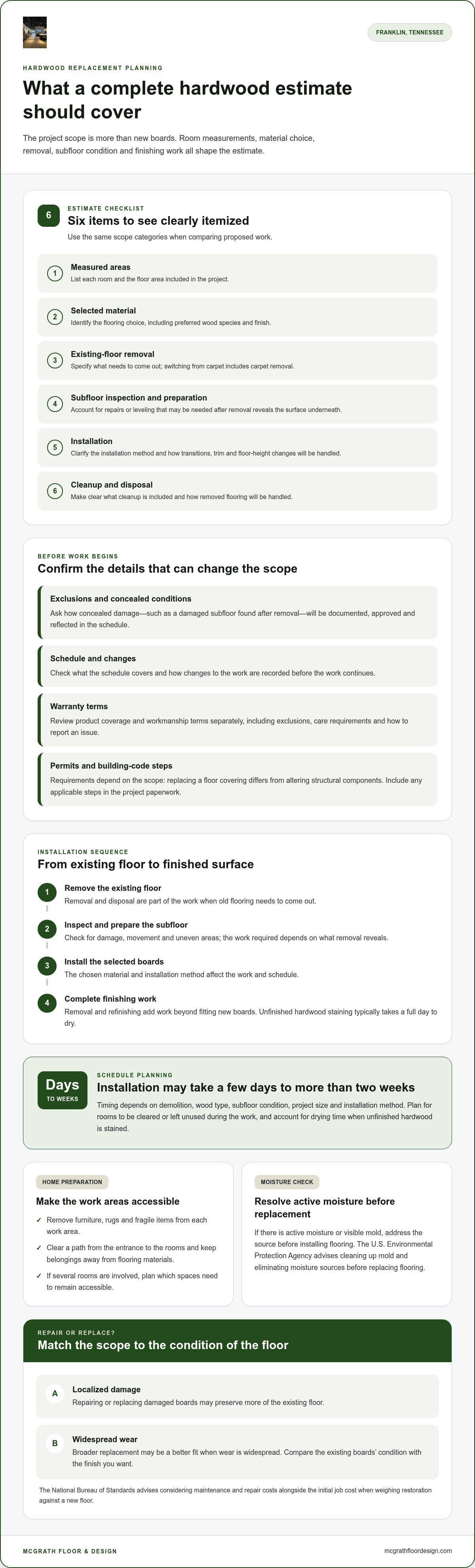
A hardwood replacement estimate should list measured areas, selected material, removal, subfloor preparation, installation, and cleanup. It should also explain how transitions, trim, and changes in floor height will be handled. If the scope includes laminate in another room, keep that work distinct so material and installation choices are easy to compare.
Check that the estimate identifies exclusions and explains how concealed conditions will be addressed. Damaged subflooring discovered after removal, for example, can change the work required. A written process for changes clarifies the added task, approval, and schedule impact before work continues.
Permit and building-code requirements depend on the project scope: replacing a floor covering differs from altering structural components. Include the work description and any permit-related steps in the project paperwork before installation begins.
Read warranty terms for coverage, exclusions, care requirements, and how to report an issue. Product coverage and workmanship terms address different parts of the project, so review each separately. Written terms make the applicable conditions easier to understand than a verbal assurance.
If you find active moisture or visible mold, address the source before installing replacement flooring. The U.S. Environmental Protection Agency advises cleaning up mold and eliminating moisture sources before replacing flooring. Doing so helps prevent a new floor from covering an unresolved problem.
How much does it cost to install hardwood floors?
Project cost depends on the room, material, removal work, and subfloor condition. Repairing or replacing part of a floor is a different scope from replacing every board.
Subfloor Preparation and Repairs
Once the old floor is removed, inspect the subfloor for damage, movement, and uneven areas. The time needed for repairs depends on what removal reveals. Include subfloor preparation in the project scope, since new hardwood needs a suitable base.
Replacing only damaged boards may preserve more of an existing floor, while widespread wear may call for a broader replacement. Switching from carpet to hardwood also involves carpet removal and an assessment of the surface underneath. List each affected room separately so the estimate distinguishes targeted repairs from full replacement.
Preparing the Home and Belongings
Before installation, remove furniture, rugs, and fragile items from each work area. Clear a path from the entrance to the rooms, and keep belongings away from flooring materials. If several spaces are included, decide which rooms must remain accessible and plan around the work sequence.
Hardwood installation can take from a few days to more than two weeks, depending on demolition, wood type, subfloor condition, project size, and installation method. For unfinished hardwood, staining typically takes a full day to dry. Factor these stages into household plans, especially if rooms need to be cleared or left unused during work.
Hardwood replacement generally follows a practical sequence: remove the existing floor, inspect and prepare the subfloor, install the selected boards, and complete the finishing work. The project’s demolition, material, and installation method affect the schedule. Removal and refinishing add work beyond fitting new boards.
If you’re considering restoration, compare the existing boards’ condition with the finish you want. Localized damage may be suitable for repair; broader wear can make replacement a better fit. The National Bureau of Standards advises considering maintenance and repair costs alongside the initial job cost. This broader view helps homeowners weigh repair against a new floor over time.
The price depends on the project and is given after a quote request; room area, wood choice, removal, and subfloor preparation shape the estimate. Ask for those elements to be itemized, including any refinishing or partial-replacement work, so the scope is clear. Compare hardwood flooring options as you decide which direction suits your rooms.
Hardwood flooring options in Franklin
Choose flooring by balancing the room’s use, the look you want, and installation needs. In a Franklin living room, for instance, plank width and finish shape the overall appearance, while the subfloor affects preparation.
Hardwood construction varies in thickness. Flooring can be as thin as 5/16 inch, while solid hardwood is generally 3/4 inch or 1/2 inch thick at its thickest. That difference matters when planning transitions to adjoining rooms, doors, and existing surfaces. Bring those details into a product consultation before settling on a material.
Finish affects how wood looks and how it fits a room’s design. A lighter look can help a small space feel open, while a darker finish creates contrast with pale walls. Compare samples in natural and artificial light, beside the cabinets, trim, or furniture you plan to keep.
Underlayment depends on the flooring product and subfloor condition. It can help create a more consistent installation surface, but the right choice depends on the floor assembly and installation method. Ask how the proposed underlayment works with the selected boards and whether transitions or changes in floor height need adjustment.
For homes with dogs, consider how paws, claws, and tracked-in grit interact with the surface. A runner near an exterior door can catch debris, while felt pads help protect furniture from dragging across boards. Keep claws trimmed and clean grit promptly; these habits reduce avoidable wear without changing the wood’s natural character.
Laminate is another flooring category to consider for your home. Compare options based on the room’s daily activity, the look you want, and how the floor will meet adjoining surfaces. A hallway, for example, may call for a different approach from a quieter bedroom.
Consider financing alongside the material decision, rather than waiting until later. Compare available payment methods, review repayment terms, and decide whether to phase rooms instead of replacing every floor at once. Keep the project scope and selected materials handy as you review terms, so you can understand the commitment for the planned work.
Before choosing, write down three priorities: how the room is used, your preferred finish, and how the floor will meet nearby surfaces. Then compare samples and installation requirements against those priorities. This simple checklist keeps design choices connected to practical details, from a dog’s favorite route through the house to the doorway transition.
Flooring removal and disposal
Removal is the first stage of hardwood replacement, and the existing floor affects the work. Hardwood boards, laminate planks, and carpet come up differently, so identify each material in the project area. Include attached underlayment, trim, and debris handling in the written scope. This makes the transition from demolition to installation easier to plan.
Before removal begins, clear furniture, rugs, and breakable items from the room. Mark the doorway and any floor sections that should remain untouched. If the project includes a living room and hall, define where removal stops at each transition. This keeps demolition focused and helps protect adjoining surfaces.
Removing baseboards before hardwood installation can help address alignment, expansion gaps, board height, and the fit of the new flooring. Record which trim pieces belong to each wall, especially in rooms with different profiles. This makes it easier to return each piece to its original location.
After the visible floor is removed, inspect the exposed surface for conditions hidden beneath the boards. Check for loose material, damaged areas, old adhesive, and uneven sections before installing new flooring. A soft spot in one corner, for example, may need attention beyond removal. Treat this inspection as a distinct project stage, not an afterthought.
Plan the debris route before demolition. Clear a path from the room to the exit, and move fragile belongings away from it. Keep children and pets out of the work area while old boards, nails, or carpet are being handled. A clear route also helps prevent debris from crossing finished rooms or remaining flooring.
Include disposal in the project plan from the start. Clarify which materials will be removed, where debris will be gathered, and whether hauling is included in the written scope. Hardwood, carpet, and laminate may need separate piles during removal. Sorting materials makes cleanup more organized and helps prevent leftover scraps from being mistaken for reusable flooring.
After removal and cleanup, inspect the cleared room before installation begins. Confirm the agreed boundaries, check that trim and thresholds are accounted for, and note any newly exposed floor issues. If moisture or mold is visible, address the source before replacing the flooring. The U.S. Environmental Protection Agency advises cleaning up mold and eliminating moisture sources before installing new flooring.
A careful removal plan protects the details that make a finished room feel complete. Document the rooms, transition points, trim, and disposal scope before work starts. The next installation stage can then begin with a clear, prepared surface rather than an uncertain demolition area.
Hardwood species and flooring selection
Wood species defines a floor’s visual character, while construction affects how the boards suit your home. In Franklin, compare samples with your cabinetry and trim, and view them in each room’s light. Oak, maple, and walnut have different grain patterns and tones, so choose based on the look you want, not the species name alone.
Solid hardwood is milled from one piece of wood. Engineered hardwood uses a real-wood surface over a layered core. For Franklin homeowners, the choice should account for the existing subfloor, installation method, and desired finish. Solid hardwood is generally 3/4 or 1/2 inch thick at its thickest, while hardwood flooring can be as thin as 5/16 inch.
Board thickness affects transitions at doorways, stairs, and adjoining rooms. Before choosing, compare the new floor’s height with nearby flooring and check door clearances. A sample board can show how its edge meets tile or carpet. Consider how the selected construction works with the subfloor and planned installation method.
Species selection is also a design decision. Oak’s visible grain can create a defined, traditional look; maple can appear more subtle; walnut has a deeper tone. These are visual starting points, not rules. Compare samples in the same room and beside the furniture and finishes that will stay.
Consider refinishing potential before buying. It depends on the product’s construction, surface layer, and remaining wood thickness. Ask how the specific floor can be maintained and what care its finish requires. The National Bureau of Standards recommends weighing maintenance and repair alongside initial project costs, so include long-term care in your flooring decision.
Comfort involves more than appearance. Consider how you use the room, whether people walk barefoot, and how the floor meets rugs or neighboring surfaces. A bedroom may call for a different look and underfoot feel from a busy entry. If you have dogs, consider where paws enter and grit may collect.
Use a simple selection sequence: first match the construction to the subfloor and installation plan; next, compare species and finish samples in the room; then review transitions and care needs. This connects the beauty of the wood with practical details, rather than relying on a showroom sample alone.
Bring your room measurements, finish preferences, and sample comparisons together before deciding. Explore hardwood flooring choices to move from species ideas toward a floor that suits your home.
McGrath Floor & Design: Hardwood Flooring
McGrath Floor & Design helps homeowners choose hardwood flooring and plan installation. Turn to the team when you’re weighing wood species, comparing finishes, or planning a replacement and want guidance through product selection and installation.
If hardwood isn’t the right fit for every room, compare laminate floors and ceramic as other flooring options. Consider each material’s suitability for the room, its appearance, and how it meets adjoining surfaces to create a cohesive plan for your home.
Bring your room measurements, preferred look, and questions about the existing floor to start a focused conversation. Contact McGrath Floor & Design to discuss flooring for your Franklin or Brentwood home.
Shape a floor plan that fits your home
A flooring decision can shape the look of the rooms around it. Before moving ahead with hardwood floor replacement in Franklin, TN, consider how the new surface will connect with your existing finishes and suit the way you use each space. A consistent choice can create a calm flow, while a deliberate change in material can give an entry, kitchen, or living area its own character.
McGrath Floor & Design offers Hardwood Flooring, Laminate Floors, and Ceramic, giving you material categories to consider as you shape your plan. Bring your preferred look and the rooms you’re updating into the conversation. A clear starting point can make your design decisions more intentional.
Contact McGrath Floor & Design today to discuss flooring for your home. Take the next step when you’re ready, and move toward a finish that feels thoughtfully chosen.
Frequently Asked Questions
Looking for a Flooring Company in Franklin, TN and Surrounding Areas?
Franklin and nearby Brentwood homeowners can start by listing the rooms, existing floor type, and preferred material. Bring photos of transitions, stairs, or damaged areas to make the project discussion more specific. Note whether you’re considering hardwood, laminate, or ceramic, and which rooms need to remain accessible. These details help shape a useful conversation about flooring selection and installation for your home.
Looking for new floors in the Middle Tennessee area?
Homeowners in Middle Tennessee can compare flooring based on room use, appearance, and how each surface meets nearby materials. Hardwood can bring natural grain to a living room, while laminate or ceramic may suit a different design plan. Start with the rooms you want to update, then note existing trim, cabinets, and adjoining floors. This inventory gives your selection discussion a clear, home-specific starting point.
What is the average cost to replace hardwood floors in Franklin, TN, per square foot?
For hardwood floor replacement in Franklin, TN, the per-square-foot price depends on the project scope and is provided after a quote request. Room dimensions, selected species and finish, removal, and preparation all affect the estimate. Ask for the measured area and each work item to be listed separately. This shows how the total relates to the rooms and materials included, rather than treating one figure as universal.
How much does hardwood floor removal and disposal cost in Franklin, TN?
Removal and disposal pricing depends on the flooring material, area, removal method, and debris handling. The project price is determined after a quote request, with the scope clarifying what removal and cleanup include. Carpet, laminate, and hardwood, for example, may require different removal steps. Identify the rooms and materials involved, and ask that hauling or disposal responsibilities be clearly stated in the written scope.
What factors affect hardwood floor replacement costs, including wood species, grade, and finish?
Species, grade, and finish shape material selection, while room dimensions and installation conditions shape the work. Grain and color can vary between species and grades, so compare physical samples before choosing. Finish also affects the final appearance. View samples beside cabinets and trim, and note your preferred options. That gives the estimate a clear material choice instead of leaving species, grade, or finish undecided.
How can homeowners find and compare hardwood flooring contractors in Franklin, TN?
Compare written project scopes, not just totals. Look for measured rooms, named materials, installation work, removal, preparation, and cleanup. Check that the proposed species, grade, and finish match your selections. Clarify how changes discovered during the work will be documented, and read warranty terms for coverage and exclusions. Keeping these details together makes estimates easier to compare and clarifies what each project includes.
What subfloor problems can increase hardwood floor replacement costs, and how are they repaired?
Soft, uneven, loose, or moisture-affected areas may need attention before new boards go down. The repair depends on the cause: a damaged section may need replacing, while an uneven area may need surface preparation. Address active moisture before covering the subfloor. If an issue is found, ask for a description of the proposed repair and its effect on the scope before the added work proceeds.
What warranties, risks, and maintenance requirements should homeowners consider when replacing hardwood floors?
Review product and workmanship warranty documents separately, since they cover different parts of a flooring project. Pay attention to exclusions, care instructions, and how to report a concern. Moisture, grit, and furniture movement can damage flooring, so use entry mats and protective pads, and clean spills promptly. Keep product details and maintenance guidance together to help care for the floor and understand its stated coverage.


