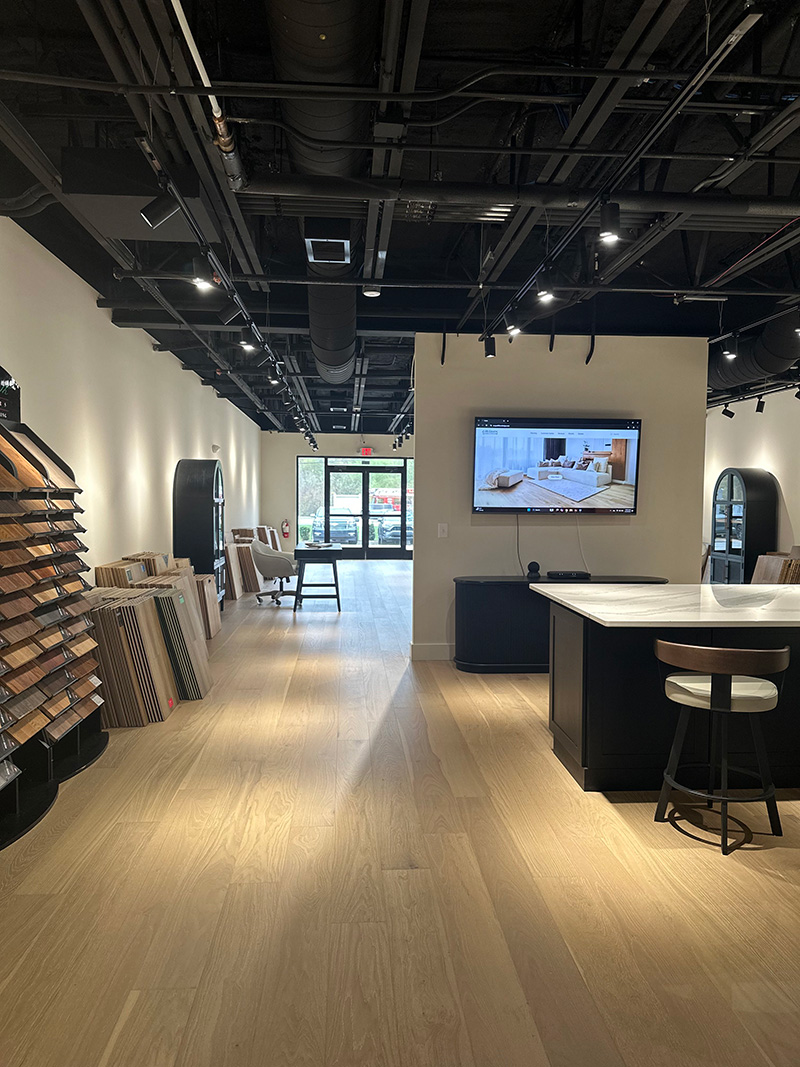

Laminate may be the practical middle ground for a busy household, not just a budget-minded choice. For durable flooring for busy families in Brentwood, it’s worth weighing everyday wear, moisture, cleaning, and long-term upkeep together. Laminate typically lasts 15-25 years, depending on quality and maintenance, while hardwood can last for decades with proper care and occasional refinishing.
Kids, pets, spills, and constant foot traffic put different demands on a floor, so no single material suits every room. The right choice depends on where it will go and what your household needs most, whether that’s a softer feel underfoot, a wood look, easy cleanup, or a surface for moisture-prone areas.
This guide compares carpet, hardwood, laminate, luxury vinyl, and tile for busy households, including their strengths and trade-offs. You’ll also learn what to consider when choosing an installer, so you can make a clear, confident decision for your Brentwood home.
Key Takeaways
- Match flooring to each room’s traffic, moisture exposure, and cleaning needs instead of choosing one material for the whole home.
- Compare laminate’s everyday practicality with the comfort of carpet and the distinct strengths of hardwood, luxury vinyl, and tile.
- Look beyond the surface when planning installation: room preparation, subfloor condition, and precise fitting all shape the finished result.
- For homes with pets and children, weigh scratch, dent, stain, and moisture resistance alongside maintenance and underfoot feel.
- Use your household’s priorities to narrow the options, then explore flooring choices that suit your home’s style and daily routines.
Carpet, hardwood, laminate, luxury vinyl, and tile
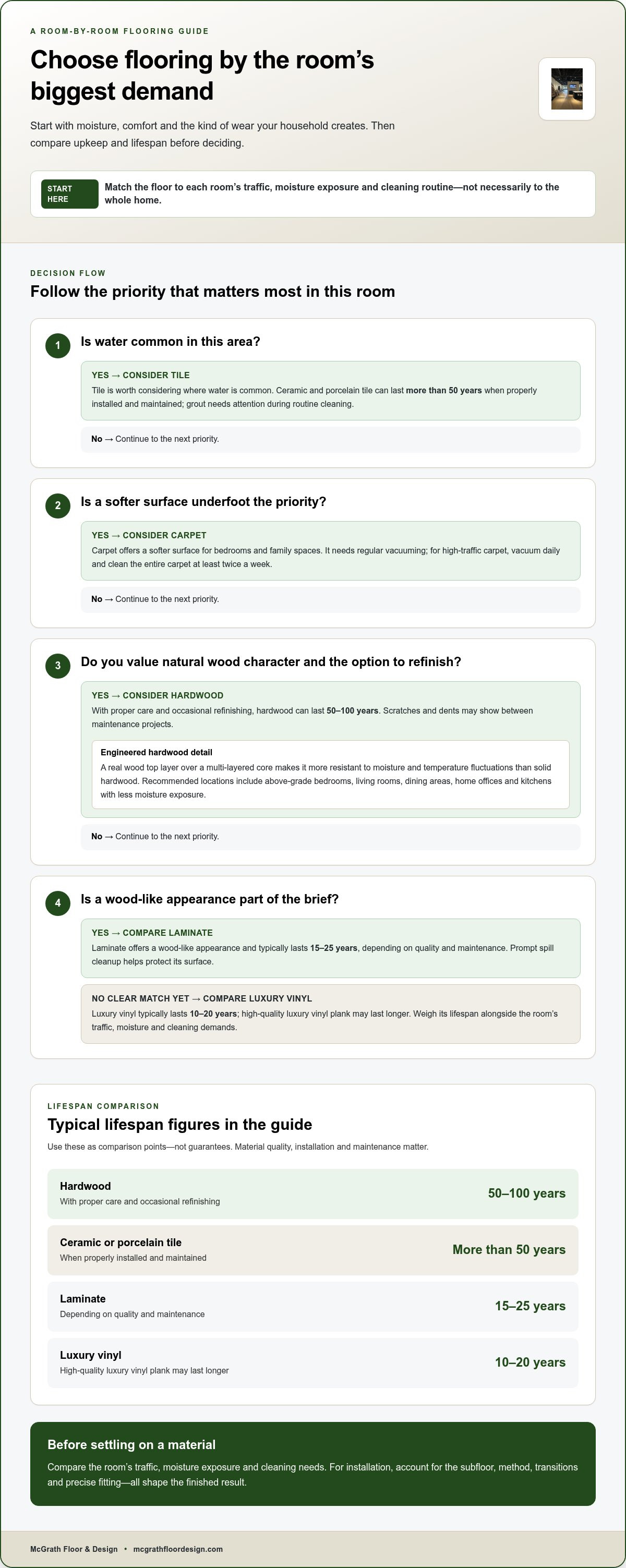
Compare each surface by room, foot traffic, cleanup, and the kind of wear your household creates. Typical lifespans vary: laminate lasts 15-25 years, vinyl 10-20 years, and ceramic or porcelain tile more than 50 years. Hardwood can last 50-100 years with proper care and occasional refinishing.
Comparing Flooring Types
Carpet offers a softer surface for bedrooms and family spaces, but it needs regular vacuuming. For high-traffic carpet, vacuum daily and clean the entire carpet at least twice a week. Hardwood brings natural wood character and can be refinished. Engineered hardwood combines a real wood top layer with a multi-layered core.
Laminate offers a wood-like appearance and typically lasts 15-25 years, depending on quality and maintenance. Luxury vinyl typically lasts 10-20 years, and high-quality luxury vinyl plank may last longer. Ceramic and porcelain tile can last more than 50 years when properly installed and maintained. Compare how each surface handles your household’s cleaning routine, spills, and busiest rooms.
Hardwood Durability and Refinishing
Solid hardwood is a long-term choice because its surface can be sanded and refinished multiple times. With proper care and occasional refinishing, hardwood can last 50-100 years. That lifespan depends on maintenance and the condition of the wood, so consider whether you value a renewable surface as much as its appearance.
Engineered hardwood’s real wood top layer sits over a multi-layered core, making it more resistant to moisture and temperature fluctuations than solid hardwood. Room conditions still matter. The Brentwood Hills engineered hardwood collection meets CARB Phase II and Lacey Act requirements and holds FloorScore certification. Recommended locations include above-grade bedrooms, living rooms, dining areas, home offices, and kitchens with less moisture exposure.
Scratch, Stain, and Water Resistance
For a busy household, consider surface wear separately from moisture exposure. Hardwood can be refreshed through refinishing, but scratches and dents may show between maintenance projects. Carpet softens footsteps, but tracked-in dirt and spills require regular care. Tile is worth considering where water is common, though grout also needs attention during routine cleaning.
Laminate’s typical lifespan is 15-25 years, depending on quality and maintenance; prompt spill cleanup helps protect its surface. Vinyl typically lasts 10-20 years, with high-quality luxury vinyl plank potentially lasting longer. Ceramic and porcelain tile can exceed 50 years with proper installation and maintenance. Use these figures as a comparison, then weigh each room’s traffic, moisture, and cleaning demands before choosing.
Professional installation and contractor selection
A well-planned installation starts with both the flooring material and the room beneath it. Compare the subfloor, installation method, and project scope before settling on a finished look.
Installation Methods and Subfloor Fit
Installation methods depend on the flooring’s construction and the surface below it. Brentwood Hills engineered hardwood, for example, can be installed using glue-down, floating, or staple methods, including glue-assisted stapling. Each method has different requirements for preparing and securing the floor. Ask how the proposed method suits your chosen material and existing subfloor.
Before work begins, look for visible dips, movement, damaged areas, or changes in floor height between rooms. A sound, even base helps boards or planks sit consistently; an unsuitable surface can affect how the finished floor looks and feels. Plan for transitions, doorways, and adjoining surfaces, especially where hardwood meets tile or laminate at a threshold.
Choosing and Installing Flooring
Start by identifying the room’s main demands. A kitchen may need a different cleanup routine from a bedroom, while scratches and visible wear stand out more in a busy hallway. Bring these details into your material discussion, then compare color, plank appearance, maintenance, and performance. A premium look should suit both the room and your household’s routine.
Map the installation from preparation through final inspection. Confirm which rooms are included, how existing flooring and transitions will be handled, and what the subfloor needs. Review the layout direction and where the first and last boards or planks will fall. Before the crew finishes, walk through the completed area and check for uneven edges, gaps, or movement underfoot.
For a hardwood-focused project, explore hardwood flooring options alongside the room’s use and desired appearance. That keeps selection connected to the practical installation plan.
DIY or Professional Installation
DIY installation may suit a homeowner with the right tools, time, and experience for the chosen product. The work involves more than placing boards: clean cuts, aligned rows, and well-handled thresholds all affect the final appearance. A small layout error can become more noticeable across a larger room, particularly beside a long wall or doorway.
Professional installation can help with projects spanning several rooms, uneven subfloor areas, or transitions between materials. When reviewing an installation plan, look for clear details about preparation, method, layout, and finish. Define the scope in writing, including rooms and transitions, so the intended result is clear before work starts. Careful planning supports both the floor’s appearance and its everyday function.
Durable laminate for busy families and high-traffic areas
Laminate can suit busy rooms where families want a wood-inspired look and manageable routine care. Its typical lifespan is 15-25 years, depending on quality and maintenance. That range makes product selection and daily habits important, especially in entryways, hallways, and family rooms. Think about where shoes, pet paws, backpacks, and dining chairs travel most. Those patterns help identify which areas will need frequent cleaning and careful spill management.
Start with your household’s busiest routes. A hallway between the front door and kitchen collects grit, while dining chairs can scuff flooring as they move. Sweep or vacuum regularly to remove debris before it gets dragged across the surface. Add protective pads under frequently moved furniture, and lift chairs instead of scraping them. These habits help preserve the floor without assuming it is scratch-proof.
Moisture deserves its own plan. A family that serves drinks in the living room can keep a cloth nearby and dry spills promptly. One commenter reported that their parents’ laminate still looked perfect after 10 years, while they dried every water droplet immediately. That account illustrates a useful habit, not a lifespan guarantee. For kitchens, consider where splashes happen and how quickly the household can wipe them up.
Laminate can bring the natural beauty and warmth of a wood look into a room without feeling purely utilitarian. Compare samples with cabinets, trim, and furniture in the actual space. Check how they look in morning and evening light, then consider how the tone works with existing details. In an open kitchen and dining area, a consistent finish can help the connected rooms feel cohesive.
Before deciding, make a simple care plan for each high-traffic area. Place a mat at the busiest entrance, keep cleaning supplies accessible, and wipe up spills promptly. Follow the product’s care directions so routine cleaning suits the flooring. If you have pets, plan for food and water bowls; with young children, use washable mats under messy activities. These habits help laminate fit everyday family routines while preserving its appearance.
Budget can also shape the choice. Ask what is included in a product quote and review the care directions for the specific flooring under consideration. A finish recommendation for another material should not be treated as laminate guidance: a flooring professional recommended refreshing a high-end anti-scratch finish on cork floors every 3- 5 years. Keep that distinction in mind when comparing maintenance expectations across flooring types.
Cleaning routines also deserve a practical check. The U.S. Environmental Protection Agency reports that vacuum cleaning laminate resuspended more dust than vacuum cleaning carpets at particle sizes of 5 µm and 10 µm. That finding can inform decisions about cleaning methods in busy rooms, particularly when household members are sensitive to dust. Follow the flooring maker’s care directions and consider the room’s needs when choosing how to remove debris. A routine that is easy to maintain can help families keep high-traffic areas orderly without assuming that one cleaning method suits every surface.
Flooring choices for homes with pets and children
Pets and children bring scratches, tracked-in dirt, spills, and energetic play into the flooring decision. Match each room’s routines to its surface, then plan simple habits to protect it.
Laminate and tile are practical for everyday sweeping and wiping. Carpet needs more frequent vacuuming: clean high-traffic areas daily and vacuum the whole carpet at least twice a week. Hardwood also benefits from regular sweeping and occasional damp mopping.
Brentwood building requirements and homeowners association covenants may affect your project. Identify any applicable restrictions on installation or materials before choosing flooring, so your selection fits your property’s requirements.
For a wood look in a busy home, hickory hardwood is recommended for households with pets and children because of its scratch resistance. Trim pets’ nails and place mats near entryways to help reduce grit and wear. A timeless wood look can complement a modern family space, while regular sweeping helps keep debris from rubbing against the finish.
Laminate suits households looking for a wood-inspired appearance and a straightforward cleanup routine. Wipe up spills promptly, especially near water bowls and in kitchens, and use furniture pads under chairs that move often. These steps help protect the surface from moisture and abrasion. For children’s art projects or snacks, place a washable mat under the activity and clean up splashes as they happen.
Carpet provides a softer landing for playrooms and bedrooms, but crumbs, pet hair, and dirt call for consistent vacuuming. Vacuum busy paths daily, such as the route from the entry to the living room. Tile gives families a hard surface for muddy paws and spills; sweep away grit and clean residue before it collects in the grout.
For another material comparison, strand-woven bamboo was reported to show no marks after two years in a home with a 95-pound dog. That is one household’s experience, not a universal performance measure. Cork has its own upkeep: flooring professionals recommend recoating every five to seven years, while a high-end anti-scratch finish may need refreshing every three to five years.
Build your flooring plan around the messes your household sees most. Put an entry mat where pets come inside, keep a cloth handy for kitchen spills, and choose a cleaning routine everyone can follow. Then compare comfort, appearance, maintenance, and scratch resistance room by room, rather than expecting one surface to meet every need.
A commenter reported no marks on strand-woven bamboo after 2 years in a home with a 95-pound dog; a flooring professional said cork needs recoating every 5-7 years.
Which flooring options resist scratches, dents, stains, and water damage best?
No single surface performs best against every kind of wear. For a Brentwood home, consider the likely damage in each room: pet claws in a hallway, dropped dishes in a kitchen, or spills near a play area. Scratch resistance, dent resistance, stain cleanup, and moisture response are separate factors. Choose for the room’s main risks, not a broad label like “durable.”
For scratch resistance, hickory hardwood is recommended for busy households with pets and children. That doesn’t make hardwood immune to marks or dents: furniture feet, grit, and dropped objects can still affect the finish. Laminate also suits high-traffic routines, though its lifespan depends on quality and maintenance. Use pads under movable chairs and sweep up grit before it gets dragged across the floor.
For spills and stains, cleanup habits matter as much as the material. Wipe laminate spills promptly with a damp cloth rather than leaving moisture on the surface. Tile offers a practical hard surface where splashes occur, though grout lines need regular attention. Carpet can collect crumbs and tracked-in dirt, so vacuum high-traffic areas daily and the entire carpet at least twice a week.
- Laminate: Typically lasts 15-25 years, depending on quality and maintenance. Protect it by promptly drying spills and removing grit.
- Luxury vinyl: Typically lasts 10-20 years, and high-quality luxury vinyl plank may last longer. Consider it where regular cleanup is a priority.
- Tile: Ceramic and porcelain tile can last more than 50 years when properly installed and maintained. Include grout care in the room’s cleaning plan.
- Hardwood: Can last 50-100 years with proper care and occasional refinishing. Its renewable surface can help address wear over time.
Take particular care with wood in areas exposed to moisture. Engineered hardwood has a real wood top layer over a multi-layered core, making it more resistant to moisture and temperature fluctuations than solid hardwood. This can inform choices for rooms with changing conditions, but spills still need prompt attention. In kitchens, consider splash zones, cleanup habits, and the floor’s care requirements.
Use a room-by-room check before choosing: identify the main source of wear, decide how much routine cleaning fits your household, then compare material and maintenance needs. For example, a tile entry may handle wet shoes differently from a hardwood living room. To compare laminate flooring options for a high-traffic space, consider how your family uses and cleans that room.
McGrath Floor & Design: Hardwood Flooring
McGrath Floor & Design helps Brentwood homeowners compare hardwood flooring, laminate floors, and ceramic for their household’s needs. Turn to the team when you’re narrowing down materials and want guidance through product selection and installation. Consider your busiest rooms, moisture exposure, cleaning routine, and preferred look together. For example, hardwood can suit a living room where you value natural character, while laminate may fit a space where everyday upkeep guides the decision. Ceramic offers another option for rooms where a hard surface suits the routine. Bring your room priorities and design preferences into the conversation to shape a flooring plan that feels cohesive and practical. Contact McGrath Floor & Design or visit mcgrathfloordesign.com to discuss your flooring project.
Make Your Next Flooring Decision with Confidence
Choosing durable flooring for busy families in Brentwood starts with a clear picture of daily life at home. Before making a final selection, note which rooms get the most activity, where spills happen, and what level of upkeep suits your routine. A room-by-room plan helps you weigh appearance, practicality, and installation needs together.
Bring those priorities to McGrath Floor & Design. The team guides you through product selection and installation, helping match your preferred material to the space and your household’s needs. Whether you’re refining a design direction or ready to plan a project, start with a free design consultation and turn your ideas into a flooring choice for your home.
Start a flooring conversation with McGrath Floor & Design and move toward a home that works beautifully for the way your family lives.
Frequently Asked Questions
What flooring materials are most durable for busy families with children and pets?
For durable flooring for busy families in Brentwood, compare each room’s activity and cleanup needs before choosing a material. Tile, laminate, and hardwood can all suit active homes, but their feel and appearance differ. A pet’s main route through the house may need a different surface from a quiet bedroom. Consider whether fur, crumbs, and scuffs will stand out against the flooring’s color and texture.
How do luxury vinyl plank, tile, laminate, and engineered hardwood compare for durability and maintenance?
A durable flooring plan for busy families in Brentwood starts with construction and care needs, not appearance alone. Luxury vinyl has waterproof options, while laminate may have an optional waterproof core. Engineered hardwood has a real wood top layer over a multi-layered core, and ceramic tile grout needs attention during cleaning. Compare each product’s surface, core, and care directions with the routine your household can maintain.
Which flooring stores and installers serve Brentwood, and what do local reviews say?
McGrath Floor & Design serves Brentwood and Franklin with hardwood, laminate, and ceramic flooring, along with professional selection and installation guidance. Customer reviews include an example of 700 square feet completed in two days; that describes one project, not a standard schedule. As you assess feedback, look for comments about communication, installation details, and how the finished flooring met the homeowner’s needs.


