
The softer pad isn't automatically the better choice. The best underlayment for laminate floors in Brentwood depends on the flooring’s installation type and the subfloor: foam is a common fit for floating laminate, while dense felt can absorb the hollow click sound. Underlayment can also cover small subfloor imperfections, such as a nail head, up to 1/8 inch.
When choosing what goes beneath a new floor, comfort and quieter rooms matter. The right underlayment also depends on the laminate and subfloor: a pad can’t replace proper preparation of larger uneven areas.
Learn how felt and foam differ in sound absorption and cushioning, when moisture protection matters, and how to match underlayment to laminate flooring. This makes it easier to compare options and choose support that suits the floor and the feel you want underfoot.
Key Takeaways
- Match the underlayment to the laminate’s installation requirements and the subfloor, rather than choosing by softness alone.
- Learn where underlayment can cushion small imperfections and why it won’t correct a subfloor that needs proper preparation.
- Compare felt’s sound-absorbing qualities with foam’s cushioning, including what to consider in busy areas and over concrete.
- Use sound ratings and moisture protection needs to narrow your options and make a more informed flooring decision.
Cushioning minor subfloor imperfections
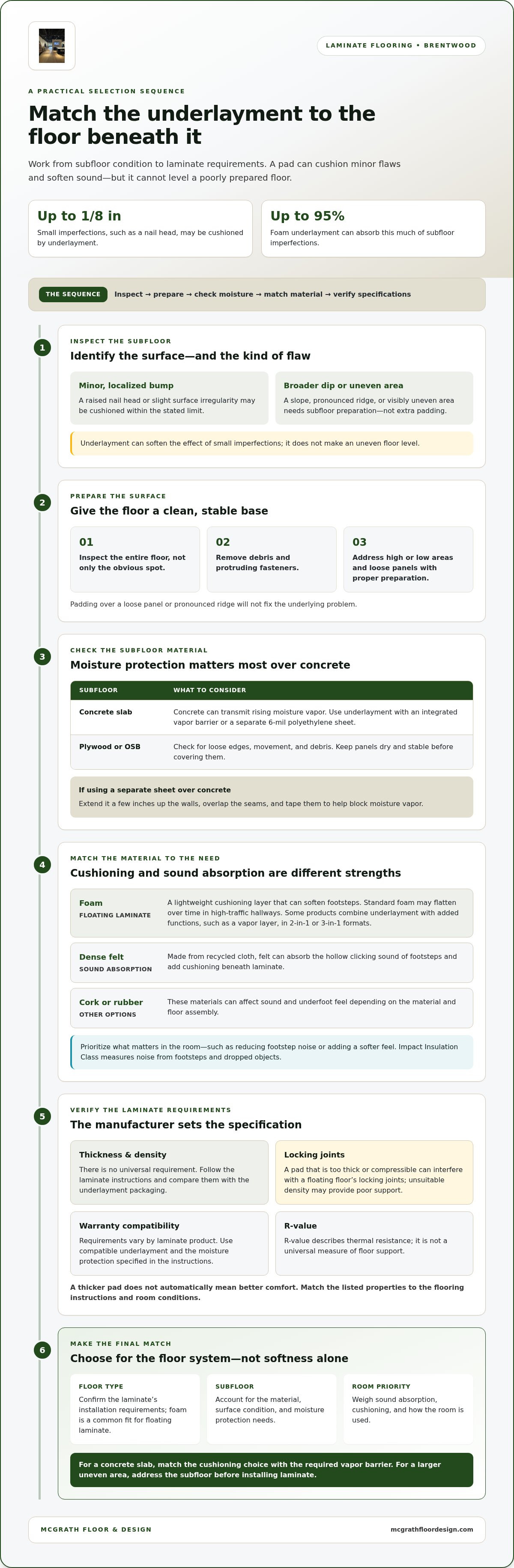
Underlayment can cushion small imperfections, such as a nail head, up to 1/8 inch. Foam underlayment can absorb up to 95% of subfloor imperfections. That cushioning helps reduce the effect of slight surface irregularities beneath laminate, but it doesn’t make an uneven floor level.
Distinguish a small bump from a broader dip. A raised nail head is a localized issue; a slope or visibly uneven area affects more of the floor. Underlayment may soften the effect of minor imperfections, but larger irregularities need subfloor preparation before laminate installation.
Inspect the entire floor, not just the spot that catches your eye. Remove debris and protruding fasteners, then address high or low areas with appropriate subfloor preparation. A clean, stable surface gives laminate and underlayment consistent support. Padding over a loose panel or pronounced ridge won’t fix the underlying problem.
The subfloor material affects what to consider. Concrete can transmit moisture vapor upward, so a suitable vapor barrier may be needed along with cushioning. Plywood and OSB are wood-panel subfloors; check for loose edges, movement, or debris. Choose underlayment that meets the laminate’s installation requirements and suits the material beneath it.
For laminate over a concrete slab, use underlayment with an integrated vapor barrier or a separate 6-mil polyethylene sheet. If installing a separate sheet, extend it a few inches up the walls, overlap the seams, and tape them. This helps block moisture vapor from rising through the concrete.
Before choosing the best underlayment for laminate floors in Brentwood, identify whether the issue is a minor surface flaw, moisture, or a larger uneven area. A pad may cushion a small imperfection, but a pronounced dip needs subfloor attention. Match the solution to the cause rather than expecting underlayment to level the floor.
Felt underlayment
Felt underlayment is a dense pad made from recycled cloth. Beneath laminate, it can absorb the hollow clicking sound of footsteps.
Fiber and Felt Characteristics
Fiber and felt underlayments use dense, cloth-based material to soften sound and add cushioning beneath laminate. Felt’s recycled-cloth construction differs from foam, which cushions through its structure rather than fibrous material. If laminate sounds hollow underfoot, felt can help soften the sharp clicking quality. Underlayment can help soften sound, but it is not a substitute for addressing subfloor problems.
Warranty requirements vary by laminate product. Follow the manufacturer’s instructions for compatible underlayment and required moisture protection; an unsuitable layer can affect warranty coverage.
In Brentwood, underlayment cost per square foot depends on the material, room size, and whether moisture protection is needed. The price is determined after a quote request.
Sound and Comfort Comparisons
Foam cushions floating floors, while dense felt absorbs laminate’s hollow click. Cork and rubber are other options that can affect sound and underfoot feel, depending on the material and floor assembly. Compare the laminate requirements with your priority, such as reducing footstep noise or adding a softer feel. Impact Insulation Class measures noise from footsteps and dropped objects.
Local Climate and Moisture
In Brentwood, consider the subfloor’s moisture conditions, especially when laminate is installed over concrete. Concrete can transmit rising moisture vapor, so a suitable barrier matters alongside felt’s sound and comfort qualities. When required by the flooring instructions, choose felt with appropriate moisture protection or use a separate barrier specified for the installation. Keep plywood and OSB panels dry and stable before covering them, since trapped moisture can affect the floor assembly.
Foam underlayment for floating floors
Foam underlayment cushions floating laminate, and some products combine multiple functions. Choose based on the flooring instructions, subfloor, and room conditions.
Foam Underlayment Characteristics
Foam is a lightweight cushioning layer designed to sit beneath floating laminate. It can soften the feel of footsteps, but standard foam may flatten over time in high-traffic hallways. That change can affect its cushioning performance, so consider how the room is used. Some modern foam underlayments are sold as 2-in-1 or 3-in-1 products, combining underlayment with added functions such as a vapor layer.
Over a concrete slab, choose foam underlayment with an integrated vapor barrier to help block moisture vapor. That barrier addresses a different need than cushioning, so assess the slab and laminate requirements together. For the best underlayment for laminate floors in Brentwood, match the product’s listed properties to the flooring instructions and room use.
Thickness and Density Requirements
There is no universal underlayment thickness or density requirement for laminate flooring. The manufacturer’s installation instructions determine which materials and specifications suit that product. A pad that is too thick or compressible can interfere with a floating floor’s locking joints, while an unsuitable density may offer poor support.
Read the laminate instructions before selecting foam, then compare the stated requirements with the underlayment packaging. Don’t assume a thicker pad means better comfort. For example, DuoFoam has an R-value of 0.28, QuietWalk has an R-value of 0.58, and SoundStep XL has an R-value of 0.24. R-value describes thermal resistance, not a universal measure of floor support.
Buying Underlayment in Brentwood
In Brentwood, you can find laminate underlayment at flooring showrooms and building-supply retailers. Choose a product made for floating laminate rather than relying on a general-purpose pad. The laminate instructions, subfloor material, and moisture-protection requirements help narrow the choices.
Bring the laminate product details when comparing underlayments. That makes it easier to match thickness, density, and vapor protection to the flooring system. In a busy hallway, consider that foam may flatten over time; over concrete, check whether an integrated vapor barrier is required. These details help ensure the underlayment meets the floor’s installation requirements, not just its initial feel.
Matching underlayment to flooring type
Match the underlayment to the laminate and the subfloor beneath it. One pad won’t suit every floor assembly.
Underlayment Over Wood Subfloors
For laminate over plywood or OSB, choose underlayment approved for the product and its installation method. A floating floor needs a stable, compatible layer that supports its locking joints without excessive compression. Foam or felt may suit different products, but the flooring instructions determine compatibility. Check for movement or raised edges in the subfloor panels before covering them.
Wood subfloors differ from concrete, and moisture-protection needs vary by installation. Don’t add a vapor barrier automatically over plywood or OSB; follow the laminate manufacturer’s directions. In a multi-story home, rubber underlayment may be considered for noise control, while the laminate requirements guide the final choice.
Attached Underlayment and Extra Layers
Laminate with attached underlayment usually doesn’t need another cushioning layer unless the manufacturer allows one. A second pad can create excess compression beneath floating planks and stress the locking joints as the floor moves underfoot. Check the product’s installation instructions before adding material.
Attached padding doesn’t automatically provide moisture protection over concrete. If the instructions require a vapor barrier, address that requirement without adding an unapproved cushion. Using only the specified layers helps provide stable support and avoids stacking materials just to make the floor feel softer.
Match each performance goal to the appropriate measure. Sound Transmission Class (STC) relates to airborne noise, such as television audio or loud talking; Impact Insulation Class (IIC) measures footstep sounds and dropped objects. Rubber underlayment can be an option for noise control and moisture protection over concrete slabs or in multi-story homes. The subfloor and laminate instructions remain central to the choice.
Use these factors to compare laminate flooring options and identify the underlayment approach that fits your floor assembly.
McGrath Floor & Design: Hardwood Flooring
McGrath Floor & Design helps bring flooring selection and installation decisions together, including underlayment considerations for laminate floors. The team can guide you as you compare laminate options and consider how the flooring, subfloor, and installation requirements work together. Hardwood Flooring and Ceramic are also available when you’re weighing materials for different rooms or design goals.
For your next step, contact McGrath Floor & Design or visit mcgrathfloordesign.com.
Plan the Floor You Want to Live With
A flooring choice shapes how a room feels and functions long after installation. Before deciding, consider how each space is used, the look you want throughout your home, and how the flooring choices work together. This broader view can help you choose the best underlayment for laminate floors in Brentwood as part of a cohesive flooring plan, not as an afterthought.
McGrath Floor & Design offers Laminate Floors, Hardwood Flooring, and Ceramic, giving you options to consider across different rooms and design goals. If you’re ready to discuss flooring for your home, contact McGrath Floor & Design. A thoughtful plan can turn practical decisions into a finished space that feels distinctly yours.
Frequently Asked Questions
What is Sound-Dampening Underlayment and Why Do You Need It?
Sound-dampening underlayment sits beneath laminate and helps reduce noise traveling through or across the floor. It can make footsteps and laminate’s hollow sound less noticeable, though sound measures describe different types of noise. Sound Transmission Class relates to airborne sounds, such as conversation or television audio, while Impact Insulation Class concerns footsteps and dropped objects. Consider which noise matters most in your Brentwood home.
What types of underlayment are best for laminate flooring?
The suitable type depends on the laminate instructions, subfloor, and room conditions. Foam often suits floating floors, felt can soften hollow clicking, and rubber is an option for noise control in multi-story homes. To find the best underlayment for laminate floors in Brentwood, compare these functions with the flooring requirements. Material alone doesn’t determine compatibility.
Which underlayment is best for laminate floors over concrete?
Over concrete, select laminate-compatible underlayment with an integrated vapor barrier, or use a separate 6-mil polyethylene sheet if the installation calls for one. The separate sheet should extend a few inches up the walls, with overlapped and taped seams. Cork underlayment over concrete should also be paired with a separate 6-mil polyethylene vapor barrier. Keep the slab’s moisture protection needs central to your selection.
What are common mistakes and risks when installing laminate underlayment?
Common mistakes include adding padding beneath laminate with attached underlayment, choosing a pad that conflicts with the flooring instructions, or expecting cushioning to correct a pronounced subfloor dip. Over concrete, omitting a required moisture barrier can leave the floor assembly exposed to rising vapor. Don’t stack materials by default. Match every layer to the laminate system and subfloor, and prepare unstable or uneven areas before installation.


