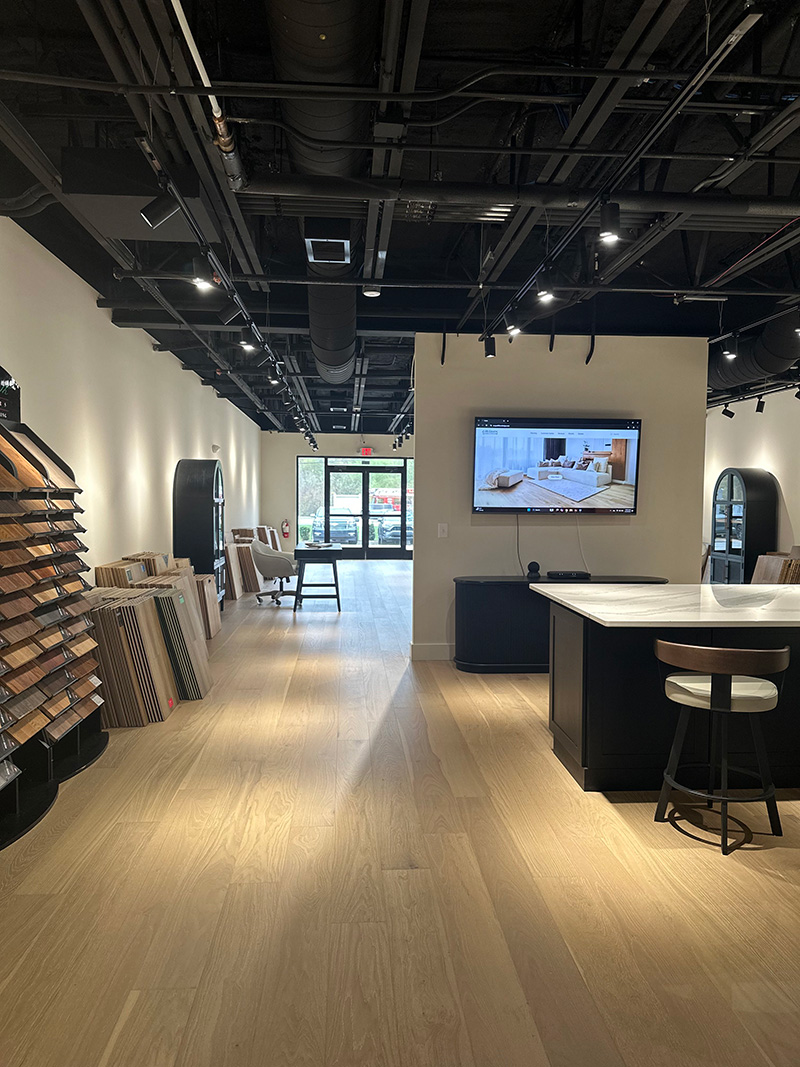

A commercial floor needs to suit the work that happens on it. The right Franklin TN office flooring solutions balance foot traffic, cleaning needs, and the look of the space, with options ranging from carpet and vinyl to hard-surface flooring. The best fit for an office may differ from what works in a retail space, showroom, or multi-tenant property.
Yes, a flooring showroom serving Franklin gives you a place to explore materials and compare how different finishes might look in your commercial space. This guide explains which flooring types can suit offices, retail areas, showrooms, and shared properties, along with the installation services available and the practical factors that shape a project. You’ll have a clearer starting point for choosing a durable, polished floor that fits the way your business operates.
Key Takeaways
- Match flooring to foot traffic, cleaning routines, and the way each area is used before settling on a material.
- Plan installation around the existing floor and business operations; preparation work and phased scheduling can shape the project.
- Compare carpet, hardwood, laminate, and tile by their practical fit as well as their appearance.
- Explore hardwood, laminate, and ceramic options with McGrath Floor & Design when you’re ready to narrow down materials for a commercial space.
Commercial flooring installation
Installing new flooring over an existing office floor can conceal cracks, uneven areas, or moisture problems. These issues may affect the new floor’s stability, finish, or adhesion. An on-site assessment can help determine whether the old covering should be removed before installation.
Start by assessing traffic patterns, the current floor covering, and business hours. These details help guide material selection and the work sequence. A busy corridor, for example, may need a different installation plan from a private office. Discussing access and operating hours also helps organize the work around daily business activity.
Preparation depends on the existing surface. Removing old tile, adhesive, and mastic adds work and affects the project schedule. After removal, the concrete slab can be ground to the required profile. Cracks, holes, and previous patches should be addressed before installation, creating a more suitable base for the selected flooring and finish.
Carpet installation calls for careful attention to the room layout, edges, and transitions to adjoining floors. Carpet can define office work areas, while hard surfaces may be more suitable for corridors or entrances. Hardwood installation also requires a prepared surface and precise fitting. If existing hardwood needs attention, restoration may involve sanding, repairs, and refinishing, depending on the wood’s condition.
A phased installation can help keep a business open during a flooring project. Work can be organized by room or zone so other areas remain in use. Projects in Franklin may also be scheduled at night or on weekends. A clear sequence helps manage access, furniture movement, and transitions between completed and active work areas. Plan phases around business hours and areas that must stay accessible, then coordinate preparation and installation for each zone.
Carpet, hardwood, luxury vinyl, and laminate options
Franklin TN office flooring solutions should reflect each space’s traffic, cleaning needs, and appearance. Carpet tile, luxury vinyl tile, and polished concrete offer different options: carpet tile has a softer feel, luxury vinyl tile suits areas prone to spills, and polished concrete can add design detail.
Carpet and Hardwood Options
Carpet can define quieter office zones, while hardwood creates a refined finish in reception areas or meeting rooms. The Internal Revenue Service identifies carpeting as a floor-covering type; for commercial spaces, consider stain resistance and suitability for heavy foot traffic. Compare colors and textures with the room’s use before choosing.
Hardwood brings a natural surface that can complement office interiors. Existing hardwood may be renewed through sanding, repairs, and refinishing, depending on its condition. For a connected design, consider how the floor’s tone and finish might carry onto hardwood stairs. Homeowners and commercial decision-makers can assess the staircase alongside adjoining spaces.
Laminate, Luxury Vinyl, and Tile
Laminate has a durable surface and comes in realistic colors, textures, and plank designs. Compare samples with the room’s lighting and furnishings to see how the finish reads across a larger area. Luxury vinyl is described as waterproof and suitable for busy areas, including kitchens, bathrooms, and entryways. Its water resistance also suits rooms prone to spills.
Porcelain tile resists moisture, stains, and wear, making it worth considering where those conditions matter. Compare tile, laminate, and luxury vinyl by appearance and intended use. The Internal Revenue Service also identifies vinyl composition tile and sheet vinyl as floor-covering types.
Office Flooring Material Comparisons
A useful way to compare Franklin TN office flooring solutions is to weigh comfort, spill exposure, and design priorities. Carpet tile offers a softer feel, while luxury vinyl tile provides a hard surface for offices prone to spills. Polished concrete offers another visual direction, with options such as color, saw-cut patterns, and embedded aggregate.
Cleaning needs matter, too. Sealed and polished commercial floors can be cleaned with routine equipment and do not require stripping-and-waxing cycles. For carpet, consider how busy shared areas are; for vinyl, consider the likelihood of spills. These differences help you select suitable materials for each office zone.
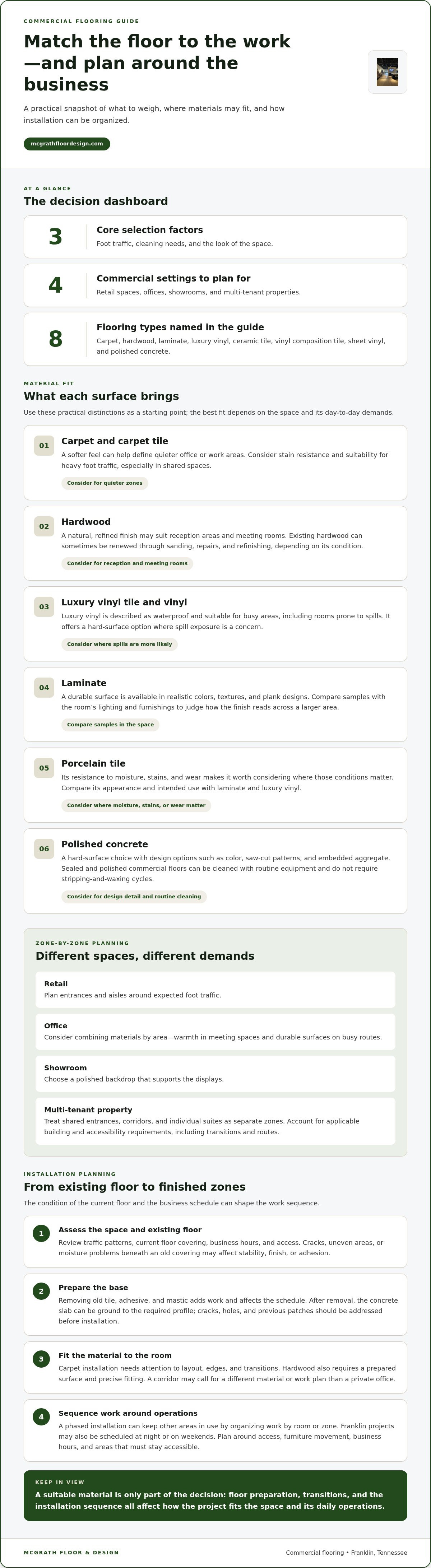
Commercial flooring for retail, offices, showrooms, and multi-tenant spaces
Choose flooring according to how each space functions, balancing durability, appearance, and the atmosphere you want to create. Retail, office, showroom, and shared-property needs can differ.
Flooring by Commercial Setting
Retail entrances and aisles need flooring suited to expected traffic, while a showroom may call for a polished backdrop for displays. Offices can combine materials by area, bringing warmth to meeting spaces and durable surfaces to busy routes. For multi-tenant properties, consider shared entrances, corridors, and individual suites as separate zones. Franklin projects should account for applicable building and accessibility requirements, including transitions and routes through the space. Specific requirements depend on the property and project scope.
Office Flooring Options
Commercial flooring options include carpet, hardwood, laminate, luxury vinyl, ceramic tile, vinyl composition tile, sheet vinyl, and polished concrete. Choose by the work each area must handle: carpet suits a different feel than a hard surface in a busy entry. The National Institute for Occupational Safety and Health (NIOSH) identifies color, saw-cut pattern, and embedded-aggregate design options for polished concrete. For hardwood flooring, consider how its warmth fits the room’s lifestyle and finish.
Measurements and Estimates
Free measurements and estimates aren’t something to assume for every Franklin flooring contractor; terms vary. A useful estimate should reflect measured rooms, selected materials, existing floor conditions, and preparation needs. During a site visit, note entrances, shared corridors, display areas, and rooms that need separate phases. These details help define the commercial flooring scope and make estimates easier to compare. Ask for the proposed work and material choices to be clearly described.
Eco-Friendly and Low-VOC Options
Eco-friendly and low-VOC attributes depend on the specific product, not simply its flooring category. Compare documented material and emissions information alongside durability, cleaning needs, and intended use. A showroom floor, for example, may need to handle frequent foot traffic while meeting project preferences for materials. Review product documentation, use, finish, and maintenance requirements together before selecting flooring.
Franklin-area flooring services
Franklin TN office flooring solutions should suit each commercial space’s traffic, appearance, and maintenance routine. A retail entrance, private office, and shared corridor face different daily demands. List how each area is used, then compare materials against those needs. Flooring for a busy shop entrance should account for frequent foot traffic, while a meeting room may place greater emphasis on finish and atmosphere.
Residential flooring calls for a different balance. Hardwood can bring warmth to a living room, while laminate offers its own surface and visual character. Consider how each room is used, which finish complements the home, and how the floor will handle everyday activity. A quiet bedroom and a frequently used entrance may call for different materials.
For Franklin TN office flooring solutions, make maintenance part of the material decision. Note the cleaning routines already used in the building and whether different spaces need different care. A consistent plan can help the property team manage entrances, offices, and shared areas without treating every surface alike.
Repair starts with identifying the damage and where it is located. A loose tile, damaged hardwood, or uneven patch each calls for a different assessment. Addressing subfloor problems early can help avoid unnecessary floor replacement. Depending on the floor’s condition, hardwood restoration may include sanding, repairs, and refinishing. The project scope should account for the existing covering and any preparation needed beneath it.
Tile installation can cover floors, walls, and showers, including setting and grouting. Commercial floor maintenance may include dust mopping and an auto-scrubber with neutral cleaner. At handoff, sealing, protective measures during turnover, and guidance for the cleaning crew support consistent care. Map the rooms, note visible damage, and describe each area’s use. Plan your flooring project with those details in mind.
McGrath Floor & Design: Hardwood Flooring
McGrath Floor & Design can help you compare hardwood flooring, laminate floors, and ceramic tile for a commercial interior. Turn to the team when narrowing material choices and seeking guidance through selection and installation. Consider how each option suits the space’s traffic, appearance, and maintenance needs: hardwood offers a natural finish, laminate a distinctive plank look, and ceramic a tile surface.
Bring the space’s intended use and your preferred style into the conversation. This gives the team a practical starting point for matching materials to your project, whether you’re planning an office, retail area, or showroom.
Contact McGrath Floor & Design or visit mcgrathfloordesign.com to discuss your flooring project.
Shape a floor plan around the way your team works
Before turning ideas into a project, consider how people enter, gather, and move through the space. Understanding these routines helps make Franklin TN office flooring solutions a considered design decision, not simply a surface choice. Think about the impression you want visitors to take away, the areas that anchor daily work, and how the finished floor can support your business identity.
Bring those priorities together in a short project brief. Note which spaces matter most, how you want the environment to feel, and any practical needs that should guide selection. This gives your flooring conversation a useful starting point and connects your design vision to the work ahead.
McGrath Floor & Design can help you move from those priorities toward a flooring plan for your space. Contact McGrath Floor & Design to discuss your project and take the next step with confidence.
Frequently Asked Questions
Do You Have A Showroom I Can Visit?
Yes. Visit McGrath Floor & Design’s showroom at 1010 Perrone Way, Suite 110, Franklin, TN 37069. It’s a practical place to view hardwood, laminate, and ceramic options and compare how their colors and finishes work together. Bring photos of your office or retail interior to help guide material discussions and connect your preferred look with the space’s intended use.
Do You Offer A Warranty On Flooring Installation?
Review the written warranty terms for the selected flooring and installation. Check what is covered, any exclusions, and the steps for making a claim. Do not assume the same coverage applies to hardwood, laminate, and ceramic. Keep the relevant product and installation documents together as a reference for your property team.
How Should I Compare Flooring Estimates?
Compare estimates by matching the proposed materials, preparation work, removal, installation scope, and project schedule. Check that each estimate addresses the same rooms and floor conditions, rather than comparing totals alone. In Franklin, estimates more than 10% apart may indicate that the lowest bidder is cutting corners. Use the difference as a prompt to examine what work or materials each proposal includes.
What are the benefits of new flooring?
New flooring can refresh a commercial interior and bring its appearance in line with your business identity. It is also an opportunity to choose surfaces suited to how staff and visitors use each area. Updating a worn reception floor, for example, can create a more considered first impression, while coordinated finishes can visually connect adjoining office spaces.
What does maintenance look like?
Maintenance depends on the flooring material and your building’s cleaning routine. Set a regular schedule, use care methods suited to the selected floor, and respond promptly to spills or visible debris. Share care instructions with the cleaning team and keep them accessible so staff can use consistent methods across offices, entrances, and shared areas.
What’s Included In An Estimate?
A useful flooring estimate describes the spaces included, selected materials, preparation, removal, installation work, and expected project sequence. It should clarify whether existing coverings or surface repairs are included. For a multi-tenant property, check that shared corridors and individual suites are identified separately. Clear details help you understand the proposed work before choosing a project plan.


