

A simple routine works best when you follow the right order. To learn how to clean ceramic tile floors in Franklin, sweep or vacuum first to remove grit, then damp-mop with a properly diluted, pH-neutral or mildly alkaline cleaner. Rinse with clean water and dry the floor to prevent residue and standing water. Sweep or vacuum weekly, and wipe up spills promptly.
It’s tempting to focus on the mop, but removing loose dirt first helps prevent grit from scratching tile or collecting in grout lines. A consistent routine makes everyday cleanup easier without relying on stronger cleaners than the floor needs.
This guide lays out a practical sequence for sweeping, vacuuming, damp-mopping, diluting cleaners, and caring for ceramic tile. You’ll also learn how to make these steps part of a repeatable routine in your Franklin home.
Key Takeaways
- For stained grout, use a gentle cleaning approach and a small nylon brush to work along the grout lines.
- Build a steady routine that includes regular dust removal and a monthly mop with mild detergent and hot water.
- Dilute cleaners according to their labels, and avoid wax-based products that can leave dirt-attracting residue.
- Inspect grout for wear and keep sealing on your maintenance calendar, following the tile manufacturer’s care advice.
To Clean Your Ceramic Tile Floors?
Inspect the floor first, then treat stains and seal grout once it’s clean and dry. These steps help you spot damage early and choose an appropriate way to clean the grout.
-
Inspect Tile and Grout for Damage
Check each tile and grout line before using water or cleaner. Look for cracks, loose tiles, crumbling grout, or gaps where dirt can collect. Note any damage so you can avoid aggressive scrubbing or forcing moisture into openings. Wait five days before cleaning newly installed tile to give the grout time to dry.
-
Clean Grout and Remove Stains
For discolored grout, start with a paste of baking soda and water. Apply it to the stained line and scrub gently with a small nylon brush or an old toothbrush. Avoid metal brushes, which can damage grout. Let the grout-cleaning solution sit on the lines for a few minutes before scrubbing, then rinse away any residue.
-
Treat Stained Grout with Hydrogen Peroxide
For persistent grout stains, mix equal parts hydrogen peroxide and water. Apply the mixture to the stained grout, keeping it on the grout lines rather than spreading it across the floor. Let it work briefly, then scrub with a small nylon brush or an old toothbrush. Rinse with clean water and dry the area to remove leftover solution.
-
Seal the Grout
Once the grout is clean and fully dry, apply a grout sealer according to its product directions. Sealing helps protect grout from everyday soil and makes routine care easier. Experts recommend sealing ceramic tile grout about twice a year, though the tile manufacturer may suggest a different schedule. Check the grout during regular floor inspections and follow the relevant care guidance.
Regular sweeping, vacuuming, and damp mopping
A reliable schedule separates dry debris removal from wet cleaning. Sweep or dust-mop daily, sweep or vacuum weekly, and mop monthly with mild detergent and hot water. This routine removes loose debris regularly and reserves damp cleaning for periodic soil removal, rather than treating every floor-care task as one step.
-
Sweep and Dust Mop Daily
Use a broom or floor dust mop daily to pick up loose dust, crumbs, and grit. Work methodically along tile edges and across open areas, collecting debris before it settles into grout lines. For wood-look tile, dust-mop regularly so particles don’t build up in grooves. Remove dry debris before damp-mopping to avoid dragging grit across the tile.
-
Vacuum Between Moppings
Vacuum ceramic tile weekly to pick up dirt, sand, and grit that sweeping may miss. Cover the whole floor, including corners and edges where debris gathers. Move carefully along grout lines and tile edges, where small particles can collect. Regular vacuuming helps prevent abrasive debris from lingering underfoot between monthly mopping sessions.
-
Mop the Floor Monthly
Mop monthly with mild detergent and hot water. Remove loose dirt first, then damp-mop in manageable sections so you can keep track of the areas you’ve cleaned. Use enough solution to lift soil, but not so much that water pools on the tile. Rinse with clean water to remove cleaner residue, then dry the floor to prevent standing water.
Keeping dry debris under control also protects tile between wet-cleaning sessions. Regularly removing dust and grit limits abrasion, while clearing particles before they settle into grout or wood-look grooves makes routine care more effective.
Applying and diluting cleaning solutions
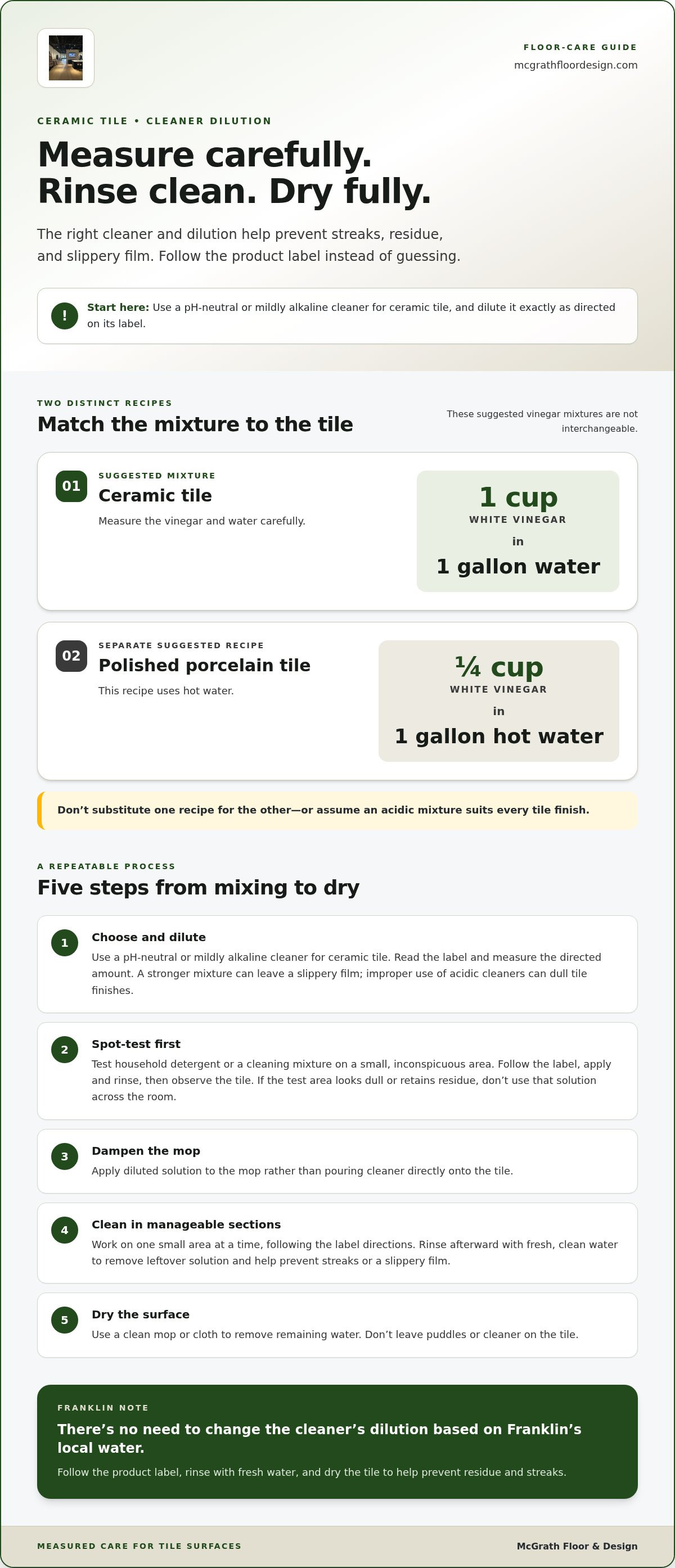
When learning how to clean ceramic tile floors in Franklin, follow the cleaner’s label rather than making assumptions about local water. To prevent streaks and residue, use the directed amount, rinse with clean water, and dry the floor after mopping.
- Choose a suitable cleaner. Use a pH-neutral or mildly alkaline cleaner to lift dirt and grease from ceramic tile. Read the label before mixing, and dilute the product exactly as directed. A stronger mixture isn’t a shortcut: leftover cleaner can leave a slippery film, and improper use of acidic cleaners can dull tile finishes.
- Measure any vinegar solution carefully. One suggested mixture for ceramic tile uses one cup of white vinegar in one gallon of water. A separate suggested recipe for polished porcelain tile uses ¼ cup of white vinegar per gallon of hot water. Don’t substitute one recipe for the other or assume an acidic mixture suits every tile finish.
- Spot-test before cleaning the full floor. Test household detergent or a cleaning mixture on a small, inconspicuous area first. Follow the product label, then observe the tile after applying and rinsing. If the test area looks dull or retains residue, don’t use that solution across the room. Spot-testing is especially useful before trying an acidic cleaner.
- Apply in manageable sections. Dampen the mop with diluted solution instead of pouring cleaner directly onto the tile. Clean one small area at a time, following the label’s directions. Rinse with fresh water afterward to remove leftover solution and help prevent streaks or a slippery film.
- Finish with a dry surface. After rinsing, use a clean mop or cloth to remove remaining water. Don’t leave puddles or cleaner on the tile. If you’re learning how to clean ceramic tile floors in Franklin, this measured approach avoids assuming local water requires a special dilution.
There’s no need to change the cleaner’s dilution based on Franklin’s local water. Follow the product label, rinse with fresh water, and dry the tile to help prevent residue and streaks.
Ceramic tile cleaning routine
Make floor care repeatable by combining scheduled cleaning with prompt spill cleanup. This keeps daily upkeep distinct from monthly mopping and gives you regular opportunities to check the tile’s condition.
- Clear spills promptly. Blot or wipe up a fresh spill as soon as you notice it. Prompt cleanup helps reduce staining and slip hazards, especially near sinks and entryways. Pick up the spill rather than letting it dry into the grout, then clean the spot with a suitable floor cleaner. Dry the area before walking on it.
- Use a regular dry-cleaning rhythm. Sweep or dust-mop daily to pick up grit before it travels across the floor. Sweep or vacuum weekly, including corners, edges, and grout lines. On wood-look tile, pass the dust mop along the grooves so debris doesn’t remain in the textured details.
- Reserve damp mopping for the monthly clean. After removing loose dirt, mop monthly with mild detergent and hot water. Follow the cleaner’s dilution directions, rinse with clean water to remove residue, and dry the surface. Standing water can create a slip hazard. Avoid wax-based products, which can leave residue that attracts dirt.
- Adjust the routine to visible soil. Clean a muddy footprint or food spill when it happens instead of waiting for the next scheduled mop. Use a dry broom or mop for everyday dust, and the monthly damp-mopping method for a soiled floor. This helps avoid unnecessary wet cleaning while addressing messes before they linger.
- Review the floor as you clean. Check tile and grout during routine upkeep for cracks, loose areas, or deteriorating grout. Notice if a cleaner leaves a film or an acidic product dulls the finish, and avoid using that product again. Keep the maintenance steps consistent: remove debris, clean with an appropriate solution, rinse, and dry.
McGrath Floor & Design: Hardwood Flooring
If caring for your current floor has you considering new ceramic flooring or another material, McGrath Floor & Design can help. The team guides you through product selection and installation, so you can compare ceramic with laminate floors or hardwood flooring based on your home’s design and needs. If your tile is damaged or you’re planning an update, consider the look and practical requirements you want from the finished floor. Contact McGrath Floor & Design to discuss your flooring options.
Make Your Next Flooring Decision With Confidence
A well-kept floor contributes to the feel of a room, but your home’s needs can change over time. If you’re weighing continued care against an update, start with what matters most: the look you want, how the room is used, and the surface that suits your plans. Knowing how to clean ceramic tile floors in Franklin gives you a practical foundation for maintaining your current floor and deciding what comes next.
McGrath Floor & Design offers Ceramic, Laminate Floors, and Hardwood Flooring. Consider what suits your home, then contact the team to discuss flooring options and product selection.
Contact McGrath Floor & Design to explore your next step. A considered choice can help make your home feel more like yours.
Frequently Asked Questions
How do you clean ceramic tile floors step by step?
Start by removing loose dust and grit, then clean the tile with a compatible, diluted solution. Work in sections, paying attention to corners and areas around furniture where soil can collect. Rinse away the cleaner and dry the surface before allowing foot traffic. If a spill happens in the kitchen, clean the affected area promptly rather than waiting for the next scheduled clean.
What cleaners are safe for ceramic tile and grout?
Choose a cleaner labeled for ceramic tile, and follow its dilution and use directions. A pH-neutral or mildly alkaline cleaner is suitable for routine dirt and grease. Spot-test household detergent in an inconspicuous area before using it across the floor. Tile finishes vary, so don’t assume a solution recommended for polished porcelain is suitable for every ceramic surface.
How do you remove stains from ceramic tile floors?
First identify whether the stain is on the tile or in the grout, since each needs a different approach. Wipe fresh food or drink spills promptly, then clean the spot with a tile-compatible solution. If a mark remains, avoid aggressive scrubbing that could affect the finish. Test the cleaner in an inconspicuous area, rinse the treated spot, and dry it.
How do you clean grout between ceramic tiles?
Apply a paste of baking soda and water to discolored grout, then gently scrub with a small nylon brush or an old toothbrush. For stubborn stains, apply equal parts hydrogen peroxide and water to the grout. Avoid metal brushes, which can damage grout. Rinse the lines after treatment and let them dry before assessing the result.
What cleaning products should not be used on ceramic tile floors?
Avoid wax-based products because their residue can attract dirt and make the surface harder to maintain. Use acidic cleaners cautiously, since improper use can dull ceramic tile finishes. Spot-test household detergent before applying it across the floor. Don’t use a stronger concentration than the label directs, as excess cleaner can leave a slippery film.


