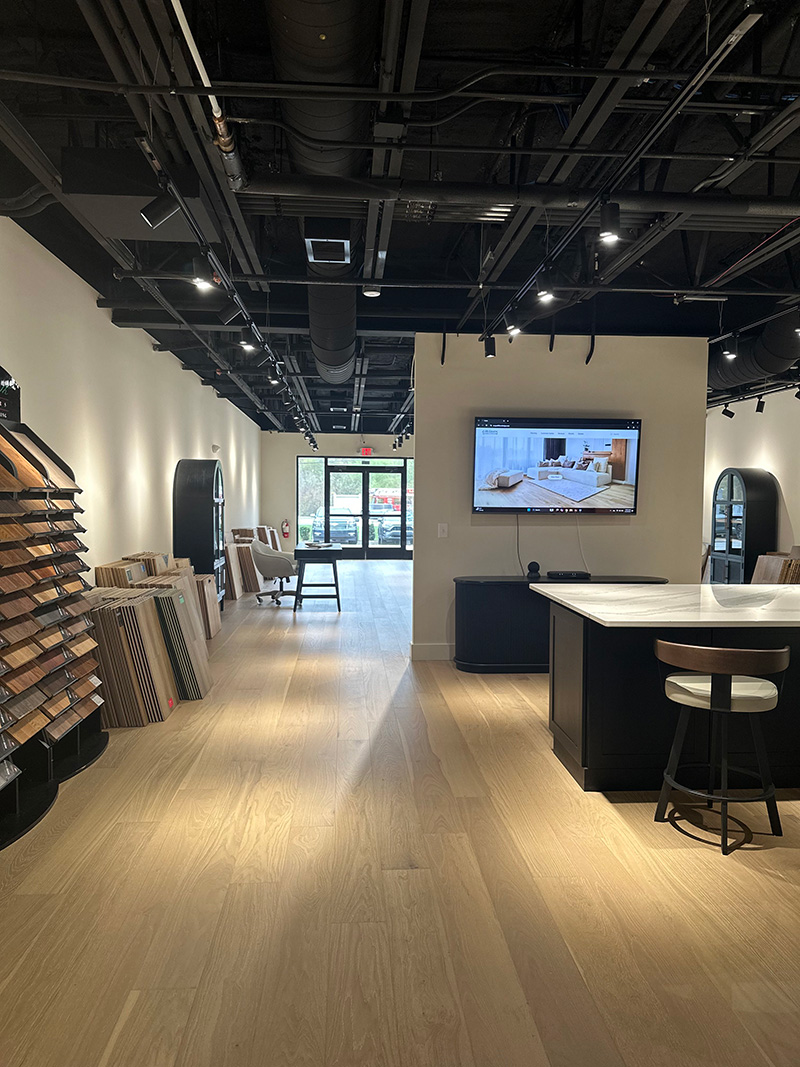

Replacing carpet with hardwood can increase a home’s value: new hardwood installation typically increases home value by 3-5% in most markets. But the cost-versus-value of new floors in Brentwood depends on more than resale potential; the room, existing floor condition, and material all shape whether replacement makes sense.
It’s natural to compare hardwood’s appeal with carpet’s comfort and practicality, especially when you’re planning for a future sale. This guide explains how hardwood, carpet, and luxury vinyl plank (LVP) differ in buyer appeal and resale value, and why refinishing existing hardwood may be worth considering before replacing it. You’ll also find a practical way to match flooring to your home and priorities.
Key Takeaways
- Compare hardwood’s resale appeal with the room’s condition and your plans before deciding whether to replace carpet.
- Look beyond the flooring material: removal, subfloor repairs, trim, and furniture moving can affect the project’s overall value.
- Use buyer appeal and likely resale return to weigh hardwood, carpet, and LVP for different rooms.
- Before replacing existing hardwood, consider whether refinishing could refresh its appearance and support your resale goals.
Does replacing carpet with hardwood increase home value?
Usually, yes. New hardwood installation typically increases home value by 3-5% in most markets, though that increase doesn’t mean every project recovers its full cost.
Engineered hardwood offers a wood surface over a layered core, making it an option for homeowners seeking hardwood’s appearance. A 4 mm engineered hardwood veneer is described as refinishable and able to deliver the resale return associated with quality engineered flooring. The material’s construction and condition matter: a floor that looks well-finished and suits the home can make a stronger impression than worn carpet, while damaged or poorly installed flooring can undermine that appeal.
| Flooring option | Buyer appeal | Resale consideration |
|---|---|---|
| Engineered hardwood | Wood appearance with a layered construction | A 4 mm veneer is refinishable |
| Solid hardwood | Traditional wood-floor character | Condition and finish shape the impression |
| Carpet | Soft, comfortable surface | Visible wear may make replacement more appealing |
Consider each room’s purpose, the floor’s condition, and the finishes nearby. Replacing worn carpet in a main living area, for example, may create a more cohesive look alongside hardwood. In a bedroom, carpet may better suit a preference for a soft surface. Resale value is only one consideration: daily comfort and how flooring connects with adjoining rooms matter too.
In Brentwood, permit requirements depend on the project’s scope, while HOA restrictions are set out in community governing documents. Changing the flooring material alone does not answer either question, so consider whether the work extends beyond the visible floor.
Issues may surface after carpet is removed. Moisture, an uneven subfloor, damaged underlayment, or old adhesive can require additional preparation. Trim, floor transitions, and furniture moving can add work as well. Include these possibilities in your project plan and consider how repairs could affect the finished surface.
Choose hardwood when a cohesive wood finish and resale appeal suit the home. Keep carpet when comfort better serves the room and the existing floor remains in good condition.
Flooring costs and buyer appeal
To weigh cost vs. value for new floors in Brentwood, compare the full project scope, not just the material. Room use, existing finishes, and preparation needs affect both buyer appeal and installation work.
Comparing Contractor Quotes and Credentials
Compare written quotes that cover the same rooms, material, removal, preparation, trim, and cleanup. A lower total may include less work, so review each line item. Ask for licensing and insurance documentation, then verify it with the issuing organizations. Comparing scope and credentials helps you assess proposals on equal terms.
Installation generally follows a sequence: measure the rooms, remove existing flooring, prepare the subfloor, install the material, and finish the trim and transitions. Timing depends on the material, room conditions, and work involved. Make sure the written project scope outlines the planned steps and expected schedule.
Removal, Repairs, Trim, and Furniture Moving
Removal may involve carpet, old flooring, or adhesive. Once the surface is lifted, installers may find an uneven or damaged subfloor that needs preparation before the new material goes down. Trim and transitions affect the finish at doorways and where floors meet other surfaces. Identify which rooms and items need to be cleared before work begins.
Project cost depends on the material, room area, removal, subfloor condition, trim, and furniture moving. A quote can set out the cost for your specific project.
For a second cost-versus-value comparison of new floors in Brentwood, consider how the material will look across connected rooms. For example, a continuous hard surface may visually link an entry and living area, while carpet may suit a bedroom’s intended feel. Include those design priorities alongside scope when comparing options. Plan a laminate flooring project with room conditions and finishing details in view.
What flooring has the highest ROI for home resale?
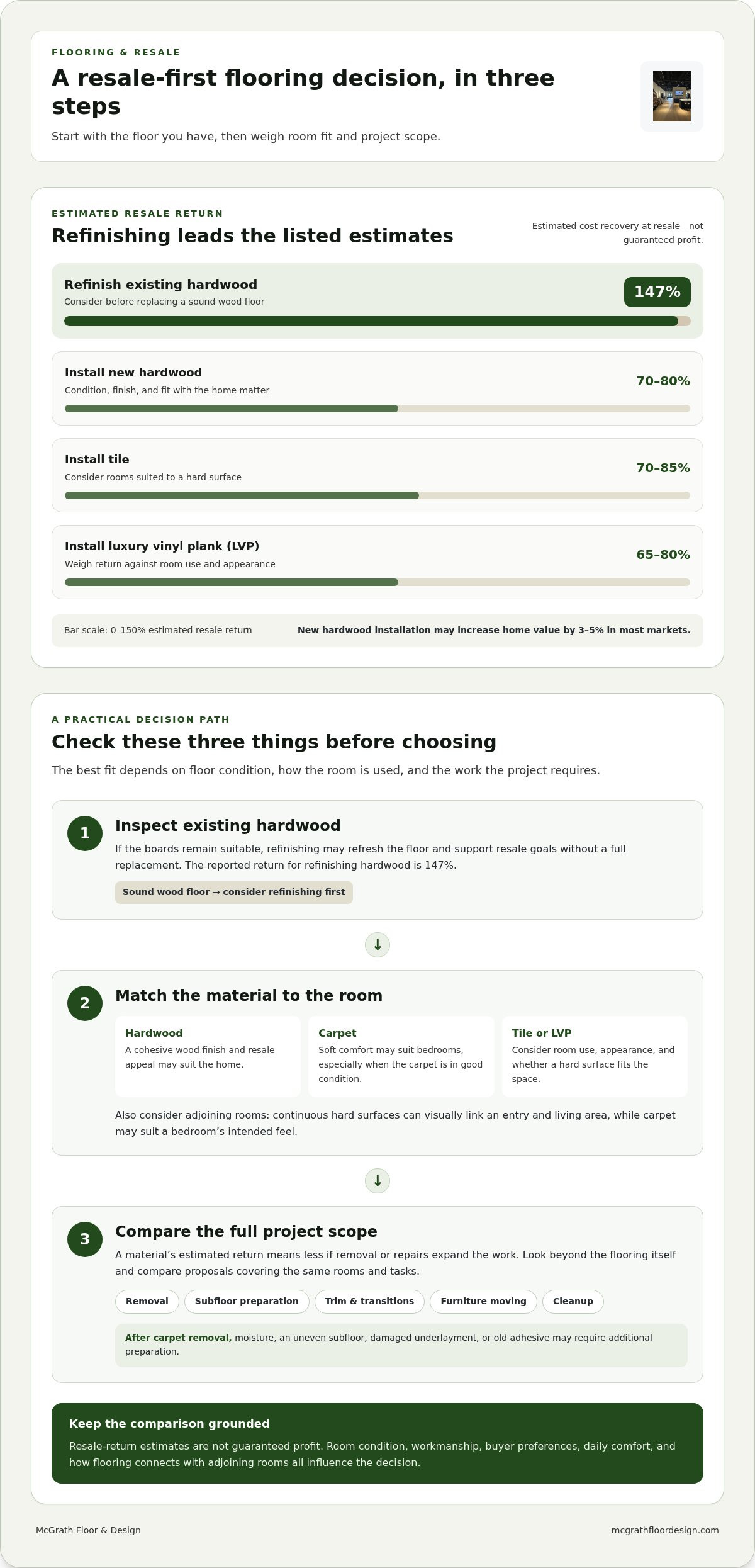
Refinishing existing hardwood leads the listed resale-return estimates. The National Association of Realtors reports a 147% return on investment for refinishing hardwood floors. New installations generally return less of their initial cost, so compare project scope before choosing solely for resale.
| Flooring project | Estimated resale return | Practical takeaway |
|---|---|---|
| Refinish existing hardwood | 147% | Consider this before replacing a sound wood floor |
| Install new hardwood | 70-80% | Prioritize condition, finish, and fit with the home |
| Install tile | 70-85% | Use it in rooms suited to a hard surface |
| Install luxury vinyl plank | 65-80% | Weigh its return against room use and appearance |
These percentages describe estimated cost recovery at resale, not guaranteed profit. A 147% return means the reported resale value exceeds the refinishing cost; it doesn’t mean every hardwood floor earns that result. Room condition, workmanship, and buyer preferences influence how flooring contributes to a sale.
Use a simple sequence to assess your options:
- Inspect existing hardwood. If the boards remain suitable, refinishing may preserve value without a full replacement.
- Match material to the room. Tile suits appropriate rooms, while comfort may make carpet preferable in bedrooms.
- Compare project scope. A material’s return means less if repairs or removal expand the work.
For example, a homeowner with worn hardwood might compare refinishing against installation, then judge each option by condition and likely buyer appeal. A kitchen or entry may call for a different surface than a bedroom. Luxury vinyl plank returns 65-80%, while tile returns 70-85%; the higher range alone shouldn’t decide material selection.
For Brentwood homeowners considering resale, a strong choice balances potential return, room function, and the home’s existing finishes. Consider refinishing before replacing hardwood. New flooring makes sense when the current surface no longer suits the appearance or use you want.
What extra costs should homeowners budget for, including removal, subfloor repairs, trim, and furniture moving?
Plan for more than the visible flooring material. In a Brentwood room, existing layers, floor condition, doorways, and furnishings can add preparation work. Ask for tasks to be listed separately in the project scope so you can see what may change if hidden damage is found.
- Removal: Carpet, old flooring, adhesive, and disposal each affect the work. For example, glued flooring may take longer to remove than loose-laid material.
- Subfloor repairs: Once the surface is exposed, soft spots, uneven areas, or moisture damage may need attention. New flooring needs a suitable base to sit evenly.
- Trim and transitions: New material can change floor height. Check door clearances, baseboards, and thresholds where the room meets tile or another surface.
- Furniture moving: Beds, sofas, and dining tables must be cleared from installation areas. Decide which rooms need moving and who will handle each item.
Use a room-by-room checklist before comparing proposals. Note the current floor type, visible damage, built-ins, doorway transitions, and furniture that is difficult to move. A room with a closet and several thresholds, for example, may need more finishing work than an open rectangular space.
Separate planned work from possible repairs in the quote. Removal and trim needs can often be described before work begins, but subfloor damage may only become visible after the old flooring is removed. Ask for any added work to be explained and approved before it changes the agreed scope.
Furniture preparation affects the project sequence too. Clear small objects, décor, and breakables before the work area is prepared. Identify heavy or delicate pieces in advance and decide where they can stay safely during installation. Clearing the room gives installers access to edges and corners.
For laminate flooring, include transitions and subfloor preparation in your project plan. Plan a laminate flooring project with room conditions and finishing details in view.
McGrath Floor & Design: Hardwood Flooring
McGrath Floor & Design helps Brentwood homeowners compare hardwood flooring, laminate floors, and ceramic options for their space. Turn to the team when weighing resale appeal against room function, existing finishes, and project scope. Guidance through product selection and installation planning can help you choose flooring that fits your home and priorities.
Hardwood, for example, may suit a living area where a cohesive wood look matters, while laminate or ceramic may better fit another room’s needs. Share your preferred style and project priorities to make the selection conversation more focused.
Contact McGrath Floor & Design to discuss flooring options for your Brentwood home.
Make Your Flooring Decision With Confidence
A thoughtful cost-versus-value decision for new floors in Brentwood starts with how you want each room to feel and function. Resale matters, but so does living with the finish every day. Consider the home as a whole: a well-chosen floor should complement adjoining spaces, suit your routines, and feel intentional rather than like a short-term fix.
Before moving ahead, identify your priorities. Is a cohesive look more important than a softer surface? Are you refreshing the home for your own enjoyment, preparing for a sale, or balancing both goals? Clear answers make the next conversation more productive and help shape a plan for your home.
When you’re ready to discuss your flooring project, contact McGrath Floor & Design. Take the next step at your own pace and shape a space that feels right for the way you live.
Frequently Asked Questions
Quick Answer: What’s the ROI on New Flooring?
There’s no single ROI for every flooring project. ROI compares the value recovered at resale with the project cost, and the result depends on the material, room, floor condition, and buyer appeal. Refinishing sound hardwood is different from replacing worn carpet or installing a new surface. For a useful comparison, consider the planned work and the room’s role, not just the material name.
Should I replace flooring before selling my house?
Replace flooring before selling when visible damage, stains, or mismatched surfaces distract from the home. If the existing floor looks presentable, replacement may add little to a buyer’s impression. Walk through the home as a buyer might: look for transitions between rooms, worn paths, and flooring that clashes with nearby finishes. Focus on the areas that most affect the overall presentation rather than replacing every surface automatically.
What is the ROI on hardwood floors?
Refinishing existing hardwood has a reported 147% return on investment, according to the National Association of Realtors. New hardwood installation typically returns 70-80% of its cost at resale. These estimates distinguish restoring an existing floor from installing a new one. If boards remain suitable for refinishing, compare that option with replacement and weigh the finish, visible condition, and consistency with adjoining rooms.
What is the average cost to install new flooring in Brentwood, California?
This article focuses on Brentwood, Tennessee, in the Greater Nashville area, not Brentwood, California. Flooring installation costs vary with material, room dimensions, removal, subfloor preparation, trim, and transitions. A room that needs repairs, for example, has a different scope from one with a prepared base. Compare written proposals for the same rooms and tasks to understand the work involved in your Brentwood home.
How much does hardwood, engineered wood, laminate, vinyl plank, and tile flooring cost per square foot in Brentwood?
Per-square-foot pricing varies with material, product selection, room conditions, and installation scope. Hardwood and engineered wood differ in construction; laminate, vinyl plank, and tile have different preparation and finishing needs too. Removal, subfloor work, and transitions can change the project total. For a meaningful comparison, define the same rooms and included tasks for each material, then assess the full project scope.
Which new flooring types offer the best resale value in Brentwood homes?
Refinishing existing hardwood has the strongest reported return among the listed projects, while new hardwood, tile, and luxury vinyl plank have estimated resale-return ranges. Choose flooring based on the room and its condition, not rank alone. Tile, for example, may suit a room designed for a hard surface, while carpet may better fit a bedroom where comfort matters. In Brentwood, a cohesive finish that suits the home’s use can support buyer appeal.


