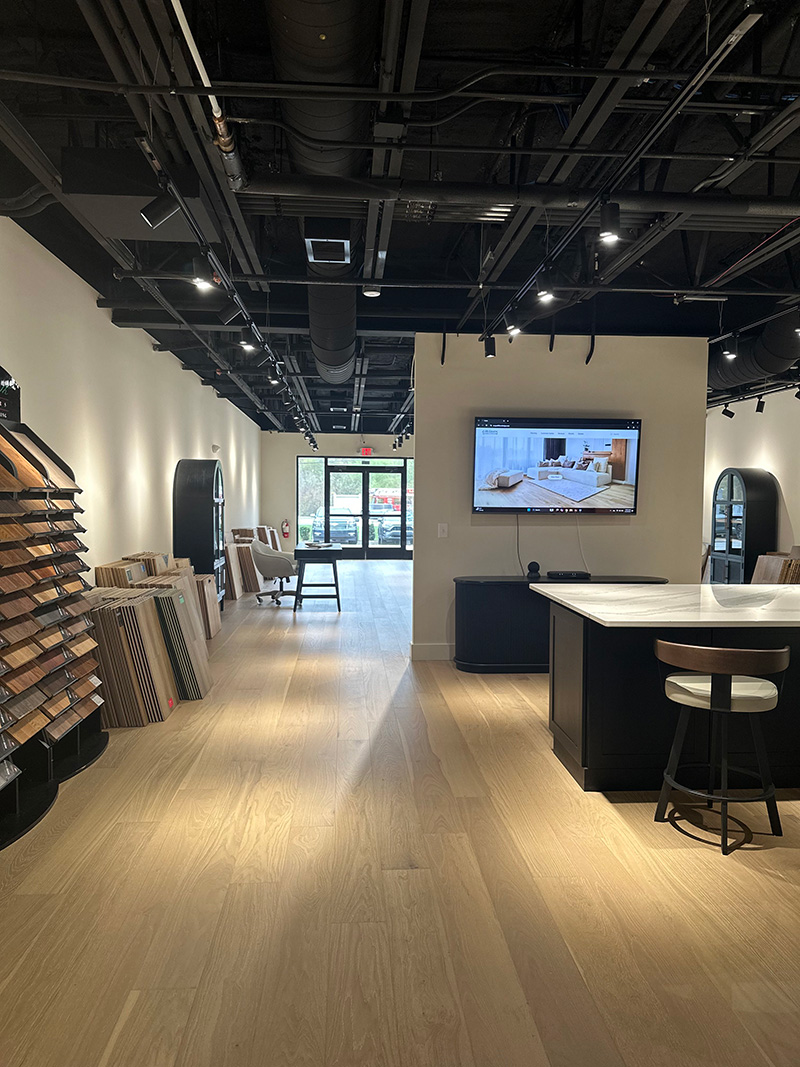

The best rental floor isn’t always the cheapest to install. Choosing flooring for an investment property in Franklin means weighing how tenants will use the space, how long you plan to hold the property, and where moisture or changing indoor conditions may affect performance. Ceramic tile can suit spill-prone areas, while hardwood may support a higher-end look for a long-term rental or resale-focused renovation.
It’s understandable to want polished floors that don’t create extra work between tenants. The right balance depends on the rental type, expected wear, humidity and temperature changes, and your investment plans. This article compares tile, hardwood, and laminate, with guidance on where each option can make sense and what to consider before choosing. You’ll be better equipped to match the flooring to the property’s purpose instead of selecting by appearance alone.
Key Takeaways
- Match flooring to rental use by weighing durability, appearance, moisture exposure, and ongoing upkeep together.
- Engineered hardwood’s layered construction can make it less prone to warping and shrinking than solid hardwood as humidity and temperature change.
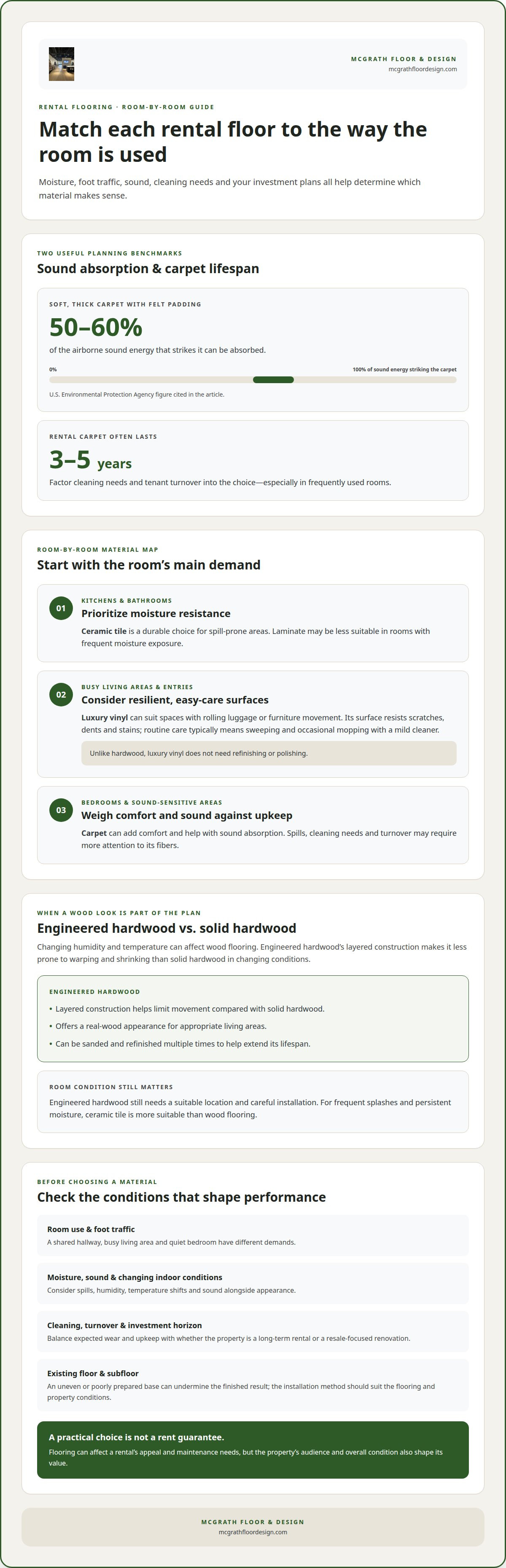
- A soft, thick carpet with felt padding absorbs about 50 to 60% of the airborne sound energy that strikes it, according to the U.S. Environmental Protection Agency.
- Let your investment horizon guide the finish: flooring suited to a long-term rental may differ from a choice aimed at resale or a high-end appearance.
1. What is the Best Flooring for Rental Property?
No single floor suits every rental. A professional weighs room use, moisture, expected tenant wear, appearance, and upkeep before recommending materials. For kitchens and bathrooms, ceramic tile or another moisture-resistant option can help manage spills. In high-traffic living areas, durability and straightforward cleaning matter more. The best fit balances those practical needs with the property’s style and investment budget.
For example, luxury vinyl can suit rentals where tenants often bring in rolling luggage or move furniture. Its resilient surface resists scratches, dents, and stains, and routine care typically involves sweeping and occasional mopping with a mild cleaner. Unlike hardwood, luxury vinyl doesn’t need refinishing or polishing. Carpet can add comfort to bedrooms, but spills and tenant turnover may call for more attention to its fibers.
When recommending flooring for kitchens, bathrooms, and busy areas, a professional considers moisture exposure, foot traffic, and cleaning demands room by room. Ceramic tile suits spill-prone spaces, while a resilient surface may be a better fit for a busy living area. Comparing those needs helps balance durability, style, and maintenance.
For questions about Franklin building codes and permits, distinguish replacing a floor finish from work that changes underlying building components. The project’s scope matters, so a material recommendation alone shouldn’t be treated as a code ruling or a permit exemption.
Renters’ preferences vary by property and household. A prospective tenant may value easy-care floors in the kitchen, comfortable carpet in a bedroom, or a polished look in the living area. Neutral finishes can also give renters flexibility when arranging furniture.
Durable, attractive flooring can strengthen a rental’s appeal and help limit maintenance between tenants. Hardwood may support a more upscale presentation, while a practical surface can simplify daily care. Neither choice guarantees higher rent: the property’s audience and overall condition also shape its value.
To help minimize vacancy, flooring professionals can coordinate measurements, material selection, and installation with the turnover schedule. Settling key decisions before work begins helps avoid delays from late changes. The right recommendation depends on the rental’s rooms, expected wear, and investment plan.
2. Engineered hardwood for humidity and temperature changes
Franklin rental properties experience changing indoor conditions as seasons shift and heating or cooling systems run. Engineered hardwood is made in layers, making it less prone to warping and shrinking than solid hardwood when humidity and temperature change. That added stability can matter in rooms where conditions vary throughout the year. It still needs a suitable location and careful installation.
Consider a living room that connects to an entryway. Foot traffic, tracked-in moisture, and changes in indoor humidity all affect how a floor performs. Engineered hardwood offers a real-wood appearance, and its layered construction helps limit movement compared with solid hardwood. It may suit an owner seeking a refined finish, but the room’s exposure and use should guide the choice.
Bathrooms present a different challenge. Frequent splashes and persistent moisture make ceramic tile more suitable than wood flooring in these spaces. A flooring professional can assess each room’s exposure, then recommend engineered hardwood for appropriate living areas and moisture-resistant flooring where water is more likely. This room-by-room approach keeps the design cohesive while matching materials to actual use.
Installation quality matters, too. Before work begins, a professional assesses the existing floor and subfloor, since an uneven or poorly prepared base can undermine the finished result. The installation method should suit the selected flooring and the property’s conditions. For an affordable plan, weigh the initial material choice against expected wear, upkeep, and the value of a lasting appearance. Engineered hardwood can also be sanded and refinished multiple times, helping extend its lifespan.
For a rental planned as a long-term asset, engineered hardwood can balance a natural look with greater dimensional stability than solid wood. A specialist in hardwood flooring options can help match the material to each room’s conditions and intended use.
3. Flooring choices for apartment rentals
Apartment flooring must suit each room and the building’s everyday demands. Before recommending materials, a professional considers foot traffic, moisture, sound, and expected tenant turnover. A hallway shared by several residents, for example, needs a different balance than a quiet bedroom. These details affect durability, maintenance, and the rental’s appeal.
Noise deserves attention in multi-unit buildings. The U.S. Environmental Protection Agency says soft, thick carpet with felt padding absorbs about 50 to 60% of airborne sound energy striking it. That can help landlords weigh sound control alongside cleaning needs. Carpet can suit bedrooms or living areas where a softer surface matters, though rental carpet often lasts three to five years.
In kitchens and bathrooms, moisture exposure matters more than softness. Laminate may be a less suitable choice in rooms with frequent moisture exposure, so landlords should consider the room’s conditions when selecting flooring. Ceramic tile is a durable choice for areas exposed to spills. A flooring professional can make recommendations room by room instead of extending one material throughout the apartment without considering how each space is used.
Rental properties also differ in tenant patterns. A short-term apartment may see rolling luggage and frequent arrivals, while a long-term rental may need a finish that stays appealing through repeated occupancy. Professionals can factor in these differences, along with the existing subfloor and the owner’s upkeep priorities. This assessment helps distinguish a surface suited to bedroom comfort from one designed for busy shared spaces.
Preparation matters, too. Before new flooring goes in, a professional evaluates whether the subfloor is level and properly prepared. This step supports a more reliable finished surface and helps avoid problems with the base beneath it. By weighing traffic, sound, moisture, and room function together, landlords can choose materials that serve tenant comfort and practical maintenance.
4. Choosing flooring based on investment plans
For owners choosing flooring for an investment property in Franklin, the first decision is how the property will serve them. A long-term rental, a short-term rental, and a home prepared for resale each call for a different balance. A flooring professional considers occupancy, room use, maintenance priorities, and the finish that suits the intended audience.
For a rental held over time, practical upkeep may matter more than a high-end finish. A professional can recommend durable flooring for heavy foot traffic, then consider a more refined look for the main living space. Comfort may influence the choice in bedrooms. Kitchens and bathrooms need a separate assessment of moisture exposure and how each space is used.
A resale project calls for a different perspective. Tile can add resale value in key areas, while hardwood, engineered hardwood, and tile can create a high-end appearance for buyers planning to live in the property. A professional weighs which rooms contribute most to that impression and where presentation should take priority. Choosing flooring for an investment property in Franklin should reflect the intended buyer, not just the current owner’s taste.
To tailor recommendations, a flooring professional can focus on the property’s audience, the owner’s holding plan, and the rooms’ wear or moisture exposure. A rental aimed at frequent occupancy, for example, may prioritize easy-care surfaces, while a resale-focused renovation may give greater weight to finish and presentation. Those priorities shape material selection, room placement, and installation planning, balancing current upkeep with future appeal.
Bring your investment goals and room priorities into a flooring discussion. Plan flooring around your investment goals before selecting materials.
McGrath Floor & Design: Hardwood Flooring
McGrath Floor & Design helps property owners compare hardwood flooring, laminate floors, and ceramic tile based on each room’s use and the investment goals. Turn to the team when you’re weighing appearance, expected wear, moisture exposure, and upkeep for a rental or resale project. Professional guidance through product selection and installation can help align the material choice with the property, from a refined living space to a spill-prone area.
Share how you plan to use the property and which rooms need new flooring. McGrath Floor & Design can guide you through selecting materials that fit your priorities.
Contact McGrath Floor & Design to discuss flooring for your investment property.
Set your investment priorities before the next flooring decision
Choosing flooring for an investment property in Franklin starts with a clear picture of what the property needs to do next. Before planning a renovation, define its intended use, the rooms that need attention, and the qualities that matter most to your investment. A focused brief gives the flooring discussion a practical starting point and keeps material choices connected to the property’s future.
You don’t need to have every detail settled before getting started. Begin with the intended rental or resale plan, then discuss how the flooring should support it. McGrath Floor & Design can guide product selection and installation around those priorities, turning the property’s purpose into a considered flooring plan.
Take the next step at your own pace. Start a flooring conversation with McGrath Floor & Design and explore a direction that suits your investment.
Frequently Asked Questions
What is the Best Flooring for Rental Property?
The best choice suits the rental’s use, room conditions, and care plan rather than forcing one material across every surface. For a unit between tenants, plan flooring by zone: practical surfaces in shared rooms, moisture-conscious choices near plumbing, and a softer finish in bedrooms. Add clear floor-care instructions to the lease so occupants know how to maintain the selected materials.
What flooring types are most durable for rental properties?
Ceramic tile, hardwood, and luxury vinyl are common durable options, with performance depending on room use and maintenance. Luxury vinyl in rental properties typically lasts 10 to 15 years with proper care. Engineered hardwood can be sanded and refinished multiple times, which can extend its service life. Tile is a practical fit for rooms exposed to frequent spills.
How much does rental property flooring cost per square foot in Franklin, TN?
Flooring costs in Franklin depend on the project and are provided after a quote request. The material, room dimensions, existing-floor removal, subfloor preparation, transitions, and installation scope all affect the total. A rental with several room types may need different materials, so one per-square-foot figure can obscure important project details. A written quote can show how the scope affects the cost.
How do luxury vinyl plank, laminate, tile, and carpet compare for rentals?
Luxury vinyl handles routine cleaning and resists scratches and stains. Laminate offers a wood-look surface, but it isn’t fully waterproof, so avoid using it in bathrooms. Ceramic tile suits spill-prone spaces. Carpet adds softness to bedrooms, but its fibers need a different cleaning routine than hard surfaces. Compare each room’s exposure and expected care needs before choosing.
What flooring lasts longest and costs least to maintain in a rental property?
No material delivers the longest service life and lowest upkeep in every room. Ceramic tile is easy to clean and suitable for moisture-prone areas, while luxury vinyl doesn’t need refinishing or polishing. Engineered hardwood can be refinished multiple times. To manage ongoing care, match each surface to its use and give tenants clear cleaning guidance for that material.
What should landlords ask a flooring professional about warranties and water-damage resistance?
Ask what the product warranty covers, which exclusions apply, and whether installation has separate coverage. For water resistance, clarify how the selected material handles spills, leaks, standing water, and moisture around seams or edges. Also discuss whether room conditions and subfloor preparation affect coverage. These details help distinguish water-resistant products from flooring intended for dry areas.


