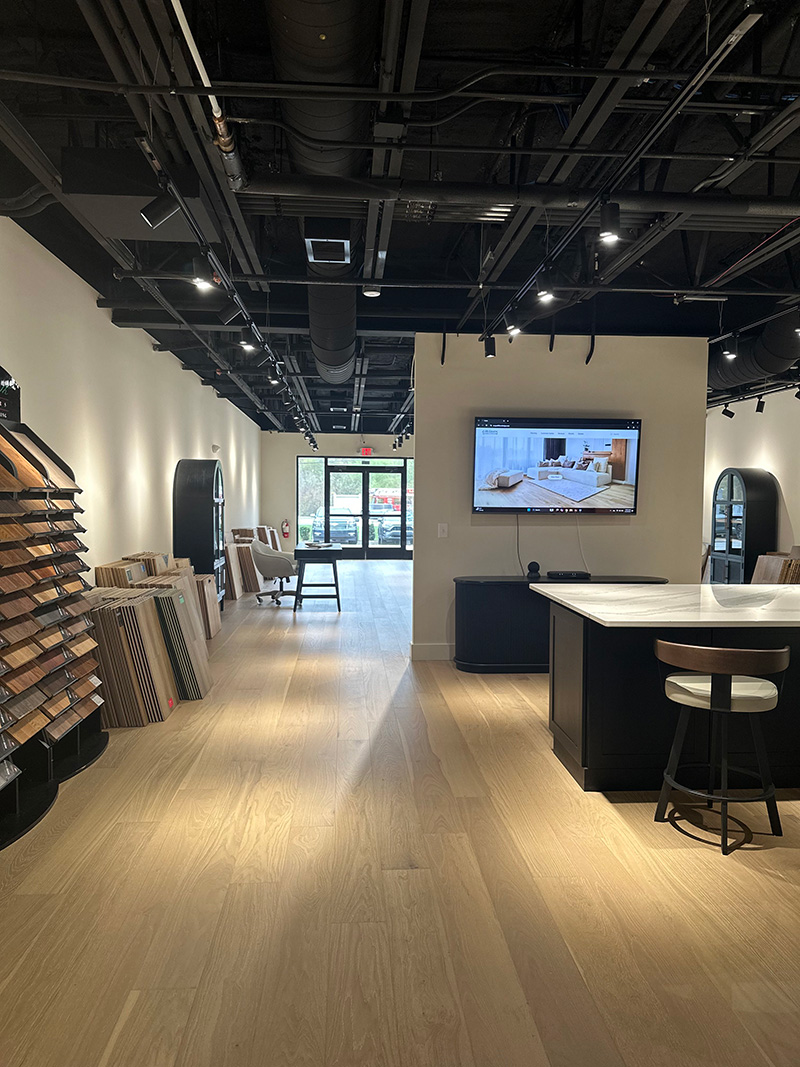

Hardwood is a strong starting point when choosing the best flooring for resale value in Franklin, particularly in main living areas where buyers may appreciate its natural look and refinishing potential. For a cohesive feel, use consistent flooring through connected spaces, then consider ceramic tile in kitchens and bathrooms, where an easy-to-clean hard surface suits the room. Neutral colors and finishes can help keep the overall look appealing to a wide range of buyers.
The right flooring choice depends not only on appearance, but also on the room, upkeep, and how well the material suits the home. This guide compares hardwood, laminate, and ceramic tile for buyer appeal and everyday maintenance, then considers tile choices for kitchens and bathrooms. Use these criteria to weigh resale appeal against durability and choose a finish that feels considered rather than tailored to one taste.
Key Takeaways
- Choose neutral colors and finishes to make flooring feel welcoming to a broad range of buyers.
- Weigh each material’s upkeep and durability against the room where it will be installed.
- Compare hardwood, laminate, and tile by buyer appeal and potential resale return before committing to an upgrade.
- Use ceramic tile thoughtfully in kitchens and bathrooms, where a practical surface can complement the rest of the home.
Buyer preferences for low-maintenance flooring
Buyers often consider upkeep as well as appearance, especially when a sale is approaching. Neutral finishes and practical materials can help a home feel ready for a wider range of tastes.
Neutral Flooring Colors
Neutral flooring gives buyers room to imagine their own furniture and décor. For carpet, taupe, warm gray, and soft beige are practical examples; for tile, neutral tones and natural-stone finishes offer a similarly restrained look. Bold patterns and strong colors make the floor a more personal statement. If you’re preparing to list soon, a quieter palette can help keep the focus on the home.
Aesthetic Appeal and Buyer Preferences
Appearance matters, but a finish that looks appealing in a showroom may feel different across an entire room. High-sheen tile, for example, can be less appealing at home than on display. Consider how the finish looks in the space, and balance visual character with a comfortable, cohesive effect. A natural-looking surface can add interest without dominating nearby finishes.
Buyers may also respond to flooring that feels consistent from room to room. Hardwood and laminate offer wood-like visual continuity, while ceramic tile can create a purposeful change in kitchens or bathrooms. Neutral tile colors, natural-stone finishes, and less reflective surfaces can keep the look broadly appealing. Ease of cleaning also helps make a practical impression.
| Option | Buyer appeal | Upkeep consideration | Color or finish direction |
|---|---|---|---|
| Hardwood | Familiar, natural look | Keep the finish presentable | Natural or neutral tones |
| Laminate | Wood-like appearance | Easy to clean and scratch-resistant | Understated wood tones |
| Ceramic tile | Practical in kitchens and baths | Easy to clean | Neutral, natural-stone look |
| Carpet | Soft, quiet appearance | Can show wear faster than hard flooring | Taupe, warm grey, or soft beige |
Start with how the room is used, then compare maintenance needs, color, and finish. A restrained palette and purposeful transitions can help buyers see a cohesive home rather than one that feels overly customized.
Durability and maintenance considerations
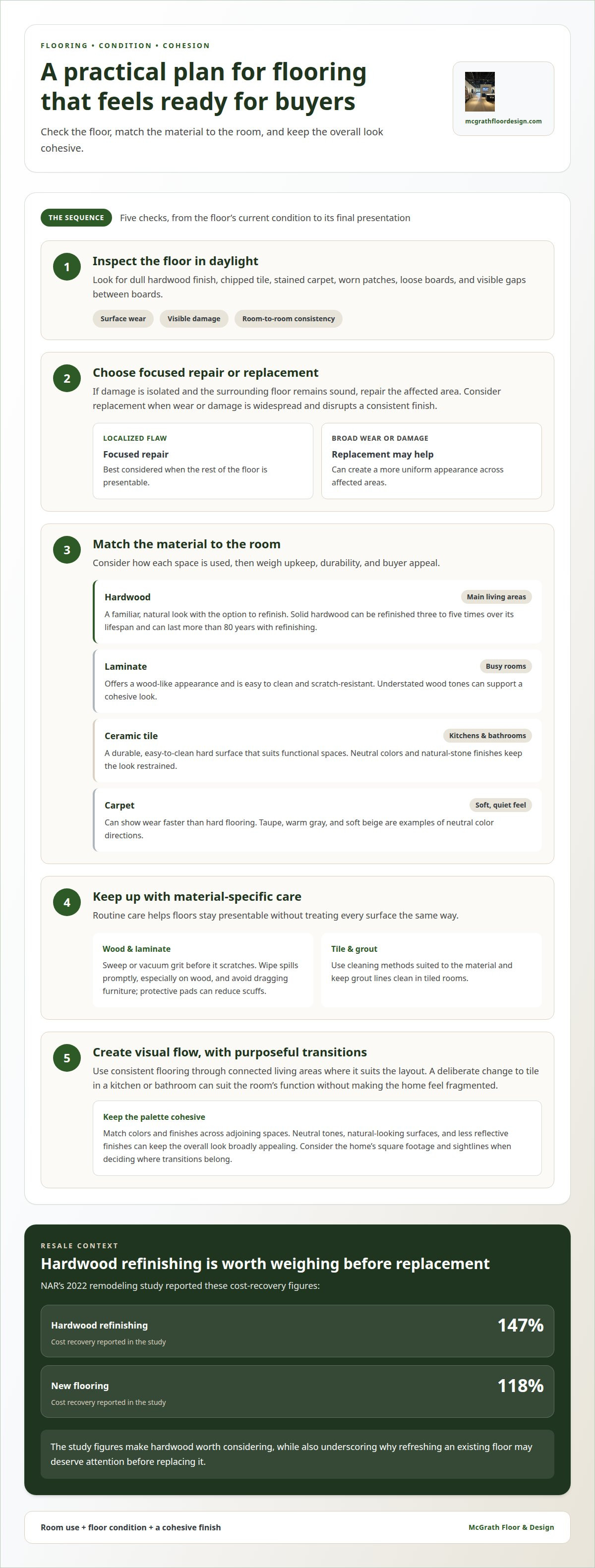
Scratches, worn patches, loose boards, and visibly damaged tile can weaken a home’s presentation. Repair isolated damage if the surrounding floor remains sound. Replace flooring when wear or damage affects broad areas and disrupts a consistent finish.
Hardwood can last more than 80 years with refinishing, and solid hardwood can be refinished three to five times over its lifespan. That gives homeowners a way to renew worn surfaces instead of replacing the entire floor. Engineered hardwood has a real wood top layer and is more stable and moisture-resistant than solid hardwood.
Laminate is easy to clean and scratch-resistant, useful qualities in busy rooms. Tile is also durable and easy to clean, while carpet can show wear faster than hard flooring. Match the material to the room’s use: a busy hallway faces different demands than a quiet bedroom.
Consistency matters across the home. Use the same flooring through connected living areas where it suits the layout, then make purposeful transitions at rooms such as kitchens or bathrooms. Matching color and finish helps adjoining spaces feel connected, even when the material changes. Consider the home’s square footage and sightlines before choosing where transitions belong.
For routine care, sweep or vacuum grit before it scratches the surface, then use cleaning methods suited to the material. Wipe spills promptly, especially on wood, and keep grout lines clean in tiled rooms. Avoid dragging furniture across hardwood or laminate; protective pads can reduce scuffs at common contact points.
Inspect floors in daylight before listing. Look for dull hardwood finish, chipped tile, stained carpet, and visible gaps between boards. Address small, localized flaws with a focused repair if the rest of the floor remains presentable. If damage is widespread, replacement can create a more uniform appearance. Choose a finish that carries through nearby rooms, with deliberate transitions where the room’s function calls for them.
Flooring materials and resale value
Flooring can shape a buyer’s first impression, but resale value depends on more than material alone. NAR’s 2022 remodeling study reported a 147% cost recovery for hardwood refinishing and 118% for new flooring. Those figures make hardwood worth considering, while also showing why refreshing an existing floor may deserve attention before replacing it.
Hardwood offers a natural appearance and can be refinished, allowing homeowners to address surface wear without changing the material. Laminate provides a wood-like look and is easy to clean and scratch-resistant. Luxury vinyl is another option, but the best choice depends on whether its appearance and upkeep suit the home, rather than on one material being right for every property.
Tile has a different role. Ceramic can suit kitchens, bathrooms, and entryways, where a hard surface fits the way those rooms are used. Consistent flooring across connected living areas can create visual flow, while a purposeful transition to tile can distinguish a functional space without making the layout feel fragmented.
- Hardwood: Consider it for main living areas when natural character and the option to refinish matter.
- Laminate: Weigh its easy-care surface against the look and finish buyers will see across the room.
- Luxury vinyl: Compare its practical appeal with the home’s overall finish and buyer expectations.
- Ceramic tile: Use it where a durable, easy-to-clean surface suits the room, especially kitchens and bathrooms.
For the best flooring for resale value in Franklin, match material to location, condition, and the home’s existing style. A worn hardwood floor may benefit more from refinishing than replacement; a visibly dated or damaged surface may call for a broader upgrade. Treat NAR’s cost-recovery figures as study results, then assess how a specific improvement will contribute to a cohesive, well-maintained presentation.
What flooring upgrades offer the best return on investment before selling a Franklin home?
For resale, prioritize the floor that improves the home’s visible condition and suits its price point. New flooring can return up to 80% on investment, while a targeted refresh may make better sense than replacing sound surfaces throughout the house.
Hardwood is a strong candidate for main floors, living rooms, hallways, and dining areas. Its estimated return on investment is 118% in most cases, though results depend on the home and project. If existing hardwood is worn but intact, refinishing can restore its appearance without replacing the entire floor.
Material comparisons offer useful direction, not a guaranteed ranking for every Franklin home. Ceramic tile has an average return on investment of 70%; porcelain tile averages 55%. Stone tile returns 55% to 70%, while marble returns less than 50%. Fresh, neutral, high-quality carpet can be a sensible bedroom update, though carpet returns 25% to 40%.
- Keep and refinish: Choose this route when hardwood remains sound but looks dull or worn.
- Replace selectively: Address damaged or outdated flooring in prominent rooms rather than upgrading every surface automatically.
- Match the room: Consider ceramic or porcelain tile for kitchens, bathrooms, and entryways.
- Maintain cohesion: Carry a consistent finish through connected spaces, using purposeful transitions between materials.
Before committing, compare the floor’s current condition, the room’s function, and the material’s fit with the home’s overall finish. A material that can appeal to buyers may still be a poor choice if it clashes with the property or over-improves one room. For the best flooring for resale value in Franklin, make the upgrade work for both buyer appeal and everyday use.
Explore flooring options to plan a cohesive update for the rooms that need attention.
McGrath Floor & Design: Hardwood Flooring
McGrath Floor & Design helps Franklin homeowners compare hardwood flooring, laminate floors, and ceramic for resale-focused updates. Turn to the team when weighing hardwood’s refinishing potential against laminate’s easy-care appeal, or deciding where tile best suits a kitchen or bathroom.
Product guidance connects each material to the room, the home’s existing finishes, and the upkeep you want to manage. This helps you plan a cohesive choice instead of selecting flooring by appearance alone. McGrath Floor & Design also guides homeowners through product selection and professional installation, helping turn those priorities into a finished interior.
Ready to discuss flooring for your home? Contact McGrath Floor & Design to plan your update.
Plan Your Flooring Update With Resale in Mind
Before choosing a finish, decide what you want the next owner to notice first: a well-cared-for home, a coherent design, or a practical room-by-room layout. That priority can guide where an upgrade makes sense and where preserving the existing floor is wiser. Keep the plan aligned with the home’s character rather than chasing a trend that may not suit its rooms or future buyers.
The best flooring for resale value in Franklin is the choice that supports the property as a whole. Consider how each room connects, how the surface will be used, and whether the finished look feels intentional from the entry onward. A clear plan helps focus investment on the areas that shape the home’s presentation while keeping material choices grounded in everyday function.
When you’re ready to discuss the right direction for your home, contact McGrath Floor & Design. Take the next step with a thoughtful plan and a finish that feels right for the home.
Frequently Asked Questions
How Much Value Does New Flooring Add to a Home?
New flooring can strengthen a home’s presentation, but its contribution depends on the floor’s condition, the room, and buyer expectations. A clean, cohesive floor may help a Franklin home feel cared for, while a premium upgrade can be out of step with the property. Consider the existing finishes and the rooms buyers see first before deciding whether replacement is likely to improve the home’s appeal.
What percentage of flooring spend can sellers expect to earn back?
There isn’t one reliable percentage sellers can expect from every flooring project. Material, installation quality, the existing floor’s condition, and the home’s overall price point all affect the return. A modest repair or focused replacement can make more sense than a whole-home upgrade when most floors remain presentable. Treat percentage estimates as comparisons, not promises of what a future sale will recover.
Are trendy flooring options like parquet a good choice for resale?
Parquet can give a room distinctive character, especially when its pattern suits the home’s architecture. Its strong visual presence may also appeal to a narrower range of buyers. For a resale-minded update, use it where it feels intentional, such as a defined entry or dining area, rather than carrying a highly distinctive pattern through every room.
Which flooring types add the most resale value in Franklin, Tennessee?
Hardwood is often a compelling resale choice because buyers recognize its natural appearance and refinishing potential. Ceramic tile can also suit kitchens and bathrooms, where room function matters as much as style. In Franklin, compare a proposed upgrade with the home’s condition and surrounding finishes. A well-matched material in a high-visibility room can make more sense than an expensive mismatch throughout the house.
How do hardwood, engineered wood, luxury vinyl plank, and carpet compare for resale appeal in Franklin?
Hardwood offers a natural surface that can be refinished; engineered hardwood has a real wood surface and is designed for greater stability than solid hardwood. Luxury vinyl plank can suit rooms where water resistance is useful, while carpet brings softness to bedrooms but may show wear sooner. For a Franklin home, choose by room use, current condition, and how each finish supports a cohesive interior.
What flooring styles and colors are popular with Franklin homebuyers?
Neutral colors, natural wood tones, and restrained finishes can work with varied furniture and décor. For carpet, warm gray, taupe, and soft beige are versatile options; for tile, natural-stone looks can add texture without overwhelming a room. Keep connected spaces visually coordinated, and reserve stronger patterns or glossy finishes for areas where they suit the home’s design.


