
The greatest threat to a historic Williamson County renovation isn't picking the wrong finish; it's ignoring the shifting framing and damp crawl spaces running beneath your feet. Selecting the right flooring for older homes in Franklin means balancing authentic architectural beauty with the physical realities of Middle Tennessee climate. You want to honor your home's vintage character, but sagging joists, persistent floor squeaks, and summer humidity that causes traditional planks to cup can turn an exciting remodel into an expensive headache.
You don't have to sacrifice historic charm just to gain lasting stability. In this guide, you will discover how to choose durable, beautiful flooring that complements historic Franklin architecture while solving common subfloor and humidity challenges. We'll walk through period-appropriate material selections like hardwood, laminate, and ceramic, outline the critical subfloor remediation steps required before installation begins, and share how experienced local craftsmanship can protect your living space for decades to come.
Key Takeaways
- Understand how Middle Tennessee crawl space humidity and shifting framing impact aging floor systems before installation starts.
- Discover which hardwood, laminate, and ceramic options deliver the ideal balance of historic character and modern dimensional stability when selecting flooring for older homes in Franklin.
- Learn the three essential subfloor preparation steps required to reinforce joists, eliminate friction squeaks, and protect your home's structural integrity.
- Match plank widths, authentic wood tones, and ceramic patterns to your specific architectural era, from ornate Victorians to timeless bungalows.
- See how partnering with a local specialist experienced in regional architecture ensures your new floors withstand seasonal climate shifts.
Structural Realities: Why Older Franklin Homes Challenge Modern Flooring
Historic Franklin properties, whether nestled in Hincheyville, along Lewisburg Avenue, or near downtown, possess timeless architectural character. They also rest on century-old framing, hand-hewn sills, and vented crawl spaces that shift continuously with the seasons. Choosing flooring for older homes in Franklin requires a clear understanding of the structural physics at work beneath your feet. Without addressing the underlying frame, even the finest materials will struggle against movement and dampness.
Middle Tennessee Humidity and Crawl Space Dynamics
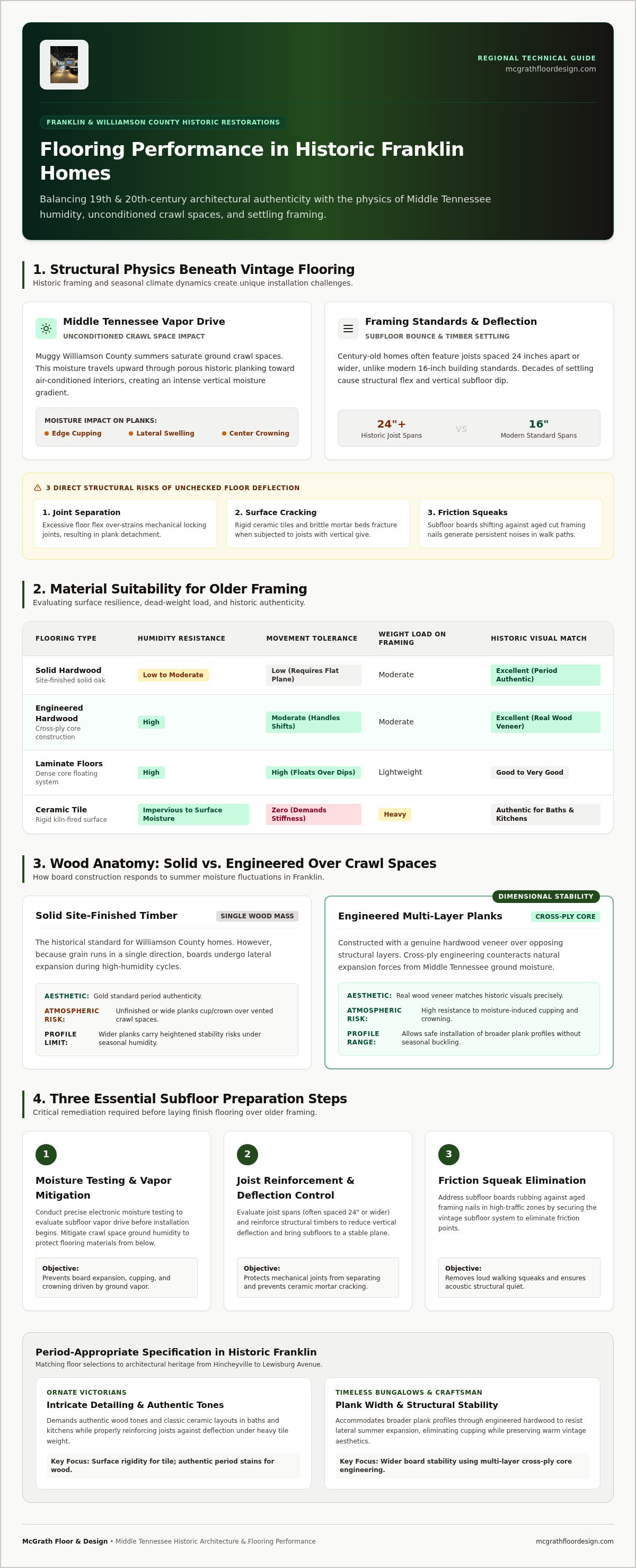
Unconditioned crawl spaces act as moisture sponges during muggy Williamson County summers. Heavy ground humidity migrates upward through porous, vintage subfloor planks, creating a steep moisture gradient between the crawl space and your air-conditioned living areas. When evaluating different types of wood flooring, this vapor drive must dictate your installation strategy. Wide, unfinished planks can cup or crown as moisture levels fluctuate, making crawl space vapor mitigation and precise electronic moisture testing essential before any work begins.
Settling Foundations and Deflection in Historic Framing
Framing standards in 19th- and early 20th-century Franklin homes differ dramatically from modern building practices. Builders often spaced floor joists 24 inches apart or wider, compared to today's standard 16-inch centers. Over decades, heavy timbers naturally settle, creating subfloor deflection, that subtle bounce or dip you feel beneath your footsteps. In Victorian and Craftsman structures, unchecked deflection creates serious risks for new finishes:
- Joint Separation: Excessive floor flex strains mechanical locking joints, causing planks to separate over time.
- Cracking Rigid Surfaces: Ceramic tiles and brittle mortar beds will snap if applied directly over joists with excessive vertical give.
- Persistent Friction Squeaks: Subfloor boards rubbing against aged framing nails generate loud squeaks in heavy walking zones.
Evaluating joist spans and foundation settling before choosing flooring for older homes in Franklin ensures your selected material performs gracefully alongside your home's historic framing.
Comparing Flooring Materials for Franklin Heritage and Aging Homes
Every floor covering interacts differently with the structural realities of an aging house. Solid timber responds to ambient air, engineered cores balance internal stresses, and ceramic requires absolute rigidity. Selecting the right flooring for older homes in Franklin means evaluating how a surface handles movement, dead weight, and seasonal atmosphere before you commit to a specific aesthetic.
| Flooring Type | Humidity Resistance | Subfloor Movement Tolerance | Weight Load on Older Framing | Historic Visual Match |
|---|---|---|---|---|
| Solid Hardwood | Low to Moderate | Low (requires strict flat plane) | Moderate | Excellent (Period Authentic) |
| Engineered Hardwood | High | Moderate (handles subtle shifts) | Moderate | Excellent (Real Wood Veneer) |
| Laminate Floors | High | High (floating system floats over dips) | Lightweight | Good to Very Good |
| Ceramic Tile | Impervious to Surface Moisture | Zero (demands reinforced stiffness) | Heavy | Authentic for Baths & Kitchens |
Solid vs. Engineered Hardwood in Historic Settings
Traditional site-finished solid oak represents the gold standard for period authenticity. However, thick solid planks expand laterally during humid Middle Tennessee summers, risking cupped board edges over vented crawl spaces. Learn more about material performance in our hardwood flooring comprehensive resource. Multi-layer engineered boards use cross-ply core construction that counteracts wood's natural urge to swell. This structural stability lets you install broader board profiles safely across historic framing without inviting seasonal buckling.
High-Performance Laminate and Ceramic Applications
Today's dense laminate floors provide an exceptional balance of resilience and flexibility. Installed as floating surfaces over acoustic underlayment, they bridge subtle subfloor inconsistencies without transferring stress to aged joists. Review design options via our laminate flooring design and durability guide. They resist claw marks, heavy foot traffic, and ambient moisture, making them practical for busy households in older neighborhoods.
Ceramic delivers timeless beauty in historic wet areas like utility rooms and pantries. Explore heritage tile styling in our ceramic bathroom and kitchen guide. Because fired tile and grout cannot bend, these installations require uncoupling membranes and stiff subfloor assemblies to prevent stress fractures.
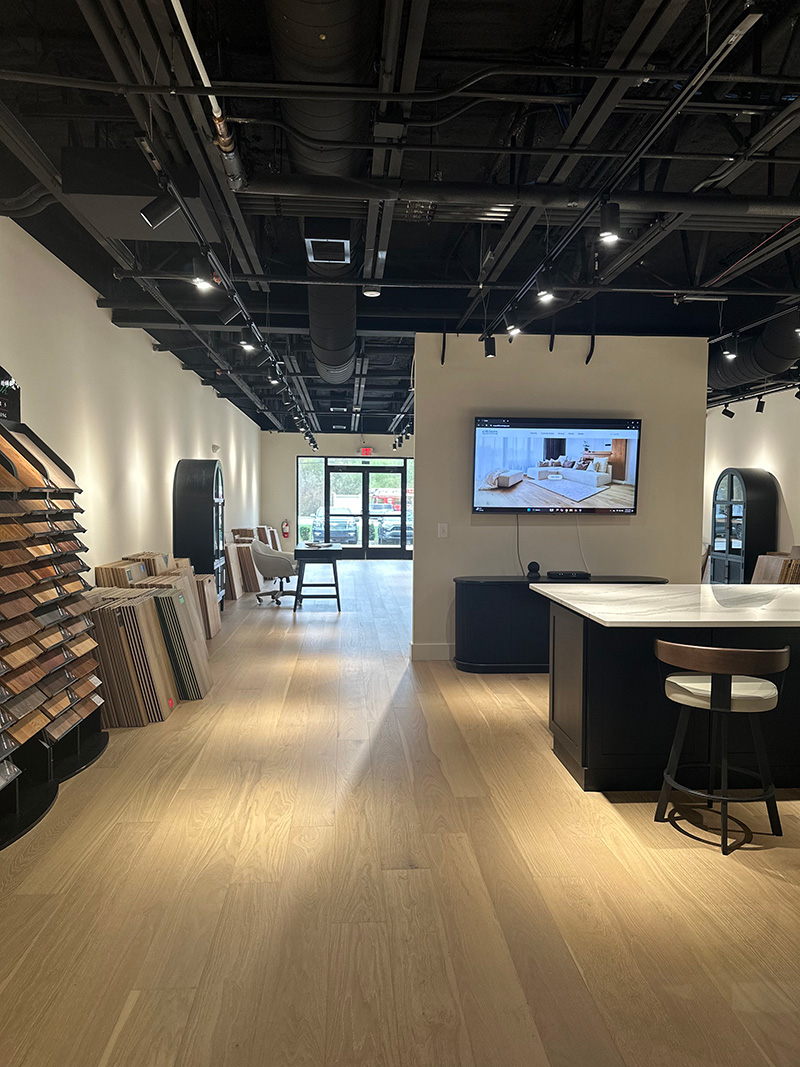
If you want to view these materials in person, you can browse tested collections through McGrath Floor & Design to see how different textures look under natural lighting.
Essential Subfloor Preparation: Three Steps to Protect Older Framing
Even the most exquisite surface material will fail if the structure beneath it remains unstable. In historic Franklin properties, subfloor remediation is not an optional upgrade; it is the foundation of the entire installation. Skipping this phase leads to hollow footfalls, shifting boards, and visible surface dips. When installing flooring for older homes in Franklin, completing three dedicated preparation steps protects your investment and preserves your home's framing.
Step 1: Joist Assessment and Fastening Loose Subfloors
Decades of seasonal expansion and foot traffic cause old nails to back out of floor joists. As vintage subfloor planks rub against these loose fasteners, they generate loud, grating squeaks. Before laying new materials, technicians must walk the room systematically to locate every movement point. Driving modern construction screws directly through the existing diagonal planks and deep into structural joists locks down the wood. Where historic joist spacing exceeds modern spans, securing an additional layer of 3/4-inch plywood across original boards significantly dampens deflection and reinforces overall load capacity.
Steps 2 and 3: Leveling Planes and Installing Vapor Barriers
Once the subfloor is secured, focus shifts toward achieving a flat surface and establishing a dependable moisture defense:
- Flattening the Plane (Step 2): Technicians map the room using a straightedge to uncover settling swales and crowned joists. High spots are planed or sanded flat. For low dips, applying a fiber-reinforced self-leveling underlayment creates a uniform surface. These specialized compounds are engineered specifically for wood subfloors, flexing naturally with seasonal timber movement without cracking.
- Blocking Crawl Space Moisture (Step 3): Ground dampness from unconditioned crawl spaces constantly rises toward living quarters. Laying down a continuous, high-performance vapor barrier membrane across the prepared subfloor halts upward vapor drive. This vital thermal and moisture barrier keeps floating laminate floors from swelling at the seams and prevents glue-down hardwood adhesives from deteriorating.
Taking the time to stabilize, level, and seal aging foundations ensures your new flooring for older homes in Franklin performs flawlessly without damaging historic architecture.
Matching Flooring Choices to Franklin Architectural Styles
Every historic home carries its own design language. Installing trendy, ultra-wide light planks into an ornate late-19th-century parlor looks jarring and disrupts visual balance. Selecting flooring for older homes in Franklin requires thoughtful harmony between original trim details, ceiling heights, and floorboard scale. When chosen carefully, modern planks and tiles can honor your home's vintage character while delivering exceptional everyday performance.
Victorian and Historic Downtown Franklin Residences
Downtown Franklin and Hincheyville showcase Queen Anne and Italianate architecture defined by tall ceilings, intricate baseboards, and formal trim profiles. Floor selections here should mirror that classic craftsmanship:
- Wood Tones and Widths: Traditional narrow-strip hardwoods or elegant parquet layouts blend naturally with historic millwork. Opt for rich, warm tones like antique chestnut or medium walnut rather than cool grays.
- Vintage Ceramic Accents: Formal vestibules, foyers, and secondary bathrooms benefit from period-appropriate ceramic patterns. Hexagon tiles, basketweaves, or decorative borders frame entryways with authentic 19th-century charm.
Craftsman Bungalows and Post-War Ranch Layouts
Early 20th-century Craftsman bungalows celebrate organic materials and unpretentious joinery. For these spaces, wire-brushed or rift-and-sawn white oak planks echo classic Arts and Crafts built-ins. Warm honey finishes and natural matte sheens bring out tight grain patterns without looking artificial. Discover installation precision in our flooring installation Franklin TN local spotlight guide.
Mid-century ranches around Franklin demand a different approach. These open-concept layouts look best with wider, clean-lined wood planks or seamless, large-format ceramic across adjoining kitchens and living areas. Maintaining consistent finished floor heights between rooms prevents awkward transition strips across open thresholds. This creates a cohesive flow throughout your entire layout.
Ready to discover the perfect surface for your home's unique history? Explore curated historic styles with McGrath Floor & Design and let experienced local specialists match your architecture with dependable materials.
Selecting and Installing Your New Floors with McGrath Floor & Design
Selecting the right flooring for older homes in Franklin requires more than picking a color swatch from a tiny catalog square. Vintage framing, variable room humidity, and unique architectural proportions require careful tactile evaluation and experienced local guidance. A successful project blends beautiful materials with meticulous on-site diagnostics, from measuring floor deflection to checking door clearance against historic thresholds.
The Curated Showroom Experience Near Franklin
Visiting a dedicated showroom lets you see broad plank displays under natural lighting conditions. At McGrath Floor & Design, homeowners can explore carefully curated collections of hardwood flooring, laminate floors, and ceramic tile chosen specifically for Middle Tennessee climate performance. Experienced specialists take the time to evaluate your home's era and crawl space setup, guiding you toward materials that will hold their shape through seasonal shifts. You can also examine custom transition thresholds, flush stair noses, and edge profiles designed to integrate cleanly with original millwork.
Craftsman Installation and Historic Trim Preservation
Installing new surfaces in an aging residence demands specialized carpentry techniques. Careless installers often pry off fragile, original pine baseboards or leave clumsy quarter-round shoe mouldings against historic plinth blocks. Experienced craftsman teams protect your home's integrity through careful methods:
- Precision Undercutting: Technicians use precision flush-cut saws to undercut door jambs and casings, sliding planks underneath without disturbing antique framing.
- Subfloor Diagnostics: In-house crews verify subfloor moisture content, plane high spots, and secure sagging joists before unboxing materials.
- Seamless Transitions: Custom-milled transition strips bridge differing floor heights smoothly between period rooms.
To see how skilled installation protects vintage spaces across the county, explore our engineered hardwood flooring installation Brentwood TN guide. With over 50 years of combined industry experience, Rick McGrath and his team bring deep local knowledge to every project, ensuring your new flooring for older homes in Franklin stands the test of time. Connect with McGrath Floor & Design today to discuss your historic renovation vision with dedicated local specialists.
Preserve Your Home's Heritage with Enduring Craftsmanship
Renovating an aging residence in Williamson County is an opportunity to honor architectural character while introducing long-term comfort. Selecting the right flooring for older homes in Franklin comes down to respecting the framing beneath your feet, mitigating seasonal crawl space humidity, and choosing materials that mirror historic proportions. Whether you choose dimensionally stable engineered hardwood, resilient laminate floors, or period-authentic ceramic, meticulous subfloor preparation ensures your investment endures for generations.
You don't have to navigate these structural challenges on your own. Backed by over 50 years of combined flooring experience in Middle Tennessee, our team pairs specialized subfloor stabilization with careful installation methods that protect original baseboards and door casings. Take the first step toward transforming your living space by choosing to visit our showroom or schedule an in-home assessment with McGrath Floor & Design. Let's bring lasting beauty, stability, and comfort to your historic Franklin home.
Frequently Asked Questions
Can I install new hardwood floors over existing original floorboards in an older Franklin home?
Yes, you can install new hardwood directly over original floorboards if they are structurally sound, flat, and firmly fastened to the framing. Installers typically run the new planks perpendicular to the existing historic boards to prevent telegraphing and structural deflection. If the original floor shows severe cupping or damage, securing a fresh plywood underlayment creates a stable foundation while preserving the original timbers underneath.
Why do floors in older Middle Tennessee houses squeak so much, and can new flooring fix it?
Squeaks happen when vintage subfloor planks rub against old, smooth nails that have loosened from settling floor joists over time. Simply laying new surface material over a noisy floor will not silence it. Experienced installers address the root cause during subfloor preparation by driving hardened construction screws through the loose boards directly into the framing before laying any new flooring for older homes in Franklin.
Is engineered hardwood better than solid wood for older homes with crawl spaces in Franklin?
Yes, engineered hardwood is generally superior to solid wood for historic homes built over vented Middle Tennessee crawl spaces. Williamson County experiences severe summer humidity swings that drive ground moisture upward. Engineered planks feature cross-ply layered cores that resist expanding and contracting, which prevents the cupping, crowning, and seasonal gaps frequently seen in solid wood planks exposed to shifting crawl space vapor.
Can I put heavy ceramic tile on the second floor of a historic home?
You can install ceramic tile on upper levels, but only after an estimator confirms the joists meet strict deflection criteria. Historic framing timbers spaced beyond modern 16-inch centers often flex under foot traffic. Installers must reinforce the framing with blocking or additional subfloor layers, then pair the ceramic with an uncoupling membrane to prevent subtle joist movement from cracking tiles or grout lines.
How do installers level an uneven subfloor without tearing out the entire structure?
Installers flatten uneven historic subfloors by planing down high crowns and filling low depressions with specialized compound. After mapping the room's high and low spots with a straightedge, elevated board seams are sanded flush. Low swales are primed and coated with a flexible, fiber-reinforced self-leveling underlayment that bridges settling gaps without putting excessive dead weight on vintage framing timbers.
Will replacing the flooring in an older home damage original baseboards and door casings?
Skilled craftsman installers can replace your flooring without damaging antique baseboards or ornate door casings. Rather than roughly prying delicate historic trim off aging plaster walls, technicians use precision flush-cut saws to undercut door jambs to the exact height of the new material. Planks slide smoothly underneath, creating a clean finish that preserves your room's original architectural details.
What type of moisture barrier is recommended for older homes above crawl spaces?
A continuous, heavy-duty polyethylene vapor barrier or specialized acoustic underlayment membrane with taped seams is strongly recommended. Ground dampness in Middle Tennessee easily penetrates unsealed subfloor planks. Installing a verified moisture membrane beneath floating laminate or engineered planks stops rising humidity before it touches your finish material, making it an indispensable protection layer when selecting flooring for older homes in Franklin.


