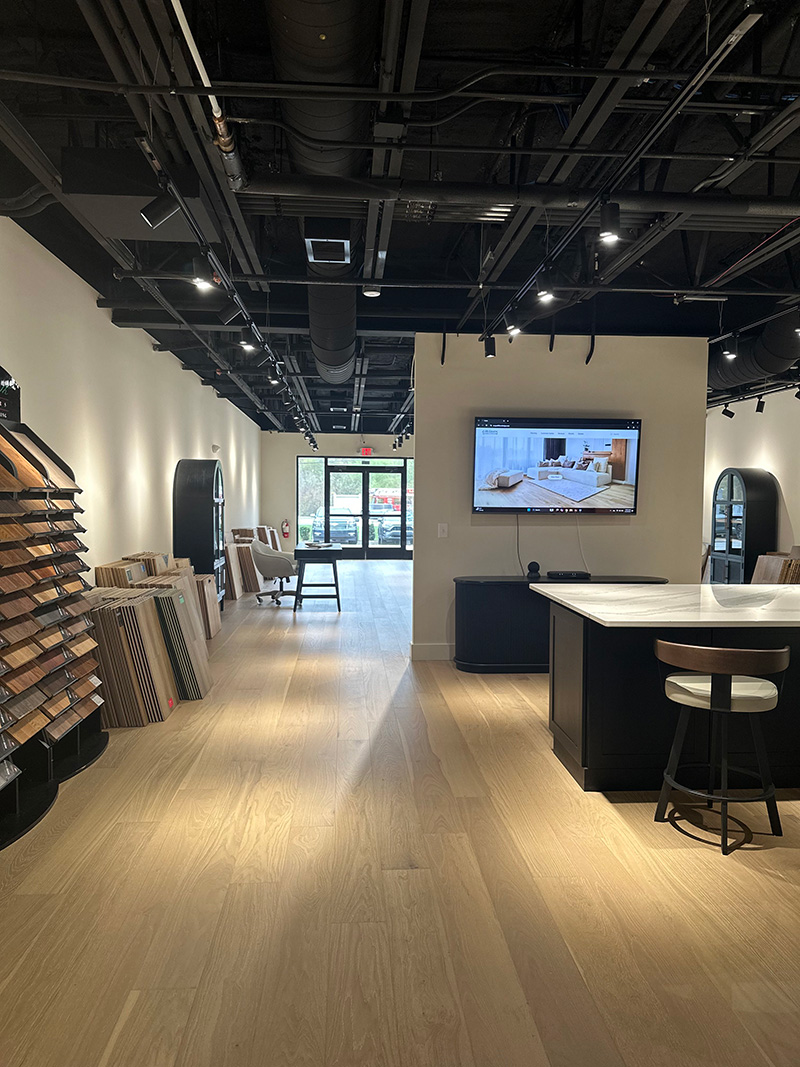

Historic character should guide your flooring decision. For historic homes in Brentwood, TN, begin with the existing floors, architectural details, and how each room is used. Hardwood can complement a traditional interior, while laminate or ceramic may better suit rooms where everyday function is the priority.
It’s natural to want a fresh update without losing an older home’s sense of place. This guide explains how to assess appearance, room conditions, material choices, and installation needs when planning Brentwood TN flooring for historic homes. You’ll learn what to consider before choosing a floor and how to find an option that suits your space.
Key Takeaways
- Match hardwood’s character to the home’s existing details and the way each room is used.
- Use architectural clues to guide flooring choices that feel appropriate to Brentwood and Williamson County homes.
- Learn what to look for when deciding whether original hardwood may be repaired or refinished.
- Compare hardwood, laminate, and ceramic with room conditions and seasonal moisture in mind.
Hardwood flooring in a Brentwood home
A Brentwood home’s age, existing materials, and room use all shape a sound flooring decision. A listing at 6309 Murray Lane featured hardwood, offering a local example of how wood floors appear in the area’s housing.
Comparing Flooring Options
Engineered hardwood, solid hardwood, and luxury vinyl differ in construction, appearance, and suitability for an older home. Engineered hardwood has layered construction; solid hardwood is wood throughout; luxury vinyl is a synthetic alternative. Compare existing floor height, visual character, room conditions, and how each option relates to the home’s original details. For Brentwood TN flooring for historic homes, these factors help narrow the choices without assuming one material suits every room.
Repairing Original Hardwood
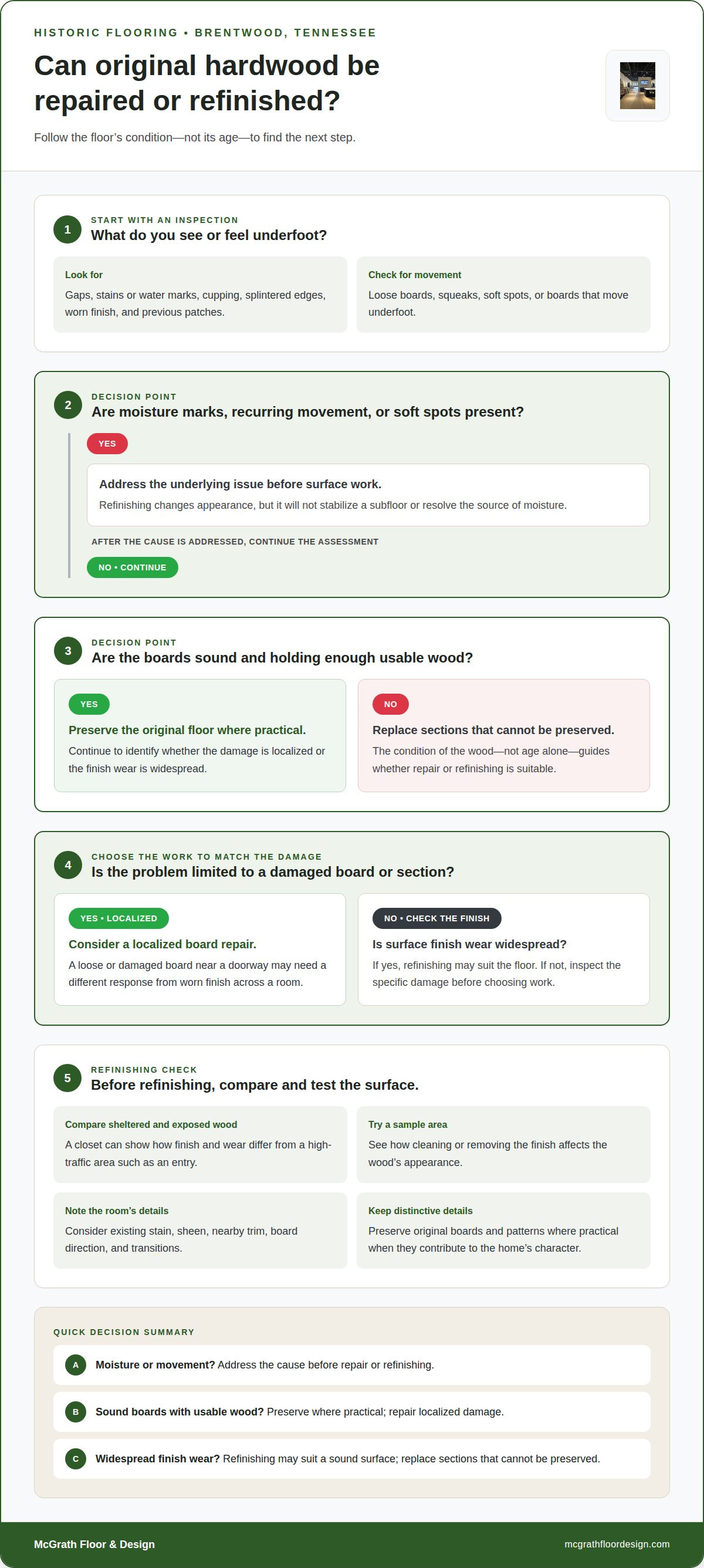
Original hardwood can often be repaired or refinished if the boards are sound and retain enough usable wood. First, look for loose boards, gaps, stains, squeaks, and worn finish. A damaged section may need a localized repair, while broader surface wear may call for refinishing. Condition matters more than age alone. Where practical, preserve distinctive board patterns and transitions that contribute to the home’s character.
Risks of Covering Original Floors
Installing modern flooring over original boards can conceal damage instead of resolving it. Added layers may change floor height at doorways, stairs, and adjoining rooms, creating awkward transitions or interfering with doors. An overlay can also make the original surface harder to access later. Before covering hardwood, inspect for moisture, movement, and loose boards. Addressing these issues first helps keep a new surface from masking an underlying problem.
Preparing for Floor Replacement
Before replacing a floor, photograph each room and note board direction, thresholds, trim, and transitions. Inspect for soft spots, movement, moisture marks, and previous patches. Whether local preservation requirements apply depends on the home’s designation and the scope of work, so don’t assume every project follows the same review process. Compare material samples with the home’s woodwork and lighting. Finally, check adjoining floor heights and door clearances to make sure the selected material fits the layout.
Historic Flooring in Brentwood and Williamson County
No single floor pattern defines every historic home in Brentwood or Williamson County. The farmhouse at 3045 Hillsboro Road dates to 1889, but its age alone cannot establish which flooring style belongs in another house. Start with the home itself: look for exposed boards beneath thresholds, surviving flooring in closets, and original transitions between rooms.
Wood is a useful starting point when researching a period-appropriate floor. Examine board width, grain, seams, wear, and finish in each room. Wide planks, narrow strip boards, and parquet create different visual effects. Compare them as possibilities, not proof of what a particular Brentwood home originally had. Existing trim, stair treads, and door thresholds can offer additional clues.
Before choosing a replacement, record what you find during a practical inspection:
- Photograph boards beside doorways, stairs, and baseboards.
- Note whether boards run lengthwise, across the room, or in a pattern.
- Compare visible flooring across rooms for changes in width, color, or finish.
- Look for older repairs or newer surfaces that may conceal original wood.
These details can help distinguish a consistent original floor from later updates. Matching board direction in adjoining rooms, for example, may suggest continuity, while a sharp change at a doorway can indicate a later alteration. Neither clue establishes a date, but both can help focus a closer inspection.
The Brentwood Historic Commission works to preserve, protect, and promote the city’s historic resources and increase awareness of local heritage. That role makes careful documentation useful: keep photographs and notes about flooring alongside other records of the home. If a property has historic significance, use its documented features and preservation context when planning changes. A thoughtful choice should respect the house’s visible details rather than rely on a generic “historic” look.
Can original hardwood floors in historic Tennessee homes be repaired or refinished?
Original hardwood can be repaired or refinished if the boards are sound and retain enough usable wood. The right approach depends on the damage: a loose board near a doorway needs different attention than worn finish across a living room. Start by inspecting the surface and identifying the cause of each visible defect.
Look for gaps, stains, cupping, splintered edges, and boards that move underfoot. A localized defect may call for a board repair, while widespread finish wear may suit refinishing. Address water marks or recurring movement before surface work. Refinishing changes the floor’s appearance, but it won’t stabilize a subfloor or resolve the source of moisture.
Use this sequence to assess the floor before deciding on a repair:
- Photograph each room in natural light, including thresholds and floor edges.
- Mark loose, cracked, or visibly damaged boards on a simple room sketch.
- Check whether doors, baseboards, and transitions show evidence of earlier floor layers.
- Compare exposed wood in a closet with the finish in a high-traffic area.
Comparing a closet with a more exposed area can reveal meaningful differences: sheltered boards may retain more finish and show less wear than an entry. Note changes in color, board width, and direction. These details can help distinguish surface aging from a more substantial floor issue.
Preserve original material where practical, especially distinctive boards that contribute to a historic home’s character. Before refinishing, consider how the existing stain, sheen, and nearby trim shape the room. A sample area can show how cleaning or removing the finish affects the wood’s appearance. For homes in Brentwood and across Tennessee, a careful inspection helps clarify the next step: repair damaged boards, refinish a suitable surface, or replace sections that cannot be preserved.
The home at 6309 Murray Lane in Brentwood, Tennessee, was listed with hardwood flooring.
Vintage homes for sale in Brentwood, Tennessee, typically stayed on the market for 76 days, and most homes for sale in Brentwood, Tennessee, received 1 offer.
What flooring options handle Tennessee humidity and seasonal moisture best?
In Brentwood, humidity and seasonal moisture make room conditions important when selecting flooring. Wood responds to moisture changes by expanding or contracting, so gaps or movement may appear as indoor conditions fluctuate. Engineered hardwood has layered construction, while solid hardwood is made from a single wood material; neither is immune to moisture. Laminate offers another surface option, but water exposure and installation guidance still matter.
Start with the room, not the sample. An entry near an exterior door faces different moisture exposure than an upstairs bedroom. Note damp areas, plumbing locations, basement conditions, and spots where wet shoes collect. These observations help you compare materials with actual room use, not just appearance. In an older Brentwood home, also consider how a new floor will meet existing thresholds and adjoining rooms.
- Identify recurring dampness or visible water marks before selecting a material.
- Consider how occupants use the room, including tracked-in moisture near entrances.
- Compare sample colors and textures with original trim and existing floors.
- Review installation requirements and care guidance for the selected flooring.
Preparation matters as much as material choice. A clean, sound, properly prepared subfloor supports a stable installation. Address leaks or persistent dampness before covering the area, and acclimate the flooring as directed by its manufacturer. Keep transitions and door clearances in view, particularly where an added layer could change floor height. These checks help protect the finished room’s appearance and function.
For historic homes, balance moisture exposure with the character you want to preserve. Hardwood can maintain a traditional wood appearance, while laminate can provide a different design approach. Compare both against the room’s conditions and the home’s original details. Explore hardwood and laminate flooring options as you narrow the right fit for your project.
McGrath Floor & Design: Hardwood Flooring
McGrath Floor & Design helps homeowners in the Franklin and Brentwood area compare flooring for historic interiors, including hardwood, laminate, and ceramic. The team can guide you when balancing original character with a room’s practical needs, or planning a new floor around existing trim and transitions.
Bring notes about the home, such as worn boards, moisture-prone areas, or differences between adjoining floors. These observations can make a practical discussion about materials and appearance more focused. Hardwood can complement a traditional interior, while laminate or ceramic may better suit another room’s use and design goals.
To take the next step, schedule a free design consultation with McGrath Floor & Design.
Make the Next Flooring Decision With Confidence
A thoughtful approach to Brentwood TN flooring for historic homes starts with a clear idea of how each room should look and function. Before choosing, consider the home’s existing character, the condition of its floors, and how your household uses each space. These details give your decision a practical foundation while keeping the home’s individual style in view.
McGrath Floor & Design offers hardwood flooring, laminate floors, and ceramic, with options for different rooms and design goals. Share what you’ve noticed in your home and how you want the finished space to feel. Schedule a free design consultation to connect those priorities with a considered flooring direction.
Contact McGrath Floor & Design to discuss your historic home flooring project. Take the next step at your own pace and begin shaping a space that feels right for your home.


