
Tile is a strong option when humidity and everyday moisture are concerns. Choosing flooring for southern climate homes means balancing moisture resistance with comfort, appearance, and room use. Laminate can suit dry living spaces, while LVP is a practical choice for areas where spills are more likely.
Look beyond color and wood-look finishes: heat, humidity, and spills can all affect flooring over time. Laminate’s fiberboard core can swell if standing water remains on it, so prompt cleanup matters. Tile provides a durable surface for busy areas, while LVP offers another option for rooms with everyday moisture.
This guide compares tile, laminate, and LVP, including their strengths, trade-offs, and suitable rooms. Use the comparisons to narrow your choices based on moisture exposure, comfort underfoot, and the look you want throughout your home.
Key Takeaways
- Learn why humidity can affect flooring differently, and how movement matters when weighing wood-based options.
- See what makes porcelain tile a strong contender for moisture-prone rooms, along with the details that shape its performance.
- Compare LVP’s practical qualities for busy homes and wet areas with the needs of your household.
- Find out why ceramic and porcelain tile may suit hot, dry rooms, and how to choose between them.
Can You Put Laminate Flooring in a Humid Climate?
Yes, but standing water can damage laminate and swell its fiberboard core. Engineered hardwood is also wood-based, but its layered construction generally moves less than solid hardwood as indoor conditions change. That can matter in Southern homes, where humidity and air-conditioning affect indoor moisture levels.
Engineered hardwood combines layers of real hardwood and softwood, helping limit expansion and contraction. Compared with solid hardwood, it is more dimensionally stable through humidity and temperature fluctuations, and it can perform better in low humidity, when solid boards may shrink or crack. It still responds to its environment: greater moisture resistance does not make it waterproof.
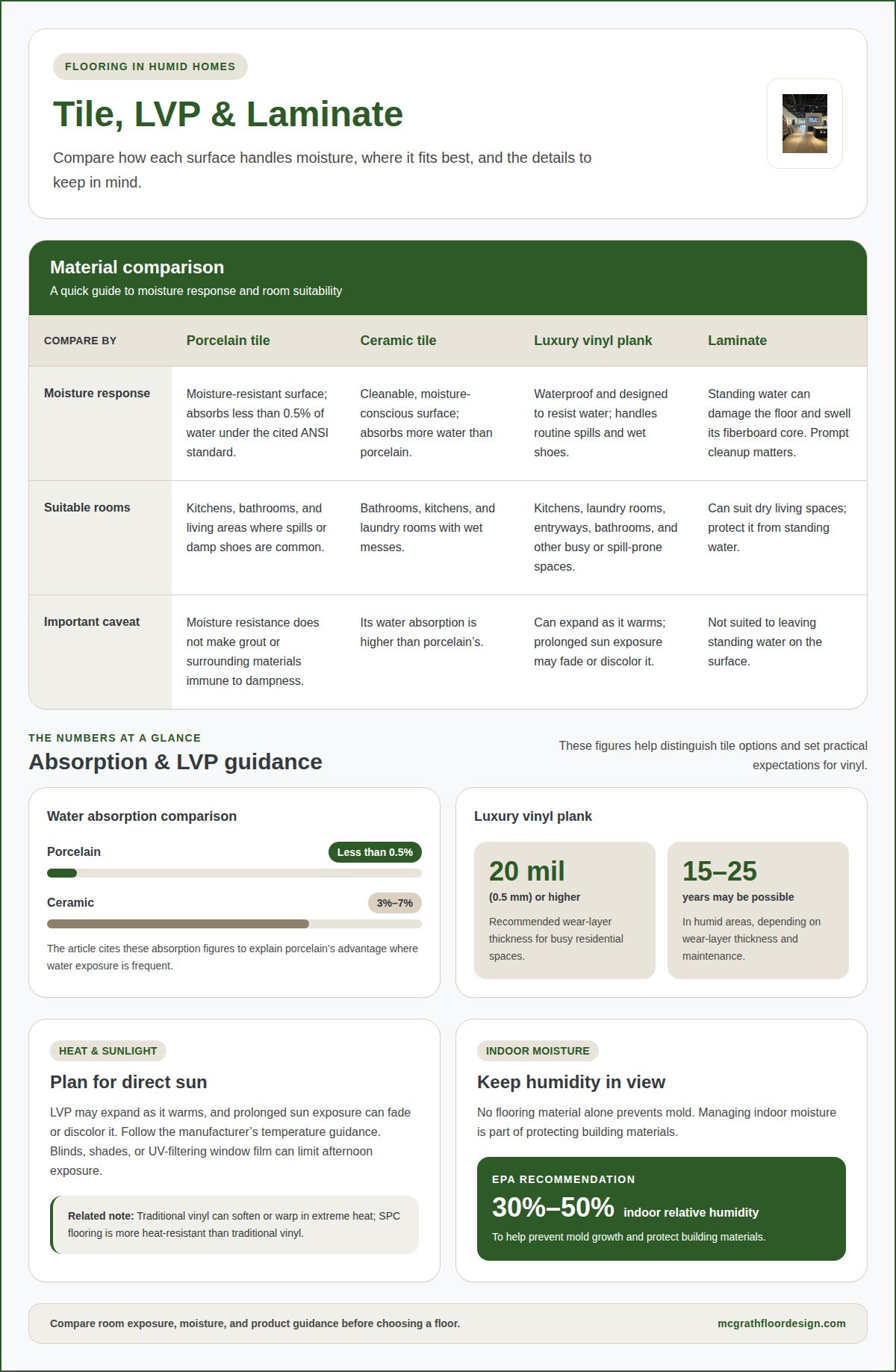
For a concrete slab, engineered hardwood can be suitable for glue-down installation. The slab’s moisture condition and the flooring manufacturer’s installation instructions matter, since trapped moisture can undermine a wood floor. Before installation, have the slab moisture-tested and follow the product’s specified temperature and humidity range. The U.S. Environmental Protection Agency recommends indoor relative humidity between 30% and 50% to help prevent mold growth and protect building materials.
Local building codes or flood-zone requirements may affect flooring materials or installation details. Their impact depends on the property and applicable requirements, so include them in your project planning.
| Option | Humidity movement | Moisture consideration | Concrete slab |
|---|---|---|---|
| Laminate | Core can swell | Standing water can cause damage | Follow product instructions |
| Engineered hardwood | Layered build limits movement | More moisture-resistant than traditional hardwood | Can be glued down |
| Solid hardwood | Can shrink or crack in dry conditions | More affected by moisture changes | Installation suitability varies |
| Porcelain tile | Doesn’t swell like wood-based flooring | Moisture-resistant surface | Consider slab and installation conditions |
Choose flooring based on room exposure, slab conditions, and the manufacturer’s guidelines. Engineered hardwood can suit a wood-floor look where humidity changes are a concern, while laminate needs protection from standing water.
Porcelain tile and moisture resistance
For indoor moisture, porcelain tile and luxury vinyl are strong choices. Porcelain absorbs less than 0.5% of water under the cited ANSI standard, helping it resist water penetration. Its hard surface suits kitchens, bathrooms, and other living areas where spills or damp shoes are common. Still, moisture resistance doesn’t make grout or surrounding materials immune to dampness.
Ceramic tile also offers a cleanable surface, but it absorbs more water than porcelain. Its absorption range is 3% to 7%, compared with less than 0.5% for porcelain. That difference helps explain why porcelain is often preferred where water exposure is frequent. Ceramic can still suit rooms with wet messes, including bathrooms, kitchens, and laundry rooms.
Which flooring materials resist mold, moisture, and water damage best? Porcelain tile and luxury vinyl are practical options for wet areas, while ceramic tile provides a moisture-conscious surface. No flooring material alone prevents mold; controlling indoor moisture matters too. The U.S. Environmental Protection Agency recommends keeping indoor relative humidity between 30% and 50% to help prevent mold growth and protect building materials.
Heat changes the comparison. Traditional vinyl can soften or warp in extreme heat, especially in direct sunlight; SPC flooring is more heat-resistant than traditional vinyl. Luxury vinyl can handle heat and dryness, but it may expand as it warms, fade, or discolor after prolonged sun exposure. Follow the manufacturer’s guidance for sunlit rooms, and use blinds, shades, or UV-filtering film to limit afternoon exposure.
For outdoor spaces, choose materials designed for weather rather than indoor flooring. Composite or aluminum decking, outdoor-rated tile, and concrete are common coastal options. Suitability depends on exposure to salt spray, humidity, rain, and UV rays. Keep carpet for drier indoor settings, and consider how each material will perform in its specific location.
Is Luxury Vinyl Plank Good for Humid Climates?
Luxury vinyl plank can suit hot, humid Southern homes, especially in rooms exposed to everyday spills. Choosing flooring for southern climate homes means weighing moisture, heat, and sunlight alongside appearance.
Luxury Vinyl in Busy and Wet Areas
Luxury vinyl plank is a practical surface for busy households because it’s waterproof and easy to clean. In kitchens, laundry rooms, or entryways, it handles wet shoes and routine spills more readily than laminate’s fiberboard core. Solid hardwood offers a different look but responds more to moisture changes. For busy residential spaces, a wear layer of 20 mil (0.5 mm) or higher is recommended.
In humid areas, LVP may last 15 to 25 years, depending on wear-layer thickness and maintenance. Product quality varies, so these factors shape its durability.
Luxury Vinyl in Heat and Humidity
Luxury vinyl can handle heat and dryness without cracking or shrinking, making it useful through seasonal weather changes. It also suits humid environments, but heat can still affect the planks. LVP expands as it warms, while high heat can damage, fade, or discolor its surface. Follow the manufacturer’s temperature guidance, particularly in rooms with strong direct sunlight.
For a wood-look floor in a sunlit room, consider how much direct sun reaches it. Blinds, shades, or UV-filtering window film can reduce afternoon exposure.
Waterproof Rigid-Core Luxury Vinyl
Waterproof rigid-core luxury vinyl offers a moisture-conscious surface for bathrooms and laundry rooms, where splashes are common. Unlike laminate, which can swell if standing water remains on its core, LVP is designed to resist water. Waterproof construction does not protect every part of a room from flooding, so installation and subfloor preparation still matter.
SPC flooring is more heat-resistant than traditional vinyl, but still requires proper subfloor preparation and installation. LVP is a practical flooring choice for southern climate homes, especially where humidity and busy routines meet. Match the product’s temperature guidance to the room, and limit prolonged sun exposure to help protect its finish.
Ceramic and porcelain tile in hot, dry climates
For Southern homes, ceramic and porcelain tile are strong options where heat or moisture shapes how a room is used. Ceramic suits wet rooms, while tile can feel cool underfoot in hot, dry conditions.
Tile Thermal Mass and Indoor Cooling
Tile feels naturally cool underfoot, which can be comfortable in a warm living room or sunny kitchen. Its thermal mass means it absorbs and releases heat, but tile alone does not cool indoor air. Room temperature, sunlight, and ventilation still influence comfort. Unlike wood floors, tile does not have the same wood-based movement as humidity changes.
Choose tile for the surface experience you want, not as a replacement for air conditioning. In a room with strong afternoon sun, consider how the floor feels at different times of day before choosing a finish and color.
Tile for Heat and Moisture
Ceramic and porcelain both suit rooms where heat and moisture matter, but they are not identical. Ceramic tile is a practical choice for bathrooms, kitchens, and laundry rooms, where splashes and damp cleaning are routine. Porcelain absorbs less water, making it a useful option when moisture resistance is a priority. With either material, the finished floor depends on appropriate installation and attention to the room’s conditions.
Tile provides a durable-feeling surface for busy areas, but the right flooring depends on where it will be installed. Consider room use, moisture exposure, desired appearance, and how the floor will feel underfoot. Tile can expand with temperature changes, so installation details and product instructions matter. Choose a material to suit the space rather than treating every room alike.
Explore ceramic tile options for rooms where a tile surface suits your home’s needs.
McGrath Floor & Design: Hardwood Flooring
McGrath Floor & Design helps homeowners compare hardwood flooring, laminate floors, and ceramic for their rooms and climate needs. Turn to the team when you’ve narrowed your choices but want guidance on balancing appearance, moisture exposure, and everyday use. Each material suits different priorities: ceramic can fit rooms where moisture matters, while hardwood and laminate offer distinct looks for living spaces.
McGrath Floor & Design guides customers through product selection and installation, helping connect a preferred style with practical considerations for the space. Share which rooms you’re updating and what matters most, such as a wood-floor look or a tile surface for a wet area.
Contact McGrath Floor & Design to discuss your flooring plans.
Plan a Floor That Fits Your Home
Start by thinking room by room. Consider how each space is used, how much natural light it receives, and the look you want throughout your home. Those priorities can turn a broad flooring decision into a clear plan for flooring for southern climate homes.
McGrath Floor & Design offers Hardwood Flooring, Laminate Floors, and Ceramic, with guidance through product selection and installation. Bring your ideas for the rooms you’re updating and start shaping a cohesive finish that serves your household’s everyday needs.
Contact McGrath Floor & Design to discuss your flooring plans. A thoughtful choice can make your home feel more distinctly yours.
Frequently Asked Questions
What flooring lasts the longest in Louisiana humidity?
Porcelain tile and concrete typically last the longest in Louisiana’s humid climate. Porcelain tile is listed with a lifespan of 50+ years, though its service life depends on installation and care. For rooms where a hard, moisture-resistant surface suits daily use, tile is a durable option. Concrete is another long-lasting choice, but it has a different appearance and feel.
What should you consider when choosing your flooring in Arizona?
Consider local heat, room use, sunlight, and flooring maintenance needs. Arizona has three general climate regions, and low-desert areas such as Maricopa, Pinal, and Yuma experience extreme summer heat and little rainfall. Tile can feel cool underfoot, while dust and grit tracked inside may abrade floor finishes. Entry mats and regular sweeping help limit wear.
Does Tile Flooring Make a Room Feel Colder?
Tile can feel cooler underfoot than carpet or wood, especially in a cool room when you’re walking barefoot. That sensation may be welcome during warm weather but less comfortable in a bedroom on a chilly morning. In a Franklin or Brentwood home, area rugs can soften tile in seating areas without covering the entire floor.
Is Waterproof Flooring Really Waterproof?
“Waterproof” describes a product’s stated resistance, not a guarantee that every part of a finished floor is protected from flooding. Water may reach edges, seams, or the subfloor, depending on the product and installation. Luxury vinyl plank is described as waterproof, while laminate products vary by construction. Follow the specific product’s care and installation instructions, especially around standing water.
How does humidity affect hardwood flooring in Southern homes?
Hardwood responds to changes in moisture: it can expand in humid conditions and shrink as indoor air dries, sometimes creating seasonal gaps. Engineered hardwood’s layered construction generally moves less than solid boards, but it still needs suitable indoor conditions. The U.S. Environmental Protection Agency recommends 30% to 50% relative humidity to help protect building materials and discourage mold growth.
Is luxury vinyl plank suitable for humid climates and flood-prone areas?
Luxury vinyl plank suits humid rooms and everyday wet messes, such as splashes near a laundry area. Its waterproof construction can make it a practical flooring choice, but it does not make the entire room flood-proof. Floodwater can affect flooring edges and what lies beneath. In a flood-prone space, distinguish routine moisture exposure from water that may remain across the floor.


