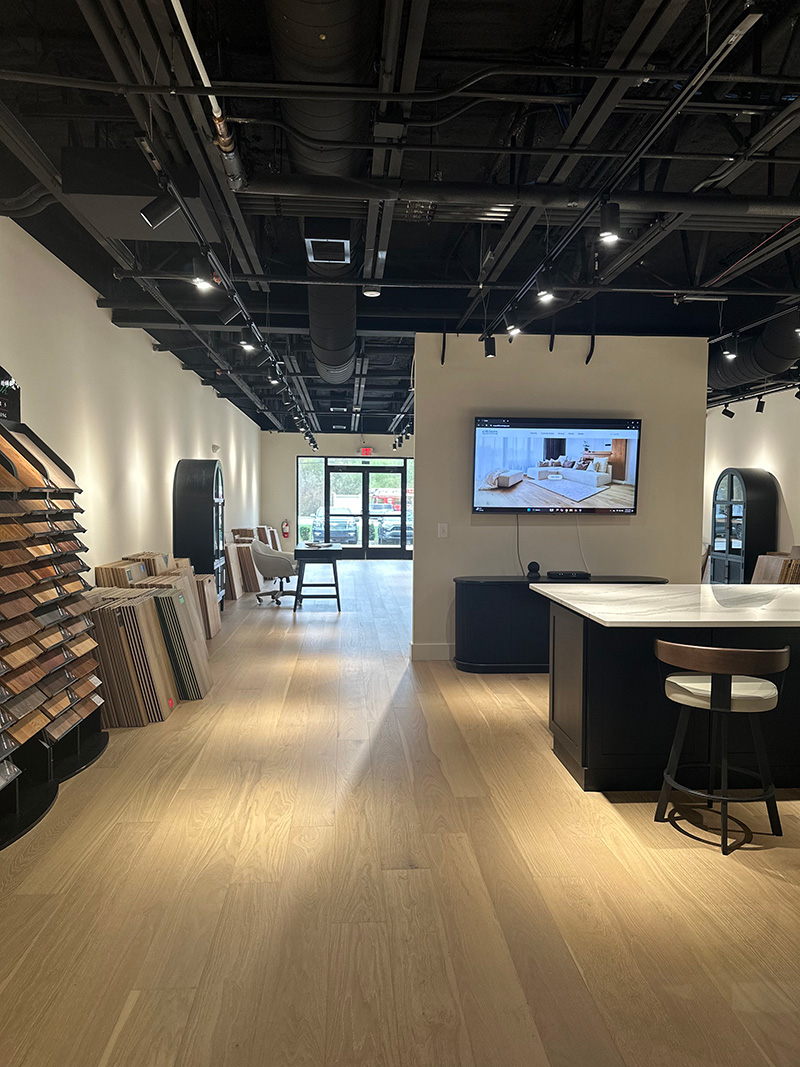

What if you could enjoy the organic beauty of a wide-plank white oak floor without ever worrying about Middle Tennessee’s notorious humidity? In our region, where annual rainfall often exceeds 50 inches, the dream of pristine hardwood frequently faces the reality of cupping, gapping, and moisture damage. You want the sophisticated aesthetic of a luxury estate, but you need a material that survives daily life. Choosing high-quality ceramic tile that looks like wood Brentwood homeowners can rely on isn't a compromise. It's a smart, strategic design choice for 2026.
We know the hesitation many feel. You might worry that tile will look "fake" or feel uninvitingly cold underfoot. We agree that your home deserves better than a cheap imitation. This guide is here to ensure you achieve a flawless transformation. You'll learn how to select the right plank dimensions and grout colors to mimic natural grain perfectly. We'll also explore the technical nuances of porcelain versus ceramic, the importance of subfloor flatness, and how professional installation creates a floor that lasts a lifetime. Let's turn your vision of a warm, durable home into a reality.
Key Takeaways
- Learn how modern high-definition printing creates planks that are virtually indistinguishable from authentic white oak or rich walnut.
- Understand why high-density porcelain is often the superior choice over standard ceramic tile that looks like wood Brentwood homeowners select for high-moisture areas like master suites.
- Explore how to match specific tile textures and widths to popular Brentwood aesthetics, from Modern Farmhouse to Luxury Traditional styles.
- Discover why wood-look tile provides a stable, moisture-resistant alternative to traditional hardwood in Middle Tennessee’s humid climate.
- See how professional installation techniques, including precise grout matching and plank offsets, ensure your floor looks like genuine timber rather than tile.
Why Wood-Look Ceramic Tile is Trending in Brentwood Luxury Homes
Brentwood interiors are undergoing a significant transformation. Homeowners are increasingly prioritizing "livable luxury," a design philosophy that refuses to sacrifice elegance for the sake of daily practicality. You want the visual warmth of a century-old oak floor, but you don't want to panic every time the dog runs through the kitchen with muddy paws. This demand has fueled the rise of high-end ceramic tile that looks like wood Brentwood designers are now specifying for everything from sprawling open-concept living rooms to high-traffic mudrooms.
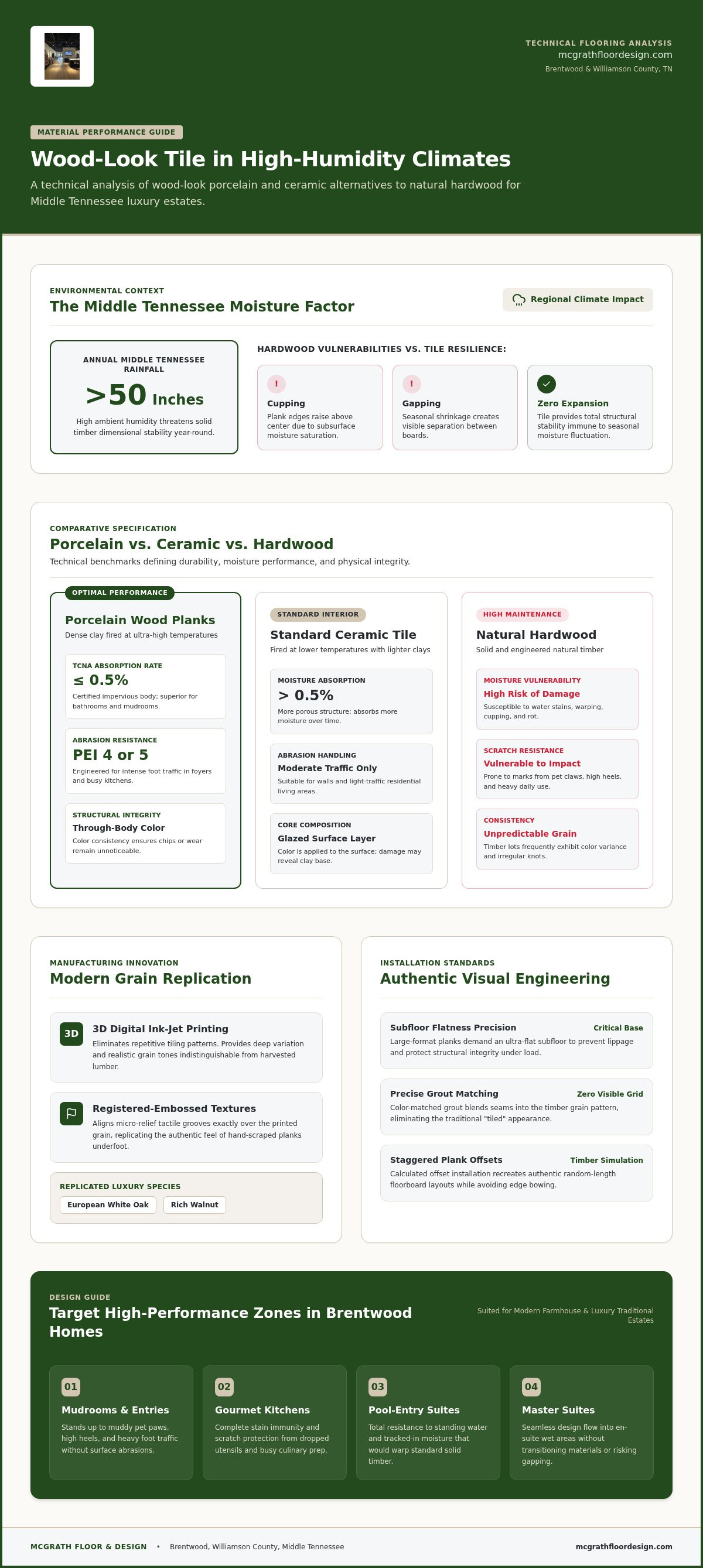
Modern wood-look ceramic isn't the flat, pixelated product of a decade ago. Today’s options utilize advanced 3D digital ink-jet printing and registered-embossed textures to create a surface that is virtually indistinguishable from genuine timber. By mimicking the deep grain and color variations of real wood, these tiles offer a sophisticated floor covering that handles the heavy demands of a busy household. It's the perfect marriage of high-end aesthetics and the rugged resilience required for life in Middle Tennessee.
The Aesthetic Appeal of Wood-Look Tile
Achieving a specific look with natural lumber can be a gamble. Natural wood often presents unpredictable knots or color shifts that might not align with your vision. In contrast, wood-look tile provides remarkable consistency while still offering the high-definition variety needed to avoid a repetitive pattern. You can easily find styles that mirror premium species like European White Oak or rich Walnut, complete with textured surfaces that provide a realistic, hand-scraped feel underfoot. It allows you to maintain a cohesive design language throughout your home without the stress of sourcing perfectly matched timber lots.
Bridging the Gap Between Durability and Style
Choosing tile over traditional materials often comes down to performance in the unique Middle Tennessee climate. While you might compare engineered vs solid hardwood for your project, tile offers a level of resilience those materials simply cannot match. It's essentially immune to the scratches from high heels or pet claws that can mar a soft wood finish. This makes it an ideal choice for the high-traffic zones of a luxury estate.
Technical quality matters here. When evaluating these products, it's helpful to understand porcelain tile standards, which ensure the material is dense enough to resist stains and heavy impact. This durability is why tile has become the standard for Brentwood kitchens and pool-entry mudrooms. It maintains its pristine appearance for decades, protecting your investment and supporting the long-term resale value of your property in the competitive Williamson County market.
Ceramic vs. Porcelain Wood-Look Tile: Making the Right Investment
Choosing the right material for your home involves more than just selecting a beautiful grain pattern. While you search for the perfect ceramic tile that looks like wood Brentwood showrooms offer, you'll likely encounter two distinct categories: standard ceramic and porcelain. Understanding their technical composition is the first step toward making a sound investment. Porcelain is a specific subtype of ceramic tile characterized by its higher density and significantly lower water absorption rates. The primary difference lies in the clay used and the firing temperature; porcelain is fired at much higher temperatures, resulting in a denser, less porous body.
Moisture resistance is a critical factor for Brentwood bathrooms and mudrooms. According to the Tile Council of North America guidelines, a tile must have a water absorption rate of 0.5% or less to be classified as true porcelain. Standard ceramic tiles are more porous, which means they can absorb more moisture over time. In a humid climate like Middle Tennessee, this distinction matters for the structural integrity of your flooring in "wet" areas. Texture matters too. High-quality porcelain often features through-body color, meaning if a chip does occur, the color remains consistent throughout the tile.
Durability is also measured by the PEI (Porcelain Enamel Institute) rating, which ranks a tile’s resistance to abrasion. For high-traffic areas in a luxury home, such as a foyer or kitchen, we recommend a PEI rating of 4 or 5. These tiles are designed to withstand the heavy foot traffic of a busy household without showing signs of wear or losing their realistic wood texture. It's a smart move for long-term value. Balancing your budget means knowing where to invest in porcelain and where standard ceramic tile that looks like wood Brentwood homeowners appreciate might suffice.
When to Choose Ceramic Wood-Look Tile
Ceramic is often an excellent choice for vertical applications or rooms with minimal traffic. Since it's slightly softer than porcelain, it's easier for installers to cut into intricate patterns or fit around complex architectural details. If you're looking to add the warmth of wood to a guest bedroom or a feature wall in a study, ceramic provides a cost-effective way to achieve that high-end look without paying for the extreme durability of porcelain. It's a practical solution for secondary spaces.
The Case for Porcelain in High-Traffic Zones
For the primary living spaces of your Brentwood estate, porcelain is the gold standard. Its impervious nature makes it ideal for indoor-outdoor transitions, such as floors that lead directly onto a patio or pool deck. It resists staining, scratching, and moisture damage with unmatched efficiency. Porcelain wins here. If you're unsure which material fits your specific room layout, a quick visit to our Franklin showroom can help you feel the difference in density and texture firsthand.
Design Guide: Matching Tile to Brentwood Interior Styles
Designing a luxury interior in Middle Tennessee requires a keen eye for architectural harmony. Whether you’re finishing a new build in Governors Club or updating a classic home near Maryland Farms, the flooring sets the tone for every other element. Finding the right ceramic tile that looks like wood Brentwood homeowners love means looking beyond the material itself and focusing on how it complements your specific style. In 2026, we see two dominant trends: the airy Modern Farmhouse and the sophisticated Luxury Traditional.
For a Modern Farmhouse aesthetic, we recommend wide-format planks in light oak or blonde finishes. These lighter tones reflect the abundant natural light found in Brentwood’s open-concept designs, creating a sense of effortless continuity. Conversely, Luxury Traditional styles often call for the rich, deep hues of walnut or mahogany. Narrower plank widths in these darker tones provide a formal, timeless foundation that pairs beautifully with heavy crown molding and antique furnishings. Achieving this realism depends heavily on "rectified" edges; these tiles are mechanically finished to be perfectly square, allowing for grout lines as narrow as 1/16 of an inch.
Grout selection is where many projects fail to reach their full potential. To make the floor look like genuine timber, the grout should be a shade darker than the tile’s lightest grain. This technique makes the lines virtually disappear, tricking the eye into seeing individual wood planks rather than a tiled surface. Beyond aesthetics, choosing non-porous materials helps manage the moisture levels in your home. According to the EPA moisture and humidity control guide, maintaining proper indoor conditions is vital for a healthy home environment, and tile’s resistance to mold makes it an ideal partner for Brentwood’s climate.
Selecting the Perfect Plank Size
The standard 6x24 planks of the past are quickly being replaced by trending 8x48 large-format options. Large-format tiles minimize the number of grout lines, which makes sprawling Brentwood living rooms feel even more expansive and high-end. If you want a truly custom look, consider mixing different plank widths. This mimics the historical character of traditional hardwood floors, where varied widths were a sign of artisanal craftsmanship. It creates a sense of depth and authenticity that uniform planks can't replicate.
Color and Texture Trends for 2026
Nashville’s color palette is shifting toward "greige" and muted natural tones that bridge the gap between warm and cool. Matte finishes are currently outperforming high-gloss satin because they hide dust and footprints more effectively under bright recessed lighting. For those looking to make a bold statement, using a herringbone wood floor pattern with tile in a foyer or mudroom adds an immediate layer of architectural interest. It's a sophisticated way to transition from the entryway into the rest of your home while maintaining incredible durability.
Practicality in Middle Tennessee: Handling Humidity and Maintenance
Living in Brentwood means navigating a climate where relative humidity frequently fluctuates between 65% and 85%. While these conditions are perfect for our lush Tennessee landscapes, they present a constant challenge for traditional flooring. Selecting ceramic tile that looks like wood Brentwood homeowners can rely on provides a permanent solution to the environmental stressors that often plague organic materials. Unlike natural timber, tile doesn't react to the moisture in the air, ensuring your floors remains stable regardless of the season.
When you compare engineered vs solid hardwood, the primary concern is often dimensional stability. Middle Tennessee’s 50 plus inches of annual rainfall can lead to vapor drive issues in crawl spaces and concrete slabs, causing real wood to cup or gap. Wood-look tile is immune to these volumetric changes. It offers the aesthetic warmth you desire with the structural peace of mind required for our specific region. If you're ready to explore these durable options in person, we invite you to visit our showroom to see our curated collections.
The Humidity Advantage
Nashville’s seasonal shifts are dramatic. In the summer, high humidity can cause wood planks to swell; in the winter, dry indoor heat leads to unsightly gaps. Tile remains perfectly gap-free year-round. This stability makes it the ideal application for Brentwood basements, laundry rooms, and entryways where moisture levels are highest. You can enjoy a seamless wood visual in a walk-out basement without the fear of warping or mold growth that often accompanies below-grade hardwood installations.
Maintenance Simplified
Pet owners in Williamson County are some of the biggest advocates for wood-look ceramic. We call it the "wet dog" test. When a muddy retriever runs through the house, wood-look tile allows for immediate cleanup with no risk of staining or scratching. Ceramic and porcelain surfaces are inherently more hygienic than wood because their non-porous nature prevents the absorption of bacteria, allergens, and odors that can linger in organic fibers. Modern maintenance is straightforward. Gone are the days of scrubbing porous grout; today’s high-performance epoxy and urethane grouts are stain-proof and never require sealing.
Thermal comfort is another area where tile excels. While some worry about tile feeling cold during Tennessee winters, it's actually the perfect conductor for integrated radiant heating systems. Installing an electric heating mat beneath your wood-look planks transforms a beautiful floor into a cozy, warm surface that rivals the feel of traditional wood. It provides a level of luxury and comfort that is particularly appreciated in master bathrooms and main-level living areas during our chilly January mornings.
The McGrath Experience: Professional Installation in Brentwood
Choosing the right ceramic tile that looks like wood Brentwood homeowners love is only half the battle. The true magic happens during the execution phase. Even the most expensive Italian porcelain can look like an obvious imitation if the layout is poor or the grout lines are uneven. At McGrath Floor & Design, we believe your flooring project should be a stress-free transition from inspiration to a finished masterpiece. Our "Vision-to-Reality" process ensures that every detail you discussed in our showroom is reflected in the final installation.
Our Seamless Installation Process
Large-format wood-look planks require a specialized approach that standard square tiles do not. Because these planks are long, any slight dip in your subfloor can cause "lippage," where one tile edge sits higher than its neighbor. Our flooring installation Franklin TN team begins every project with meticulous subfloor preparation, using self-leveling compounds to ensure a perfectly flat plane. This is the foundation of a floor that looks and feels like authentic hardwood.
Precision layout planning is another hallmark of our work. We don't just start laying tiles; we map out the entire room to ensure a natural, staggered appearance that mimics the random lengths of real timber. This avoids the "stair-step" patterns often seen in amateur work. We also maintain a strictly clean job site. We respect your home and your time, ensuring that dust is minimized and the workspace is tidy at the end of each day.
Why Local Expertise Matters
When you work with a local partner, you're getting a commitment to quality that national big-box stores simply can't replicate. Rick McGrath and our seasoned team bring over 50 years of combined industry experience to your Brentwood home. We've seen every type of foundation and humidity challenge Williamson County has to offer. We don't just sell you a product; we act as your dedicated guide throughout the entire journey.
There's no substitute for seeing and feeling these textures in person. We invite you to visit our local showroom to explore our curated selection of premium ceramic tile that looks like wood Brentwood designers recommend. Walk on the surfaces, compare the grain patterns under different lighting, and let us help you find the perfect match for your home. Reach out to schedule a consultation, and let's start turning your vision into a reality.
Transforming Your Brentwood Home with Confidence
Your home is a sanctuary that deserves the perfect blend of aesthetic warmth and long-term durability. We've explored how modern printing technology and high-density materials allow you to enjoy the timeless look of white oak without the maintenance headaches of natural timber. By choosing the right material for your specific room and prioritizing precision installation, you create a space that stands up to Middle Tennessee’s unique climate. It's about making a choice that looks beautiful today and performs even better tomorrow.
Investing in high-quality ceramic tile that looks like wood Brentwood families will enjoy for decades requires a partner who understands the local landscape. With 50+ years of combined industry experience and a commitment to NWFA-influenced standards, we pride ourselves on being that guide. Our local showroom is ready to help you move from an initial vision to a stunning, finished reality. Let's build something beautiful together.
Schedule Your Brentwood Flooring Consultation with McGrath Floor & Design today. We look forward to helping you select a floor that brings lasting joy and value to your living space.
Frequently Asked Questions
Does ceramic tile that looks like wood feel cold?
Wood-look tile naturally adopts the ambient temperature of your home, which can feel cooler than organic wood during chilly Middle Tennessee winters. This is a significant benefit in the humid summer months as it helps keep your living space feeling fresh. If you prefer a warmer touch, we recommend installing an electric radiant heating system beneath the planks. This addition provides a luxurious, consistent warmth that makes your floors incredibly cozy on cold January mornings.
How do I choose the right grout color for wood-look tile?
Selecting the perfect grout color is essential for maintaining the illusion of genuine timber. We suggest choosing a shade that matches the darkest grain pattern within the tile or one that is slightly darker than the base color. This technique ensures the grout lines recede from view, allowing the individual planks to take center stage. Avoid light or contrasting grout colors, as these create a grid-like appearance that immediately signals the floor is actually tile.
Is wood-look tile more expensive than real hardwood?
The total investment for wood-look tile often aligns closely with high-end hardwood, though the cost distribution differs. While material prices for premium porcelain planks are comparable to luxury oak, the installation labor is typically more intensive. Tile requires meticulous subfloor leveling and specialized mortars to ensure a flat finish. In the long run, many Brentwood homeowners find it more cost-effective because it eliminates the need for periodic sanding, refinishing, or humidity-related repairs.
Can wood-look tile be installed over existing flooring?
We generally advise against installing new tile over existing surfaces like vinyl or old hardwood. For a professional result that lasts decades, the existing flooring should be removed to expose the subfloor. This allows our team to address any structural issues or leveling needs before the new planks are laid. A clean, stable substrate is the only way to prevent tile cracking and ensure the thin grout lines remain intact throughout your home's lifespan.
Is porcelain or ceramic better for wood-look tile in a kitchen?
Porcelain is the superior choice for high-traffic kitchens because it's significantly denser and more resistant to moisture than standard ceramic. When selecting ceramic tile that looks like wood Brentwood homeowners should prioritize porcelain's low 0.5% absorption rate to handle frequent spills and heavy appliance traffic. Its through-body construction also means that minor chips are far less visible. This ensures your kitchen floor maintains its sophisticated, high-end appearance even in the busiest areas of your luxury estate.
How wide should the grout lines be for wood-look tile?
To achieve a realistic wood floor appearance, grout lines should be kept as narrow as possible, typically between 1/16 and 1/8 of an inch. This requires using rectified tiles, which have been precisely cut to uniform dimensions during manufacturing. Narrower lines minimize the visual break between planks and mimic the tight fit of traditional hardwood. Our installation team uses specialized spacers and leveling systems to maintain this precision across large, open-concept living areas.
Will wood-look tile increase the resale value of my Brentwood home?
High-quality ceramic tile that looks like wood Brentwood buyers recognize as a premium upgrade can certainly boost your home's market appeal. In the competitive Williamson County real estate market, durability and livable luxury are highly valued traits. Potential buyers appreciate a floor that offers the aesthetic warmth of wood without the vulnerability to pet scratches or humidity damage. It represents a low-maintenance, long-term flooring solution that signals the home has been meticulously maintained with top-tier materials.
How long does it take to install wood-look ceramic tile?
A typical flooring replacement project in a Brentwood home usually takes between seven and ten business days, depending on the square footage and subfloor condition. The process includes removing old materials, preparing the substrate, laying the planks with precision offsets, and allowing the grout to cure. We prioritize a methodical pace to ensure every tile is perfectly level. Our team provides a clear timeline during your initial consultation so you can plan your schedule with confidence.


