
A flooring warranty can cover a qualifying defect without covering every replacement expense. For flooring warranty information in Brentwood, start with the specific floor’s written terms: a residential hardwood flooring warranty provides a 25-year wear-through warranty for the finish from the purchase date, while replacement charges and labor responsibilities depend on the coverage described.
It’s reasonable to expect a warranty to help if a floor develops a problem, but coverage has limits. The flooring type, the floor’s condition, and the cause of the damage can all affect whether a claim qualifies and what replacement involves.
This guide explains how prorated charges work, which exclusions may affect a claim, and what to prepare when submitting one. It also compares warranty considerations for hardwood, laminate, and ceramic flooring, helping you understand the terms that apply and the practical steps toward warranty service.
Key Takeaways
- Separate the warranty’s coverage for a qualifying hardwood finish defect from replacement costs; labor may still be the homeowner’s responsibility.
- Review the exclusions before installation, especially the limits related to bathrooms, commercial use, and accepting plank condition.
- Organize photos and damage notes to support a laminate flooring claim and make the issue clearer to assess.
- Compare the written terms for hardwood, laminate, and ceramic flooring because coverage differs by flooring type.
Twenty-five-year limited warranty and prorated replacement charges
Typical extended warranty costs in Brentwood depend on the written term, material, and remedy. There is no single charge for every floor. A flooring warranty may cover manufacturing defects and qualifying wear, but not every replacement expense.
Limited Warranty Terms
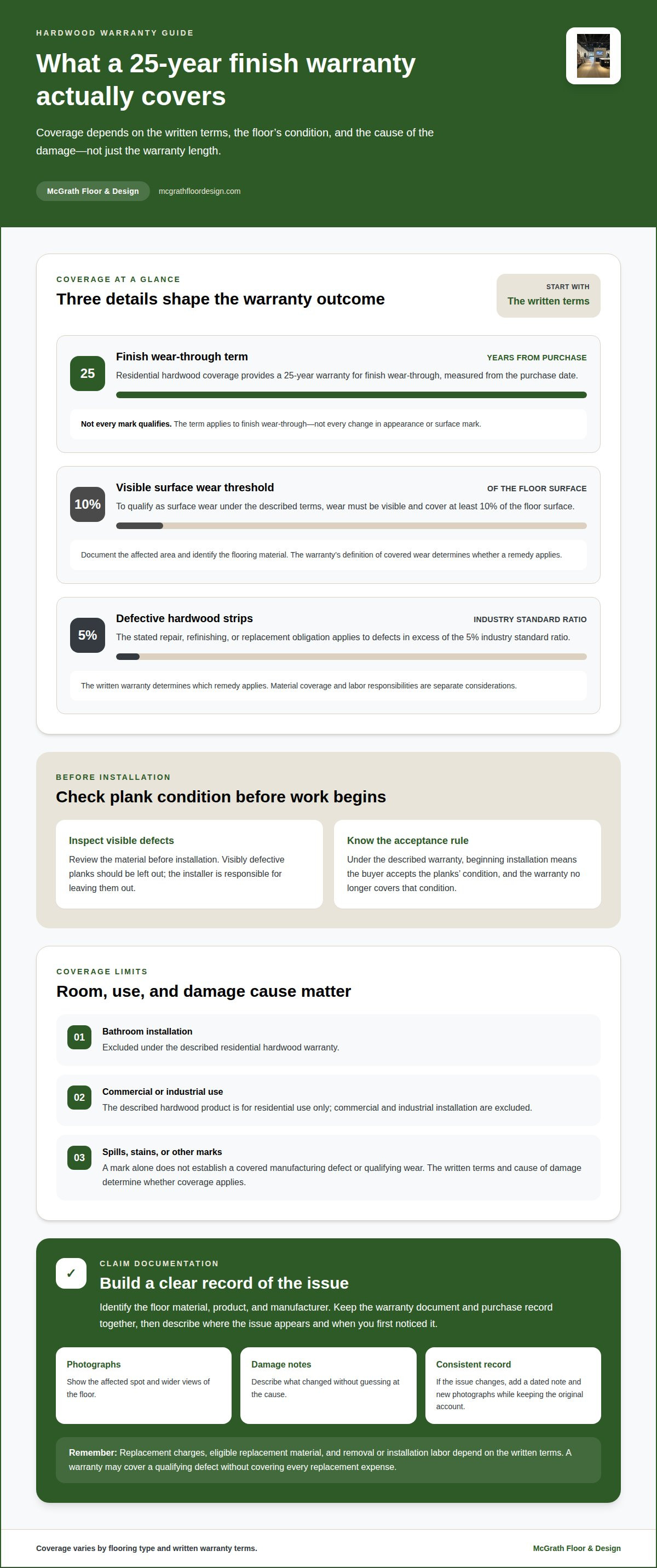
A limited warranty defines which flooring problems qualify and how long coverage lasts. A ten-year limited warranty describes a ten-year coverage window, while a residential hardwood warranty provides 25 years of finish wear-through coverage from the purchase date. These terms aren’t interchangeable: the written warranty identifies the covered material, qualifying damage, and available remedy. Keep the purchase date and warranty document together to establish the applicable period.
Prorated Replacement Charges
A prorated replacement charge adjusts the warranty contribution according to the coverage period used. The written terms determine how that adjustment is calculated, so the homeowner’s share can depend on the claim date and eligible replacement material. For example, a claim made after several years may receive a different contribution from one made early in the 25-year finish term. Review whether the warranty also assigns removal or installation labor to the homeowner.
Repair, Replacement, and Refund Remedies
Remedies are the actions a manufacturer may take for a qualifying warranty claim. The written terms may provide for repair, refinishing, replacement, or a refund; they determine which remedy applies. For defective hardwood strips, the stated repair, refinishing, or replacement obligation applies to defects in excess of the 5% industry standard ratio. Under the described laminate coverage, the buyer is responsible for labor to remove damaged flooring and install replacement planks. Material and labor are separate considerations.
Defect and Wear Coverage
Defect and wear coverage addresses specified manufacturing problems or qualifying surface deterioration. For hardwood, the 25-year term applies to finish wear-through from the purchase date, not every mark or change in appearance. Surface wear must be visible and cover at least 10% of the floor surface to qualify. When assessing a claim, document the affected area and identify the material; the warranty’s definition of covered wear determines whether replacement or another remedy applies.
Warranty exclusions
Coverage may exclude certain rooms, uses, or plank conditions. For hardwood, bathroom installation and commercial or industrial use fall outside the described residential warranty.
Liquid Damage Exclusions
A liquid-damage exclusion limits coverage for specified moisture-related damage. The hardwood warranty facts identify bathroom installation as excluded, but do not establish that every spill or liquid event is excluded. Read the written terms for the specific floor, and distinguish a liquid-related claim from a manufacturing defect or qualifying surface wear. The material and cause of the damage matter.
For example, a stain after a spill does not by itself show whether the warranty applies. Record where the mark appears, what changed, and when you noticed it. Then describe the condition accurately in your claim. A comfort preference, stain, or liquid mark is not automatically a covered manufacturing defect or qualifying wear. The warranty’s coverage descriptions and exclusions determine the distinction.
Installation Errors
An installation-related exclusion limits coverage when installation or the accepted plank condition affects a claim. For hardwood, beginning installation means the buyer accepts the planks’ condition, and the warranty no longer covers that condition. Visibly defective planks should not be installed; the installer is responsible for leaving them out. Review the material before installation to identify visible defects.
Before installation begins, set aside visibly defective planks and document their condition. Under the described warranty, the buyer accepts the planks’ condition once installation starts. This rule concerns plank condition, not every possible installation error. The written warranty defines any other installation-related limits, so do not assume that an uneven surface, gap, or other concern is automatically covered or excluded.
Use also affects hardwood coverage: the described product is for residential use only, excluding commercial or industrial installation. A hardwood floor in a home bathroom remains excluded under the stated terms, even though the setting is residential. These are separate limits, so both the room and the use matter when reviewing the warranty.
Submitting a warranty claim
A warranty claim requests a review of a flooring problem under the product’s written terms. For flooring warranty information in Brentwood, first identify the floor material, product, and manufacturer. Then describe the issue plainly, including where it appears and when you first noticed it. A precise account separates the visible condition from assumptions about its cause.
Claim Submission
To submit a claim, send the product details and damage description for review. Find the warranty document and purchase record, then follow its submission instructions. For laminate flooring, include photographs and notes describing the damage. For example, say that a plank edge is raised near a doorway rather than guessing whether moisture or installation caused it.
Keep your description consistent throughout the claim and any follow-up. If the issue changes, add a dated note and new photographs rather than replacing your original account. This gives the reviewer a clearer record over time. Brentwood homeowners seeking flooring warranty information should keep their product and purchase documents together for easy reference.
Claim Proof and Documentation
Claim documentation identifies the floor and shows the reported damage. Include photographs of the affected spot and wider views that show its location in the room. Attach the purchase record, product details, and written warranty when available. For laminate claims, photos and damage notes are especially relevant. Describe what you can see without labeling it a covered defect.
Before submitting, make sure each image is clear and supports your written description. A close-up can show the surface condition, while a wider view clarifies whether the issue affects one plank or a larger area. Keep copies of the files with your submitted claim. An organized record makes it easier to provide consistent details if the reviewer requests more information.
Warranty information by flooring type
Hardwood, laminate, and ceramic warranties vary by product and written terms. Compare the coverage for each floor, not just a retailer’s general description.
Flooring-Type Warranty Terms
A flooring-type warranty sets coverage according to the material and product terms. Hardwood wear coverage varies by warranty level: the highest listed five-star term is 50 years, while other listed structural-integrity levels provide 30 years. Residential hardwood structure is warranted against manufacturing defects for as long as the homeowner owns the home.
Laminate warranties may run 21 to 30 years or 31 to 40 years; terms of 5 to 10 years generally apply to commercial use. Water-resistance coverage applies only to selected brands when the warranty specifies it. Ceramic coverage also varies by floor, so its own written terms determine the applicable protection.
Coverage Transfer
Transferability determines whether a warranty remains valid after the original purchaser sells the home. Residential hardwood coverage is limited to the original retail purchaser and is nontransferable while that purchaser owns the home. The structural warranty’s lifetime term means the period that homeowner owns the home, not the lifetime of a new owner.
Laminate warranties generally apply to the original end consumer and are not transferable. When a home is sold, distinguish the original purchaser’s remaining coverage from the new homeowner’s ownership. The warranty’s transfer language determines whether coverage continues after the original purchaser leaves.
Major brands and local retailers do not share one universal warranty term. Material, warranty level, intended use, and written exclusions all shape the comparison. Review the original warranty alongside the product under consideration, then compare covered defects, wear conditions, transfer limits, and who pays for labor. A long laminate warranty, for example, does not by itself establish water-resistance coverage.
Compare written terms by floor type before choosing coverage. Explore flooring options for a project that fits your home.
McGrath Floor & Design: Hardwood Flooring
McGrath Floor & Design helps homeowners choose hardwood flooring, laminate floors, or ceramic with their project needs and warranty terms in mind. When planning a new floor, compare the product’s written coverage with its appearance, intended use, and care requirements before choosing.
For hardwood, laminate, and ceramic projects, the team guides you through product selection and installation. This helps you consider which flooring material suits your space and which product-specific terms to review. Keep the warranty document with your purchase records so its coverage details are easy to find after installation.
For help choosing flooring for your home, contact McGrath Floor & Design.
Make Your Next Flooring Decision With Confidence
Use your understanding of flooring warranty information in Brentwood as part of planning a floor that suits your home. Connect the material, the room’s needs, and the written warranty before deciding. Hardwood, laminate, and ceramic each have different considerations, so think about how you use the space and which finish suits your home.
McGrath Floor & Design offers Hardwood Flooring, Laminate Floors, and Ceramic, with guidance through product selection and installation. Bring your project goals to the conversation, whether you’re updating one room or shaping a larger interior. Start with clear priorities and the right material for your space.
Contact McGrath Floor & Design to discuss your flooring project. Take the next step toward a space that feels considered, comfortable, and distinctly yours.
Frequently Asked Questions
How do I get warranty service?
Start with the warranty document for your installed flooring and identify the manufacturer and product. Match the problem to the coverage language, then gather the purchase record and a clear description of the affected area. For flooring in a Brentwood home, note the room and whether the issue affects one plank or a wider section. These details help direct the service request.
How do I make a claim?
Prepare a concise claim with the product information, purchase record, warranty terms, and a description of the problem. Include clear photographs of both the affected spot and its location in the room. For laminate, add notes describing the damage. Keep copies of everything submitted, and use the same factual description if the claim reviewer requests more details.
What flooring warranties are available in Brentwood, CA?
This guide covers Brentwood, California, where homeowners work with trusted local experts like McGrath Floor & Design. Warranty coverage depends on the particular floor and its written product terms. For hardwood, laminate, or ceramic, review the warranty for the material you select rather than assuming a general local warranty applies. Compare its coverage, exclusions, and transfer limits before choosing a floor for your home.
What exclusions and maintenance requirements apply to flooring warranties?
Exclusions and care instructions depend on the flooring warranty. The hardwood coverage described here excludes bathroom installation and commercial or industrial use; remove visibly defective planks before installation begins. Follow the warranty’s cleaning directions. Hardwood care guidance advises against cleaning with water or steam, so use the product’s stated cleaning method instead.
How long do warranties last for hardwood, laminate, vinyl, tile, and carpet?
Terms differ by product and coverage type. Hardwood includes a 25-year finish wear-through term; the highest listed five-star wear term is 50 years, and other listed structural-integrity levels provide 30 years. Laminate terms may be 21 to 30 years or 31 to 40 years. Ceramic coverage varies by floor. Vinyl and carpet terms depend on their individual written warranties.
How do I file a flooring warranty claim in Brentwood?
For a flooring claim in Brentwood, organize the product and purchase details, then describe the affected area and damage clearly. Photograph the issue up close and from farther back to show its location. Laminate claims should include photos and damage notes. Keep the original files and submitted records together so you can provide consistent details if the reviewer asks follow-up questions.


