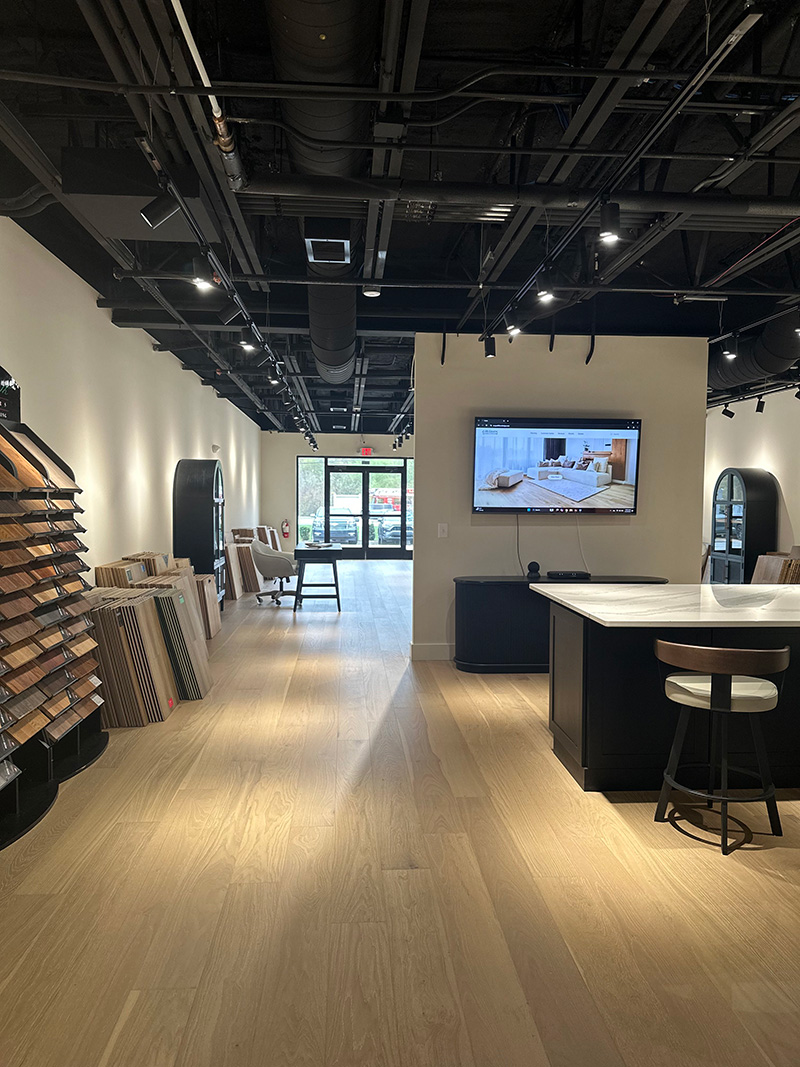

The lowest bid can be the one that deserves the closest scrutiny. When comparing Franklin, TN flooring for retail stores, line up the work included in each estimate, not just the totals. If the lowest estimate is more than 10% below the highest, examine the scope carefully: that gap may signal that something is being cut from the job.
If you’re comparing Franklin TN flooring for retail stores, start with estimates that clearly show what the project includes. A useful quote identifies the materials, removal, subfloor preparation, installation, transitions, and finishing details, so you can compare like with like. This guide covers how to review estimates, choose among hardwood, laminate, and ceramic for a store, and understand written product and installation terms. It also explains how to plan a project in Franklin or Brentwood around the store’s layout and daily use.
Key Takeaways
- Compare estimates by the work and materials included, not by the total alone, so you can spot differences in project scope.
- If the lowest estimate is more than 10% below the highest, look closely at what may be missing or reduced.
- Weigh material options against your store’s traffic, moisture exposure, and maintenance needs, and distinguish product coverage from installation terms.
- Review how flooring service coverage fits your project location near Franklin or Brentwood before planning the next steps.
Do You Offer A Warranty On Flooring Installation?
A flooring warranty has two parts: product coverage and installation workmanship. Product warranty coverage varies, so check the written terms for the specific flooring. The written terms define which product issues qualify. Installation terms are separate, so read both before approving a project. Manufacturer-approved installation methods help safeguard product warranty coverage. Keep the estimate, warranty documents, and completion records together.
Compare complete installation quotes by scope, not just total. Each estimate should identify the flooring, removal, subfloor preparation, installation, transitions, and finishing details. Include stairs and wooden vents when relevant, and ask for the work to be itemized so you can see what each proposal covers. A lower total may leave out preparation or finishing. Before comparing prices, make sure the material, installation method, and listed work are aligned.
Installation time depends on the floor area, removal of existing flooring, subfloor preparation, layout, and selected material. After-hours work should be part of the agreed schedule, not an assumption. Before installation, remove merchandise, movable displays, and other loose items from the work area. Clear access to the floor and plan how staff and customers will avoid active work zones.
For luxury vinyl plank (LVP) and laminate installation, check that the estimate identifies the specific product and work included. They are distinct flooring options, so compare the specified product and installation method rather than assuming the process is identical. If the design includes stairs, make sure their treatment and transitions are included. Define how wooden vents will be finished to coordinate with the surrounding floor. If carpet is part of the plan, confirm that it is included in the proposal.
Before signing, read the product coverage, installation terms, and exclusions in writing. Confirm that the quote covers the full project, including details that affect the finished floor. The installation method should align with the manufacturer’s instructions. Premium materials or extensive preparation are no substitute for clear paperwork. Copyright notices on product documents are not warranty terms, so keep the actual coverage language with your project records.
Vinyl, carpet, laminate, luxury vinyl tile, and hardwood
For Franklin, Tennessee retailers, choose flooring by traffic, spills, cleaning needs, and the store’s visual style. Luxury vinyl flooring is described as waterproof and scratch-resistant, making it worth considering for spill-prone areas. Commercial carpet offers comfort, warmth, and sound insulation, while stain-resistant options are designed for heavy foot traffic. Laminate can mimic hardwood or tile and provides a scratch-resistant, easy-care surface.
Luxury vinyl tile gives a store a tile-like appearance with luxury vinyl’s water resistance. Ceramic or porcelain tile offers another hard-surface look; porcelain resists moisture, stains, and wear, with low maintenance. Polished concrete creates a continuous finish, but its appearance may not suit every retail design. Hardwood brings natural character to a flooring project, while its suitability depends on the store’s expected traffic and care routine. No material is a universal guarantee of a better fit.
For a Franklin project, consider accessible routes, level transitions, surface stability, slip concerns, and clear paths to exits in light of applicable building, accessibility, and safety criteria. Choosing a material alone does not establish compliance; the layout, installation details, and building use matter.
For hardwood flooring installation in Franklin, Tennessee, include subfloor preparation and final details in the project scope. That helps account for the work beneath the finished surface, as well as transitions and edges. Compare carpet, hardwood, vinyl, laminate, and tile by where each will go. For example, carpet may suit a space where sound and comfort matter, while tile may better suit a location exposed to spills. Separate materials by zone if one surface doesn’t meet every need.
Map the store’s busiest paths and spill-prone areas, then match each zone to a practical flooring option. View samples under the store’s lighting and consider how seams, transitions, and adjacent surfaces will look together. Keep maintenance routines and the desired finish in mind. A room-by-room material plan makes the estimate easier to assess and helps create a cohesive design.
How Should I Compare Flooring Estimates?
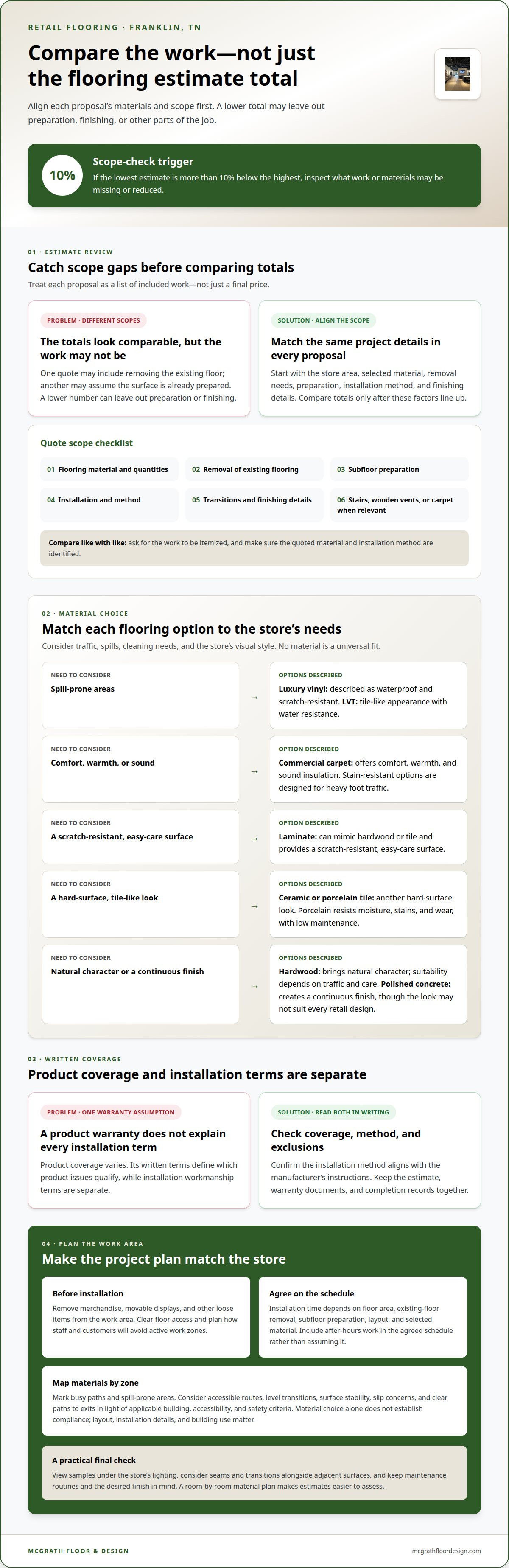
Compare written estimates line by line, not only by the total. If the lowest estimate is more than 10% cheaper than the highest, inspect the scope closely. That gap may indicate that work or materials differ. For Franklin TN flooring for retail stores, begin by aligning the store area, selected material, removal needs, preparation, installation, and finishing details in each proposal.
Start with a floor plan. Mark the areas needing replacement and note where different materials or transitions may be required. Compare each estimate’s materials, quantities, removal, subfloor work, and finishing. One proposal may include removing the existing floor, while another assumes the surface is already prepared. Those are different scopes, even if both promise the same finished look. For durability, review the specified product and its terms rather than relying on a general label such as “commercial grade.”
The price depends on the project and is given after a quote request; area, material, removal, preparation, and finish details shape it. Compare totals only after aligning those factors. A showroom sample can help you assess color and texture, but the written estimate should identify the material quoted. Homeowners can use the same method: compare equivalent products and tasks before judging value. A clear scope keeps Franklin TN flooring for retail stores estimates grounded in comparable work.
When reviewing estimates, look for examples of retail interiors and details that show how the proposed work suits your project. Assess each quote for clarity and completeness, including materials, preparation, and installation. A free estimate, by itself, does not demonstrate workmanship or the suitability of the selection.
- Mark included and excluded work in each estimate.
- Match material details and preparation before comparing totals.
- Keep written notes on transitions, removal, and finishing.
- Use retail-specific reviews and portfolio examples as context, not substitutes for a detailed scope.
Service areas around Franklin and Brentwood
Retailers in Franklin and Brentwood can plan flooring projects with McGrath Floor & Design, proudly serving these local communities. Start by identifying the store location, floor areas, and material priorities. A Franklin boutique may call for a different look from a busy Brentwood shop. Sharing the location and project scope helps focus the selection on the space’s layout, use, and desired finish.
Local guidance is most useful when it connects design choices to practical needs. Bring a floor plan or mark the customer paths, fitting rooms, checkout area, and spill-prone spots. Then consider where comfort and warmth matter, and where a hard surface may better suit daily cleaning. A stylish finish should also work across thresholds and adjoining areas. These details help specialists guide a flooring selection that feels cohesive throughout the store.
Before discussing materials for a Franklin-area project, organize the details of the work. Note whether it covers one sales floor or several rooms, and identify the existing flooring and any stairs. Describe the store’s operating needs and the areas that must remain accessible during planning. This information helps shape a practical scope around the actual layout and installation needs.
Product warranties and installation terms deserve attention alongside service location. Keep the chosen material, written estimate, and warranty documents together for the project. If a store has multiple zones, label each one on the floor plan, such as “entry,” “checkout,” and “stockroom.” Those labels make it easier to discuss different flooring needs clearly and keep the selection organized.
Retailers around Franklin and Brentwood can browse flooring options and consider how each material supports the store’s look and daily use. Share the location, floor plan, and preferred style to begin a focused conversation about the project. From a refined local storefront to a warm neighborhood shop, a clear plan connects local service coverage with a considered flooring choice.
McGrath Floor & Design: Hardwood Flooring
McGrath Floor & Design helps Franklin and Brentwood retailers compare flooring materials and plan a cohesive interior. Its showroom guidance can help you consider hardwood flooring, laminate floors, and ceramic for different areas of a store. Turn to the team when you’ve reviewed estimates and want to refine your material selection around the space, style, and project scope.
For example, weigh hardwood’s natural character against laminate’s wood-inspired look, or consider ceramic for a distinct hard-surface finish. Bring your floor plan, preferred materials, and estimate details to make the conversation more focused. McGrath Floor & Design provides guidance through product selection and installation planning for commercial interiors.
Contact McGrath Floor & Design to discuss flooring options for your Franklin-area retail space.
Turn Your Flooring Plan Into a Clear Next Step
Flooring shapes how customers experience a store, from the entrance to the checkout area. Before moving ahead, note the priorities that matter most: the atmosphere you want to create, the demands of daily use, and the details that will guide the project. This gives your team a shared reference as you move from choosing flooring for retail stores in Franklin, TN, to planning the finished space.
Keep the next conversation focused. Bring your preferred materials, project area, and estimate questions, then discuss how they fit your goals. A considered plan helps you move forward clearly while keeping the store’s character at the center.
For a conversation about your project, reach out to McGrath Floor & Design. Your next step can be a thoughtful one, with a floor plan that supports the way your store looks and works.
Frequently Asked Questions
Do You Have A Showroom I Can Visit?
Yes. McGrath Floor & Design’s showroom is at 1010 Perrone Way, Suite 110, Franklin, TN 37069. Visiting lets you compare flooring samples in person and consider how colors and textures work together. Bring photos of your store, a simple floor plan, or material ideas. Those references can help make your selection conversation more specific to your retail space.
Looking for new floors in the Middle Tennessee area?
McGrath Floor & Design serves the Greater Nashville area, including Franklin and Brentwood, with flooring selection and installation guidance. Its offerings include hardwood flooring, laminate, and ceramic. For a retail project, note which areas need new flooring and the look you want to achieve. That gives the selection process a clear starting point for your Middle Tennessee space.
Which flooring contractors in Franklin, TN specialize in retail stores?
McGrath Floor & Design helps commercial customers in the Franklin area with flooring selection and installation planning. Bring a store layout and describe how customers use each area, such as the entrance, sales floor, and checkout. This context helps connect your flooring choice to the store’s design goals and practical needs.
What retail flooring materials are best for stores in Franklin, TN?
The right material depends on the store’s style, traffic, and care routine. Hardwood brings natural character, laminate offers a wood-inspired look, and ceramic provides a hard-surface option. Consider how each material will appear beside displays, shelving, and existing finishes. Viewing a sample alongside those elements can help you judge whether its color and texture suit the overall design.
Which flooring options are most durable and slip-resistant for high-traffic retail stores?
Durability and slip resistance are separate considerations, and a material name alone does not establish either. For high-traffic areas, compare the specific product’s stated wear characteristics with the store’s daily use. For traction, consider the surface finish and conditions in that area, including tracked-in moisture. Plan cleaning practices around the selected flooring to support its appearance and performance.
What flooring warranties and maintenance plans do Franklin, TN commercial flooring companies offer?
Warranty coverage differs between flooring products and installation work, so review each document separately. Product warranties generally extend for up to 10 years, while installation terms depend on the written agreement. A maintenance plan should clearly describe routine care, recommended cleaning products, and any limits. Keep those instructions with the project records, so staff can follow consistent care practices after installation.


