

Rugs are more than décor; they’re a first line of defense for hardwood. For Franklin homeowners, how to protect hardwood floors in Franklin starts with wiping spills promptly, catching grit at the door, and placing rugs with suitable pads in busy areas. Dry-dust regularly, clean at least weekly with a product suited to the floor’s finish, and dry it fully after damp-mopping.
It’s easy to focus on dramatic accidents, but daily foot traffic, pet claws, and tiny particles can gradually dull or scratch wood. A few thoughtful habits help limit that wear while keeping the grain and finish visible.
This guide covers practical ways to handle spills, shoes, pets, and dirt; choose rugs and pads that protect the surface; and avoid cleaners that may harm the finish. You’ll also find straightforward everyday cleaning steps to build a plan that suits your household and hardwood.
Key Takeaways
- Blot spills promptly, then follow a steady cleaning routine that suits the floor’s finish.
- Reduce scratches by keeping grit under control, protecting furniture legs, and managing pet and shoe traffic.
- Choose rug pads that help prevent slipping and trapped debris, and rotate rugs to spread wear and sunlight exposure.
- Skip cleaners with ammonia, polish, vinegar, or oil soaps; use products recommended for your floor’s finish.
- Learn how rug placement and size can shield busy areas while preserving the look of your hardwood.
1. Cleaning spills promptly
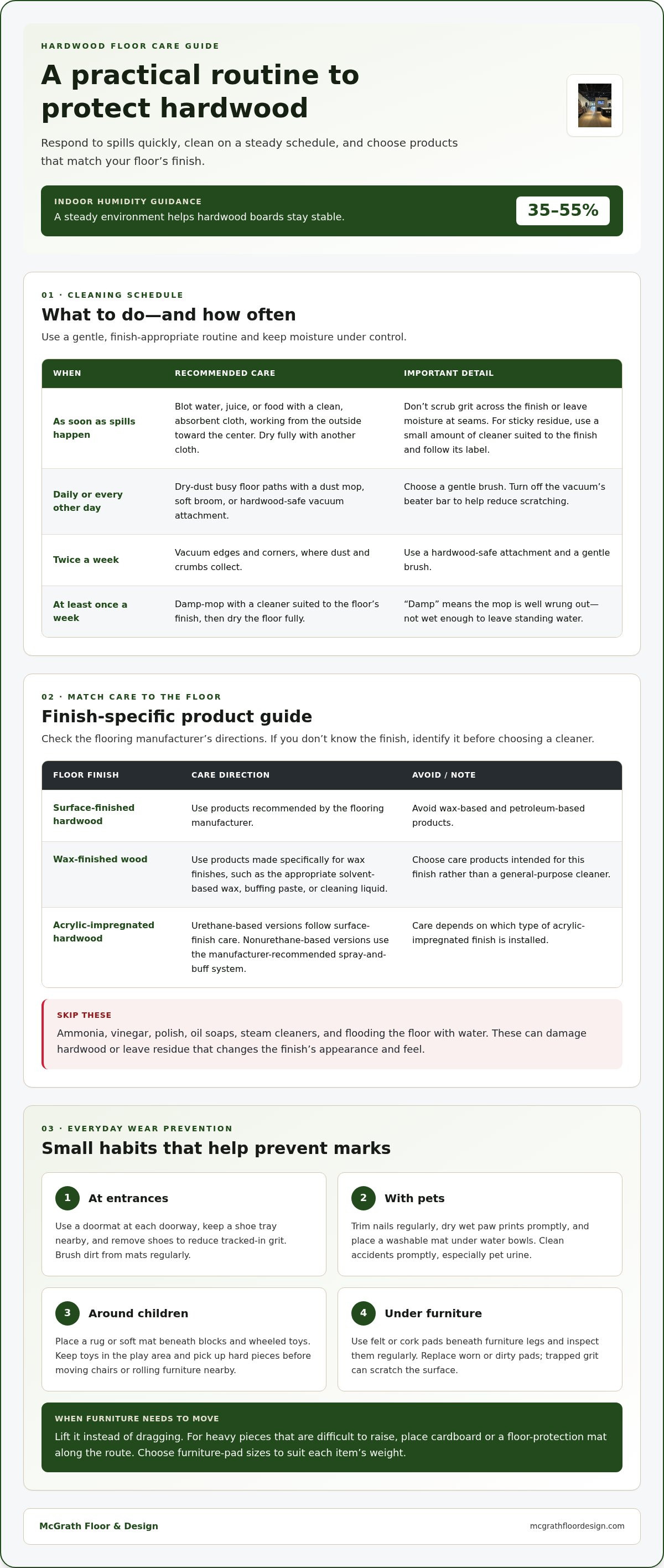
Act quickly when water, juice, or food lands on hardwood. Blot the spill with a clean, absorbent cloth, working from the outside toward the center, then dry the area completely with another cloth. Don’t scrub grit across the finish or leave moisture sitting at seams, where it can reach the wood. For sticky residue, use only a small amount of a cleaner suited to the floor’s finish, following its label.
Build a simple routine around how each part of the room is used. Dry-dust busy floor paths daily or every other day with a dust mop, soft broom, or hardwood-safe vacuum attachment. Choose a gentle brush and turn off the vacuum’s beater bar to reduce scratching. Vacuum edges and corners twice a week, where dust and crumbs collect.
At least once a week, damp-mop with a finish-appropriate cleaner, then dry the floor fully. “Damp” means the mop is well wrung out, not wet enough to leave standing water. Follow the flooring manufacturer’s care directions, since surface-finished, wax-finished, and acrylic-impregnated floors may need different products. If you don’t know the finish, identify it before choosing a cleaner.
For surface-finished hardwood, use products recommended by the flooring manufacturer. Avoid wax-based and petroleum-based products on these floors. Wax-finished wood needs products made specifically for wax finishes, such as the appropriate solvent-based wax, buffing paste, or cleaning liquid. Acrylic-impregnated floors also require finish-specific care: urethane-based versions follow surface-finish care, while nonurethane-based versions use the manufacturer-recommended spray-and-buff system.
Skip ammonia, vinegar, polish, and oil soaps. These can damage hardwood or leave residue that changes the appearance and feel of the finish. Don’t use a steam cleaner or flood the floor with water. A carefully controlled routine helps protect the surface through everyday use and years of household cleaning.
Keep indoor humidity between 35 and 55 percent to help hardwood boards stay stable. The guidance doesn’t set a temperature figure, so maintain a consistent indoor environment rather than making abrupt heating or cooling changes.
Franklin’s seasonal shifts can change indoor moisture levels, which may contribute to wood movement. During humid periods, manage indoor moisture; during drier periods, avoid letting the home become excessively dry. Keep up prompt spill cleanup and weekly damp-mopping in every season.
Franklin homeowners can choose hardwood flooring or laminate floors. To clean installed hardwood, follow its manufacturer’s care instructions and choose products according to its finish.
2. Protecting floors from children, pets, dirt, and shoes
Small household habits help limit scratches, dents, and water damage. Remove shoes at the entry, keep grit off the floor, and quickly dry wet paw prints or splashes. Ask children and visitors to leave sports cleats outside hardwood areas. Cleats and damaged high heels can scratch or dent wood, while loose dirt can wear down the finish underfoot.
Set a doormat at each doorway and keep a shoe tray nearby. This gives wet or gritty footwear a designated place before anyone walks farther inside. A shoes-off routine is easier to maintain when slippers sit beside the entrance and everyone uses the same spot. Brush dirt from the mat regularly, since debris can travel indoors on socks or paws.
Pets bring their own wear patterns. Trim their nails regularly to reduce scratch marks, and place a washable mat under water bowls to catch drips. If a pet tends to scratch or play roughly, guide play toward a carpeted room. Clean accidents promptly, especially pet urine, which can stain wood if it reaches the floor.
Children’s toys can scuff floors, too. Create a play area with a rug or soft mat beneath blocks and wheeled toys. Pick up hard pieces before moving chairs or rolling furniture nearby. Use felt or cork pads beneath furniture legs, and inspect them regularly. Replace worn or dirty pads, because trapped grit can scratch the surface.
Lift furniture instead of dragging it. For heavy pieces that are difficult to raise, lay cardboard or a floor-protection mat along the route. Choose furniture-pad sizes to suit each item’s weight. Coasters or cups can spread the pressure of exceptionally heavy furniture over a broader area. Avoid concentrating the heaviest pieces in one small spot.
Protecting hardwood floors in Franklin often comes down to managing everyday movement. Keep a clear path between the entry and main living areas, and place a shoe station where people naturally pause. For children, set a simple rule: toys stay in their play zone, not under chairs that may roll across them.
To protect hardwood floors in Franklin, combine clean entry habits with pet care and thoughtful furniture placement. Check busy areas for tracked-in dirt, loose toy pieces, or furniture pads that need replacing. These small checks help catch risks before they leave visible marks.
For a room where repeated traffic has worn the surface beyond everyday care, hardwood flooring options can help you plan a fresh foundation suited to the space.
Make the doorway routine consistent for guests and household members: asking visitors to remove shoes helps keep dirt and grime away from the wood, while entrance mats catch what footwear carries. Keep soccer cleats outside; cleats and damaged high heels can scratch or dent hardwood. For engineered wood, prevent grit and debris from accumulating along traffic paths and beneath furniture, where particles can act like sandpaper under the legs. If a pet repeatedly scratches, redirect play to a carpeted space.
3. Using welcome mats and rugs in high-traffic areas
Place a welcome mat at each entrance where outdoor grit can reach hardwood. It catches small stones and debris before shoes carry them farther inside. Choose one large enough for people to take a few steps on its surface, and keep it flat so its edges don’t become a trip hazard. Shake or vacuum the mat often; a dirty mat can hold the very particles it should trap.
Protect the routes people actually walk. A hallway runner can cover the path between the front door and living room, while a washable kitchen rug can sit beside the sink or cooking area. These spots often see repeated foot traffic, dropped crumbs, or splashes. Keep rugs clear of cabinet doors and appliance paths, and move them to clean underneath so grit doesn’t stay trapped against the floor.
Use a rug pad made for hardwood beneath area rugs and runners. A suitable pad helps prevent slipping and reduces the risk of sand grinding between the rug and floor. Check that the pad lies flat and fits inside the rug’s edges. Avoid rubber-backed entrance rugs, which can discolor wood. If a pad or rug leaves marks, remove it and clean the floor according to its finish.
Adjust rug placement occasionally. Rotate rugs every few months to spread sunlight and foot traffic more evenly across the floor. This can help prevent one exposed strip from changing appearance while the covered section stays shaded. When rotating a rug, vacuum the hardwood beneath it and check for grit, moisture, or discoloration before putting it back.
For households with frequent visitors, keep clean booties near the entrance as an optional indoor alternative to shoes. They can help limit grit on footwear, but wash or replace them when dirty. On rainy days, let damp footwear dry on a tray rather than placing it on a rug that may hold moisture against hardwood. A dry, clean mat works better than a wet one.
Rolling office chairs need a different solution from hallway runners. Plastic chair mats can shift beneath the wheels and grind dirt into hardwood. A glass chair mat is recommended for protecting the floor under a rolling desk chair. Check beneath it during regular cleaning, since debris can collect at the mat’s edges.
Think of rugs as movable shields, not permanent covers. Pair a well-positioned entry mat with runners on heavily used routes, then lift and clean beneath them during routine care. These simple checks help keep grit from abrading the finish while leaving the wood visible throughout the room.
4. Avoiding ammonia, polish, vinegar, and oil soaps
Check the cleaner’s label before it touches hardwood. Set aside products containing ammonia, polish, vinegar, or oil soaps, since they’re unsuitable for wood floors. A familiar household mixture, such as diluted vinegar, isn’t a safe substitute. Vinegar and ammonia can damage hardwood, so don’t use them for routine cleaning or spot treatment.
Choose a product recommended for your floor’s finish instead. For a surface-finished floor, follow the flooring manufacturer’s care directions and use its recommended cleaner. Wax-finished boards need products made specifically for wax finishes. Acrylic-impregnated flooring also has distinct care requirements, so identify its finish before selecting a product.
Make product selection a simple three-step habit. First, read the bottle’s ingredients and directions. Next, compare its intended use with the flooring manufacturer’s instructions. Finally, apply it as directed, using the amount and method on the label. Don’t assume a product is suitable because it says “wood” or “multi-surface.” Those broad descriptions don’t replace finish-specific guidance.
Keep cleaning tools clean, too. A vacuum head with a hard or damaged edge can scratch, while debris caught in a mop can drag across the surface. Before cleaning, remove grit with a hardwood-safe vacuum attachment or soft dust mop. Check the mop pad for trapped pieces, and wash or replace it when dirty. Clean tools help prevent particles from becoming abrasives.
Don’t combine cleaners or apply a second product to cover residue from the first. If a floor looks streaky after cleaning, stop and review the product label and finish instructions rather than adding polish. Avoid abrasive pads and vigorous scrubbing, which can mark the finish while trying to remove a spot. Use a soft cloth and suitable cleaner for small, stubborn marks.
Store approved products in their original containers, away from children and pets, and keep the manufacturer’s floor-care instructions nearby. A note inside a cleaning cupboard can identify the floor finish and the product intended for it. This small step helps prevent someone from reaching for vinegar, ammonia, or oil soap out of habit.
For older floors, unknown finishes, or marks that remain after proper cleaning, avoid experimenting with household chemicals. The right approach depends on the existing finish and the source of the mark. Follow the flooring manufacturer’s directions, and seek help from a wood-flooring professional for serious problems such as dried pet urine stains, uneven surfaces, or water damage marks.
When a cleaner’s suitability is unclear, leave it off the floor until you can check the finish guidance. Don’t use vinegar or ammonia to clean hardwood floors, because these solutions can damage them. Even a small test with an unsuitable household product isn’t a substitute for confirming that it matches the finish. If recommended care directions don’t resolve a concern, seek advice from a wood-flooring professional rather than trying another household remedy.
5. Using area rugs to protect hardwood floors
An area rug can act as a movable barrier between daily foot traffic and wood flooring. Place one where people pause, turn, or cross the same path repeatedly, such as beside a sofa or between a hallway and living room. Match its size to the space: area rugs range from 3×5 feet to 10×13 feet and larger. A rug that covers the walking route offers protection without hiding every board.
Choose a rug pad made for hardwood. Several independent market sources say a rug pad helps prevent slipping and reduces the risk of trapped sand grinding into hardwood. Fit it inside the rug’s edges, then lift a corner periodically to check for grit or moisture underneath. Avoid rubber-backed entrance rugs, which can discolor wood. For an entry, use a suitable rug or mat that catches stones and debris without leaving its backing against the floor.
There isn’t one universally safest rug material for every hardwood finish. Choose a rug with a compatible pad that lies flat and doesn’t transfer color or leave marks. Check the rug and pad for rough backing, accumulated debris, and moisture before placing them. Felt or cork furniture pads can help prevent scuffs and dents; choose their size according to the furniture’s weight and replace worn pads.
Rotate area rugs every few months. This spreads sunlight exposure and traffic wear more evenly, rather than leaving one section covered and another exposed. Before replacing a rug, clean beneath it and inspect the wood. If the surface looks discolored, damp, or unusually worn, leave the rug off while addressing the cause. A permanent cover can conceal developing damage.
For a renovation or move, protect exposed floor paths before carrying materials or furniture. Lay down cardboard, plywood sheets, or specialized floor-protection mats where people will walk or set items down. Lift heavy pieces instead of dragging them, and prevent grit from collecting beneath protective sheets. Remove the covering after the work, then inspect and clean the floor.
Franklin building requirements and homeowners’ association rules are separate from everyday rug care. Rugs and pads protect the installed surface; applicable requirements or governing documents may affect flooring installation or alterations. Keep these questions distinct when planning a project, rather than assuming a protective rug addresses installation rules.
For a practical setup, pair an entry rug with a pad, cover the busiest walking route, and use felt or cork pads beneath furniture. Check each barrier during routine cleaning, rotate rugs every few months, and replace worn pads. These steps help reduce dirt, scratches, and uneven wear while keeping the hardwood visible.
McGrath Floor & Design: Hardwood Flooring
McGrath Floor & Design helps Franklin homeowners explore hardwood flooring for rooms where durability, style, and everyday care all matter. If you’re planning a new floor or considering a change after years of wear, the team can guide you through flooring selection and installation. Laminate floors and ceramic tile are also available when a room’s needs call for a different surface.
Bring your priorities into the conversation: the room’s traffic, your preferred look, and a care routine that suits your household. This context helps narrow the choices and shape a flooring decision around how you use the space.
Contact McGrath Floor & Design to discuss flooring options for your home in Franklin.
Make your next flooring decision with confidence
A well-cared-for floor is part of a home’s character, but protection starts with choices that suit the room and the way you live. As you consider how to protect hardwood floors in Franklin, think beyond today’s routine: how should the space feel, function, and look as your household changes? A flooring plan can bring those priorities together, whether you’re refreshing one room or planning a larger renovation.
McGrath Floor & Design can help you explore options and make a considered choice for your home. Bring your questions and vision to the conversation, then take the next step at your own pace.
Contact McGrath Floor & Design to discuss flooring for your home. A thoughtful plan can help your space feel beautiful, practical, and truly yours.
Frequently Asked Questions
How should hardwood floors be cleaned and maintained to prevent damage?
Clean hardwood according to its finish and the flooring manufacturer’s care instructions. In a Franklin home, keep those instructions handy and revisit them if the floor’s appearance changes after cleaning. Cloudiness, sticky residue, or dull patches can signal that a product or method isn’t suited to the finish. Pause before applying a polish or coating, and use only a product intended for that specific floor.
How can you protect hardwood floors from pets, children, and heavy foot traffic?
Set household routines that keep hard play and frequent movement from wearing the same floor spots. For example, store wheeled toys in a designated play area and keep pet toys away from doorways where people turn or pause. After guests leave, scan busy routes for tracked-in grit or small objects before they’re stepped on or pushed beneath furniture. This adds a quick, practical reset to daily home care.
What indoor humidity and temperature should be maintained to prevent hardwood floor gaps or warping?
Keep indoor humidity between 35 and 55 percent to help hardwood boards stay stable. Maintain a consistent indoor environment and avoid abrupt heating or cooling changes.


