

Your sealed wood flooring is a structural defense system, not just a cosmetic finish. In the heart of Middle Tennessee, where the humidity can shift from a crisp morning to a heavy, sweltering afternoon in hours, your floors are constantly working to stay stable. Many homeowners in Nashville and Franklin feel a sense of hesitation when choosing a cleaner or wondering if a slight change in the grain is a sign of seal failure. It's natural to worry about damaging such a significant investment, especially when advice on oil-based versus water-based finishes feels contradictory and overwhelming.
We're here to bridge the gap between your vision of a pristine home and the practical reality of expert maintenance. This guide provides the clarity you need to protect your floors against our unique local climate for decades to come. We'll walk you through a simple method to test your floor's integrity, establish a cleaning schedule that actually works, and help you navigate the choice between DIY care and professional service. You'll gain the confidence to keep your living space beautiful, functional, and resilient through every season.
Key Takeaways
- Identify whether your floor has a topical or penetrating barrier before you start cleaning to prevent accidental finish degradation.
- Select the ideal sealant for Middle Tennessee's unique humidity cycles to ensure your wood remains stable and beautiful for decades.
- Protect your sealed wood flooring by ditching steam mops for microfiber tools that preserve the seal's integrity against daily wear.
- Learn the critical preparation steps that account for 90% of a successful finish and why a dust-free environment is non-negotiable.
- Spot the "Gray Wood" warning signs that indicate when it's time to transition from DIY maintenance to professional refinishing services.
"Is My Wood Floor Sealed?" How to Identify Your Flooring Type
Understanding your floor's finish is the foundation of proper care. In the simplest terms, sealed wood flooring refers to hardwood that has been treated with either a topical coating or a penetrating substance to block moisture and debris. Without this barrier, raw wood acts like a sponge. It absorbs spills and Tennessee humidity, which eventually leads to permanent warping or deep staining. You shouldn't choose a cleaning solution or a maintenance routine until you know exactly what's standing between your mop and the timber.
Identifying your seal is the first step in protecting your investment. Using a heavy-duty cleaner meant for polyurethane on a floor treated with natural oils can strip away the protection, leaving the wood vulnerable. Conversely, applying wax to a modern surface seal can create a cloudy, slippery mess that's difficult to remove. Taking five minutes to identify your flooring type saves hours of frustration and prevents costly mistakes.
The Water Drop Test: A 5-Minute Evaluation
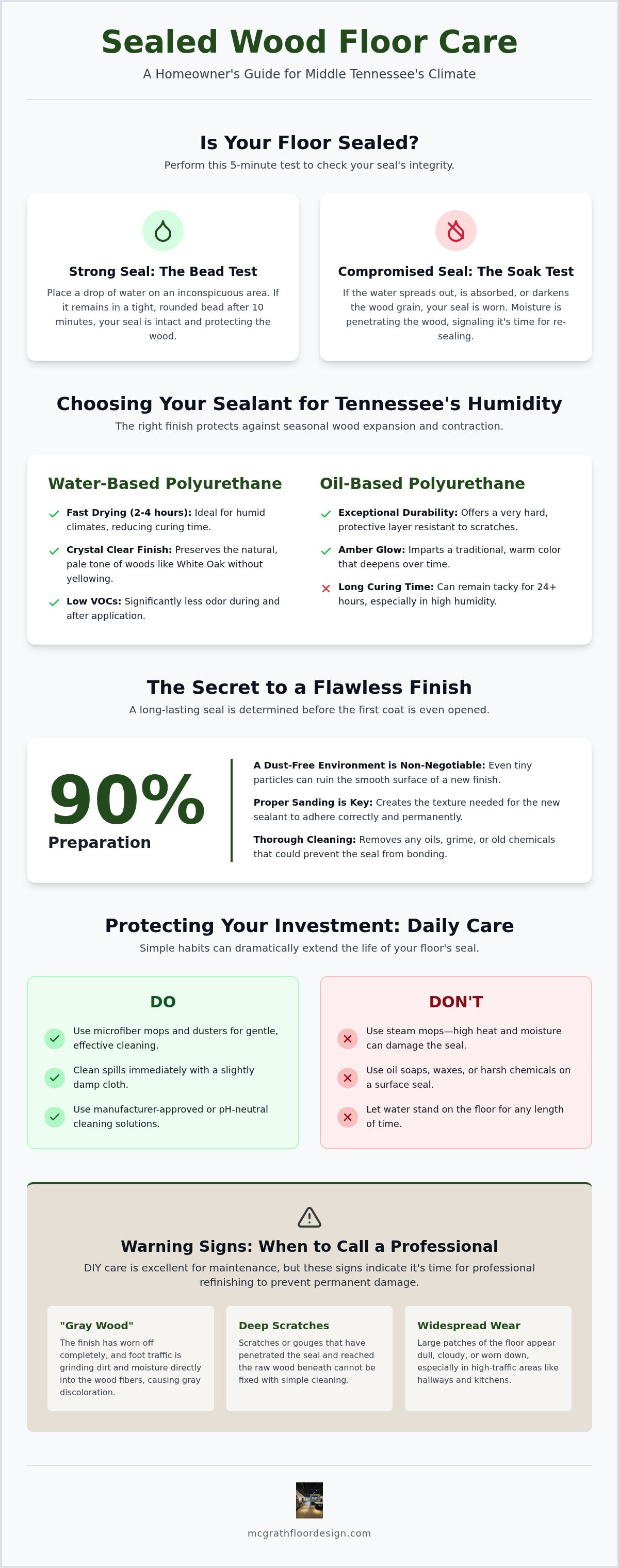
Don't guess when it comes to the health of your floors. We suggest a simple, non-destructive test to determine if your seal is still doing its job. First, find an inconspicuous area. A corner inside a walk-in closet or a spot hidden behind a door near the baseboard works perfectly. Place a single drop of room-temperature water on the surface and wait for ten minutes.
- The Bead: If the water remains in a tight, rounded bead, your seal is strong and intact.
- The Soak: If the water spreads out or begins to darken the wood grain, the seal is compromised.
If the wood darkens, moisture is reaching the fibers. This is a clear signal that your sealed wood flooring needs attention to prevent long-term structural issues.
Distinguishing Between Surface Seals and Penetrating Oils
Modern homes in Nashville typically feature one of two main finish types. Surface seals, such as polyurethane, create a protective film that sits on top of the wood. It looks like a clear, thin layer of protection and provides excellent resistance to daily wear. Penetrating oils are different. They soak deep into the wood fibers rather than resting on the surface, offering a more organic, matte aesthetic that highlights the natural texture of the grain.
To tell them apart, look closely at how the floor reflects light. Surface seals usually have a more uniform sheen. If you run your hand over the floor and feel the actual texture of the wood grain, you likely have an oil finish. If the surface feels smooth and slick, you're likely looking at a film-forming seal. This distinction is vital because the maintenance products for one can often ruin the other.
Selecting the Best Sealant for Middle Tennessee Homes
Choosing the right protection for your sealed wood flooring in Middle Tennessee isn't just about looks. It's about engineering a defense against our 80% humidity mornings and dry, heated winters. Nashville homes face unique stressors that can cause finishes to cloud or crack if they aren't matched to the environment. Whether you're in a historic bungalow or a modern build, the sealant you choose dictates how your floors handle the natural expansion and contraction of timber.
White Oak remains a local staple for its versatility and strength. However, it's a temperamental species because it contains high levels of tannins. If you apply the wrong finish, these tannins can react and cause "tannin pull," which results in unsightly green or black discolorations. Using a high-quality tannin-blocking sealer is the only way to ensure your white oak stays true to its intended color. For high-traffic Franklin households with kids and pets, we often weigh the raw durability of a surface seal against the ease of repair found in natural oils.
Water-Based vs. Oil-Based Polyurethane
Water-based polyurethane has become the gold standard for white oak hardwood flooring in 2026. It dries quickly, often within two to four hours, which is a massive advantage in our humid climate where moisture can stall the curing process. It also remains crystal clear over time, preserving the pale, natural tones that are currently trending.
Oil-based options offer a traditional amber glow that deepens with age. They're incredibly durable and generally more affordable, but they come with a catch. The high VOC levels mean a strong odor that lingers for days, and the drying time is significantly longer. In the middle of a humid Tennessee summer, oil-based poly can remain tacky for twenty-four hours or more, increasing the risk of dust settling into your fresh finish.
Hard Wax Oils and Natural Finishes
We've seen a significant rise in European-style matte finishes across Brentwood luxury homes. Hard wax oils don't sit on top of the wood like a plastic shell; they soak into the fibers and harden. This creates a "living" finish that feels organic underfoot. The primary benefit is the ability to spot-repair scratches without refinishing the entire room.
The trade-off is moisture resistance. While they handle spills well if wiped up immediately, they don't offer the same waterproof barrier as a thick polyurethane coat. These floors require specific soaps and occasional "refresher" oils to maintain their integrity. We help homeowners move from vision to reality by selecting finishes that survive the local elements. If you're unsure which path fits your lifestyle, consulting an expert guide can ensure your floors remain a source of pride rather than a maintenance burden.
The Step-by-Step Guide to Sealing Hardwood Floors
Excellence in flooring is built on a foundation of meticulous preparation. While the final coat provides the aesthetic joy of a finished home, the prep work accounts for 90% of your success. If you rush the sanding or ignore a single speck of dust, the finish will highlight those flaws rather than hide them. Achieving high-quality sealed wood flooring requires a methodical approach that respects both the material and the environment.
Safety must remain your top priority throughout the process. Ensure your workspace has consistent cross-ventilation to manage fumes, especially if you've chosen an oil-based product. You must also practice proper disposal of all used rags. Place them in a water-filled metal container immediately after use. Oily rags are highly flammable and can spontaneously combust if they're left in a pile. Finally, always check the local forecast. You should never seal floors on a rainy Nashville day. The spike in humidity can trap moisture under the sealant, leading to a cloudy finish or "blushing" that compromises the bond.
Preparation: Sanding and Cleaning
Proper sanding is a progressive journey. Start with a coarse grit to level the boards and move steadily toward finer grits, usually finishing with a 100 or 120-grit paper. This sequence opens the wood pores evenly so the sealant can penetrate effectively. Once sanding is complete, vacuum the room multiple times, including the tops of baseboards and windowsills where dust hides.
The "tack cloth" method is your final defense against debris. Wipe the entire surface with a microfiber cloth to ensure the wood is pristine. Watch for "grain raise" after your initial cleaning or staining. If the wood fibers swell and feel fuzzy, a light buffing with a fine-grit screen will restore the smoothness needed for a professional result.
Application Techniques for a Professional Finish
Using the right tools prevents common frustrations like bubbles and lap marks. We recommend a T-bar applicator for large open areas or a high-quality, lint-free roller. These tools help you maintain a "wet edge," ensuring each pass blends seamlessly into the last. Work steadily and avoid over-agitating the liquid, as this introduces air that can dry into permanent surface bubbles.
Master the "cutting in" technique for the best results. Use a high-quality brush to apply sealant to corners and edges first, working about six inches out from the baseboards before you tackle the main floor with your larger applicator. Most sealed wood flooring requires multiple coats. You'll know a coat is ready for a light scuff-sand when the surface feels hard to the touch and the sandpaper produces a fine white powder rather than gumming up. This mechanical bond ensures the next layer adheres perfectly, moving your project from a simple vision to a durable reality.
Cleaning and Care: Protecting Your Sealed Wood from Daily Wear
Maintaining sealed wood flooring is a daily practice of protection, not just a weekly chore. Most homeowners focus on removing visible dirt, but the real goal is preserving the integrity of the chemical barrier. We have one golden rule for our clients: never use a steam mop. The combination of high heat and pressurized moisture is a recipe for disaster. It forces water into the wood grain and can cause your beautiful finish to peel or delaminate over time.
Choose microfiber over traditional string mops for your regular routine. String mops often carry too much water, which can seep into joints and cause swelling. Microfiber is different. It uses static electricity to grab dust and requires only a tiny amount of moisture to clean effectively. This ensures you aren't leaving standing water that could compromise the bond between the wood and the sealant.
Protect your floors from the "Nashville grit." The fine sediment found in Middle Tennessee soil acts like sandpaper underfoot. Every step grinds these particles into the finish, eventually dulling the shine and exposing the raw wood beneath. Place heavy-duty entry mats at every door and use area rugs in high-traffic zones like hallways. These simple barriers are your seal’s best friend, catching abrasive debris before it can do any damage.
Avoid the vinegar myth at all costs. Many internet forums suggest vinegar and water as a natural alternative, but vinegar is an acid. It slowly dissolves the protective layer of your floor, leading to a hazy appearance that no amount of buffing can fix. Stick to pH-neutral cleaners that are specifically formulated for modern finishes to ensure your investment remains secure for the long term.
The Ideal Cleaning Routine
Establishing a consistent rhythm keeps your floors in peak condition without requiring hours of labor. Focus on these three intervals to maintain a professional look:
- Daily: Dust mop or vacuum with the beater bar turned off to prevent surface scratches.
- Weekly: Lightly damp mop with a pH-neutral hardwood cleaner and a microfiber pad.
- Monthly: Inspect high-traffic areas, like the space in front of the kitchen sink, for signs of seal thinning.
Managing Humidity and Spills
Your home's HVAC system is your floor's best ally. Follow the 30-60% Rule: maintain indoor humidity within this range to prevent the wood from expanding or contracting too much. This stability protects the bond of your sealant and prevents gaps from forming between boards. When spills happen, blot them immediately with a dry cloth. Never wipe a spill, as this can push liquid into the seams. If you have different materials in your home, it's helpful to know how to clean engineered hardwood floors to avoid damaging specialized wear layers.
We believe your home should be a source of joy, not a maintenance headache. If your floors have lost their luster or the seal seems compromised, consult with our professional team to restore your home's beauty and ensure your floors are protected for years to come.
Professional Refinishing in Nashville: When DIY Is Not Enough
Routine care preserves your home's beauty, but there comes a point where DIY maintenance reaches its limit. Distinguishing between a minor surface scuff and a deep scratch is vital for the longevity of your sealed wood flooring. Surface scuffs only affect the topmost layer of the finish; they can often be buffed away with the right tools. Deep scratches, however, cut through the protective barrier and expose the raw timber to the air. If you notice your wood turning a dull, weathered gray, you've reached the "Gray Wood" warning stage. This color shift indicates that moisture and oxygen are actively damaging the wood fibers. Waiting beyond this point often means a simple refresh is no longer an option, and a full, aggressive sanding becomes mandatory to save the floor.
For floors that are dull but not yet structurally damaged, a "Screen and Coat" is a highly effective, cost-sensitive solution. This process involves lightly abrading the existing finish and applying a fresh top coat of sealant. It bypasses the dust and duration of a full refinish while restoring that deep, rich luster you expect from high-end hardwood. Professional expertise is critical during this phase. We ensure the new layer chemically bonds to the old one. Without proper preparation, a new seal can peel off in sheets; this is a failure known as delamination that often plagues well-intentioned DIY attempts in the humid Nashville climate.
Signs It’s Time for a Professional Refinish
Knowing when to call in an expert can save you thousands in replacement costs. Watch for these specific indicators that your current seal has reached the end of its functional life:
- Water Test Failure: Water no longer beads anywhere on the floor, especially in high-traffic kitchens or entryways.
- Texture Changes: The wood grain feels rough, splintery, or "raised" to the touch, suggesting the seal is too thin to protect the fibers.
- Aesthetic Aging: Extensive yellowing or ambering has occurred, which can date a home’s interior and hide the natural beauty of the wood species.
The McGrath Advantage: Quality Craftsmanship in Middle TN
Our team brings 50+ years of combined industry experience to every Nashville, Franklin, and Brentwood home we enter. We understand the technical nuances of how local humidity affects curing times and seal integrity. This deep historical knowledge prevents common installation and sealing failures that less experienced contractors might overlook. We invite you to visit our showroom to see different sheen levels in person, allowing you to move from a vague vision to a tactile reality. Our goal is to act as your dedicated guide, ensuring your floors remain a stunning centerpiece of your home for decades. Schedule a consultation with McGrath Floor & Design today to discuss the best path forward for your hardwood.
Preserving the Beauty of Your Middle Tennessee Home
Your home is a sanctuary, and the foundation of that space deserves a defense strategy as robust as its aesthetic. By mastering the water drop test and selecting sealants designed for our local humidity, you've taken the first steps toward a lifetime of durability. Remember that consistent, pH-neutral cleaning is the secret to keeping your sealed wood flooring vibrant and strong. Small, proactive habits today prevent the need for aggressive interventions tomorrow.
When you're ready to transition your vision into a reality, our team is here to act as your dedicated guide. As a locally owned and operated partner in Middle Tennessee, we offer NWFA-trained expertise and a premium curated material selection that stands the test of time. We take pride in our craftsmanship and the long-term relationships we build with our neighbors in Nashville, Franklin, and Brentwood. Explore Premium Hardwood and Professional Installation at McGrath Floor & Design. Let's work together to ensure your floors remain a source of joy and pride for years to come.
Frequently Asked Questions
Can I seal my wood floors without sanding them first?
Yes, you can refresh your floors through a process called a screen and coat. This method involves lightly abrading the existing finish with a buffer to create a mechanical bond for the new sealant. It's an excellent way to restore luster without the dust and time of a full sand. However, this only works if the current seal is intact and the wood isn't graying or deeply scratched.
How long does it take for sealed wood flooring to cure in Nashville humidity?
Curing times vary by product, but Middle Tennessee's high humidity often extends the timeline. Water-based polyurethanes typically allow for light foot traffic in 4 to 6 hours but require 7 to 14 days to fully cure. Oil-based finishes may stay tacky for 24 hours and take up to 30 days to reach maximum hardness. We suggest keeping pets and heavy rugs off the surface until the cure is complete.
Is it better to use a water-based or oil-based sealer for high-traffic areas?
Both options offer professional-grade durability, but water-based sealers are the modern favorite for busy households. They dry much faster and provide a crystal-clear finish that won't yellow over time. Oil-based sealers provide a traditional amber glow and are slightly more resistant to certain household chemicals. For most homes, the low odor and non-yellowing nature of water-based options make them the superior choice for sealed wood flooring.
Can I use a steam mop on my sealed hardwood floors?
No, you should never use a steam mop on any hardwood surface. The pressurized heat forces moisture deep into the wood fibers and under the protective finish. This often leads to cupping, warping, and premature seal failure that can't be easily repaired. Stick to a slightly damp microfiber mop and a pH-neutral cleaner to ensure your floor's barrier remains intact and beautiful for decades to come.
How often should I reseal my hardwood floors in a home in Franklin?
Most residential floors in Franklin benefit from a professional screen and coat every 3 to 5 years. This interval depends on your lifestyle, pet activity, and how well entry mats manage the local grit. If you notice that water no longer beads on the surface or the finish looks dull despite regular cleaning, it's time to refresh the seal. Regular maintenance prevents the need for an expensive full sand-and-finish.
What is the best cleaner for polyurethane-sealed wood floors?
The safest choice is a pH-neutral hardwood cleaner specifically formulated for polyurethane finishes. Avoid vinegar, ammonia, or wax-based soaps, as these acidic or oily substances can etch the surface or leave a sticky residue. A simple routine of dry dust mopping followed by a light mist of professional-grade cleaner on a microfiber pad is the best way to maintain sealed wood flooring without damaging the protective topcoat or clouding the sheen.
What happens if I use the wrong sealer on my wood species?
Using an incompatible sealer can lead to "tann Pull" or poor adhesion. White Oak, for instance, contains high tannins that react poorly with certain water-based finishes, causing dark discolorations if you don't use a tannin-blocking sealer first. Some exotic woods have natural oils that prevent standard polyurethanes from sticking correctly. Professional guidance ensures the chemical bond is matched to your specific wood species, preventing a frustrating and costly delamination failure.


