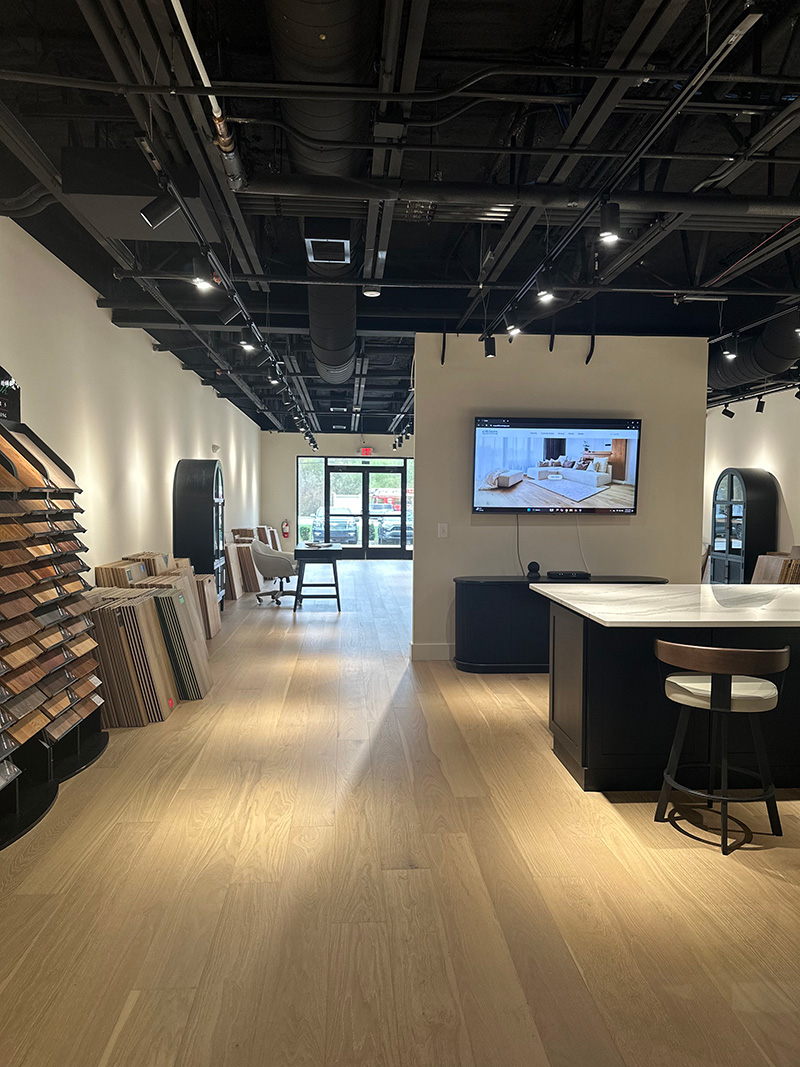

The most moisture-resistant floor isn’t automatically the best choice for every room. If you’re searching for the best flooring for Tennessee humidity, start by considering where moisture may come from, how the room is used, and how the floor will be installed.
Humid summers and seasonal changes can raise concerns about swelling, warping, or gaps. Hardwood, laminate, and ceramic respond differently: wood can shift as humidity changes, laminate may be vulnerable if moisture reaches its core, and ceramic resists water at the surface but still depends on careful installation and a sound subfloor. The material matters, but so do the conditions around and beneath it.
This guide compares how these flooring options perform in humid conditions and where each may suit your home. Use the room’s exposure to moisture, household routines, subfloor conditions, and product instructions to weigh durability against the look you want. McGrath Floor & Design serves Greater Nashville, including Franklin and Brentwood, with flooring guidance and professional installation. Start with the room, then match the material and installation to its needs.
Key Takeaways
- Distinguish everyday humidity from direct water exposure to identify the moisture risks in each room.
- Compare hardwood, laminate, and ceramic by construction, care needs, and limitations, not by material labels alone.
- Choose the best flooring for Tennessee humidity by weighing room use, water exposure, design goals, and product instructions.
- Prepare for installation in sequence: assess the rooms, review product requirements, and ready the site before laying the floor.
- Pair a suitable material with professional installation to support a durable floor that fits your home.
What Makes Flooring in Tennessee Homes Sensitive to Humidity?
Humidity is the amount of water vapor in the air. Flooring can react to moisture in its surroundings, but the response depends on the material, its construction, and the conditions beneath and around it. Wood, for example, can absorb or release moisture as indoor conditions change, which may cause it to expand or contract.
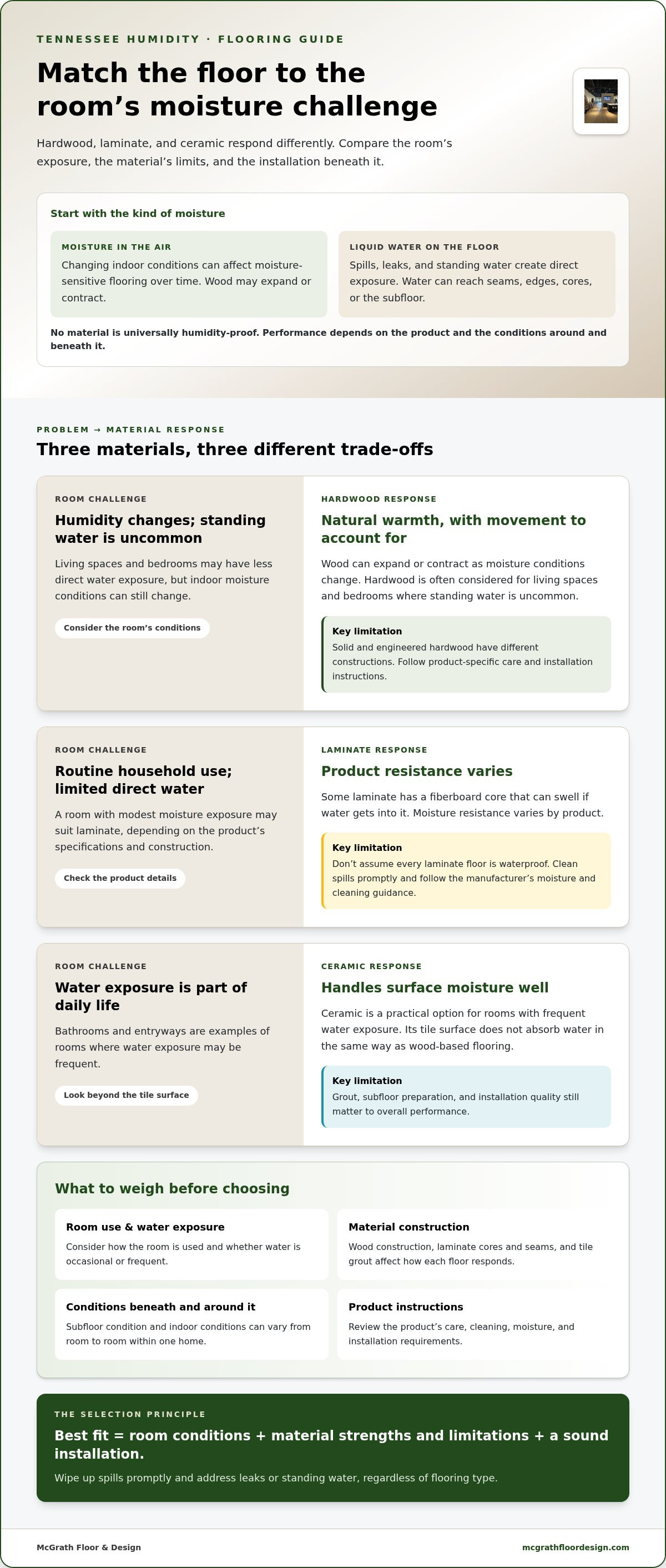
A useful rule: moisture in the air can gradually affect moisture-sensitive flooring, while liquid water from a spill or leak can cause more direct damage. The definition of humidity helps explain why changes in the air matter. It is also important to distinguish those changes from water sitting on a floor. No material is universally humidity-proof.
How Tennessee’s seasons can affect indoor flooring conditions
Tennessee’s humid climate makes indoor moisture a practical consideration when choosing flooring. Outdoor conditions don’t translate directly to every room. Heating and cooling, ventilation, and a home’s construction all influence indoor air. HVAC use may help manage indoor conditions, but it doesn’t guarantee consistent humidity throughout the year or across the house.
Conditions can vary from room to room. A space over a crawlspace, a well-ventilated living area, and a closed-up bedroom may each have different conditions under one roof. That’s why the best flooring for Tennessee humidity depends on the specific room and installation environment, not just the regional climate.
Humidity, spills, and leaks: why the difference matters
Ambient humidity is moisture suspended in the air. Spills, plumbing leaks, and standing water put liquid moisture in direct contact with the floor. A material that tolerates ordinary changes in indoor humidity may still be damaged if water reaches its seams, edges, core, or subfloor.
Hardwood can respond to changes in moisture, while laminate with a fiberboard core may swell if water penetrates it. Ceramic doesn’t absorb water in the same way as wood-based flooring, but grout, the subfloor, and other parts of the installation still matter. Performance varies by product, so follow its care and installation instructions.
Wipe up spills promptly and address leaks or standing water regardless of flooring type. Persistent moisture may affect not only the visible surface but also the layers below it. Understanding the difference helps you compare materials realistically and plan for each room’s conditions.
How Hardwood, Laminate, and Ceramic Respond to Humidity
Each flooring material manages moisture differently. Hardwood responds to changes in indoor conditions, laminate depends on the moisture resistance of its core and seams, and ceramic suits water-prone rooms but still relies on a sound installation. The best flooring for Tennessee humidity is the option whose strengths and limitations fit the room.
| Material | Moisture sensitivity | Room conditions | Care and key limitations |
|---|---|---|---|
| Hardwood | Wood can expand or contract as moisture conditions change. | Often considered for living spaces and bedrooms where standing water is uncommon. | Manage moisture and follow product-specific care and installation instructions. Construction affects how the floor responds. |
| Laminate | Some products have a fiberboard core that can swell if water gets into it; resistance varies by product. | May suit rooms with routine household use and limited direct water exposure, depending on specifications. | Clean spills promptly and follow the manufacturer’s moisture and cleaning guidance. Don’t assume every laminate floor is waterproof. |
| Ceramic | The tile surface handles moisture well, but grout and layers beneath it remain relevant. | A practical option for rooms where water exposure is frequent, such as bathrooms or entryways. | Grout needs care, and subfloor preparation and installation quality affect overall performance. |
Is hardwood a good choice for humid Tennessee homes?
Hardwood can be a suitable choice, but it responds to moisture rather than ignoring it. Solid hardwood is milled from a single piece of wood; engineered hardwood has a wood surface over layered construction. Their structures differ, so don’t assume they behave identically. Both need installation conditions suited to the product. The National Wood Flooring Association discusses how humidity-related expansion and contraction matter for wood flooring.
For a closer look at hardwood’s material and design considerations, explore hardwood flooring options and guidance.
When laminate or ceramic may suit a room better
Laminate may work in areas with modest moisture exposure, but its construction and stated limitations vary by manufacturer. Review the product instructions to see where it’s appropriate and how to clean it. Ceramic can be a practical choice where splashes are part of daily life. Tile is only one part of the installation: grout, subfloor preparation, and careful setting all contribute to how the finished floor performs.
In short: hardwood offers natural warmth but moves with moisture, laminate can be vulnerable at its core and seams, and ceramic handles surface water well while depending on sound grout and installation. Compare those trade-offs with the room’s conditions and your design goals.
Which Flooring Is Best for Tennessee Humidity? Compare by Room
The right choice depends on how a room is used, how often water reaches the floor, the look and feel you want, and the selected product’s specifications. A bathroom and a bedroom have different demands, even in the same home. Start with the room’s routine, then weigh moisture exposure against comfort, appearance, and upkeep.
Flooring choices for kitchens, bathrooms, and entryways
Kitchens: Consider how often spills happen and how quickly your household cleans them up. Ceramic can be a practical fit where splashes and frequent cleaning are part of daily life. Hardwood can bring warmth and natural character, while laminate may suit the design if its product instructions allow for the room’s conditions. With either wood-based option, wipe up spills promptly and follow care guidance.
Bathrooms: Ceramic is worth considering because its surface handles moisture well. The overall floor still depends on details beyond the tile, including grout, subfloor preparation, and installation. Hardwood or laminate may be appropriate only when the specific product’s instructions allow that setting. Careful moisture management remains important.
Entryways: Shoes can bring rain and dampness indoors, so consider how much tracked-in water the area sees and how easy you want cleanup to be. Ceramic is one option for a frequently wet entry. Hardwood or laminate may work when the product specifications suit the space and your routine addresses wet shoes and spills quickly.
Flooring choices for living rooms and bedrooms
Living rooms and bedrooms often have less direct water exposure, so comfort and appearance may carry more weight. Hardwood offers natural variation and a warm visual character, though it can still respond to changing moisture conditions. Laminate provides design flexibility, including looks inspired by wood, with performance that depends on its construction and manufacturer guidance. Explore a laminate flooring guide to understand the category’s features alongside your room’s needs.
Ceramic can also suit a living room or bedroom if you value its appearance and straightforward surface care. Its firm feel may be less appealing if softness underfoot is a priority, so consider how you use the room day to day.
There isn’t one universal winner. To find the best flooring for Tennessee humidity, match each room’s moisture exposure and household habits with the product’s specifications. Then balance those practical needs with the style and comfort you want. A room-by-room plan can create a cohesive look without requiring the same material throughout the home.
How to Prepare for Humidity-Resilient Flooring Installation
A durable flooring project starts before the first plank or tile goes down. In Middle Tennessee, the material, room conditions, and preparation work together. Use this sequence to make a considered choice and avoid relying on general advice that may not fit the product or your home.
What to assess before choosing flooring in Middle Tennessee
Start with how each room is used and whether it has a history of dampness, spills, or leaks. Note the ventilation and how heating and cooling are used throughout the home. Conditions may differ between rooms, and a space over a crawlspace may present different considerations from one on another level. These details help guide material selection and identify site conditions that need attention before installation.
Every flooring assessment is specific to the project. Installers consider the room and relevant site conditions before determining preparation steps. Flooring can’t resolve an active leak or an underlying building moisture issue, so address those concerns before installation planning moves forward.
Why installation instructions and subfloor preparation matter
Review the selected product’s installation and care instructions. Requirements vary by material and product, so manufacturer guidance takes priority over broad online recommendations. Acclimation, for example, should be followed only when the manufacturer requires it, using the method and timing specified for that product.
Then prepare the site. The subfloor may need to be cleaned, leveled, and assessed for moisture as appropriate to the flooring and installation. There isn’t one universal moisture threshold or preparation method for every floor. The installer uses product requirements and project conditions to determine the appropriate approach. For hardwood projects, construction and installation method also matter. Learn more through an engineered hardwood installation guide when evaluating that option.
Installation should begin only after the room, product instructions, and substrate are ready. This sequence connects the material choice to the conditions it will face and helps support a sound, lasting result.
Preparation checklist: Assess each room and existing moisture concerns, review the product instructions, prepare the site and subfloor, then install according to the selected flooring’s requirements.
Choosing the best flooring for Tennessee humidity means considering preparation alongside appearance and room use. McGrath Floor & Design provides material guidance and professional installation for homeowners across Greater Nashville, including Franklin and Brentwood. Explore flooring and installation guidance for your project.
Choose Tennessee Flooring with McGrath Floor & Design
The best flooring for Tennessee humidity isn’t chosen by material name alone. Match the floor to the room’s moisture exposure, your household’s routines, the appearance you want, and the product’s installation and care requirements. Hardwood, laminate, and ceramic each offer distinct design possibilities, and the right fit may differ from one room to the next.
Bring your room conditions and design goals into the selection process
Before comparing options, consider how each space works day to day. Think about foot traffic, spills, cleaning habits, comfort underfoot, and how much natural variation or consistency you’d like in the finished look. Then weigh those preferences against each product’s specifications. Guided selection connects your household’s priorities with a flooring category suited to the room.
If you’re considering tile, include ceramic’s design and material characteristics in your comparison. The goal is to balance practical needs with a finish that feels at home in your space, rather than choosing on appearance or humidity concerns alone.
Plan a flooring project from selection through installation
Material selection and installation are connected. McGrath Floor & Design helps homeowners compare hardwood, laminate, and ceramic, and provides professional flooring installation. The team brings more than 50 years of combined industry experience among its owners and partners, guiding decisions around your rooms and design priorities.
Serving Greater Nashville, including Franklin and Brentwood, McGrath Floor & Design is a local resource for homeowners planning a flooring update. Bring your priorities into the selection process, from the feel of a living space to the cleanup demands of an entryway, and consider the product-specific requirements that shape preparation and installation.
A considered choice starts with your home, not a one-size-fits-all rule. Explore flooring options with McGrath Floor & Design and take the next step toward a floor that fits your rooms, routines, and design vision.
Choose a Floor That Fits Your Home
The best flooring for Tennessee humidity depends on more than the material itself. Consider how each room is used, how much moisture it encounters, and the appearance and upkeep you prefer. Hardwood, laminate, and ceramic have different strengths, so match your choice to room conditions and follow the selected product’s requirements.
Preparation matters, too. Assess the space and subfloor, address moisture concerns, and plan installation according to the manufacturer’s instructions. These steps connect a flooring choice with the practical conditions it will face every day.
McGrath Floor & Design helps Greater Nashville homeowners, including those in Franklin and Brentwood, compare flooring options and plan professional installation. The team brings more than 50 years of combined industry experience among its owners and partners to material selection and project guidance.
Ready to explore what suits your rooms and design goals? Explore flooring options with McGrath Floor & Design. Thoughtful selection and careful planning can help you move forward with confidence toward a floor that feels right at home.
Frequently Asked Questions
Is hardwood flooring suitable for Tennessee humidity?
Hardwood can suit Tennessee homes, but its performance depends on its construction, the room’s conditions, moisture management, and installation according to the product’s instructions. Wood can expand or contract as moisture conditions change, so consider where the floor will go and how the space is used. Solid and engineered hardwood have different constructions, and neither is a universal solution for every room or humidity condition.
What type of flooring handles humidity best?
No single material is best for every home. Ceramic is worth considering in bathrooms or other rooms with frequent water exposure, though grout and installation still matter. Hardwood can bring warmth and natural variation to spaces with less direct water, while laminate may suit a room if its product specifications fit the conditions. Compare each room’s use, moisture exposure, design priorities, and the manufacturer’s guidance before deciding.
Can humidity damage laminate flooring?
Laminate performance depends on the product’s construction and the moisture it encounters. Ambient humidity is moisture in the air, while spills and leaks put liquid water directly on the floor. Some laminate products have a fiberboard core that may swell if water penetrates it, so don’t assume every option is waterproof. Follow the manufacturer’s instructions for suitable room conditions, cleanup, and care, and wipe up spills promptly.
Is ceramic flooring a good choice for a humid bathroom?
Ceramic can be a practical option for a humid bathroom, especially where splashes and frequent cleaning are part of daily use. The tile surface handles moisture differently from wood-based flooring, but the entire installation still matters. Grout, subfloor preparation, and installation quality affect how the finished floor performs. Follow product-specific care guidance and consider how the bathroom is used when comparing ceramic with other flooring choices.
Should hardwood flooring acclimate before installation in Tennessee?
Follow the selected hardwood product’s installation instructions rather than assuming every floor needs the same acclimation process. Requirements can vary with the product and site conditions. Before installation, the project team considers the room and relevant conditions, then follows the manufacturer’s specified approach where acclimation is required. This helps align the installation with the flooring’s requirements, but it doesn’t guarantee performance if moisture concerns in the home remain unresolved.
How can I protect floors from humidity in Middle Tennessee?
Manage indoor conditions with your home’s heating, cooling, and ventilation in mind, while recognizing that conditions can vary between rooms. Address leaks promptly and clean up spills before water reaches seams or the subfloor. Follow the selected flooring’s care and installation directions, including any product-specific preparation requirements. For homeowners in Franklin and Brentwood, matching material and installation decisions to room conditions helps support a durable flooring project.
Which flooring is best for a Tennessee kitchen?
The best kitchen floor depends on water exposure, cleanup habits, design preferences, and product requirements. Ceramic is worth considering where splashes and frequent cleaning are routine, though grout and installation need attention. Hardwood offers natural character, while laminate provides design flexibility; both require product-specific suitability and prompt spill cleanup. Compare how your household uses the kitchen, then choose a material whose care instructions and moisture limitations fit that routine.


