
The most humidity-resistant floor isn’t automatically the right choice for every room. Choosing Franklin flooring for high humidity means weighing moisture exposure against the look and feel you want, whether that points to hardwood, laminate, or ceramic. In Franklin’s humid climate, it’s understandable to worry about floors swelling, gapping, or changing shape, especially when moisture beneath the surface goes unnoticed.
A durable floor starts with an informed material choice and careful preparation. This guide explains how indoor humidity can affect flooring, compares hardwood, laminate, and ceramic, and shows why the subfloor needs to be clean, level, and dry before installation. Room conditions and household priorities can help narrow your options more reliably than a one-material-fits-all rule. McGrath Floor & Design offers flooring selection guidance and professional installation, helping homeowners connect practical needs with a finished look they’ll enjoy.
Key Takeaways
- Understand why everyday indoor humidity shifts can affect flooring differently from spills or standing water.
- Compare hardwood, laminate, and ceramic based on room conditions, care needs, and design preferences rather than assuming one material suits every space.
- Franklin flooring for high humidity performs best when material selection and installation planning account for moisture exposure together.
- Plan for moisture testing and installation conditions suited to the flooring and its manufacturer’s instructions.
- Use local selection and installation guidance to align your flooring choice with your home’s needs and design goals.
Why Franklin’s humid conditions matter when choosing flooring
Seasonal changes can leave homeowners wondering whether boards will shift, gaps will appear, or a floor’s appearance will change over time. Outdoor weather is only part of the picture. Franklin and Middle Tennessee experience hot, humid summers and significant rainfall, while indoor conditions also depend on heating and cooling, ventilation, and how moisture moves through a home.
How humidity can affect floors inside a Franklin home
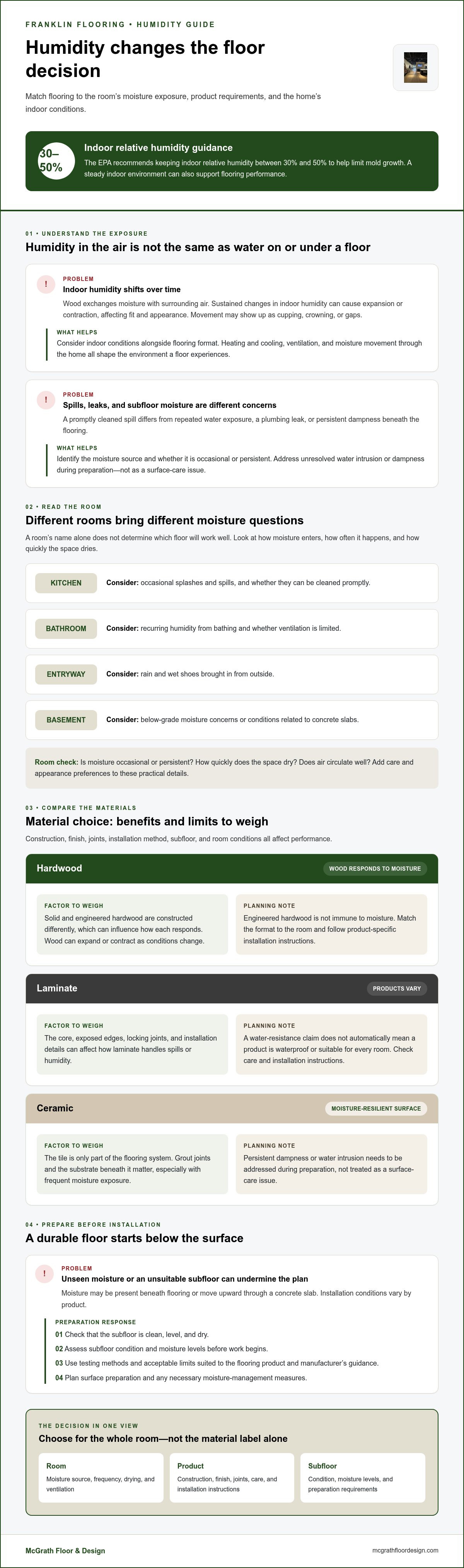
Relative humidity is the amount of water vapor in the air compared with the maximum amount the air can hold at the same temperature, expressed as a percentage. Wood exchanges moisture with the surrounding air, so sustained changes in indoor humidity can cause it to expand or contract, affecting a floor’s fit and appearance. Movement may show up as cupping, crowning, or gaps. Solid and engineered hardwood are constructed differently, which can influence how each responds. This overview of Engineered hardwood describes those differences.
Humidity in the air isn’t the same as a leak, standing water, or moisture rising through a subfloor. A promptly cleaned spill differs from repeated water exposure or persistent dampness beneath the flooring. Because each presents a different concern, Franklin flooring for high humidity should be selected with both typical indoor conditions and the room’s specific moisture sources in mind. The Environmental Protection Agency recommends keeping indoor relative humidity between 30% and 50% to help limit mold growth. A steady indoor environment can also support flooring performance.
Which rooms deserve closer moisture attention?
Room use helps clarify the type of moisture exposure to plan for. Kitchens may see occasional splashes and spills, while bathrooms can experience recurring humidity from bathing and limited ventilation. Entryways collect rain and wet shoes, and basements may have moisture concerns related to below-grade conditions or concrete slabs. These rooms don’t all pose the same risk, and a room’s name alone doesn’t determine which material will work well.
Consider whether moisture is occasional or persistent. A surface spill that can be cleaned is different from recurring wetness, poor ventilation, or unresolved water intrusion. Think about how the space is used, how quickly it dries, and whether air circulates well. Include these practical details alongside appearance and maintenance preferences when comparing flooring. Material category matters, but so do product construction, installation requirements, and room conditions. Matching all of them helps support lasting comfort and a more consistent appearance.
How flooring materials respond to humidity and moisture
Flooring performance depends on more than the material category printed on a label. Construction, surface finish, joints, installation method, subfloor condition, and room conditions all influence how a floor responds. Normal seasonal shifts in indoor humidity can affect materials differently from a spill, plumbing leak, or moisture moving upward through a concrete slab. Each situation needs to be considered on its own.
Hardwood and engineered hardwood in changing indoor conditions
Wood naturally responds to moisture in its surroundings. As conditions change, it can expand or contract, so stable indoor humidity and appropriate installation conditions matter. Engineered hardwood has a layered construction that differs from solid hardwood, but it isn’t immune to moisture and still needs to be installed according to product-specific instructions. The Nashville hardwood flooring guide offers more context for considering hardwood in Middle Tennessee homes.
The Maple Flooring Manufacturers Association explains how humidity relates to optimal performance and relative humidity for wood floors. Treat any recommended range as guidance for the relevant product and setting, not as a replacement for its installation instructions. For Franklin flooring for high humidity, the goal is to match the wood format to the room and manage indoor conditions, rather than rule out hardwood across the board.
Laminate and ceramic: understand the limits of each category
Laminate products vary in construction and moisture resistance. The core, exposed edges, locking joints, and installation details can all affect how a floor handles spills or humidity. A water-resistance claim doesn’t automatically mean a product is waterproof or suitable for every room. Review the product’s care and installation instructions as part of your decision. The complete laminate flooring guide explores laminate’s construction and design options.
Ceramic offers a moisture-resilient surface, but the flooring system includes more than the tile itself. Grout joints and the substrate beneath the tile still matter, especially where moisture exposure is frequent. Persistent dampness or water intrusion needs to be addressed during preparation, not treated as a surface-care issue.
Look at the whole installation. Before work begins, assess the subfloor’s condition and moisture levels using methods and acceptable limits suited to the flooring product and its manufacturer’s guidance. Moisture testing, surface preparation, and any necessary moisture-management measures help establish whether conditions are appropriate for installation. McGrath Floor & Design guides material selection around your room, exposure, and design priorities, then coordinates that choice with installation requirements. Explore flooring selection and installation guidance as you plan your project.
Hardwood, laminate, or ceramic: compare flooring for Franklin homes
There isn’t one material that suits every room in a humid climate. Compare how each option fits the space, how it will be cared for, and what the product requires for installation. The table is a starting point, not a substitute for checking the instructions for the flooring you choose.
| Material | Moisture considerations | Potential room fit | Care and design considerations |
|---|---|---|---|
| Hardwood | Wood can expand or contract as indoor moisture conditions change. Construction, finish, and installation influence how it performs. | May suit living spaces and other rooms where indoor conditions can be managed. | Offers natural grain and varied finish possibilities. Follow product-specific care guidance and manage indoor humidity. |
| Laminate | Moisture resistance varies by product. Edges, joints, and the core can affect how a floor responds to spills and humidity. | Can be considered for suitable living areas, depending on product instructions and room exposure. | Available in varied visual styles. Use the care and installation instructions for the specific product. |
| Ceramic | The tile surface is moisture-resilient, but grout and the substrate beneath it remain important parts of the floor system. | Can be a practical choice where moisture exposure is a central consideration, such as some kitchens or bathrooms. | Offers a hard, durable surface with a range of design possibilities. Keep grout and surface care in mind. |
When hardwood may fit the room and the homeowner’s priorities
Hardwood brings natural grain and character, with finish choices that help shape a room’s feel. It isn’t automatically unsuitable for humid homes. The key question is whether the room’s conditions, wood construction, and installation requirements align. Engineered hardwood is a distinct construction format, not a promise that moisture-related movement cannot occur. Explore the engineered hardwood installation guide for Brentwood for more context on planning.
When laminate or ceramic may be a practical alternative
Laminate can offer design flexibility, but water-resistance claims apply to the particular product and its stated conditions, not necessarily to every laminate floor. Ceramic’s hard surface may suit spaces where moisture is a key concern, though sound substrate preparation and attention to grout remain essential. See the 2026 ceramic flooring guide for additional design and care considerations.
Takeaway: The right choice for Franklin flooring for high humidity depends on the room’s exposure, the selected product’s specifications, and installation conditions that support its intended use.
Prepare for flooring installation in a humid Franklin home
A durable installation starts before the new floor arrives. Prepare in sequence: understand the room, assess the subfloor and moisture conditions, resolve problems, then install and care for the flooring according to its specific requirements. This connects the material choice to the realities of the space instead of relying on a general rule for every home.
Assess the room, subfloor, and moisture sources
Start by noting signs that deserve attention, such as recurring dampness, water stains, musty odors, visible leaks, or poor ventilation. Share where and when you notice them during project planning. A subfloor assessment helps establish whether the surface suits the selected flooring and whether moisture testing is needed. Testing methods and acceptable readings vary by material and manufacturer, so results should be assessed against the product’s requirements.
- Identify exposure: Consider room use, ventilation, spills, plumbing, and any history of water intrusion.
- Assess the base: Check the subfloor’s condition and suitability for the flooring system before installation.
- Address the source: Resolve leaks or persistent moisture concerns before covering the area with new flooring.
These steps matter because a finish floor can’t correct an underlying moisture problem. For Franklin flooring for high humidity, preparation should account for both the chosen material and conditions below or around it. Any moisture-management measures depend on the site conditions and the flooring instructions.
Plan acclimation, installation, and ongoing indoor conditions
Acclimation isn’t a one-size-fits-all waiting period. Whether it’s needed, how it’s handled, and the required conditions depend on the product’s construction and manufacturer instructions. Installation requirements, including subfloor moisture limits and any approved moisture-control method, also vary. Follow the directions for the selected hardwood, laminate, or ceramic rather than applying a timeline or threshold intended for another product.
After installation, steady indoor conditions support consistent performance, particularly for wood flooring. Use the product’s care guidance for routine cleaning and promptly clean spills. If a leak occurs, address its source and the affected area rather than letting moisture linger. Ventilation and regular attention to damp-prone spaces can help you spot concerns early.
McGrath Floor & Design connects material selection with professional installation, accounting for room conditions and product requirements. Plan your flooring installation with guidance shaped around your home and design priorities.
Choose humidity-conscious flooring with McGrath Floor & Design
A flooring decision should reflect more than appearance. The room’s everyday use, moisture exposure, desired style, maintenance preferences, and installation requirements all help determine which option is practical. McGrath Floor & Design helps homeowners weigh those priorities across hardwood, laminate, and ceramic, so the choice suits both the character of the space and the conditions it needs to handle.
Match the flooring category to your home and design goals
Start with how you want the room to look and feel, then consider how it functions. Hardwood may appeal if natural grain and warmth are central to your design. Laminate offers its own range of looks, with moisture claims that depend on the specific product. Ceramic can suit spaces where moisture exposure weighs heavily in the decision. No category is right for every room. The best fit balances the room’s conditions with the care and appearance you prefer.
Experienced guidance can make the decision clearer. McGrath Floor & Design connects your goals with practical considerations such as room use, moisture exposure, product instructions, and installation requirements. The team is owned and operated by Rick McGrath and partners, with more than 50 years of combined industry experience. That knowledge helps turn a broad question about Franklin flooring for high humidity into a considered choice for a specific space, without relying on one-size-fits-all recommendations or performance promises.
Plan the next step for a Franklin flooring project
Selection and installation work best as connected stages. Once you’ve narrowed the material category, the project plan can account for the room and the selected flooring’s requirements, carrying your design vision through to a polished finished space. Bring your priorities into the conversation: where the flooring will go, how the room is used, what look you want, and which moisture concerns matter to you.
McGrath Floor & Design serves Franklin, Brentwood, and Greater Nashville with flooring selection guidance and professional installation for residential and commercial interiors. Explore the options and shape a plan around your space and priorities.
Explore flooring options with McGrath Floor & Design
Make a confident choice for your Franklin home
Choosing flooring for a humid home is about matching the material to the room, not searching for one option that fits everywhere. Hardwood, laminate, and ceramic each bring different design and care considerations. The specific product, moisture conditions, and installation preparation also shape long-term performance. A thoughtful plan for Franklin flooring for high humidity starts with understanding how the space is used and preparing the subfloor for the selected material.
McGrath Floor & Design brings more than 50 years of combined industry experience among its owners and partners to flooring selection and professional installation. Serving Franklin, Brentwood, and the Greater Nashville area, the team helps homeowners connect room conditions and design goals with a suitable flooring direction. Start with a choice that feels both practical and personal.
Explore flooring options with McGrath Floor & Design and take the next step toward a durable, beautiful floor.
Frequently Asked Questions
Is hardwood flooring suitable for a humid home in Franklin?
Hardwood can suit a humid Franklin home, but suitability depends on the indoor environment, the room’s moisture exposure, and the flooring’s construction. Wood responds to changing moisture conditions, so product instructions and careful installation preparation matter. Consider how consistently indoor conditions can be maintained and whether the room sees spills or persistent dampness. Choose based on those factors rather than treating hardwood as universally suitable or unsuitable.
Can laminate flooring handle humidity and occasional spills?
Some laminate flooring can handle everyday indoor humidity and occasional spills, but performance varies by product. Air humidity and liquid on the surface are different exposures, and a spill left at edges or joints may present a concern even if the room itself feels comfortable. Review the selected product’s moisture claims, care directions, and installation instructions. Those details explain which conditions it’s designed for and how to clean spills appropriately.
What flooring is best for high-humidity rooms in a Franklin home?
There’s no universal best flooring for every humid room in Franklin. Ceramic may be worth considering where moisture exposure is central, such as some bathrooms, while laminate suitability depends on its specific construction and instructions. Hardwood may fit rooms with manageable indoor conditions and appropriate preparation. Compare how the space is used, its ventilation, and the likelihood of spills or dampness. Address persistent moisture or water intrusion before installing flooring.
How does humidity affect hardwood floors?
Hardwood can expand or contract as moisture conditions around it change. Depending on the floor and conditions, movement may appear as seasonal gaps or changes in the boards’ shape, but it doesn’t mean damage is inevitable. Consistent indoor conditions can help limit large swings, while appropriate preparation and installation help the floor respond as intended. Follow the selected product’s guidance for indoor conditions, maintenance, and installation rather than assuming all hardwood behaves identically.
Does flooring need to acclimate before installation in Franklin?
Acclimation requirements depend on the flooring material, the specific product, and its manufacturer’s instructions. There isn’t one appropriate number of days or one set of room conditions for every hardwood, laminate, or ceramic installation. Project assessment helps determine what preparation is needed, including whether acclimation applies and what conditions must be met. Follow the product instructions and installation plan so the flooring and subfloor are prepared for the actual room environment.
What happens if flooring is installed over a damp subfloor?
Installing flooring over unresolved moisture can contribute to performance problems, but the outcome depends on the flooring and the complete floor system. Moisture may affect the finish material, joints, adhesive, or other components, depending on the installation. Before work begins, assess the subfloor and use moisture testing suited to the selected product. Address leaks or persistent dampness at the source, then proceed only when conditions meet the flooring manufacturer’s requirements.
Is ceramic tile a good choice for humid areas?
Ceramic tile can be a good option for some humid areas because its surface is moisture-resilient. The full installation still matters: grout, the substrate beneath the tile, and the installation itself all affect how the floor performs. Consider the room’s use, ventilation, and type of water exposure, then follow product guidance for installation and care. Ceramic may suit a moisture-conscious design, but it doesn’t eliminate the need to manage persistent dampness.


