
The floor that resists scratches best may not be the right floor for your home. Ceramic can stand up to plenty of everyday wear, while laminate and hardwood each bring different strengths to a busy household. If pets, furniture, shoes, or daily foot traffic have you comparing options, choosing scratch resistant flooring Brentwood homeowners can feel confident about starts with more than a surface claim.
It’s sensible to look for a floor that stays attractive through daily life, but “scratch-resistant” doesn’t mean scratch-proof. The right choice depends on how your household uses each room, how much upkeep suits you, and whether you value easy care, natural character, or the option to refinish.
This guide compares hardwood, laminate, and ceramic for scratch resistance and everyday practicality, and explains how finishes and product ratings can help you assess claims. You’ll also learn what to consider for pets, furniture, and busy spaces. McGrath Floor & Design helps homeowners in Brentwood and Franklin compare flooring materials and provides professional installation.
Key Takeaways
- Scratch resistance describes how well a surface withstands marks, not whether it can never be damaged.
- Compare hardwood, laminate, and ceramic by more than scratch resistance: consider comfort, other types of wear, and room use.
- Choose scratch resistant flooring Brentwood homes can suit by weighing household routines, appearance, maintenance, and moisture needs.
- Use entry mats and regularly remove loose grit with care methods suited to your floor to help limit everyday wear.
- McGrath Floor & Design offers hardwood, laminate, and ceramic flooring, with professional installation for your project.
Scratch-Resistant Flooring in Brentwood: What Does Scratch Resistance Really Mean?
Pets racing through the hallway, children at play, chairs shifting around the table, and shoes carrying grit indoors can all leave visible marks. It’s reasonable to want a floor that holds its appearance through everyday life. Still, “scratch-resistant” describes a surface’s ability to withstand marking; it doesn’t mean the floor is immune to damage.
When comparing scratch resistant flooring Brentwood options, distinguish scratches from other kinds of wear. A scratch is a mark or cut in the surface. A dent comes from an impact or concentrated pressure, while a scuff may transfer material onto the floor without cutting into it. Chips, moisture damage, and gradual dulling are different problems, too. A surface may resist light scratches yet remain vulnerable to a dropped heavy object or moisture.
Is scratch-resistant flooring truly scratch-proof?
No flooring should be treated as invulnerable. Sharp grit can scrape a surface, a heavy object can cause a dent or chip, and dragging furniture can leave marks. Set expectations around how each room is used: a quiet guest room faces different demands than a busy entry or a space where pets and children spend much of the day.
For hardwood, the Janka hardness test compares how much force is needed to press a steel ball into a wood species. It can help explain differences in wood hardness, but it doesn’t rate a floor’s finish or directly predict whether that finish will scratch.
Which everyday conditions can leave marks on floors?
Small particles matter. Sand and other grit tracked inside can act like abrasives under shoes, especially when repeatedly walked across the same area. Pet claws may contribute to surface marks, while unprotected furniture feet can scrape floors as chairs or tables move. Entry points and frequently used paths are common places to focus on in homes across Brentwood and Franklin.
Not every mark looks the same on every floor. Material and finish influence how a surface responds, while color and lighting affect how noticeable a mark appears. A scratch that blends into a textured or varied surface may stand out on a smoother, more uniform one. Installation and care also affect long-term appearance: a well-chosen floor still benefits from appropriate upkeep and protection.
Consider what happens in each room, not just the material label. That practical picture makes it easier to compare flooring and set priorities for your home.
How Hardwood, Laminate, and Ceramic Flooring Compare for Scratch Resistance
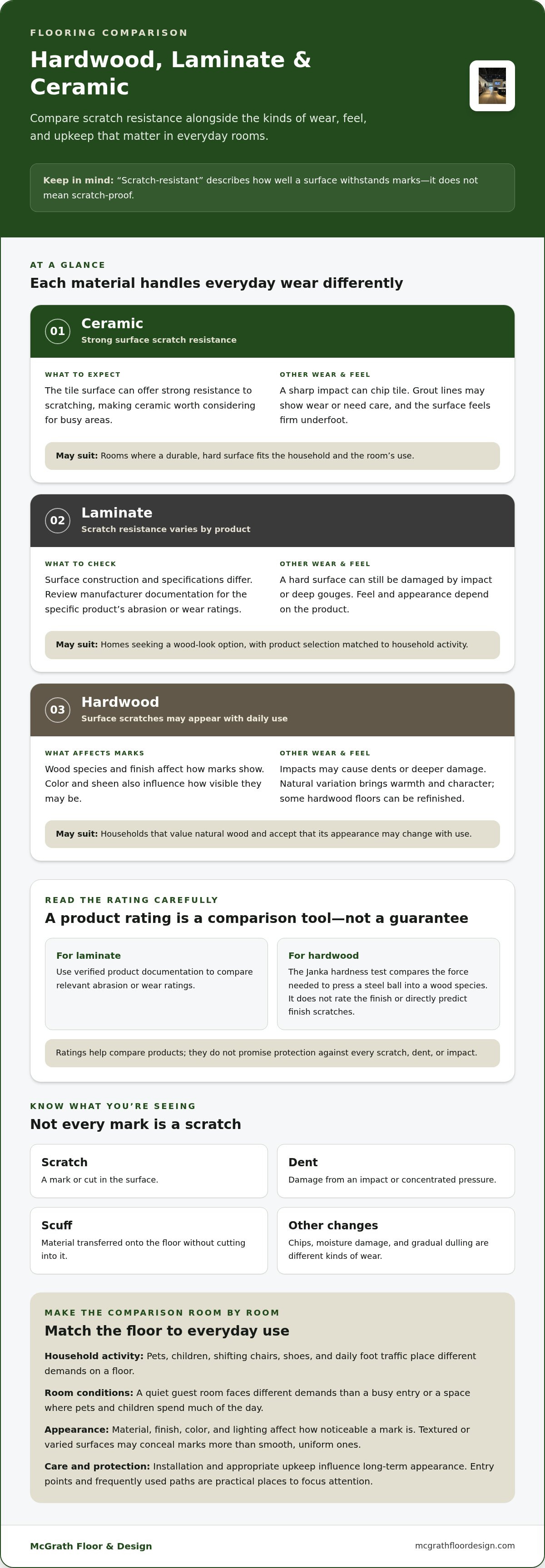
Each material handles everyday wear differently, and no single label tells the whole story. Ceramic tile generally offers strong resistance to surface scratching, laminate performance varies by product, and hardwood may show marks more readily while offering natural character and the possibility of refinishing. Compare the kinds of wear that matter in your rooms, not just a broad claim about durability.
| Flooring | Scratch resistance | Other damage and feel | May suit |
|---|---|---|---|
| Hardwood | Surface scratches can appear with daily use; the wood species and finish affect how marks show. | Impacts may cause dents or deeper damage. Its natural variation brings warmth and character, and some hardwood floors can be refinished. | Households that value natural wood and accept that its appearance may change with use. |
| Laminate | Resistance varies by product and surface construction. Check verified product documentation for relevant abrasion or wear ratings. | A hard surface can still be damaged by impact or deep gouges. The feel and appearance depend on the product. | Homes seeking a wood-look option, with product selection matched to household activity. |
| Ceramic | The tile surface can offer strong scratch resistance, making ceramic worth considering for busy areas. | Tile can chip from impact, while grout lines may show wear or need care. The surface feels firm underfoot. | Rooms where a durable, hard surface suits the household and the room’s use. |
What should homeowners know about laminate scratch resistance?
Laminate is a category, not one uniform performance level. Surface construction and specifications differ, so don’t assume every laminate floor resists scratches equally. Review manufacturer documentation for the specific product’s abrasion or wear ratings. Use those ratings to compare products, not as a promise against every scratch, dent, or impact.
How do hardwood and ceramic respond to everyday wear?
On hardwood, a surface scratch differs from a dent or deeper gouge. The species and finish influence how the floor responds, while color and sheen affect how visible marks may be. Wood’s natural appearance suits a range of home styles, with choices in look and finish for different projects.
Ceramic’s tile surface may resist scratching well, but that doesn’t make the entire installation immune to wear. A sharp impact can chip a tile, and grout lines have their own upkeep needs. Room use, finish, color, and regular care all shape how a floor looks over time. To compare materials for a home in Brentwood or Franklin, explore hardwood, laminate, and ceramic flooring with McGrath Floor & Design.
How to Choose Scratch-Resistant Flooring for Your Brentwood Home
The right floor depends on how each space is used, not on a durability claim alone. Use this framework to compare scratch resistance with the practical and visual details that matter in your home.
- Map rooms, occupants, and sources of wear. Start with busy entries and shared spaces, then consider quieter bedrooms or offices. Note where pets move, children play, shoes are worn indoors, and furniture gets rearranged. These routines show where scratch resistance deserves priority.
- Rank your priorities. Put scratch resistance alongside appearance, underfoot comfort, maintenance, and moisture needs. A floor that performs well against surface marks may not be the best match if another quality matters more in that room.
- Assess moisture separately. Think about where tracked-in rain, spills, or other household moisture may occur, and how often. Moisture performance is not the same as scratch resistance. Evaluate each as its own requirement instead of assuming one feature covers both.
- Compare product-specific information. Review manufacturer documentation for the particular product’s surface, abrasion, or wear details. Ratings can help you compare, but they don’t promise immunity from damage. For broader laminate selection guidance, read the complete laminate flooring guide.
- Check the look in your home. Consider how texture, color variation, and finish may affect the visibility of marks. Compare physical samples in the rooms where they’ll be installed, under your home’s lighting and beside your furnishings. A sample can look different against your wall color, furniture, and natural light than it does in a showroom.
Which rooms and routines should guide your flooring choice?
Assess high-traffic entries and family gathering areas differently from low-traffic rooms. If pets often cross an entry or chairs move regularly around a dining table, include those habits in your decision. Brentwood households vary, so account for your own routine, including seasonal moisture tracked inside, rather than assuming every home has the same demands.
What flooring details are worth comparing before you decide?
Bring your priorities together: product documentation for performance, samples for appearance, and room use for day-to-day practicality. This makes it easier to compare scratch resistant flooring Brentwood options realistically and choose a material that fits your household and the character of your home.
How to Protect Scratch-Resistant Flooring from Daily Wear
Good care starts with small, repeatable habits. They can reduce avoidable scratches and scuffs, though no routine can prevent every mark or replace repairs when damage occurs. For scratch resistant flooring Brentwood homeowners choose, match cleaning and protection to the material and the specific product’s care instructions.
Which habits help reduce scratches and scuffs?
Focus on entryways and other high-traffic paths, where grit can collect and get ground under shoes. Place suitable mats at entrances, and remove loose dirt regularly with a method appropriate for your floor. Check the manufacturer’s guidance before choosing cleaning tools or products; care that suits one surface may not suit another.
- Protect furniture feet. Use pads suited to the furniture and flooring, and check them periodically. Replace worn, loose, or debris-covered pads so they continue to provide a buffer.
- Move heavy pieces carefully. Lift furniture, appliances, and heavy décor when possible instead of dragging them across the floor. For larger moves, plan how to avoid pulling weight over the finished surface.
- Keep grit from spreading. Pay attention to busy routes and clear tracked-in debris with material-appropriate tools. A consistent routine helps limit abrasive particles between deeper cleans.
How can homeowners set realistic care expectations?
Care varies by flooring material, finish, and product. Follow the manufacturer’s directions for cleaning and maintenance rather than applying one universal method to hardwood, laminate, and ceramic. Prevention helps manage everyday wear, but it doesn’t undo a scratch, chip, or other damage that has already occurred. If you have hardwood, this hardwood floor care guide offers more material-specific maintenance guidance.
Set a routine that fits how the room is used: keep entry mats in place, check furniture protectors, and remove loose dirt before it builds up. Then respond to marks according to the care guidance for that particular floor. These steps support a well-kept appearance without promising that scratches or other damage can always be avoided.
For help matching flooring materials and care expectations to your home, explore flooring options with McGrath Floor & Design.
Find Scratch-Resistant Flooring in Brentwood with McGrath Floor & Design
Choosing a floor is about finding the right balance, not chasing a promise that a surface will never show wear. Consider how each room is used, what look you want to create, and what care routine feels manageable. Hardwood, laminate, and ceramic each bring different qualities to a project, so the best fit depends on how those qualities align with your household’s priorities.
What happens when you plan a flooring project with local guidance?
Start with a conversation about your rooms and routines. Which areas see the most activity? Do you have pets, children, or furniture that moves often? Are you drawn to the character of hardwood, the options available in laminate, or the look and feel of ceramic? Sharing your durability priorities alongside your design preferences makes the comparison practical.
McGrath Floor & Design guides homeowners in Brentwood and Franklin through hardwood, laminate, and ceramic choices, and provides professional installation. The owners and partners bring more than 50 years of combined industry experience to material selection and installation. Their guidance helps you consider how a floor’s appearance, performance information, and care expectations fit the space, without treating any material as damage-proof.
How can you move from flooring research to a confident choice?
Bring room details, household needs, and inspiration images to the selection process. Note where foot traffic is heaviest, what furnishings will sit on the floor, and whether moisture is a separate concern in a particular room. These specifics help narrow your priorities and compare options clearly. For a closer look at ceramic’s design and durability considerations, explore this ceramic flooring guide.
As you evaluate scratch resistant flooring Brentwood homeowners can choose, weigh the documented characteristics of a specific floor alongside its color, texture, comfort, and maintenance needs. Professional installation brings the selected material into your home with attention to the project’s details, while day-to-day care helps maintain its appearance over time.
Ready to connect your household’s needs with a flooring direction? Explore flooring options with McGrath Floor & Design.
Choose a Floor That Fits Your Everyday Life
The right floor isn’t simply the one with the strongest scratch-resistance claim. Compare hardwood, laminate, and ceramic for the kinds of wear each may face, then weigh those differences against your rooms, household routines, preferred look, and care expectations. Product details matter, too, so review specific manufacturer information and treat scratch resistance as one part of a broader decision.
For scratch resistant flooring Brentwood homeowners can feel good about, McGrath Floor & Design offers hardwood, laminate, and ceramic flooring with professional installation in Brentwood and the Greater Nashville area. The owners and partners bring more than 50 years of combined industry experience to helping you consider your project’s needs and design direction.
Take the next step: explore flooring options with McGrath Floor & Design and find a thoughtful starting point for a floor that feels right at home.
Frequently Asked Questions
Is there flooring that is completely scratch-proof?
No flooring should be described as completely scratch-proof. Scratch resistance means a surface can withstand some everyday marking, but sharp grit, heavy impacts, and dragged furniture can still cause damage. The likelihood and visibility of marks vary with the specific product, finish, color, installation, and care. For scratch resistant flooring Brentwood homeowners are considering, compare product information and choose based on how each room is used.
What flooring is best for dogs and other pets?
There isn’t one best floor for every pet household. Compare hardwood, laminate, and ceramic using product-specific surface information, while also considering claws, tracked-in grit, accidents, comfort, and cleanup. A surface that handles scratches well may still feel hard underfoot or need attention after spills. McGrath Floor & Design guides homeowners in Brentwood and Franklin through material choices that balance household routines, care expectations, and preferred appearance.
Can laminate flooring get scratched?
Yes, laminate flooring can get scratched, and its resistance to surface wear varies by product. Fine grit, sharp objects, or moving heavy furniture without care may leave marks. Review the manufacturer’s documentation for the specific floor rather than relying on a broad material label. Entry mats, suitable cleaning methods, and furniture protectors can help limit everyday abrasion, but they can’t prevent every scratch, dent, or other type of damage.
Is hardwood flooring a good choice if I am worried about scratches?
Hardwood can be a good choice if you value its natural appearance and feel, but it can show scratches and dents with everyday use. How visible marks become depends on the floor’s characteristics, finish, color, and household routines. Compare those trade-offs with laminate and ceramic, considering the room, pets, furniture, and maintenance you’re comfortable with. The goal is to select a floor that fits your priorities, not to expect a mark-free surface.
Does ceramic tile scratch easily?
Ceramic tile can provide a hard surface, but performance depends on the specific tile and its documented characteristics. A tile surface may resist ordinary scratches yet remain vulnerable to chips from impact, while grout can show a different kind of wear. Consider where the floor will be installed and how the room is used. For a home in Brentwood or Franklin, weigh appearance and care needs alongside scratch resistance.
How can I keep my floors from getting scratched?
Use suitable entry mats and regularly remove loose grit with cleaning methods recommended for your flooring product. Add appropriate protective pads beneath furniture legs, replace them when worn, and lift heavy items rather than dragging them. These habits can reduce common sources of abrasion, but they don’t make a floor damage-proof. Follow the manufacturer’s care guidance for your particular hardwood, laminate, or ceramic floor.
Is scratch resistance the same as overall floor durability?
No. Scratch resistance describes a surface’s ability to withstand marking, while overall durability includes other concerns such as dents, chips, moisture exposure, and wear over time. A floor may perform well in one area but have different limitations in another. Compare product-specific information with your room conditions and household routines. Homeowners in Brentwood and Franklin can weigh those priorities across hardwood, laminate, and ceramic rather than relying on one label.


