
The most textured tile isn’t automatically the safest choice for a wet bathroom floor. Choosing slip-resistant tile for bathrooms Brentwood homeowners can feel confident about means looking beyond surface texture and label claims to how the room will actually be used.
You want dependable traction without a surface that feels uncomfortable underfoot or is difficult to clean. Slip-resistance information can help, but it has limits: ANSI A326.3’s DCOF benchmark for level interior floors expected to get wet is a useful starting point, not a guarantee that a floor will never be slippery. Soap, standing water, and maintenance matter, too.
This guide compares tile surfaces and formats for bathroom floors and shower areas, and explains how grout and installation contribute to the finished result. You’ll also learn how to balance practical needs with the look you want for your Brentwood home. McGrath Floor & Design offers ceramic tile selection and professional installation, supported by more than 50 years of combined industry experience among the owners and partners.
Key Takeaways
- Compare slip-resistant tile for bathrooms Brentwood homes need by considering wet-use conditions, not just a surface label.
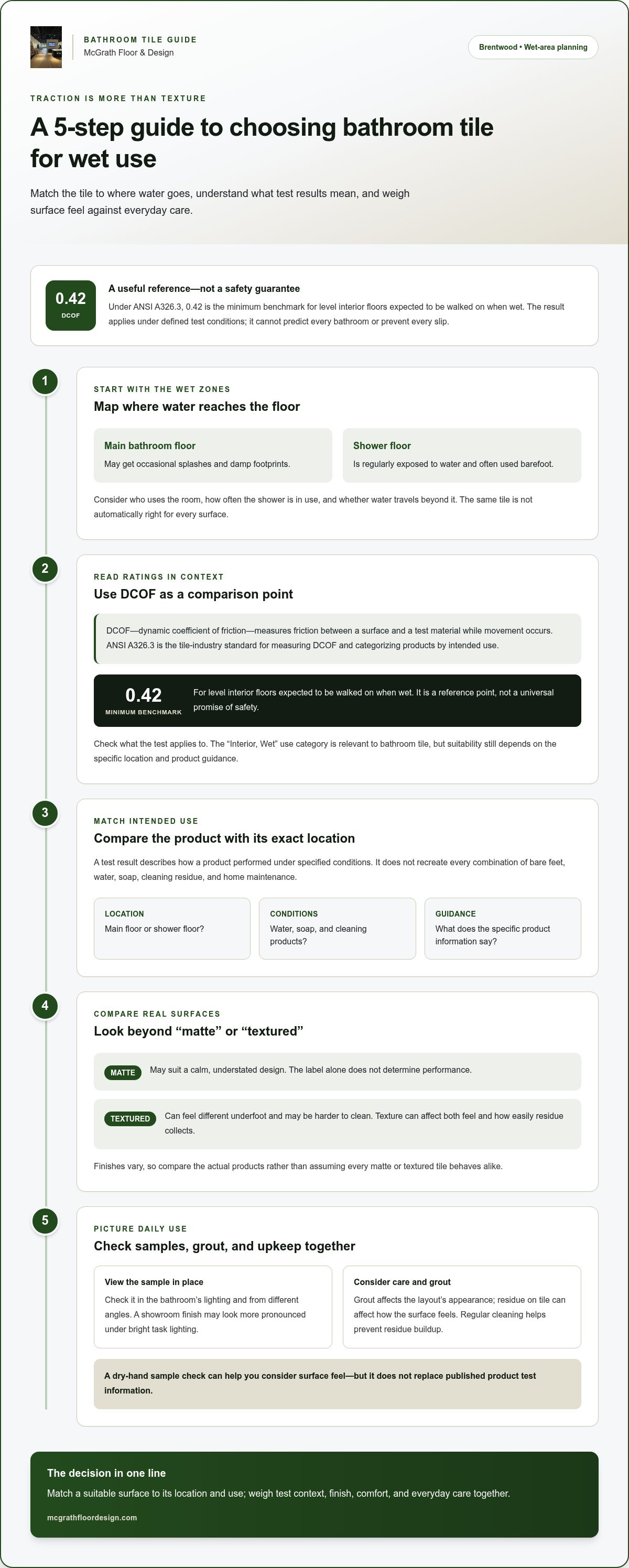
- Learn what DCOF and ANSI A326.3 can tell you, and why ratings should be considered alongside a tile’s intended use.
- Weigh ceramic tile surfaces and formats against your preferred look, cleaning routine, and bathroom layout.
- Plan samples, layout, substrate preparation, waterproofing details, slope, grout, and transitions before installation begins.
- See how thoughtful ceramic selection and professional installation can bring practical needs and design vision together.
What makes slip-resistant tile for bathrooms in Brentwood different?
Bathroom tile needs to do more than complete the design. Water from a shower, damp feet, or splashes near the sink can change how a floor feels underfoot. Choose a surface with the tile’s location and the room’s use in mind.
Slip-resistant bathroom tile has a surface selected to help improve traction underfoot; it cannot guarantee that slips or falls will never happen. A surface may offer useful traction under specific test conditions, while the conditions at home change with water, soap, cleaning products, and everyday wear.
What does slip resistance mean on a bathroom tile?
Think of slip resistance as one consideration in a broader safety decision, not a promise. Bare feet and footwear feel different on a surface, while standing water, soap residue, or leftover cleaner can affect contact between feet and tile. Regular cleaning helps prevent residue from building up.
Product tests help compare surfaces under defined conditions, but they can’t predict every person’s experience in every home. For an overview of how testing methods and devices vary, see Floor slip resistance testing. Use test information as a guide alongside the room’s actual use, not as a complete answer.
Why room location matters when choosing Brentwood bathroom tile
A main bathroom floor and a shower floor face different patterns of moisture. The main floor may get occasional splashes and damp footprints; the shower floor is regularly exposed to water and often used barefoot. Consider who uses the room, how often the shower is in use, and whether water tends to travel beyond the shower area.
These differences can help you narrow your options before comparing finishes and formats. The same tile isn’t automatically right for every surface in the room.
For a Brentwood bathroom update, start by identifying where water is most likely to collect or travel. Consider the route from shower to vanity, how family members use the space, and which areas need frequent cleaning. These details give tile selection a practical foundation without losing sight of style.
This is the key consideration when choosing slip-resistant tile for bathrooms Brentwood homeowners can feel good about: match a suitable surface to its location and use instead of looking for a tile that promises certainty. Texture may factor into the decision, but comfort, cleaning habits, and installation details matter, too. McGrath Floor & Design helps Brentwood homeowners consider ceramic tile selection and professional installation together.
How to compare tile slip-resistance ratings and surface finishes
Ratings can make tile options easier to compare, but they need context. A test result describes how a product performed under specified conditions; it doesn’t tell you exactly how the floor will feel in every Brentwood bathroom. Read the test information alongside the intended use, finish, and installation plan.
What DCOF and ANSI A326.3 can tell you
Dynamic coefficient of friction, or DCOF, measures friction between a surface and a test material while movement occurs. ANSI A326.3 is a tile-industry standard for measuring DCOF and categorizing products by intended use. For level interior floors expected to be walked on when wet, 0.42 is the minimum benchmark under this standard. It’s a reference point, not a universal promise of safety.
Check what the test applies to. A result under defined conditions can help compare products, but it doesn’t recreate every combination of bare feet, water, soap, cleaning residue, or home maintenance. The Interior, Wet use category is relevant to bathroom tile, but suitability still depends on the specific location and product guidance. The National Floor Safety Institute (NFSI) shares broader resources on slip-and-fall prevention and standards. These can add context, but they don’t replace tile-specific test information.
How matte and textured finishes change the decision
A matte finish may suit a calm, understated design, while a more textured surface can feel different underfoot and may be harder to clean. Neither label alone determines performance. Finishes vary, and texture can affect both how a tile feels and how easily residue collects. Compare the actual products rather than assuming every matte or textured tile behaves alike.
Look at samples in the bathroom’s lighting and consider them in the area where they’ll be installed. A finish that looks subtle in a showroom may appear more pronounced under bright task lighting. View a sample from different angles and consider how its surface feels when dry. A dry-hand test does not replace published product test information.
Picture the completed floor, not just the tile face. Grout joints, water, soap, cleaning products, and upkeep all influence the underfoot experience. Grout affects the layout’s appearance, while residue on tile can affect how the surface feels. A consistent cleaning routine helps maintain the floor’s appearance and condition.
When comparing slip-resistant tile for bathrooms Brentwood homeowners are considering, weigh test context, intended use, finish, and everyday care together. McGrath Floor & Design can help you explore ceramic tile selection and installation with your bathroom’s needs and design vision in mind.
Which bathroom tile formats and materials suit a Brentwood home?
The right tile format depends on where it will go, the room’s layout, and the look you want. Smaller pieces can fit around drains and tight spaces more readily, while larger pieces may create a more open visual effect. Neither format guarantees traction: consider the specific surface and its intended application as well as the layout.
Small-format versus large-format tile on wet floors
Tile size affects the number of cuts and grout joints in a layout. More joints can create a busier pattern; fewer joints give a cleaner, more continuous appearance. In a shower, the floor must also be shaped to direct water toward the drain, so tile dimensions and installation planning need to work together.
| Format | Where it may fit | What to consider |
|---|---|---|
| Small-format or mosaic | Shower floors or detailed layouts | More grout joints and flexibility around drains; joint count alone doesn’t establish traction. |
| Large-format | Main bathroom floors or broad wall areas | Fewer grout joints and a spacious look; cuts, room dimensions, and floor slope affect the layout. |
This comparison is a starting point, not a rule. A compact bathroom may benefit from a layout that reduces awkward cuts, while a larger room can accommodate a more expansive pattern. For shower floors, the installer must account for the floor’s slope and drain location alongside the tile’s dimensions and surface.
Ceramic tile, grout, and the finished surface
Ceramic tile gives Brentwood homeowners a versatile material to consider throughout a bathroom, but products differ in finish and intended use. Compare the specific tile’s guidance with its planned location rather than assuming every ceramic option suits every floor. McGrath Floor & Design offers ceramic tile selection and professional installation for Brentwood projects.
Grout contributes to the room’s appearance and routine upkeep. A narrow, subtle joint creates a different visual effect from a contrasting grout line, and the amount and placement of grout vary with tile format and layout. Grout joints are part of the floor assembly, but they don’t make a tile surface inherently slip-resistant.
Make separate decisions for each surface. For the main floor and shower floor, focus on intended use underfoot, finish, and how the layout accommodates the room. Shower walls don’t face the same traction concern as floors, so appearance, scale, and cleaning preferences can guide those choices more strongly. Coordinating wall and floor tile can create a cohesive design without using the same format throughout.
As you compare slip-resistant tile for bathrooms Brentwood homeowners may choose, consider tile, grout, placement, and installation as parts of one finished design. This helps practical choices support the room’s look and everyday use.
What should you plan before installing bathroom tile in Brentwood?
A successful tile project starts with the room, not a sample board. Before choosing a finish, consider how the bathroom is used and where water travels. Then connect those observations to product selection, layout, and installation details. This sequence helps align practical needs and design choices from the first conversation through the finished floor.
A practical checklist before selecting bathroom floor tile
Bring the room’s daily routine into the decision. Note which areas get shower spray, vanity splashes, or regular barefoot traffic. Measurements and photos can clarify the available space, obstacles, and style you’re aiming for, so you can consider tile in its actual setting.
- Map how the room is used. Identify the shower floor, main floor, vanity area, and spots where water commonly reaches. Note whether household members usually walk barefoot or wear slippers.
- Gather room details. Take measurements and photos that show the doorway, fixtures, drain, and existing surfaces. Share design preferences such as the mood, colors, and visual scale you hope to achieve.
- Compare samples together. Consider surface texture, color, format, and grout appearance as a group. Tile can look different under changing light and beside other finishes, so view samples in the bathroom when practical.
- Think through upkeep. Consider how you clean the room and whether a detailed surface or grout pattern suits your routine. Review product guidance for the specific tile and its planned location.
- Plan the layout before installation. Discuss cuts, grout lines, edges, and transitions near adjoining flooring. A considered layout can help avoid awkward slivers or visual interruptions around fixtures and doorways.
This preparation gives the selection conversation useful context. It also helps distinguish the needs of each part of the room, especially where floor and shower conditions differ.
Installation details that influence the finished floor
Tile is only one part of the assembly. The substrate, or surface beneath the tile, affects how the installation is planned. Existing movement, unevenness, or signs of moisture may call for project-specific preparation before tile is set. Waterproofing details should also be coordinated with the bathroom design and the areas exposed to water.
In a shower, drain placement and floor slope need to work with the chosen tile dimensions and layout so water can move toward the drain. Cuts around the drain and edges, grout joints, and transitions at a doorway all contribute to a cohesive finish. These details depend on the individual room; general planning guidance isn’t a substitute for installation decisions based on site conditions.
Professional installation connects material selection to those conditions. McGrath Floor & Design serves Brentwood with ceramic tile guidance and installation, bringing the selected surface, room layout, and finishing details into one coordinated project. To plan your bathroom tile project, share your design vision and how the space works day to day.
Choose bathroom tile and installation with McGrath Floor & Design
A cohesive bathroom uses materials that suit both the design and the way the room works. Tile selection and installation are connected decisions: finish, format, grout, layout, and edge details all contribute to the final result. McGrath Floor & Design brings ceramic selection guidance and professional installation together for Brentwood homeowners planning a bathroom update.
From tile samples to a cohesive bathroom design
Start with the design you want, then compare samples as parts of one palette. Look at color alongside grout, vanity finishes, wall surfaces, and other materials in the room. A tile that looks appealing on its own may feel different beside the cabinetry or under the bathroom’s lighting.
Light changes how color and surface detail appear. View samples in the room at different times of day if possible, and consider both natural and artificial light. Subtle texture might stand out under direct lighting, while a deeper color may look different in a dim corner. These comparisons help you make a considered choice.
Keep practical use in the conversation, too. For slip-resistant tile for bathrooms Brentwood homeowners are considering, the product’s intended use and surface information should align with where it will be installed. Pair those details with your preferred look, cleaning habits, and the room’s layout. Exploring ceramic tile design and durability can also help you consider how material choices contribute to the finished space.
Plan a Brentwood bathroom flooring project with experienced guidance
Good project planning turns preferences into a clear path from material selection to installation. McGrath Floor & Design serves Brentwood and the Greater Nashville area, offering tailored product guidance and professional installation for residential flooring projects. The owners and partners bring more than 50 years of combined industry experience, supporting a thoughtful process grounded in the homeowner’s vision and the room’s needs.
As selections take shape, consider the tile and installation plan together. Room measurements and photos help frame the layout conversation. Grout lines, cuts, and transitions influence how the finished design reads, while the installation surface and the bathroom’s specific features inform project preparation. Each decision should serve the completed room, not just the sample board.
Bring your ideas, preferred finishes, and notes about how the bathroom is used into the planning conversation. These details give material selection useful direction while leaving room to refine the design. The aim is a bathroom that feels like your home and is thoughtfully planned for everyday use.
If you’re ready to discuss a Brentwood bathroom project, explore ceramic tile and flooring services with McGrath Floor & Design.
Take the Next Step Toward a Bathroom That Feels Like Yours
Start by picturing how you want the bathroom to look and feel, then bring that vision into a tile-planning conversation. Note which areas see the most water, what you like about your current layout, and which finishes suit your home. These details make the search for slip-resistant tile for bathrooms Brentwood homeowners can feel good about a more personal design decision.
A well-planned bathroom balances everyday function with details that make the space welcoming. Explore ceramic options, consider how they’ll work with your design, and shape a flooring plan around the way you use the room. McGrath Floor & Design brings material selection and installation together for Brentwood projects.
Explore ceramic tile and flooring services with McGrath Floor & Design to plan your Brentwood bathroom project.
Frequently Asked Questions
Is slip-resistant tile completely slip-proof?
No tile surface can guarantee that a fall will never happen. Traction may change with water, soap, cleaning residue, footwear, and maintenance, so a surface can feel different during a busy morning than after the floor has dried. Product test information offers a controlled comparison, not a prediction for every home. Consider the bathroom’s routines and plan how to keep the finished surface clean and free of residue.
Can large-format tile be used on a bathroom floor?
Yes, large-format tile can suit some bathroom floors, depending on the room and intended placement. A broad main floor may accommodate larger pieces, while a shower floor with a central drain may call for a different layout. Review how tile dimensions work around fixtures, edges, and the drain before settling on a pattern. The right format is the one that fits the space and installation plan.
What does a DCOF rating mean for bathroom tile?
A DCOF rating describes dynamic coefficient of friction, a measurement of friction under specified test conditions. Use it as one piece of product information, not as a promise about how tile will perform in your home. Compare the test information with the product’s intended application, then consider where it will be installed. A bathroom used by barefoot family members may call for different practical considerations than a lightly used powder room.
Are textured bathroom tiles harder to clean?
Some textured surfaces may take more attention during routine cleaning, though the specific tile and its surface determine how much care it needs. Check the product’s care guidance before choosing, especially if your household prefers simple cleaning. Compare a sample with the grout color and joint style you’re considering, too. Residue may be more noticeable against some grout colors, and the room’s cleaning routine affects upkeep.
Is ceramic tile a good choice for a Brentwood bathroom?
Ceramic tile can be a suitable bathroom option when the specific product fits its planned location and installation. Compare floor and wall applications separately, and consider how the selected surface, color, and format fit the room’s daily use. For slip-resistant tile for bathrooms Brentwood homeowners are planning, McGrath Floor & Design can help connect ceramic selection with design and installation needs in Brentwood and Franklin.
How do I choose tile for a shower floor?
Choose shower-floor tile by considering the surface, format, grout layout, drain position, and installation plan together. A detailed layout around a drain, for example, may affect which tile dimensions are practical. Product information can help narrow the choices, while the room’s dimensions guide the final plan. Bring measurements or a clear photo of the shower area to make the layout conversation more useful.
Does grout make bathroom tile more slip-resistant?
Grout joints can influence the feel of a tiled floor, but grout alone shouldn’t be relied on to make tile safe underfoot. The finished experience depends on the tile surface, layout, installation, and bathroom maintenance. Consider grout color and joint placement for appearance and cleaning, then assess the tile itself for its intended floor use. Treat grout as part of the overall design, not a substitute for tile selection.


