
For the best flooring for laundry rooms in Brentwood, start with moisture resistance: ceramic tile or sheet vinyl can handle everyday splashes better than carpet, while solid hardwood can buckle or cup when exposed to moisture. Tile offers a durable surface, but grout needs care; laminate can suit a laundry room when spills are wiped up quickly, though standard laminate isn’t fully waterproof. If a washer overflows, flooring seams and carpet can leave moisture more opportunity to reach the floor beneath.
Appearance is only one consideration. Laundry-room flooring also needs to handle appliance weight, foot traffic, and occasional spills. This guide compares tile, vinyl, laminate, and other options, explains why carpet can be difficult to manage around leaks, and outlines what to consider before choosing a floor for a room with a washer and dryer. Use the room’s likely water exposure, cleaning needs, and daily use to narrow your options.
Key Takeaways
- Weigh luxury vinyl and tile against your room’s moisture exposure, appliance use, and cleaning needs to narrow your options.
- Understand why laminate’s seams and installation details matter when a washer leak or overflow occurs.
- Look beyond water resistance: subfloor condition, foot traffic, and appliance movement also shape a floor’s long-term performance.
- Consider carpet’s moisture drawbacks before choosing a soft surface for a room where spills and dampness are possible.
What is the best flooring for a laundry room with high moisture levels?
Sheet vinyl, luxury vinyl, and tile can all suit moisture-prone laundry rooms, but they differ in seams and upkeep. Match the surface to the risk of spills, appliance placement, and your cleaning routine.
Luxury Vinyl Plank and Tile
Luxury vinyl plank and luxury vinyl tile offer a layered surface in plank or tile formats. Properly installed waterproof vinyl plank and tile need a solid, even substrate; tight installation helps limit moisture entry. Luxury vinyl tile is commonly 12 inches by 12 inches. With appropriate maintenance, it can last 10 to 30 years or longer. Follow the product’s care guidance, and consider that vinyl can dent under extreme weight or show light scratches.
Sheet Vinyl Flooring
Sheet vinyl comes in broad rolls, creating fewer seams than separate planks or tiles. Sheets are sold 6 to 13 feet wide, and vinyl sheet flooring is also made in 12-foot-wide rolls. That continuous surface can reduce moisture entry points and help protect the subfloor. Installation needs careful fitting at edges; severe damage may mean replacing the entire sheet or room’s flooring.
Sheet vinyl and well-installed luxury vinyl have fewer openings where moisture can seep through. Slip resistance depends on the surface and whether it is wet, so water resistance alone does not tell you how secure the floor will feel underfoot.
| Option | Moisture protection | Maintenance | Key trade-off |
|---|---|---|---|
| Luxury vinyl plank or tile | Strong with tight installation | Follow product care guidance | Can dent or scratch |
| Sheet vinyl | Few seams across the surface | Clean spills promptly | Severe damage may require broad replacement |
| Porcelain tile | Highly moisture-resistant | Maintain grout | Grout needs attention |
| Ceramic tile | Excellent moisture resistance | Maintain grout | More porous than porcelain |
When reviewing a flooring warranty, read the coverage, water-related exclusions, and care instructions together. Maintenance also varies by surface: clean up spills on vinyl promptly, and give tile grout the attention it needs.
Before installation, the subfloor should be clean, level, and completely dry. Waterproof vinyl plank and tile require a solid, even substrate; the suitable underlayment depends on the flooring system.
This comparison doesn’t name Brentwood contractors or summarize local reviews. Reviews can describe installation experiences, but they don’t establish a flooring material’s water resistance.
Choose sheet vinyl for a surface with fewer seams, luxury vinyl for plank or tile styling, or porcelain when tile durability is a priority.
Laminate flooring's vulnerability to washer overflows
Laminate offers plank styles and a warm, wood-like appearance, but its moisture resistance varies. Standard laminate can handle everyday splashes better than prolonged exposure; water that reaches the seams may seep beneath the surface and damage the core. An overflowing washer is a greater challenge than a small drip because water can spread across the floor before it is noticed.
Waterproof laminate is another option, but its performance depends on the product and installation. Tight seams help limit moisture entry, and some products include built-in underlayment. Even a waterproof label does not mean a floor is suitable for every major leak, so consider the room’s spill risk before choosing.
Reduce risk by thinking about water at its source. A washer pan can help contain an overflow. A waterproofing membrane or sealer may also help protect the subfloor, particularly near the washer and dryer. Professional installation can help create a close fit, and prompt cleanup keeps standing water from lingering at plank joints.
- Small splash: Wipe it up quickly before moisture reaches a seam.
- Washer overflow: Water may spread beneath planks and threaten the subfloor.
- Ongoing dampness: Trapped moisture can damage flooring and create conditions that support mold growth.
Leaks can affect flooring in different ways: laminate may swell or suffer core damage, while moisture can enter tile grout or flooring seams. If water becomes trapped beneath a floor, the damp subfloor can also create conditions for mold.
Choose laminate if its appearance suits your room and you can manage spills promptly, but weigh its limits against the chance of an overflow. For a closer look at laminate flooring options, consider how plank seams, underlayment, and water protection fit your laundry setup.
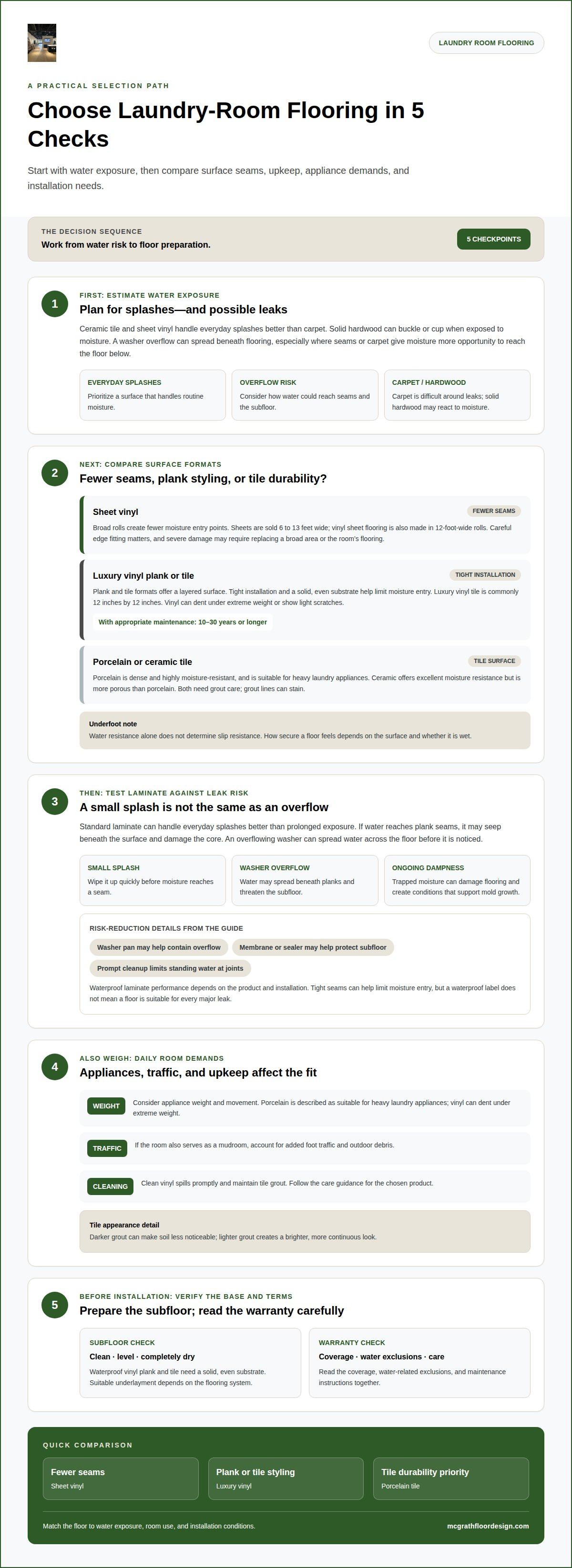
Laundry room flooring selection criteria
Luxury vinyl plank, porcelain tile, and sheet vinyl differ in seams, moisture resistance, and the look they bring to a laundry room. A flooring choice alone doesn’t establish whether Brentwood permits or building-code requirements apply; that depends on project scope.
Luxury Vinyl Plank
Luxury vinyl plank uses separate planks to create a wood-inspired look and generally feels softer underfoot than tile. Careful installation helps limit moisture entry, but the seams remain part of the surface. Consider appliance weight and movement when comparing it with porcelain. If the laundry room also serves as a mudroom, account for the additional foot traffic and outdoor debris.
Porcelain Tile
Porcelain tile is dense, highly moisture resistant, and suitable for rooms with heavy laundry appliances. Its durable surface is practical where longevity matters, though grout lines need care to help prevent staining. Choose grout that complements the tile: darker grout can make soil less noticeable, while lighter grout creates a brighter, more continuous look.
Sheet Vinyl
Sheet vinyl can cover a broad area with fewer seams than plank flooring, reducing places where moisture may enter. It is a practical choice when a continuous surface matters more than a wood-plank look. Consider how the floor color works with cabinets and walls. A pale floor, for example, can brighten a compact laundry room, while a deeper tone can contrast with light cabinetry.
Compare materials by likely water exposure, appliance weight, foot traffic, comfort underfoot, and upkeep. If the laundry area shares space with a mudroom, prioritize a surface that can handle water and outdoor debris. Consider the whole room, too: flooring colors and accents should complement cabinetry, wall finishes, and nearby spaces.
Environmental features vary by product. If recycled content or low-VOC certifications matter to you, review the details for each flooring option. Regardless of material, installation requires a clean, level, completely dry subfloor; the flooring system determines the suitable underlayment. Choose for the room’s conditions, not appearance alone.
Carpet risks in laundry rooms
Carpet may feel warm underfoot, but its fibers and backing make washer spills harder to manage. A small hose drip can soak beyond the visible surface, while an overflow may reach the padding and subfloor. Unlike sheet vinyl, carpet is not a wipe-clean surface, so moisture can linger after the visible spill is gone.
Retained dampness is the main concern. Wet carpet can develop odors, and trapped moisture can create conditions for mold growth. A leak behind the washer, for example, may go unnoticed as water spreads under the carpet. Detergent spills also need prompt attention because residue can remain in the fibers.
Carpet may last around 10 years, but that lifespan doesn’t account for the extra moisture exposure of a laundry room. By contrast, luxury vinyl and sheet vinyl have surfaces that are easier to wipe, while tile resists moisture but requires grout care. Solid hardwood is also vulnerable to moisture and may buckle or cup, so carpet isn’t the only material that needs careful consideration.
If you want a soft surface, consider a removable rug outside the washer’s immediate area. If it gets wet, lift it promptly and dry both sides and the floor beneath. Keep rugs away from appliance connections and likely leak paths so the floor remains easier to inspect after a wash.
- Check after washing: Look around the washer and nearby floor for damp spots.
- Respond to spills: Blot moisture promptly and dry the carpet backing and underlying surface.
- Choose a practical surface: For the main laundry area, compare wipe-clean vinyl or tile with carpet’s softer feel.
Carpet’s comfort may suit an adjacent dry area, but its fibers and padding make it a poor fit beside a washer. Explore flooring options with moisture exposure and everyday upkeep in mind.
McGrath Floor & Design: Hardwood Flooring
McGrath Floor & Design can help you compare flooring choices for your laundry room’s moisture exposure, style, and everyday use. Hardwood adds natural warmth to suitable interiors, but moisture can cause it to warp or stain, making it less suitable for rooms with frequent spills or leak concerns.
For laundry areas, consider ceramic tile for moisture resistance or laminate if you can clean spills promptly and avoid prolonged dampness. McGrath Floor & Design guides you through product selection and professional installation, helping you assess how each material fits the room and the look you want.
If you’re weighing hardwood against a more moisture-conscious option, contact McGrath Floor & Design to discuss your flooring plans.
Plan a Laundry Room That Works for You
Picture how the room works on an ordinary laundry day. Consider the washer’s location, how you move through the space, and which finish suits your cabinetry and nearby rooms. These practical details can help you choose the best flooring for laundry rooms in Brentwood based on your home, not just a material comparison.
McGrath Floor & Design can guide you through flooring selection and installation, connecting your priorities with a cohesive finished space. Bring your ideas for the room and discuss the look and function you want to achieve.
Contact McGrath Floor & Design to talk through your laundry room flooring plans and take the next step with confidence.
Frequently Asked Questions
How do I choose between porcelain and ceramic tiles for my laundry room?
Choose porcelain when moisture exposure and appliance loads are key concerns; it is denser and absorbs less water than ceramic. Ceramic tile also resists moisture and can suit a laundry room when spills are cleaned regularly. For Brentwood homeowners comparing the best flooring for laundry rooms, consider grout upkeep, color, and how each tile works with cabinetry and wall finishes.
What flooring materials are best for laundry rooms in Brentwood, Tennessee?
For Brentwood homes, the best flooring for laundry rooms depends on likely spills, appliance use, and the room’s style. Porcelain or ceramic tile offers moisture resistance, while sheet vinyl has fewer seams. Luxury vinyl is another option for plank or tile looks. Carpet and solid hardwood are less suited to frequent moisture, so consider their limitations before using them beside a washer.
What does laundry room flooring cost per square foot in Brentwood, TN, including installation?
Installed flooring costs depend on the material, room dimensions, subfloor condition, preparation, and installation details. For example, an uneven or damaged subfloor may need different preparation from a clean, level surface. When reviewing estimates, compare the material, preparation, and installation work included, rather than comparing a material-only figure with an installed total.
Which flooring types hold up best to washers, dryers, and heavy appliances?
Porcelain and ceramic tile are suitable for heavy laundry appliances, provided the floor has a stable, even substrate. Vinyl can also work under appliances when installed correctly, though extreme weight may dent some products. To choose the best flooring for laundry rooms in Brentwood, consider appliance movement, spill exposure, and each material’s installation needs together.
Which laundry room flooring options are most water-resistant and slip-resistant?
Porcelain tile is highly moisture resistant, while sheet vinyl and well-installed luxury vinyl reduce potential entry points. Slip resistance depends on the floor’s surface and wet conditions, so water resistance alone does not indicate how secure it feels underfoot.


